2007 Toyota RAV4 Reliability & Problems
By Adrian V. LockhartUpdated All 1,004 NHTSA owner reports researched and classified
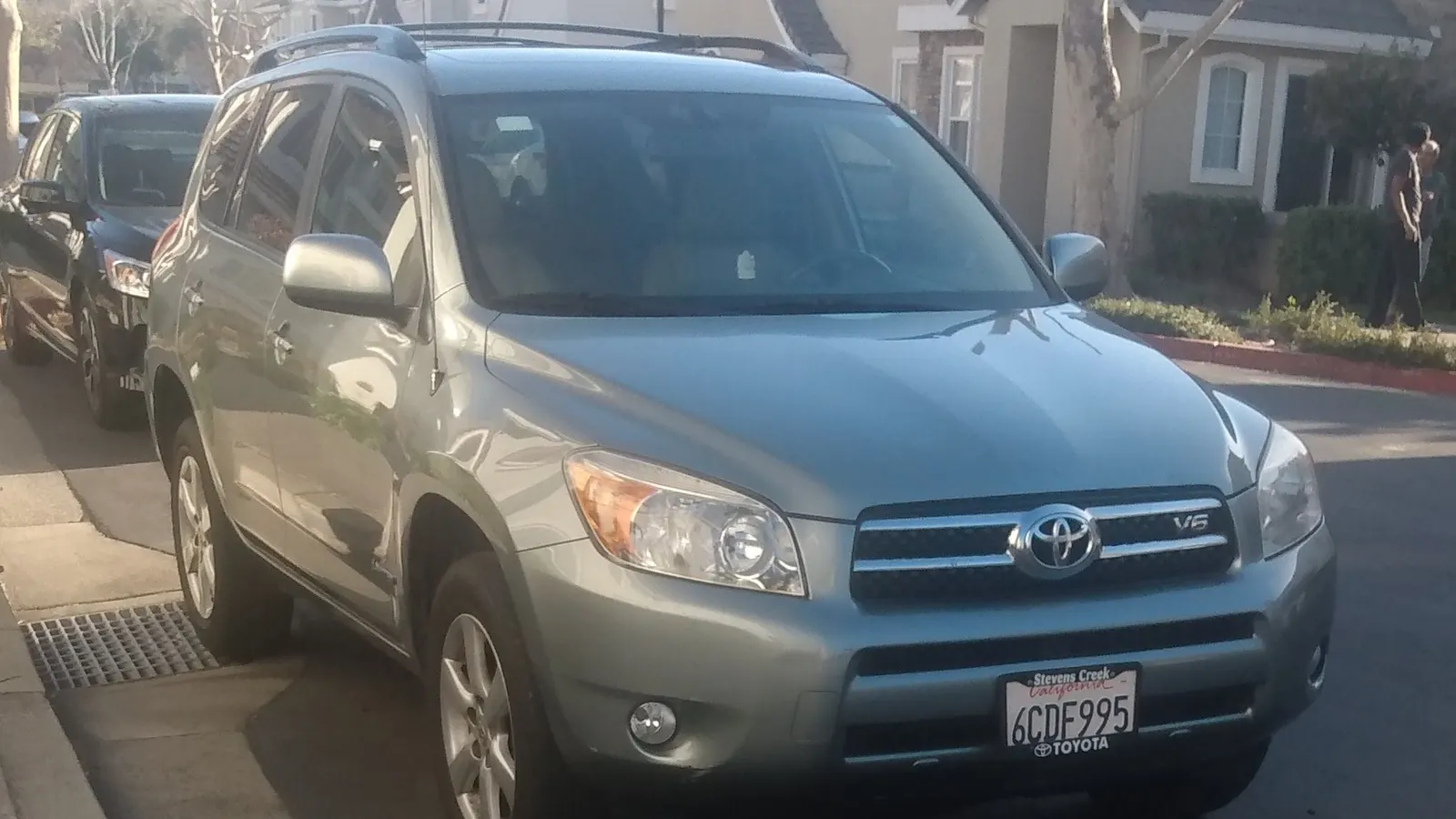
Pictured: 2007 Toyota RAV4 V6. Photo: DestinationFearFan, CC BY-SA 4.0, cropped
Owner complaints
1,004
97 report a crash, fire, injury or death
Recalls
14
None urgent
Most common problem
21%
of complaints: steering column clunk
Complaints per year filed
2007–2025 · peak 151
In short
Some known problemsThe 2007 Toyota RAV4 has some known problems: NHTSA investigated power window master switch fires and rear suspension arm failure, and both investigations closed with recalls. NHTSA has 1,004 owner complaints, and 97 report a crash, fire, injury or death. The most common are a clunk from the steering column, excessive oil consumption and sudden acceleration. There are 14 recalls.
Reliability
How Reliable Is the 2007 Toyota RAV4?
The 2007 RAV4 is rated Some known problems because of two official NHTSA investigations, not because one failure dominates the complaints. One looked at power window master switch fires and closed with recall 12V491000. The other looked at rear suspension arm failure and closed with recalls 12V373000 and 13V383000. The complaints themselves are spread across many issues. The most common, a clunk from the steering column when turning, is a minor annoyance. Others are safety-critical, so the model year carries both everyday irritations and a few serious risks.
The recurring problems that matter most for ownership are excessive oil consumption, sudden or unintended acceleration, and a persistent airbag warning light. Oil consumption is reported almost entirely on the 2.4L engine, and some owners describe the oil light coming on or the engine seizing. Engine failure needing replacement is its own, smaller group of complaints, and it overlaps with the oil complaints because owners mention low or burned-off oil. This model year has no recall for oil consumption or engine failure. Among the owners who say whether repairs worked, most say oil consumption was not fixed, and complaints generally lean toward repairs that failed.
Several recalls address real defects. The rear suspension recalls say that if the alignment adjusting nuts are improperly tightened during service, the rear suspension arm may develop unwanted movement and rust, leading to thread damage and eventual failure, which causes an abrupt change in the vehicle's alignment. Owners who describe a broken rear arm often mention these recalls, and most who reported an outcome say the repair fixed it. The window switch recall says the switch can malfunction and overheat, and owners describe door fires and smoke from the driver door, though this model year has no recall for the other fire reports. The airbag light complaints often mention recalls 11V245000 and 14V168000, and a few owners say recall parts were unavailable or the light returned after the repair. Sudden acceleration has recall 11V113000, which concerns a pedal trapped by an unsecured or incompatible driver's floor mat. The steering clunk, sun visor, power steering and brake complaints have no recall for them.
Mileage helps you read a particular vehicle. Sudden acceleration is reported early, with a median of about 30,800 miles, and the steering clunk typically appears around 45,000 miles. Power steering loss and brake complaints cluster around 79,800 and 71,000 miles, while the rear control arm, oil consumption and airbag light problems are reported later, around 89,000, 95,500 and 96,300 miles. Engine failure is the latest, at a median of about 116,000 miles. A vehicle with high mileage and no oil records deserves the most caution, and a lower-mileage one still needs its recall history checked.
Complaint counts show what owners reported, not how many vehicles are affected, and they cannot show how any particular vehicle was maintained or driven. Many of these problems may never occur on a given RAV4. Still, the combination of safety-critical reports and repairs that often did not hold means a pre-purchase inspection, a recall check by VIN and a look at service records are worth the effort.
Top problems
The 10 problems owners report most
Named from 1,004 NHTSA complaints. Open a problem for symptoms, the fix, cost and owners' accounts.
1.Clunk from steering columnMinorAbout 1 in 5 complaints34,300–65,000 mi~$600 repair
Owners describe clunking or knocking when turning, often at low speed and getting louder over time. Reports typically begin around 45,000 miles, with the middle half between 34,300 and 65,000 miles. Many repairs mention the intermediate steering shaft, and this model year has no recall for it.
What owners describe
- Noise at low speed20%
- Clunk when turning wheel15%
Fix
Most common repair owners describe: intermediate steering shaft replaced (4 reports).
Repair worked in 57% of complaints that describe one (complaints lean toward repairs that failed)
Mileage
45,000 mi
Middle half 34,300–65,000 mi · 192 reports
Repair cost
$594
Middle half $474–$833 · 57 owner amounts
How common
21%
212 of 1,004 complaints
By engine
- 2.4L 4-cyl55%
- 3.5L V645%
In owners' words
“The dealer now claims that all rav4's and Toyota minivans make the noise and it is nothing to worry about”
Owner in VA2.4L 4-cylFiled 2010NHTSA 10339154 “Every time the vehicle made a turn in any direction it made a clanking sound in the steering column”
Owner in MAFiled 2010NHTSA 10348503 “The cost to fix this Toyota part defect will be out of my pocket, and it's very substantial ($890)”
Owner in TX3.5L V6Filed 2010NHTSA 10339215 2.Excessive oil consumptionSeriousAbout 1 in 6 complaints69,500–120,000 mi~$3,800 repair
Owners report an empty dipstick, an oil light coming on, failed oil consumption tests and fear of the engine seizing. Reports are mostly on the 2.4L engine and typically come at about 95,500 miles, with the middle half between 69,500 and 120,000 miles. This model year has no recall for it.
What owners describe
- Oil light comes on14%
- Burns oil between changes10%
- No oil on dipstick6%
Fix
Most common repair owners describe: engine repair quoted for stuck oil rings (2 reports).
Repair worked in 18% of complaints that describe one (complaints lean toward repairs that failed)
Mileage
95,500 mi
Middle half 69,500–120,000 mi · 132 reports
Repair cost
$3,750
Middle half $2,765–$4,923 · 12 owner amounts
How common
15%
155 of 1,004 complaints
Crash, fire or injury
0%
of these complaints
In owners' words
“In june the oil was down one quart and in september I did another oil change with only two quarts of oil left in the pan”
Owner in WA2.4L 4-cylFiled 2013NHTSA 10553624 “Found it to be so low it doesn't even register on the dipstick, and only after driving less than 1000 miles.”
Owner in PA2.4L 4-cylFiled 2013NHTSA 10554141 “On 11/26/13 I checked it again no oil and what's amazing is the light never came on like the first time.”
Owner in FL2.4L 4-cylFiled 2013NHTSA 10553969 3.Sudden or unintended accelerationCriticalAbout 1 in 14 complaints21,000–47,000 mi
Owners describe the pedal sticking, surging at a red light or while parking, and engine revs that rise under braking or in neutral. Reports typically come early, at about 30,800 miles, with the middle half between 21,000 and 47,000 miles. One owner mentions recall 11V113000.
What owners describe
- Surges at a stop7%
- Accelerator pedal stuck5%
Fix
Most common repair owners describe: throttle body seal replaced (1 report). Recall 11V113000.
Mileage
30,800 mi
Middle half 21,000–47,000 mi · 67 reports
Repair cost
—
Fewer than 10 owners report a repair cost
How common
7%
74 of 1,004 complaints
By engine
- 3.5L V656%
- 2.4L 4-cyl44%
In owners' words
“The accelerator pedal became stuck. It did not continue to accelerate, but would not return to idle when she released her foot from the pedal”
Owner in CA2.4L 4-cylFiled 2010NHTSA 10346813 “Suddenly, the engine revved as if the gas pedal was to the floor. The car lurched forward and crashed into the concrete base of a light pole”
Owner in OH3.5L V6Filed 2010NHTSA 10372613 “I drove around for an hour with the master mechanic - couldn't get the vehicle to replicate”
Owner in IL3.5L V6Filed 2010NHTSA 10358966 4.Airbag warning light stays onSeriousAbout 1 in 18 complaints65,900–121,300 mi~$500 repair
Owners report the airbag light on while driving or parked, and many say the spiral cable needed replacing. Reports typically come at about 96,300 miles, with the middle half between 65,900 and 121,300 miles. Owners mention recalls 11V245000 and 14V168000, and some say the recall part was unavailable.
What owners describe
- Airbag light stays on53%
- Spiral cable failure49%
- Clock spring needs replacing7%
- Recall part unavailable5%
Fix
Most common repair owners describe: spiral cable assembly replaced (2 reports). Recalls 11V245000, 14V168000.
Repair worked in 46% of complaints that describe one (complaints lean toward repairs that failed)
Mileage
96,300 mi
Middle half 65,900–121,300 mi · 48 reports
Repair cost
$500
Middle half $446–$533 · 20 owner amounts
How common
6%
57 of 1,004 complaints
By engine
- 2.4L 4-cyl79%
- 3.5L V619%
- 1.8L 4-cyl2%
In owners' words
“After having recall repairs done on the vehicle under NHTSA campaign id number: 11v245000 (air bags:frontal:sensor/control module) the srs warning lamp was illuminated”
Owner in TX2.4L 4-cylFiled 2011NHTSA 10407772 “Dealer informed us there is a Toyota recall about to be issued but no parts are available for a repair.”
Owner in MN3.5L V6Filed 2014NHTSA 10608042 “The d squib circuit/spiral cable is faulty and therefore the air bag system is not operational.”
Owner in WI2.4L 4-cylFiled 2014NHTSA 10573874 5.Sun visor does not stay upMinorAbout 1 in 27 complaints63,500–102,000 mi~$150 repair
Owners say the driver visor falls or droops and blocks their view, and a few say it struck their head. Reports typically come at about 77,000 miles, with the middle half between 63,500 and 102,000 miles. This model year has no recall for it.
What owners describe
- Blocks forward view32%
- Driver visor falls down19%
- Visor droops partway14%
- Hits head or forehead8%
Fix
Most common repair owners describe: visor replacement quoted (4 reports).
Mileage
77,000 mi
Middle half 63,500–102,000 mi · 35 reports
Repair cost
$150
Middle half $106–$230 · 10 owner amounts
How common
4%
37 of 1,004 complaints
By engine
- 2.4L 4-cyl65%
- 3.5L V635%
In owners' words
“The driver's side sun visor no longer stays in place when stowed and instead droops down at approximately a 40 degree angle.”
Owner in CO2.4L 4-cylFiled 2014NHTSA 10643254 “The sun visor is not staying in the stowed position which is flat against the interior roof of the car”
Owner in NH2.4L 4-cylFiled 2014NHTSA 10639120 “Will not stay in the up position. It stays in a semi-down position where it blocks forward vision”
Owner in CA3.5L V6Filed 2011NHTSA 10426899
Show 5 more problemsShow fewer problems
6.Rear control arm rusting or breakingCriticalAbout 1 in 31 complaints55,000–111,000 mi
Owners describe a pop or snap from the rear, a rear wheel tilting inward and losing control while driving. Reports typically come at about 89,000 miles, with the middle half between 55,000 and 111,000 miles. Owners mention recalls 13V383000 and 12V373000.
What owners describe
- Lost control while driving28%
- Rusted or broken tie rod28%
- Pop or bang from rear19%
- Rear wheel tilted inward19%
Fix
Most common repair owners describe: repaired (2 reports). Recalls 13V383000, 12V373000.
Repair worked in 88% of complaints that describe one (complaints lean toward repairs that failed)
Mileage
89,000 mi
Middle half 55,000–111,000 mi · 25 reports
Repair cost
—
Fewer than 10 owners report a repair cost
How common
3%
32 of 1,004 complaints
By engine
- 2.4L 4-cyl86%
- 3.5L V614%
In owners' words
“While traveling on a highway, the rear tie rod (suspension arm) on the driver side of our rav4 suddenly failed, causing the car to swerve wildly out of control and crash into a concrete divider.”
Owner in PA2.4L 4-cylFiled 2014NHTSA 10645047 “I lost control of the vehicle. The right rear wheel kicked out and was no longer parallel with the vehicle”
Owner in NH2.4L 4-cylFiled 2012NHTSA 10448288 “Passenger side rear tie rod assembly failed and wheel turned at 45 degree angle, disabling the automobile”
Owner in RI2.4L 4-cylFiled 2012NHTSA 10456012 7.Vehicle catches fireCriticalAbout 1 in 35 complaints56,000–89,000 mi
Owners describe the driver door catching fire, smoke from the door panel and flames at the window switch, and some say the vehicle was destroyed. Reports typically come at about 80,000 miles, with the middle half between 56,000 and 89,000 miles. Window switch recall 12V491000 covers switches that may malfunction and overheat.
What owners describe
- Flame at window switch45%
- Driver door catches fire21%
- Smoke from driver door14%
Fix
Most common repair owners describe: replaced master switch assembly (1 report). Recalls 12V491000, 15V689000, 16V396000.
Mileage
80,000 mi
Middle half 56,000–89,000 mi · 23 reports
Repair cost
—
Fewer than 10 owners report a repair cost
How common
3%
29 of 1,004 complaints
By engine
- 2.4L 4-cyl75%
- 3.5L V625%
In owners' words
“Considerable smoke pouring out of the driver's door and a small tongue of flame from the same place”
Owner in FL2.4L 4-cylFiled 2011NHTSA 10394453 “The main power window switch on the drivers side had a hole burned into it the size of a dime”
Owner in IN2.4L 4-cylFiled 2011NHTSA 10411328 “The rear passenger side floorboard carpet and rear passenger side seat was engulfed in flames”
Owner in NY3.5L V6Filed 2012NHTSA 10452994 8.Loss of power steeringCriticalAbout 1 in 36 complaints46,800–106,000 mi
Owners report the steering locking up or freezing, the power steering light coming on, and trouble after a jump start or a failing battery. Reports typically come at about 79,800 miles, with the middle half between 46,800 and 106,000 miles. This model year has no recall for it.
What owners describe
- Battery light or dead battery29%
- Power steering light on14%
- Lost assist without warning14%
- Steering locks or freezes11%
Fix
Most common repair owners describe: battery replaced (4 reports).
Repair worked in 38% of complaints that describe one (complaints lean toward repairs that failed)
Mileage
79,800 mi
Middle half 46,800–106,000 mi · 25 reports
Repair cost
—
Fewer than 10 owners report a repair cost
How common
3%
28 of 1,004 complaints
By engine
- 2.4L 4-cyl61%
- 3.5L V639%
In owners' words
“Upon starting the car the red power steering warning light (p/s) stayed on and the steering wheel would not move”
Owner in NY2.4L 4-cylFiled 2011NHTSA 10441325 “The power steering locked and the power steering warning light began to sporadically illuminate”
Owner in CAFiled 2010NHTSA 10350324 “I was driving at 25mph when the red battery light came on and I lost the ability to steer.”
Owner in NJ2.4L 4-cylFiled 2015NHTSA 10725431 9.Brake pedal sinks or brakes failCriticalAbout 1 in 42 complaints47,300–89,100 mi
Owners describe hissing when braking, brake booster failure and a pedal that went to the floor, with some saying the vehicle would not stop. Reports typically come at about 71,000 miles, with the middle half between 47,300 and 89,100 miles. This model year has no recall for it.
What owners describe
- Brake booster failure33%
- Vehicle will not stop25%
- Hissing when braking13%
Fix
Most common repair owners describe: brake booster replaced (2 reports).
Mileage
71,000 mi
Middle half 47,300–89,100 mi · 23 reports
Repair cost
—
Fewer than 10 owners report a repair cost
How common
2%
24 of 1,004 complaints
By engine
- 2.4L 4-cyl61%
- 3.5L V639%
In owners' words
“The brake makes hissing noises and the driver is required to press it down very hard for it to work”
Owner in NCFiled 2014NHTSA 10610060 “When I applied them at a stop sign, I rolled on out into the intersection before coming to a stop.”
Owner in KY2.4L 4-cylFiled 2016NHTSA 10885712 “The check engine light was illuminated again and the contact experienced brake failure”
Owner in MA2.4L 4-cylFiled 2011NHTSA 10426253 10.Engine failure needing replacementCriticalAbout 1 in 44 complaints99,400–136,600 mi
Owners describe the engine seizing, loud noises, power loss on the freeway and an engine that could not restart, often with very low oil. Reports are all on the 2.4L engine and typically come at about 116,000 miles, with the middle half between 99,400 and 136,600 miles. This model year has no recall for it.
What owners describe
- Engine seizes22%
- Power loss on freeway17%
- Loud engine noise13%
- Very low engine oil13%
Fix
Most common repair owners describe: rebuilt engine installed (3 reports).
Mileage
116,000 mi
Middle half 99,400–136,600 mi · 19 reports
Repair cost
—
Fewer than 10 owners report a repair cost
How common
2%
23 of 1,004 complaints
Crash, fire or injury
0%
of these complaints
In owners' words
“My son was driving home from work when the car stopped performing properly. Shaking and no acceleration.”
Owner in PA2.4L 4-cylFiled 2013NHTSA 10554007 “The service rep called it internal engine failure and seemed very familiar with the problem.”
Owner in MA2.4L 4-cylFiled 2013NHTSA 10535839 “On oct 19 written notice received, states reimbursement for replacing the engine denied.”
Owner in WI2.4L 4-cylFiled 2015NHTSA 10789653
Buying one
Should you buy a used 2007 Toyota RAV4?
What to check before you buy, based on the complaint and recall data.
Test drive with the wheel turned at low speed and listen for a clunk from the steering column. Ask for oil change records and check the dipstick, since oil use is a major complaint on the 2.4L engine. Confirm with a Toyota dealer that the rear suspension arm, power window switch and airbag recalls were completed, and have the rear suspension inspected for rust or damage.
- 1Run the VIN for open recalls. NHTSA lists 14 recalls. Check at nhtsa.gov/recalls.
- 2Test-drive for sudden acceleration. It's the most common safety-critical complaint, in about 1 in 14 owner complaints, usually around 30,800 miles.
- 3Check for steering column clunk. The most common complaint, in about 1 in 5 owner complaints.
- 4Get a pre-purchase inspection. An independent mechanic can spot leaks, stored fault codes and accident repairs that a test drive misses.
Toyota RAV4 model years
Which Toyota RAV4 years to avoid? Every model year compared
Early complaints are those filed in a model year's first 3 years. They follow how many were sold, so they don't show which years are better. The tag on 2007 is its verdict from our research of its owner complaints.
Crash test ratings
NHTSA 5-Star Safety Ratings.
| 4-DR. w/SAB | |
|---|---|
| Overall | Not rated |
| Frontal crash | Not rated |
| Side crash | Not rated |
| Rollover | ★★★★ |
| Rollover risk | 17% |
Owning one
If you already own one
Find your symptom, see when problems tend to show up, and check which recalls apply.
Check your oil level often, and do not ignore an oil light. Stop driving and get a rear wheel that looks tilted or a sudden pop from the rear inspected, because owners describe losing control after a rear suspension arm failure. Smoke or a burning smell from the driver door, or a window switch that stops working, needs prompt attention. Keep floor mats secured and confirm all open recalls are done.
- Clunk from steering columnMinorAbout 1 in 5 owner complaints212 of 1,004Median 45,000 mi
Most common repair owners describe: intermediate steering shaft replaced (4 reports).
- Excessive oil consumptionSeriousAbout 1 in 6 owner complaints155 of 1,004Median 95,500 mi
Most common repair owners describe: engine repair quoted for stuck oil rings (2 reports).
- Sudden or unintended accelerationCriticalAbout 1 in 14 owner complaints74 of 1,004Median 30,800 mi
Most common repair owners describe: throttle body seal replaced (1 report).
- Airbag warning light stays onSeriousAbout 1 in 18 owner complaints57 of 1,004Median 96,300 mi
Most common repair owners describe: spiral cable assembly replaced (2 reports).
- Sun visor does not stay upMinorAbout 1 in 27 owner complaints37 of 1,004Median 77,000 mi
Most common repair owners describe: visor replacement quoted (4 reports).
- Rear control arm rusting or breakingCriticalAbout 1 in 31 owner complaints32 of 1,004Median 89,000 mi
Most common repair owners describe: repaired (2 reports).
- Vehicle catches fireCriticalAbout 1 in 35 owner complaints29 of 1,004Median 80,000 mi
Most common repair owners describe: replaced master switch assembly (1 report).
- Loss of power steeringCriticalAbout 1 in 36 owner complaints28 of 1,004Median 79,800 mi
Most common repair owners describe: battery replaced (4 reports).
Show all 19 problemsShow fewer problems
- Brake pedal sinks or brakes failCriticalAbout 1 in 42 owner complaints24 of 1,004Median 71,000 mi
Most common repair owners describe: brake booster replaced (2 reports).
- Engine failure needing replacementCriticalAbout 1 in 44 owner complaints23 of 1,004Median 116,000 mi
Most common repair owners describe: rebuilt engine installed (3 reports).
- Stalling or shutting off while drivingCriticalAbout 1 in 48 owner complaints21 of 1,004Median 93,700 mi
- Rear suspension recall repair prevents alignmentSeriousAbout 1 in 50 owner complaints20 of 1,004Median 119,800 mi
- Power window switch smokes or burnsCriticalAbout 1 in 59 owner complaints17 of 1,004Median 85,800 mi
- Throttle lag or uneven accelerationSeriousAbout 1 in 63 owner complaints16 of 1,004Median 6,500 mi
- Airbags did not deploy in a crashCriticalAbout 1 in 72 owner complaints14 of 1,004Median 87,000 mi
- Battery drain or no-startSeriousAbout 1 in 84 owner complaints12 of 1,004Median 64,000 mi
- Many warning lights at onceMinorAbout 1 in 91 owner complaints11 of 1,004Median 50,500 mi
- VVT-i oil hose ruptures and dumps oilSeriousAbout 1 in 91 owner complaints11 of 1,004Median 45,600 mi
- Clunks or knocks from the suspensionMinorAbout 1 in 100 owner complaints10 of 1,004Median 90,200 mi
of complaints that list mileage (117 of 808) came in before 25,000 miles. A low odometer reading is no guarantee.
14 recalls, newest first
Open one for the risk, the remedy and what to do now.
Suspension › RearThe affected vehicles have rear suspension arms (rear tie rods) with adjusting lock nuts that may have been…Aug 12, 2016337,449 vehicles16V596000
- Defect
- The affected vehicles have rear suspension arms (rear tie rods) with adjusting lock nuts that may have been improperly tightened after servicing.
- Risk
- Failure of the rear tie rod could cause a loss of vehicle control, increasing the risk of a crash.
- Remedy
- Dealers will replace both rear suspension arms and encapsulate the locknuts, free of charge.
Front assembly › Seat heater/coolerThe electrical wiring in the seat heaters may be damaged when the seat cushion is compressed.Jun 2, 20167,749 vehicles16V396000
- Defect
- The electrical wiring in the seat heaters may be damaged when the seat cushion is compressed.
- Risk
- If damaged, the copper strand heating element may short circuit, increasing the risk of a fire.
- Remedy
- Dealers will disconnect the seat heaters, free of charge, and refund the purchase price of the seat heater accessory.
Seat belts › Rear/otherIn the event of a frontal collision, the rear seat belts for the outboard seats may be cut by the seat cushion frame.Feb 19, 20161,123,752 vehicles16V096000
- Defect
- In the event of a frontal collision, the rear seat belts for the outboard seats may be cut by the seat cushion frame.
- Risk
- A cut seat belt may not properly restrain the seat occupant, increasing their risk of injury in a crash.
- Remedy
- Dealers will install a protector over both rear seat cushion frames, free of charge.
Visibility › Power window devices and controlsDuring the manufacturing of the Power Window Master Switch (PWMS), grease lubricant may have been inconsistently…Oct 22, 20151,814,284 vehicles15V689000
- Defect
- During the manufacturing of the Power Window Master Switch (PWMS), grease lubricant may have been inconsistently applied to the sliding electrical contacts.
- Risk
- If the sliding electrical contacts are not protected by lubricant, debris and moisture that get into the switch may cause a short circuit and the switch assembly may overheat and melt, increasing the risk of a fire.
- Remedy
- Dealers will inspect the switch, applying a lubricant if no abnormality is found.
Front assembly › Seat heater/coolerThe affected vehicles may experience compression of the seat cushion which may damage the seat heater wiring.Nov 19, 20143,233 vehicles14V743000
- Defect
- The affected vehicles may experience compression of the seat cushion which may damage the seat heater wiring.
- Risk
- Damage to the seat heater wiring could cause the wires to short, increasing the risk of the seat burning and causing personal injury to the occupant.
- Remedy
- Dealers will disconnect the heaters with copper strand heating elements and refund the purchase price of the seat heater accessory, free of charge.
Show all 14 recallsShow fewer recalls
Driver side › Inflator moduleIn the affected vehicles, the steering column assembly contains electrical connections to the driver's airbag module…Apr 9, 20141,486,413 vehicles14V168000
- Defect
- In the affected vehicles, the steering column assembly contains electrical connections to the driver's airbag module housed in a spiral cable assembly, which includes a Flexible Flat Cable (FFC).
- Risk
- If the FFC is damaged, connectivity to the driver's air bag module could be lost and the air bag deactivated.
- Remedy
- Toyota will notify the Toyota vehicle owners, and General Motors will notify the Pontiac Vibe owners.
Suspension › RearIf the nuts for adjusting the rear wheel alignment are improperly tightened during service, the rear suspension arm…Aug 28, 2013780,584 vehicles13V383000
- Defect
- If the nuts for adjusting the rear wheel alignment are improperly tightened during service, the rear suspension arm (rear tie rod) may develop unwanted movement and rust leading to thread damage and eventual failure. Failure of the rear tie rod will cause an abrupt change in the vehicle's alignment.
- Risk
- Failure of the rear tie rod could cause a loss of vehicle control, increasing the risk of a crash.
- Remedy
- Dealers will inspect the tie rods and replace any that have rust or corrosion on the alignment adjustment threads.
Visibility › Power window devices and controlsThe power window master switch assemblies in some of these vehicles were built using a less precise process for…Oct 10, 20122,519,424 vehicles12V491000
- Defect
- The power window master switch assemblies in some of these vehicles were built using a less precise process for lubricating the internal components of the switch assemblies. Irregularities in this lubrication process may cause the power window master switch assemblies to malfunction and overheat.
- Risk
- If the switch overheats, it may melt, possibly resulting in a fire.
- Remedy
- Toyota will notify its owners, and dealers will inspect the switch and apply a special grease that inhibits heat build up or replace any switch damaged by the defect, free of charge.
Suspension › RearIf the nuts for adjusting the rear wheel alignment are improperly tightened during service, the rear suspension arm…Aug 2, 2012780,584 vehicles12V373000
- Defect
- If the nuts for adjusting the rear wheel alignment are improperly tightened during service, the rear suspension arm (rear tie rod) may develop unwanted movement and rust, leading to thread damage and eventual failure. Failure of the rear tie rod will cause an abrupt change in the vehicle's alignment.
- Risk
- Failure of the rear tie rod could cause a loss of vehicle control, increasing the risk of a crash.
- Remedy
- Dealers will inspect the rear tie-rod nut for looseness and replace any suspect tie-rod found loose.
Air bagsIN THE CURTAIN SHIELD AIRBAG (CSA) SYSTEM, THERE ARE TWO SENSORS IN THE AIRBAG SENSOR ASSEMBLY WHICH ARE DESIGNED TO…Apr 21, 2011307,848 vehicles11V245000
- Defect
- IN THE CURTAIN SHIELD AIRBAG (CSA) SYSTEM, THERE ARE TWO SENSORS IN THE AIRBAG SENSOR ASSEMBLY WHICH ARE DESIGNED TO DETECT VEHICLE ROLL ANGLE.
- Risk
- INADVERTENT ACTIVATION OF THE CSA AND/OR THE SEAT BELT PRETENSIONER CAN CAUSE INJURY TO A VEHICLE OCCUPANT.
- Remedy
- TOYOTA WILL REPLACE THE AIRBAG SENSOR ASSEMBLY WITH A NEW ONE CONTAINING IMPROVED ROLL RATE SENSORS, FREE OF CHARGE.
Vehicle speed control › Accelerator pedalTHE ACCELERATOR PEDAL CAN GET STUCK IN THE WIDE OPEN POSITION DUE TO ITS BEING TRAPPED BY AN UNSECURED OR…Feb 24, 20111,363,244 vehicles11V113000
- Defect
- THE ACCELERATOR PEDAL CAN GET STUCK IN THE WIDE OPEN POSITION DUE TO ITS BEING TRAPPED BY AN UNSECURED OR INCOMPATIBLE DRIVER'S FLOOR MAT.
- Risk
- A STUCK OPEN ACCELERATOR PEDAL MAY RESULT IN VERY HIGH VEHICLE SPEEDS AND MAKE IT DIFFICULT TO STOP THE VEHICLE, WHICH COULD CAUSE A CRASH, SERIOUS INJURY OR DEATH.
- Remedy
- THE REMEDY IS NOW AVAILABLE.
Other › LabelsSOUTHEAST TOYOTA IS RECALLING CERTAIN MODEL YEAR 2005-2011 PASSENGER VEHICLES FOR FAILING TO COMPLY WITH THE…Feb 3, 2010153,418 vehicles10V036000
- Defect
- SOUTHEAST TOYOTA IS RECALLING CERTAIN MODEL YEAR 2005-2011 PASSENGER VEHICLES FOR FAILING TO COMPLY WITH THE REQUIREMENTS OF FEDERAL MOTOR VEHICLE SAFETY STANDARD NO. 110, "TIRE SELECTION AND RIMS." THESE VEHICLES WERE SOLD WITHOUT THE REQUISITE LOAD CARRYING CAPACITY MODIFICATION LABELS.
- Risk
- A DRIVER MAY OVERLOAD A VEHICLE WHICH MAY INCREASE THE RISK OF A CRASH.
- Remedy
- DEALERS WILL MAIL TO CONSUMERS THE CORRECTED LABEL OR THE CUSTOMER WILL HAVE THE OPTION FOR DEALERS TO INSTALL THE LABEL FREE OF CHARGE.
Other › LabelsGULF STATES TOYOTA IS RECALLING CERTAIN MODEL YEAR 2005-2010 VEHICLES FOR FAILING TO COMPLY WITH THE REQUIREMENTS OF…Feb 3, 2010271,417 vehicles10V035000
- Defect
- GULF STATES TOYOTA IS RECALLING CERTAIN MODEL YEAR 2005-2010 VEHICLES FOR FAILING TO COMPLY WITH THE REQUIREMENTS OF FEDERAL MOTOR VEHICLE SAFETY STANDARD NO. 110, "TIRE SELECTION AND RIMS." THESE VEHICLES WERE SOLD BETWEEN SEPTEMBER 1, 2005 AND JUNE 2, 2008 WITHOUT THE REQUISITE LOAD CARRYING CAPACITY MODIFICATION LABELS.
- Risk
- THIS DOES NOT MEET THE STANDARD REQUIREMENTS.
- Remedy
- DEALERS WILL MAIL TO CONSUMERS THE CORRECTED LABEL OR THE CUSTOMER WILL HAVE THE OPTION FOR DEALERS TO INSTALL THE LABEL FREE OF CHARGE.
Other › LabelsTHESE VEHICLES WERE NOT EQUIPPED WITH LOAD CARRYING CAPACITY MODIFICATION LABELS WHICH FAILS TO CONFORM WITH THE…Jun 15, 200927,080 vehicles09V223000
- Defect
- THESE VEHICLES WERE NOT EQUIPPED WITH LOAD CARRYING CAPACITY MODIFICATION LABELS WHICH FAILS TO CONFORM WITH THE REQUIREMENTS OF FEDERAL MOTOR VEHICLE SAFETY STANDARD NO. 110, "TIRE SELECTION AND RIMS."
- Risk
- INCORRECT LOAD CARRYING CAPACITY MODIFICATION LABELS COULD RESULT IN THE VEHICLE BEING OVERLOADED, INCREASING THE RISK OF A CRASH.
- Remedy
- TOYOTA WILL NOTIFY OWNERS AND PROVIDE THEM WITH A NEW, ACCURATE LABEL TO BE INSTALLED OVER THE INACCURATE LABEL FREE OF CHARGE.
What to do
Check the VIN at nhtsa.gov/recalls. If a recall is open, any dealer will fix it free. For NHTSA's full record of a campaign, search its number there (for example 16V596000).
Reliability history
Toyota RAV4 reliability by year
Complaints filed in each model year's first 3 years, by trouble spot. Darker cells have more complaints; counts aren't adjusted for how many were sold each year.
All problems
Every problem reported on the 2007 RAV4
Every problem found in the 1,004 owner complaints, by area of the vehicle.
Steering
251 25%- 212 21%typically at 45,000 mi · repair $594 · 57% fixed45,000$59457%
- Loss of power steeringCritical28 3%typically at 79,800 mi · 38% fixed79,800–38%
- Power steering rack and pinion failure4 0.4%–––
- Vehicle wanders from side to side3 0.3%–––
- Sticky or notchy steeringSerious3 0.3%–––
- Steering column shaft worn out1 0.1%–––
Show 7 more steering problemsShow fewer steering problems
- Lost steering and control while driving1 0.1%–––
- Steering failed while driving1 0.1%–––
- Clicking noise when turning1 0.1%–––
- Jerking and steering shake when reversing uphill1 0.1%–––
- Steering shaft or rack failure1 0.1%–––
- Worn front suspension and steering joints1 0.1%–––
- Steering squeal1 0.1%–––
Engine
229 23%- Excessive oil consumptionSerious155 15%typically at 95,500 mi · repair $3,750 · 18% fixed95,500$3,75018%
- 23 2%typically at 116,000 mi116,000––
- Stalling or shutting off while drivingCritical21 2%typically at 93,700 mi · 40% fixed93,700–40%
- VVT-i oil hose ruptures and dumps oilSerious11 1%typically at 45,600 mi45,600––
- Low-oil warning light comes on too late7 0.7%typically at 49,400 mi49,400––
- Oil leaks or low oilSerious6 0.6%typically at 54,700 mi54,700––
Show 18 more engine problemsShow fewer engine problems
- Exhaust pipe or muffler rusting throughSerious5 0.5%–––
- Water pump leaks4 0.4%–––
- Water pump failureSerious4 0.4%–––
- Engine knocking or pinging3 0.3%–––
- Misfires or head gasket failureSerious2 0.2%–––
- Ignition coil shorting out2 0.2%–––
- Charcoal (EVAP) canister failure2 0.2%–––
- Piston ring failure with low oil pressure2 0.2%–––
- Vehicle bounces up and down while driving1 0.1%–––
- Check engine and stability control lights come on1 0.1%–––
- Oxygen sensor failure with check engine light1 0.1%–––
- Neutral start switch fails, engine will not start1 0.1%–––
- Muffler rusted1 0.1%–––
- External oil pressure line ruptured1 0.1%–––
- Rough idle and vibration at stops1 0.1%–––
- Engine hesitates and RPM fluctuates1 0.1%–––
- Vehicle shakes at idle1 0.1%–––
- Broken engine mounts from corrosion1 0.1%–––
Acceleration & speed control
106 11%- 74 7%typically at 30,800 mi30,800––
- Throttle lag or uneven accelerationSerious16 2%typically at 6,500 mi6,500––
- Cruise control shifts gears back and forthMinor9 0.9%typically at 1,300 mi1,300––
- Whistling or whining noiseMinor6 0.6%–––
- Floor mat slips under pedals1 0.1%–––
- Cruise control surges or cuts out on hills1 0.1%–––
Show 3 more acceleration & speed control problemsShow fewer acceleration & speed control problems
- Accelerator pedal too short after recall repair1 0.1%–––
- Engine loses power under light throttle1 0.1%–––
- Engine sputters during acceleration1 0.1%–––
Airbags & seat belts
93 9%- 57 6%typically at 96,300 mi · repair $500 · 46% fixed96,300$50046%
- Airbags did not deploy in a crashCritical14 1%typically at 87,000 mi87,000––
- Airbags deploy without a crashCritical8 0.8%typically at 32,000 mi32,000––
- Passenger airbag turns off with an adult in the seatCritical3 0.3%–––
- Curtain airbag deployed without a crash2 0.2%–––
- Seat belt failed to restrain in a crash1 0.1%–––
Show 10 more airbags & seat belts problemsShow fewer airbags & seat belts problems
- Curtain airbags deployed while starting the car1 0.1%–––
- Passenger seat belt tightens to choking when braking1 0.1%–––
- Airbags deployed late1 0.1%–––
- Airbags deploy with no crash1 0.1%–––
- Steel rims crack at the weld1 0.1%–––
- Seat belt webbing shredding1 0.1%–––
- Seat belt warning light on with belt fastened1 0.1%–––
- Seat belt unlatches1 0.1%–––
- Rear seat belt buckles do not latch1 0.1%–––
- Passenger airbag separating from its cover1 0.1%–––
Suspension
70 7%- 32 3%typically at 89,000 mi · 88% fixed89,000–88%
- Rear suspension recall repair prevents alignmentSerious20 2%typically at 119,800 mi119,800––
- Clunks or knocks from the suspensionMinor10 1.0%typically at 90,200 mi90,200––
- Rear sway bar links breakSerious3 0.3%–––
- Rear sway bar link corroded or broken2 0.2%–––
- Rear shock leaks or fails1 0.1%–––
Show 5 more suspension problemsShow fewer suspension problems
- Struts give out1 0.1%–––
- Vibration from under the vehicle1 0.1%–––
- Spiral cable (clock spring) failure1 0.1%–––
- Rear sway bar broke and fell off1 0.1%–––
- Front end wobble1 0.1%–––
Body, lights & visibility
60 6%- 37 4%typically at 77,000 mi · repair $15077,000$150–
- Frame, subframe or body rusting throughSerious6 0.6%–––
- Sunroof fails to open2 0.2%–––
- Driver seat does not adjust back far enough1 0.1%–––
- Front bumper clips break at headlight seam1 0.1%–––
- Sunroof glass shatters1 0.1%–––
Show 12 more body, lights & visibility problemsShow fewer body, lights & visibility problems
- Windshield rubs frame and squeaks1 0.1%–––
- Rear door rubber seal comes loose1 0.1%–––
- Side window glass shatters on its own1 0.1%–––
- Rear window glass breaks on its own1 0.1%–––
- Power window regulator failure1 0.1%–––
- Power window or switch fails1 0.1%–––
- Doors auto-lock with a child inside1 0.1%–––
- Hood flies open while drivingCritical1 0.1%–––
- Heated seat gets excessively hot1 0.1%–––
- Paint peeling or bubbling1 0.1%–––
- Horn does not work1 0.1%–––
- Hood moves at highway speed1 0.1%–––
Fire
39 4%- Vehicle catches fireCritical29 3%typically at 80,000 mi80,000––
- Power window switch smokes or burnsCritical17 2%typically at 85,800 mi85,800––
- Wheels lock up with smoke1 0.1%–––
Electrical
38 4%- Battery drain or no-startSerious12 1%typically at 64,000 mi64,000––
- Many warning lights at onceMinor11 1%typically at 50,500 mi50,500––
- Water leaks damaging electronicsSerious5 0.5%typically at 27,000 mi27,000––
- Alternator failure4 0.4%–––
- Sudden loss of all electrical power2 0.2%–––
- Battery cable colors reversed1 0.1%–––
Show 5 more electrical problemsShow fewer electrical problems
- Alarm system malfunction kills engine1 0.1%–––
- Poor radio reception1 0.1%–––
- Key plastic casing separates from metal key1 0.1%–––
- Alternator or charging system failure1 0.1%–––
- Wiring harness damaged1 0.1%–––
Brakes
33 3%- Brake pedal sinks or brakes failCritical24 2%typically at 71,000 mi71,000––
- Vehicle does not slow down when braking4 0.4%–––
- Brake noise and early wearMinor3 0.3%–––
- Brake and accelerator pedals too close together2 0.2%–––
- Shifter moves out of park without brake pressed1 0.1%–––
- Gas and brake pedals easy to press together1 0.1%–––
Show 1 more brakes problemsShow fewer brakes problems
- ABS and cruise control not working1 0.1%–––
Transmission & drivetrain
26 3%- Transmission failure needing replacementSerious5 0.5%typically at 105,000 mi105,000––
- Drops into neutral or loses drive while movingCritical3 0.3%–––
- Harsh, jerky shiftingSerious3 0.3%–––
- Vehicle pulls or veers to one side2 0.2%–––
- Hesitation or slipping while drivingSerious2 0.2%–––
- Transaxle whine and vibration2 0.2%–––
Show 10 more transmission & drivetrain problemsShow fewer transmission & drivetrain problems
- Engine rattle at startup from VVT gear2 0.2%–––
- Rear differential coupling failure2 0.2%–––
- Shaking and noise at moderate speed2 0.2%–––
- Delayed engagement pulling away from a stopSerious1 0.1%–––
- Transmission stays out of overdrive1 0.1%–––
- Transmission whine at cruising speed1 0.1%–––
- Vehicle rolled away while in park1 0.1%–––
- Gauges and gear indicator stop working1 0.1%–––
- Power transfer unit (PTU) or 4WD failureCritical1 0.1%–––
- Broken transmission mounts1 0.1%–––
Wheels & tires
26 3%- Wheels rusting and flakingMinor5 0.5%–––
- Steering wheel lock engages while drivingCritical3 0.3%–––
- Tire tread separates or disintegrates2 0.2%–––
- Tire valve stems corrode and seize2 0.2%–––
- Tire pressure sensors corrode and leak air2 0.2%–––
- Rear wheel speed sensor fails1 0.1%–––
Show 11 more wheels & tires problemsShow fewer wheels & tires problems
- Tire blowout1 0.1%–––
- Wheel lugs sheared and wheel separated1 0.1%–––
- Uneven tire wear1 0.1%–––
- Steel wheels corrode and flake1 0.1%–––
- Wheel bearing and wiring corrode1 0.1%–––
- Tire valve stem broke1 0.1%–––
- Rear wheel speed sensors fail, disabling stability control and ABS1 0.1%–––
- Steering wheel and vehicle shake violently1 0.1%–––
- Rear wheels lock up while driving1 0.1%–––
- Fractured wheel bearings and rusted axles1 0.1%–––
- Steering wheel seizes1 0.1%–––
Fuel system & stalling
9 0.9%- Evap canister, hose or bracket comes offSerious5 0.5%typically at 11,700 mi11,700––
- Poor fuel economy1 0.1%–––
- Evap canister flooded after deep water1 0.1%–––
- Fuel filler housing not secured1 0.1%–––
- Fuel leaksCritical1 0.1%–––
Other
1 0.1%- Bluetooth malfunction1 0.1%–––
151 problems found in all 1,004 complaints. One complaint can describe more than one problem, so counts add up to more than the total. Not counted as a defect: 46 about recall paperwork or parts delays, 14 describing no vehicle defect. Typical miles, repair cost and fix rate show only when enough owners report them.
The data
Behind the numbers
Every figure comes from NHTSA's complaint file and APIs.
- Complaints
- 1,004
- Recalls
- 14
- Crashes
- 53
- Fires
- 37
- Injuries
- 41
- Deaths
- 0
Crashes and fires count complaints that report one; injuries and deaths count people.
Complaints by engine
Decoded from the partial VINs owners include. Not adjusted for how many of each engine were sold.
FAQ
2007 Toyota RAV4 questions
Is the 2007 Toyota RAV4 reliable?
The 2007 Toyota RAV4 has some known problems. NHTSA investigated power window master switch fires, closed with recall 12V491000, and rear suspension arm failure, closed with recalls 12V373000 and 13V383000. Owners have filed 1,004 complaints, spread across many issues, and 97 of them report a crash, fire, injury or death.
What are the most common 2007 Toyota RAV4 problems?
The most common complaint is a clunk from the steering column when turning, with 212 complaints (about 1 in 5). Next are excessive oil consumption with 155 complaints (about 1 in 6) and sudden or unintended acceleration with 74 (about 1 in 14). An airbag warning light that stays on follows with 57 complaints.
How many recalls does the 2007 Toyota RAV4 have?
There are 14 recalls, and none has a do-not-drive or park-outside warning. They cover rear suspension arm failure (12V373000, 13V383000, 16V596000), power window switch overheating (12V491000, 15V689000), seat heater wiring (14V743000, 16V396000), cut rear seat belts (16V096000), the driver's air bag spiral cable (14V168000), the curtain air bag sensor (11V245000), a floor mat trapping the accelerator pedal (11V113000), and tire load labels (09V223000, 10V035000, 10V036000). Check your VIN at nhtsa.gov/recalls.
Does the 2007 Toyota RAV4 have sudden acceleration problems?
Owners filed 74 complaints of sudden or unintended acceleration, about 1 in 14 of all complaints, and the problem is rated critical. Reports typically come early, at about 30,800 miles. Owners describe a sticking pedal and surging at a stop. Recall 11V113000 covers an accelerator pedal trapped by an unsecured or incompatible driver's floor mat.
Does the 2007 Toyota RAV4 have oil consumption problems?
Yes, excessive oil consumption is reported often, with 155 complaints (15%), mostly on the 2.4L engine. Owners describe an empty dipstick and an oil light coming on. Reports typically come at about 95,500 miles, and this model year has no recall for it. Of owners who said whether repairs worked, 18% reported a fix.
Does the 2007 Toyota RAV4 have rear suspension arm problems?
Yes. Owners filed 32 complaints about the rear suspension arm rusting or breaking, rated critical. They describe a pop from the rear, a rear wheel tilting inward and losing control, typically at about 89,000 miles. Recalls 12V373000 and 13V383000 cover this, and most owners who reported an outcome say the repair fixed it.
What should I check before buying a 2007 Toyota RAV4?
Test drive with the wheel turned at low speed and listen for a steering column clunk. Ask for oil change records and check the dipstick, since oil use is a major complaint on the 2.4L engine. Confirm with a Toyota dealer that the rear suspension arm, power window switch and airbag recalls were completed, and inspect the rear suspension for rust or damage.
Which Toyota RAV4 years should you avoid?
Avoid the 2001–2003 and 2023–2024 Toyota RAV4: owner complaints for those years show serious known problems. The 2012–2013, 2015, 2018 and 2022 are worth checking carefully: complaints show some known problems. For the 2004–2009, make sure the recall repairs were done: an urgent recall matters more than their complaint pattern. The 2010–2011, 2014, 2016–2017, 2019–2021 and 2025 show no pattern of serious problems. The 2000 has too few complaints to judge. Every model year is compared on the Toyota RAV4 years-to-avoid page.
Methodology
How we researched this
- Complaints. NHTSA's owner complaint file, counted as unique complaint numbers for make TOYOTA, model RAV4, model year 2007. Data through Oct 4, 2026.
- Verdict. Judged from this model year's own complaints, not against other models, using shares rather than counts. Serious known problems: one serious problem (transmission, engine or stalling, steering, brakes, airbags, fire, fuel leaks) is in a quarter or more of complaints; or a smaller but clear cluster comes with an unusual share of crash, fire, injury or loss-of-power reports or early failures; or an urgent recall or NHTSA investigation matches a top complaint. Some known problems: one of those signals on its own. No pattern of serious problems: none of them; this doesn't mean the vehicle is trouble-free. Too few complaints to judge: under 50 complaints. Why this verdict: An NHTSA investigation into power window master switch fire (EA12006, closed with recall 12V491000); An NHTSA investigation into rear suspension arm assembly failure (PE12013, closed with recall 12V373000, 13V383000).
- No grade or class ranking. Raw complaint counts favor models that sell fewer cars, so we don't score or rank this vehicle against other models until we can adjust for sales.
- Trouble spots and history. Complaints grouped by the part owners chose when filing. The history grid counts complaints filed in each model year's first 3 years so older and newer years compare fairly; years with fewer than 3 complete years are marked too new.
- Named problems. Every one of the 1,004 complaints was researched and classified by its problems, severity, symptoms, repairs and any cost the owner mentions; the counts, costs and fix rates on this page are tallies of those classifications. Quotes are verbatim excerpts, checked against the original text. Engines are decoded from partial VINs with NHTSA's vPIC service.
- Repair costs and fix rates. Shown only when at least 10 owners report a repair cost, or at least 10 complaints describe whether a repair worked.
- Not adjusted for sales. Not affiliated with NHTSA. Page updated Nov 23, 2026.