2012 Toyota RAV4 Reliability & Problems
By Adrian V. LockhartUpdated All 260 NHTSA owner reports researched and classified
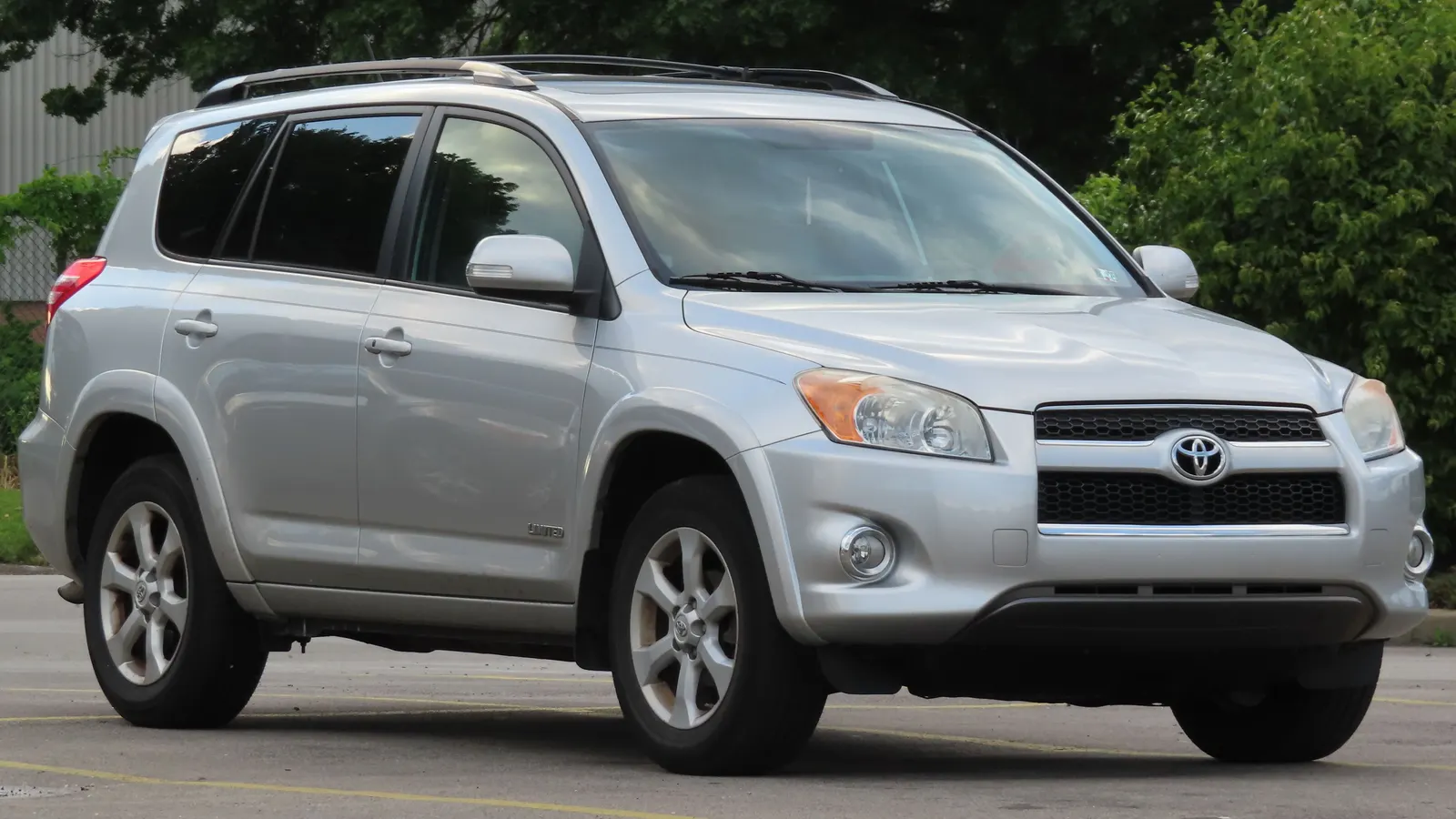
Pictured: 2011 Toyota RAV4 Limited, same generation as the 2012 model. Photo: MercurySable99, CC BY-SA 4.0, cropped
Owner complaints
260
43 report a crash, fire, injury or death
Recalls
5
None urgent
Most common problem
25%
of complaints: sudden acceleration
Complaints per year filed
2012–2025 · peak 62
In short
Some known problemsThe 2012 Toyota RAV4 has some known problems: 66 owner complaints (25%) describe sudden or unintended acceleration, and 71% of serious complaints that list mileage came before 50,000 miles. NHTSA has 260 owner complaints, 43 of them reporting a crash, fire, injury or death. The model year has 5 recalls, none for acceleration.
Reliability
How Reliable Is the 2012 Toyota RAV4?
The 2012 Toyota RAV4 has a verdict of some known problems. One issue dominates its complaints: sudden or unintended acceleration, reported in about 1 in 4 owner complaints. It is a safety-critical problem, because a car that speeds up when the driver expects it to slow down can end in a crash. The page's verdict comes from timing. 71% of serious complaints that list mileage were filed before 50,000 miles, which means these problems tend to show up while the car is fairly new.
Owners describe the car accelerating while they brake, surging forward, or the engine revving and spiking in speed. Many of these reports come from low-speed moments such as pulling or turning into a parking space and reversing out of one. Some owners say they had to shift to neutral to stop the car. A few describe crashing into a parked car. Reports come from owners of the 4-cylinder and the V6 engines, so the complaint is not limited to one version. This model year has a lower share of complaints about other systems, so acceleration is the main issue to understand before buying.
None of this model year's 5 recalls covers sudden acceleration. The recalls address rear seat belts that may be cut by the seat cushion frame in a frontal collision, water dripping onto the wiper linkage joint, a software update for the Skid Control electronic control unit, a weight label that was outside the allowed accuracy, and passenger seat occupant sensor calibration on some modified vehicles. Complaints about acceleration therefore have no official remedy behind them. Owners who reported repairs mostly describe a dealer finding nothing wrong, and one owner says the dealer replaced the driver's floor mat. There are too few repair reports to say whether any fix works.
Mileage matters when you look at an odometer. Half of the acceleration complaints that list mileage came at about 17,500 miles or less, and a quarter came before about 6,700 miles. A quarter came after about 42,200 miles, so a higher-mileage car is not clear of the problem, but most reports happened early. Across all complaints that list mileage, the median is about 25,000 miles. A RAV4 that has already passed 50,000 miles without incident has gone through the period when most serious reports were filed, though that is no guarantee.
Complaint counts show what owners reported, not how many vehicles are affected, and they cannot show how a particular car was maintained or driven. Before buying, ask for service records, check all recalls by VIN, and test the car in slow parking maneuvers and gentle braking. If a car has ever surged or revved unexpectedly, walk away or get a dealer inspection in writing first.
Top problems
The problem owners report most
Named from 260 NHTSA complaints. Open a problem for symptoms, the fix, cost and owners' accounts.
1.Sudden or unintended accelerationCriticalAbout 1 in 4 complaints6,700–42,200 mi
Owners describe the car accelerating while they brake, surging forward, or the engine revving and spiking, often when pulling into a parking space or reversing out of one. Some had to shift to neutral to stop. Half of the reports that list mileage came at about 17,500 miles or less, and none of this model year's recalls cover it.
What owners describe
- Accelerates while braking79%
- Surges forward20%
- Happens when parking17%
Fix
Most common repair owners describe: tested nothing found (1 report).
Mileage
17,500 mi
Middle half 6,700–42,200 mi · 58 reports
Repair cost
—
Fewer than 10 owners report a repair cost
How common
25%
66 of 260 complaints
By engine
- 2.5L 4-cyl67%
- 3.5L V631%
In owners' words
“The technician informed the contact that the vehicle was manufactured correctly and to place the vehicle in neutral whenever the failure occurred.”
Owner in SC2.5L 4-cylFiled 2012NHTSA 10487818 “As soon as I took my foot off the brake the car surged forward like the gas pedal was stuck.”
Owner in NY2.5L 4-cylFiled 2012NHTSA 10483211 “The vehicle was taken to the dealer for inspection but they could not duplicate the failure.”
Owner in FL2.5L 4-cylFiled 2012NHTSA 10483853
Buying one
Should you buy a used 2012 Toyota RAV4?
What to check before you buy, based on the complaint and recall data.
Ask the seller whether the car ever surged forward or revved on its own, especially when parking or braking. Take a test drive that includes slow parking-lot maneuvers and gentle braking. Check the recall status of all 5 recalls with the VIN, since none of them address acceleration, and have a mechanic look over anything that feels unusual.
- 1Run the VIN for open recalls. NHTSA lists 5 recalls. Check at nhtsa.gov/recalls.
- 2Test-drive for sudden acceleration. It's the most common safety-critical complaint, in about 1 in 4 owner complaints, usually around 17,500 miles.
- 3Ask for software update records. 10% of complaints mention a software update or reflash.
- 4Get a pre-purchase inspection. An independent mechanic can spot leaks, stored fault codes and accident repairs that a test drive misses.
Toyota RAV4 model years
Early complaints are those filed in a model year's first 3 years. They follow how many were sold, so they don't show which years are better.
Crash test ratings
NHTSA 5-Star Safety Ratings.
| SUV AWD | SUV FWD | |
|---|---|---|
| Overall | ★★★★ | ★★★★ |
| Frontal crash | ★★★★ | ★★★★ |
| Side crash | ★★★★★ | ★★★★★ |
| Rollover | ★★★★ | ★★★★ |
| Rollover risk | 17% | 19% |
Owning one
If you already own one
Find your symptom, see when problems tend to show up, and check which recalls apply.
Watch for the engine speeding up or the car moving forward when you are braking, parking or shifting. If it happens, shift to neutral, brake firmly and stop somewhere safe, then have a dealer inspect the car. Confirm with the VIN that every recall has been done, and report any episode to NHTSA so it is on record.
- Sudden or unintended accelerationCriticalAbout 1 in 4 owner complaints66 of 260Median 17,500 mi
Most common repair owners describe: tested nothing found (1 report).
- Brake pedal sinks or brakes failCriticalAbout 1 in 19 owner complaints14 of 260Median 8,400 mi
- Airbags did not deploy in a crashCriticalAbout 1 in 19 owner complaints14 of 260Median 27,000 mi
- Check engine, TRAC OFF and 4WD lights come on togetherMinorAbout 1 in 26 owner complaints10 of 260Median 85,000 mi
of complaints that list mileage (80 of 163) came in before 25,000 miles. A low odometer reading is no guarantee.
5 recalls, newest first
Open one for the risk, the remedy and what to do now.
Seat belts › Rear/otherIn the event of a frontal collision, the rear seat belts for the outboard seats may be cut by the seat cushion frame.Feb 19, 20161,123,752 vehicles16V096000
- Defect
- In the event of a frontal collision, the rear seat belts for the outboard seats may be cut by the seat cushion frame.
- Risk
- A cut seat belt may not properly restrain the seat occupant, increasing their risk of injury in a crash.
- Remedy
- Dealers will install a protector over both rear seat cushion frames, free of charge.
Visibility/wiperIn the affected vehicles, water may drip onto the joint that connects the wiper linkage to the wiper motor.Sep 18, 2015423,456 vehicles15V577000
- Defect
- In the affected vehicles, water may drip onto the joint that connects the wiper linkage to the wiper motor.
- Risk
- Over time, the dripping water may cause corrosion and wear at the joint, potentially resulting in the separation of the wiper linkage.
- Remedy
- Dealers will replace the water diverter channel.
Antilock/traction control/electronic limited slip › Control unit/moduleIn the affected vehicles, the brake system contains a brake actuator that adjusts the fluid pressure of each wheel…Feb 12, 2014261,114 vehicles14V054000
- Defect
- In the affected vehicles, the brake system contains a brake actuator that adjusts the fluid pressure of each wheel cylinder.
- Risk
- If this occurs, these systems could become inoperative, reducing the directional control assistance, increasing the risk of a crash.
- Remedy
- Toyota will notify owners, and Toyota and Lexus dealers will update the software for the Skid Control electronic control unit, free of charge.
Other › LabelsThese vehicles were sold with labels that were outside the allowable one percent of accuracy of actual weight added.…Apr 9, 20137,525 vehicles13V123000
- Defect
- These vehicles were sold with labels that were outside the allowable one percent of accuracy of actual weight added. Thus, these vehicles fail to comply with the requirements of Federal Motor Vehicle Safety Standard (FMVSS) Number 110, "Tire Selection and Rims."
- Risk
- An inaccurate label could lead to owners overloading their vehicles and tires. An overloaded vehicle can result in a tire failure which may result in a vehicle crash, personal injury, or property damage.
- Remedy
- Southeast Toyota will notify owners and provide a corrected label with instructions concerning its installation.
Frontal › Sensor/control module-inactiveDuring modification by SET to include accessories such as leather seat covers, seat heaters or headrest DVD systems,…Jan 16, 20133,235 vehicles13V014000
- Defect
- During modification by SET to include accessories such as leather seat covers, seat heaters or headrest DVD systems, these vehicles may not have had the passenger seat occupant sensing system calibration tested.
- Risk
- If the front passenger seat occupant sensing system is out of calibration, the front passenger airbags may not deploy or they may deploy inappropriately for the passenger's size and position.
- Remedy
- Dealers will test the sensitivity of the occupant detection sensors, and recalibrate them as necessary.
What to do
Check the VIN at nhtsa.gov/recalls. If a recall is open, any dealer will fix it free. For NHTSA's full record of a campaign, search its number there (for example 16V096000).
Reliability history
Toyota RAV4 reliability by year
Complaints filed in each model year's first 3 years, by trouble spot. Darker cells have more complaints; counts aren't adjusted for how many were sold each year.
All problems
Every problem reported on the 2012 RAV4
Every problem found in the 260 owner complaints, by area of the vehicle.
Acceleration & speed control
67 26%- 66 25%typically at 17,500 mi17,500––
- Abrupt speed changes in normal and cruise control1 0.4%–––
Body, lights & visibility
49 19%- Wipers pop and stickSerious9 3%typically at 58,000 mi58,000––
- Sun visor will not stay upMinor9 3%typically at 72,000 mi72,000––
- Paint peelingMinor7 3%–––
- Side or rear window glass shattersSerious5 2%–––
- Headrests push the head forward2 0.8%–––
- Windshield cracking2 0.8%–––
Show 12 more body, lights & visibility problemsShow fewer body, lights & visibility problems
- Driver sun visor droops and will not stay up2 0.8%–––
- Power door lock actuator failure2 0.8%–––
- Sunroof glass shatters2 0.8%–––
- Washer reservoir cracked or pump defective2 0.8%–––
- Rear seat shakes over rough road surfaces1 0.4%–––
- Door lock slams shut on its own1 0.4%–––
- Tail lights come on by themselves1 0.4%–––
- Doors no longer lock automatically in drive1 0.4%–––
- Side mirror glass shatters1 0.4%–––
- Distortion across the windshield1 0.4%–––
- Rust under the hood1 0.4%–––
- Windows fog up and cannot be cleared1 0.4%–––
Airbags & seat belts
26 10%- Airbags did not deploy in a crashCritical14 5%typically at 27,000 mi27,000––
- Seat belt buckle fails to releaseSerious3 1%–––
- Airbag warning light stays onSerious3 1%–––
- Rear middle seat belt buckle blocked by child seat1 0.4%–––
- Rear shoulder belt locks around a child's neck1 0.4%–––
- Air conditioning unit failed1 0.4%–––
Show 3 more airbags & seat belts problemsShow fewer airbags & seat belts problems
- Seat belt pretensioner tightens on its own1 0.4%–––
- Passenger airbag turns off with an adult in the seatCritical1 0.4%–––
- Airbags deploy without a crash1 0.4%–––
Brakes
19 7%- Brake pedal sinks or brakes failCritical14 5%typically at 8,400 mi8,400––
- Brake noise and early wearMinor2 0.8%–––
- Stability control, ABS and traction control do not work2 0.8%–––
- Brake actuator circuit failure disables ABS and cruise control2 0.8%–––
- Washer fluid does not spray1 0.4%–––
Transmission & drivetrain
16 6%- Check engine, TRAC OFF and 4WD lights come on togetherMinor10 4%typically at 85,000 mi85,000––
- Rollaway in park1 0.4%–––
- Gear shifter sticks or is deformed1 0.4%–––
- Harsh, jerky shiftingSerious1 0.4%–––
- Rear differential failure1 0.4%–––
- Front drive axles corroded and lost lubricant1 0.4%–––
Show 2 more transmission & drivetrain problemsShow fewer transmission & drivetrain problems
- Drops into neutral or loses drive while movingCritical1 0.4%–––
- Transmission failure needing replacementSerious1 0.4%–––
Engine
14 5%- Stalling or shutting off while drivingCritical4 2%–––
- Check EV system warning and loss of power2 0.8%–––
- Coolant leak2 0.8%–––
- Excessive oil consumption2 0.8%–––
- Loses power with Check EV System warning1 0.4%–––
- Acid smell when the air conditioner is on1 0.4%–––
Show 3 more engine problemsShow fewer engine problems
- Evap canister failure1 0.4%–––
- Engine knocking1 0.4%–––
- Oil leaks or low oilSerious1 0.4%–––
Electrical
11 4%- Battery drain or no-startSerious3 1%–––
- Oxygen sensors keep failing3 1%–––
- Many warning lights at onceMinor2 0.8%–––
- Bluetooth hands-free hard to use1 0.4%–––
- AVS warning light stays on1 0.4%–––
- Wiring harness damage1 0.4%–––
Steering
6 2%- Loss of power steeringCritical3 1%–––
- Lost steering control while driving1 0.4%–––
- Noise from the steering column when turning1 0.4%–––
- Wobbling at highway speed1 0.4%–––
Suspension
6 2%- Clunks or knocks from the suspensionMinor2 0.8%–––
- Rear toe arm bracket detaches2 0.8%–––
- Worn rear struts and shock absorbers1 0.4%–––
- Loose, wobbly rear end with thumping1 0.4%–––
Wheels & tires
5 2%- Constant low tire pressure warning2 0.8%–––
- Spare tire housing came off1 0.4%–––
- Rear tire constantly loses air1 0.4%–––
- Tire pressure warning light stays on1 0.4%–––
Fire
4 2%- Vehicle catches fireCritical4 2%–––
70 problems found in all 260 complaints. One complaint can describe more than one problem, so counts add up to more than the total. Not counted as a defect: 47 about recall paperwork or parts delays, 7 describing no vehicle defect. Typical miles, repair cost and fix rate show only when enough owners report them.
The data
Behind the numbers
Every figure comes from NHTSA's complaint file and APIs.
- Complaints
- 260
- Recalls
- 5
- Crashes
- 36
- Fires
- 4
- Injuries
- 22
- Deaths
- 0
Crashes and fires count complaints that report one; injuries and deaths count people.
Complaints by engine
Decoded from the partial VINs owners include. Not adjusted for how many of each engine were sold.
FAQ
2012 Toyota RAV4 questions
Is the 2012 Toyota RAV4 reliable?
The 2012 Toyota RAV4 has some known problems. Sudden or unintended acceleration appears in 66 of its 260 NHTSA owner complaints. Also, 71% of serious complaints that list mileage came before 50,000 miles, so the problems tend to show up while the car is fairly new.
What are the most common 2012 Toyota RAV4 problems?
Sudden or unintended acceleration is by far the most common, with 66 complaints, about 1 in 4 owner complaints. It is rated critical. Smaller groups include airbags that did not deploy in a crash (14 complaints), brake pedal sinking or brake failure (14), wipers that pop and stick (9) and sun visors that will not stay up (9).
Does the 2012 Toyota RAV4 have any recalls?
The 2012 Toyota RAV4 has 5 recalls, and none carries a do-not-drive or park-outside warning. They cover rear seat belts that may be cut by the seat cushion frame (16V096000), water dripping onto the wiper linkage joint (15V577000), Skid Control software (14V054000), an inaccurate weight label (13V123000) and passenger seat occupant sensor calibration (13V014000). Check your VIN at nhtsa.gov/recalls.
Does the 2012 Toyota RAV4 have sudden acceleration problems?
Yes, it is the main complaint, with 66 owner reports, about 1 in 4 owner complaints. Owners describe the car accelerating while they brake, surging forward, or the engine revving, often when pulling into or reversing out of a parking space. Some had to shift to neutral to stop. None of the model year's 5 recalls covers it.
At what mileage do 2012 Toyota RAV4 acceleration problems appear?
Mostly early. Half of the acceleration complaints that list mileage came at about 17,500 miles or less, and a quarter came before about 6,700 miles. A quarter came after about 42,200 miles, so a higher-mileage car is not clear of the problem. Across all complaints that list mileage, the median is 25,000 miles.
Is the 2012 Toyota RAV4 safe?
NHTSA rates the 2012 Toyota RAV4 4 out of 5 stars overall, with 4 out of 5 stars for frontal, 5 out of 5 stars for side and 4 out of 5 stars for rollover. The AWD and FWD versions have the same ratings. Of 260 complaints, 43 report a crash, fire, injury or death.
What should I check before buying a 2012 Toyota RAV4?
Ask the seller whether the car ever surged forward or revved on its own, especially when parking or braking. Test drive it with slow parking-lot maneuvers and gentle braking. Check the status of all 5 recalls with the VIN, since none address acceleration, and ask for service records.
Methodology
How we researched this
- Complaints. NHTSA's owner complaint file, counted as unique complaint numbers for make TOYOTA, model RAV4, model year 2012. Data through Oct 4, 2026.
- Verdict. Judged from this model year's own complaints, not against other models, using shares rather than counts. Serious known problems: one serious problem (transmission, engine or stalling, steering, brakes, airbags, fire, fuel leaks) is in a quarter or more of complaints; or a smaller but clear cluster comes with an unusual share of crash, fire, injury or loss-of-power reports or early failures; or an urgent recall or NHTSA investigation matches a top complaint. Some known problems: one of those signals on its own. No pattern of serious problems: none of them; this doesn't mean the vehicle is trouble-free. Too few complaints to judge: under 50 complaints. Why this verdict: 71% of serious complaints that list mileage came before 50,000 miles (typical: 36%).
- No grade or class ranking. Raw complaint counts favor models that sell fewer cars, so we don't score or rank this vehicle against other models until we can adjust for sales.
- Trouble spots and history. Complaints grouped by the part owners chose when filing. The history grid counts complaints filed in each model year's first 3 years so older and newer years compare fairly; years with fewer than 3 complete years are marked too new.
- Named problems. Every one of the 260 complaints was researched and classified by its problems, severity, symptoms, repairs and any cost the owner mentions; the counts, costs and fix rates on this page are tallies of those classifications. Quotes are verbatim excerpts, checked against the original text. Engines are decoded from partial VINs with NHTSA's vPIC service.
- Repair costs and fix rates. Shown only when at least 10 owners report a repair cost, or at least 10 complaints describe whether a repair worked.
- Not adjusted for sales. Not affiliated with NHTSA. Page updated Nov 23, 2026.