2017 Toyota RAV4 Reliability & Problems
By Adrian V. LockhartUpdated All 307 NHTSA owner reports researched and classified
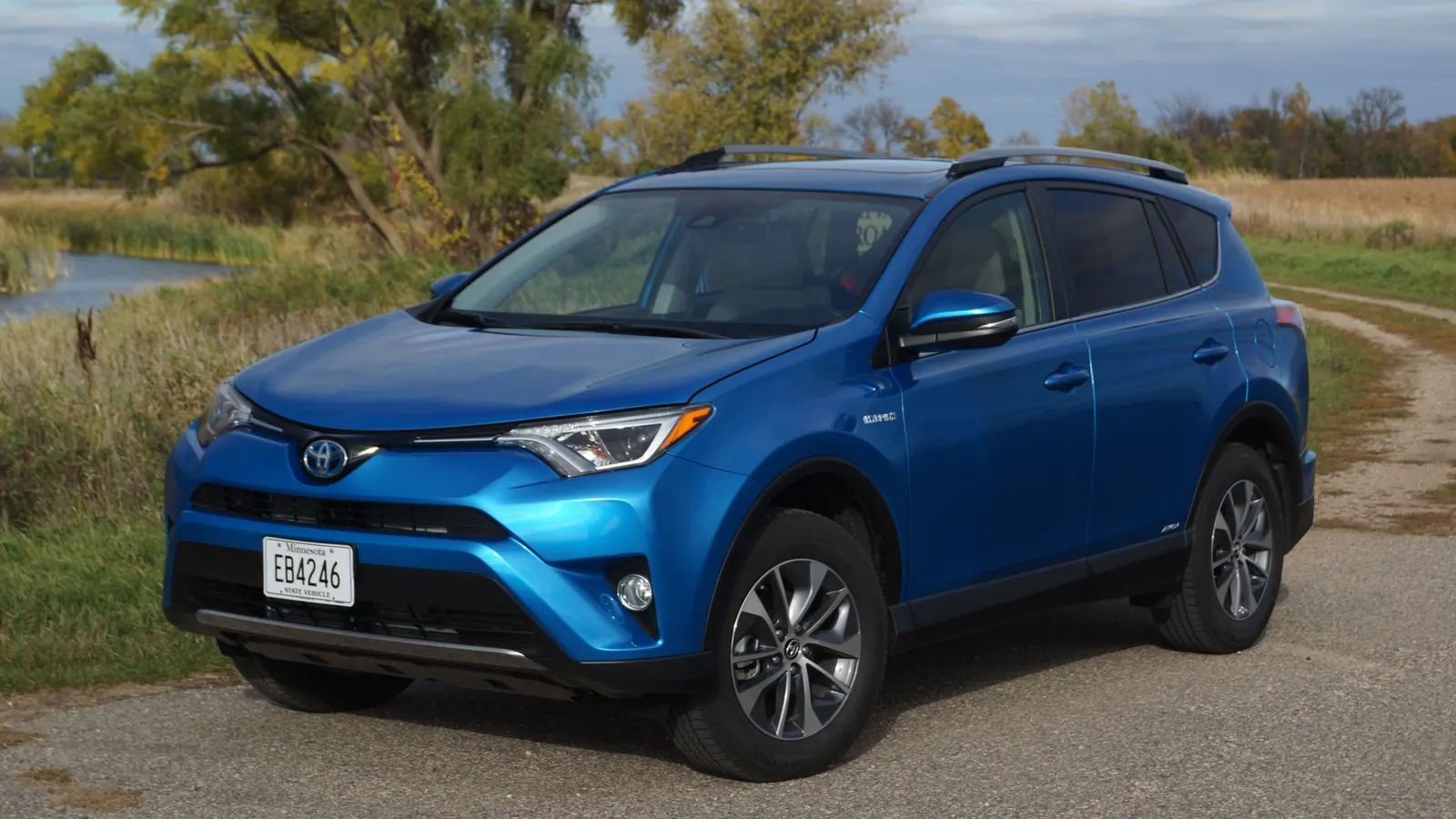
Pictured: 2017 Toyota RAV4 XLE Hybrid. Photo: Greg Gjerdingen, CC BY 2.0, cropped
Owner complaints
307
58 report a crash, fire, injury or death
Recalls
3
None urgent
Most common problem
9%
of complaints: vehicle fire
Complaints per year filed
2016–2025 · peak 47
In short
No pattern of serious problemsThe 2017 Toyota RAV4 shows no pattern of serious problems: its largest serious problem class, fires, makes up 9% of complaints, and no recall tells owners to park it. NHTSA has 307 owner complaints, and 58 report a crash, fire, injury or death. The most common are fires, stalling and brake failures. The model year has 3 recalls.
Reliability
How Reliable Is the 2017 Toyota RAV4?
This model year has no pattern of serious problems in its own complaints, but that is not the same as having none. The most serious class is fires, about 1 in 11 complaints, and fires, stalling and brake failures are the problems most often reported. Most of these are safety-critical when they happen, so they matter more than the less serious complaints. No recall for this model year tells owners to park the vehicle or keep it outside, and there is no open serious NHTSA investigation.
Fire is the most severe problem here, and most of those reports are rated severe. Owners describe smoke or flames from under the hood, a burning smell, and fires after parking. Several fire complaints mention recall 23V734000, which covers replacement 12-volt batteries that may not fit properly in the battery tray. The recall says the battery may move and contact the hold-down bracket, possibly causing a short circuit. The same recall is mentioned in some stalling and battery complaints, so those problems overlap. Whether a given fire is tied to the recall can't be told from complaint counts alone.
Stalling and brake problems have no recall of their own for this model year. Stalling reports include lost power, the engine shutting off and charging system warnings. Brake reports include a pedal that goes to the floor or feels spongy. Only a handful of owners described how repairs went. Among those who did, brake owners lean toward repairs that failed, and some report the same brake parts replaced three times. That is a reason to be cautious if a car you are considering has had repeated brake work.
Mileage helps you read an odometer. Brake complaints come early, with a middle point of about 9,500 miles and most reports under 17,500 miles. Stalling reports cluster early too, with a middle point of about 29,900 miles, though some come as late as 77,000 miles. Battery trouble sits in the middle, around 55,000 miles. Fire reports come later, with a middle point of about 78,000 miles and most between 58,500 and 93,500 miles. A car at the higher mileage range deserves a closer look at the engine bay and battery, and a lower-mileage car deserves a careful brake check.
Complaint counts show what owners chose to report, not how many vehicles are affected, and they can't show how a particular car was maintained or driven. Use them to decide what to inspect and which recall to confirm, then rely on the car's own service history, the VIN recall check and an independent inspection.
Top problems
The 4 problems owners report most
Named from 307 NHTSA complaints. Open a problem for symptoms, the fix, cost and owners' accounts.
1.Vehicle catches fireCriticalAbout 1 in 11 complaints58,500–93,500 mi
Owners describe white smoke or smoke from under the hood, flames in the engine compartment and a burning smell, most often while driving or just after parking. Some cars were totaled. Reports with a mileage have a middle point of about 78,000 miles, and several owners mention recall 23V734000.
What owners describe
- Smoke from under the hood26%
- Fire after parking19%
- Flames in engine compartment15%
- Burning smell15%
Fix
Most common repair owners describe: clamp put back on (1 report). Recall 23V734000.
Mileage
78,000 mi
Middle half 58,500–93,500 mi · 15 reports
Repair cost
—
Fewer than 10 owners report a repair cost
How common
9%
27 of 307 complaints
By engine
- 2.5L 4-cyl96%
- 2.5L 4-cyl hybrid4%
In owners' words
“While her daughter was making a turn the steering wheel ceased as white smoke was seen coming from under the hood.”
Owner in MD2.5L 4-cylFiled 2020NHTSA 11308368 “When I tried to pull over, the vehicle stopped on its own so I was half way between the street and parking lot.”
Owner in WA2.5L 4-cylFiled 2020NHTSA 11317639 “After parking and exiting the vehicle, she noticed smoke coming from the engine then the engine caught fire.”
Owner in MO2.5L 4-cylFiled 2021NHTSA 11400228 2.Stalling or shutting off while drivingCriticalAbout 1 in 16 complaints21,200–77,000 mi
Owners describe lost power, the vehicle shutting down and charging system warnings, often while driving or at low speed. Reports with a mileage have a middle point of about 29,900 miles. Recall 23V734000 is mentioned in two complaints.
What owners describe
- Engine shuts off21%
- Charging system warning21%
- Lost power11%
- Gauges and screens go dark5%
Fix
Most common repair owners describe: dealer ran tests (1 report).
Mileage
29,900 mi
Middle half 21,200–77,000 mi · 12 reports
Repair cost
—
Fewer than 10 owners report a repair cost
How common
6%
19 of 307 complaints
By engine
- 2.5L 4-cyl95%
- 2.5L 4-cyl hybrid5%
In owners' words
“The car would stall when it came to a stop or it would stall sometimes while driving and the interior of the car would then smell of gasoline.”
Owner in CA2.5L 4-cylFiled 2021NHTSA 11395988 “While stopped at a stoplight, my rav4 completely shut down and the dashboard flashed the warning "charging malfunction; see owner's manual".”
Owner in IL2.5L 4-cylFiled 2021NHTSA 11405821 “The engine shut off and all screens and gauges shut off for about 3 to 5 seconds then the car restarted on its own”
Owner in MA2.5L 4-cylFiled 2018NHTSA 11078543 3.Brake pedal sinks or brakes failCriticalAbout 1 in 18 complaints4,200–17,500 mi
Owners describe a spongy pedal, a pedal that goes to the floor and a car that would not stop, on the highway and in parking areas. Reports with a mileage have a middle point of about 9,500 miles, so many appear early. No recall is mentioned for it.
What owners describe
- Spongy brake pedal29%
- Car does not slow29%
- Pedal goes to the floor18%
- Brake drag6%
Fix
Most common repair owners describe: dealer checked brakes (1 report).
Mileage
9,500 mi
Middle half 4,200–17,500 mi · 13 reports
Repair cost
—
Fewer than 10 owners report a repair cost
How common
6%
17 of 307 complaints
By engine
- 2.5L 4-cyl94%
- 2.5L 4-cyl hybrid6%
In owners' words
“I almost got myself kill on highway i25 because the brakes failed totally having to resort to pulling the emergency brake.”
Owner in CO2.5L 4-cylFiled 2021NHTSA 11386320 “Breaks failed when backing out of parking space and failed immediately again when trying to pull back into parking space”
Owner in FLFiled 2017NHTSA 11014830 “I was driving and taking a turn and as I applied the brakes the car did not slow down result in a minor accident.”
Owner in AK2.5L 4-cylFiled 2016NHTSA 10938656 4.Battery drain or no-startSeriousAbout 1 in 20 complaints31,300–72,000 mi
Owners describe a car that will not start, a starter that only clicks, and batteries replaced two or three times, including a corroded battery and post. Reports with a mileage have a middle point of about 55,000 miles. Recall 23V734000 is mentioned in four complaints.
What owners describe
- Will not start40%
- Battery replaced repeatedly33%
- Electrical warning light20%
- Corroded battery or post13%
Fix
Most common repair owners describe: battery replaced (4 reports). Recall 23V734000.
Mileage
55,000 mi
Middle half 31,300–72,000 mi · 8 reports
Repair cost
—
Fewer than 10 owners report a repair cost
How common
5%
15 of 307 complaints
Crash, fire or injury
7%
of these complaints
In owners' words
“Car will not start. Doesn't seem to be the battery. Got a jump start but same warning light illuminated.”
Owner in NJ2.5L 4-cylFiled 2023NHTSA 11509205 “Occasionally the vehicle would not immediately start-up, or would take multiple attempts before starting.”
Owner in KY2.5L 4-cylFiled 2022NHTSA 11446929 “I was stuck in a parking lot and had to be towed to the nearest Toyota dealership.”
Owner in CA2.5L 4-cylFiled 2022NHTSA 11481542
Buying one
Should you buy a used 2017 Toyota RAV4?
What to check before you buy, based on the complaint and recall data.
Ask the seller for proof that recall 23V734000, the replacement battery fit recall, was checked, and look at the battery, clamp and tray for movement or corrosion. On a test drive, check that the brake pedal feels firm and does not sink, and ask whether the battery has been replaced more than once. Run the VIN on NHTSA's recall lookup before you buy, and get a pre-purchase inspection.
- 1Run the VIN for open recalls. NHTSA lists 3 recalls. Check at nhtsa.gov/recalls.
- 2Test-drive for vehicle fire. It's the most common safety-critical complaint, in about 1 in 11 owner complaints, usually around 78,000 miles.
- 3Get a pre-purchase inspection. An independent mechanic can spot leaks, stored fault codes and accident repairs that a test drive misses.
Toyota RAV4 model years
Early complaints are those filed in a model year's first 3 years. They follow how many were sold, so they don't show which years are better.
Crash test ratings
NHTSA 5-Star Safety Ratings.
| SUV FWD | SUV AWD | |
|---|---|---|
| Overall | ★★★★★ | ★★★★★ |
| Frontal crash | ★★★★ | ★★★★ |
| Side crash | ★★★★★ | ★★★★★ |
| Rollover | ★★★★ | ★★★★ |
| Rollover risk | 17% | 17% |
Owning one
If you already own one
Find your symptom, see when problems tend to show up, and check which recalls apply.
Watch for smoke or a burning smell from under the hood, a pedal that feels spongy or goes to the floor, and the engine shutting off or a charging system warning while driving. If you see smoke or flames, or the brakes feel unsafe, stop driving and get the car towed. Confirm with a dealer that recall 23V734000 is done, and keep a record of any repeat brake or battery repairs.
- Vehicle catches fireCriticalAbout 1 in 11 owner complaints27 of 307Median 78,000 mi
Most common repair owners describe: clamp put back on (1 report).
- Stalling or shutting off while drivingCriticalAbout 1 in 16 owner complaints19 of 307Median 29,900 mi
Most common repair owners describe: dealer ran tests (1 report).
- Brake pedal sinks or brakes failCriticalAbout 1 in 18 owner complaints17 of 307Median 9,500 mi
Most common repair owners describe: dealer checked brakes (1 report).
- Battery drain or no-startSeriousAbout 1 in 20 owner complaints15 of 307Median 55,000 mi
Most common repair owners describe: battery replaced (4 reports).
- Brake noise and early wearMinorAbout 1 in 24 owner complaints13 of 307Median 15,000 mi
- Airbags did not deploy in a crashCriticalAbout 1 in 26 owner complaints12 of 307Median 18,500 mi
- Sunroof glass shattersSeriousAbout 1 in 28 owner complaints11 of 307Median 15,500 mi
- Sudden or unintended accelerationCriticalAbout 1 in 31 owner complaints10 of 307Median 16,900 mi
of complaints that list mileage (89 of 162) came in before 25,000 miles. A low odometer reading is no guarantee.
3 recalls, newest first
Open one for the risk, the remedy and what to do now.
Electrical system › 12v/24v/48v batteryCertain replacement 12-volt batteries may not fit properly in the battery tray, allowing the battery to move and…Nov 1, 20231,853,568 vehicles23V734000
- Defect
- Certain replacement 12-volt batteries may not fit properly in the battery tray, allowing the battery to move and contact the hold-down bracket, possibly causing a short circuit.
- Risk
- A battery short circuit increases the risk of a fire.
- Remedy
- Dealers will replace the battery clamp sub-assembly, battery tray, and positive terminal cover, free of charge.
Other › LabelsThe load carrying capacity modification label may be incorrect. As such, these vehicles fail to comply with the…Jun 28, 20191,325 vehicles19V503000
- Defect
- The load carrying capacity modification label may be incorrect. As such, these vehicles fail to comply with the requirements of Federal Motor Vehicle Safety Standard (FMVSS) number 110, "Tire Selection and Rims."
- Risk
- An incorrect label may lead to unintentionally overloading the vehicle, increasing the risk of a crash.
- Remedy
- SET will notify owners and provide a corrected label for placement over the inaccurate label, free of charge.
Tires › Temporary/emergency spare tireThe spare tire air pressure was not adjusted to the proper pressure as stated on the Tire Pressure Label.May 2, 2017409 vehicles17V295000
- Defect
- The spare tire air pressure was not adjusted to the proper pressure as stated on the Tire Pressure Label.
- Risk
- A spare tire that is not inflated to the proper value may not perform as intended, increasing the risk of a crash.
- Remedy
- Dealers will inspect the spare tires, adjusting their pressure as necessary, free of charge.
What to do
Check the VIN at nhtsa.gov/recalls. If a recall is open, any dealer will fix it free. For NHTSA's full record of a campaign, search its number there (for example 23V734000).
Reliability history
Toyota RAV4 reliability by year
Complaints filed in each model year's first 3 years, by trouble spot. Darker cells have more complaints; counts aren't adjusted for how many were sold each year.
All problems
Every problem reported on the 2017 RAV4
Every problem found in the 307 owner complaints, by area of the vehicle.
Body, lights & visibility
65 21%- Sunroof glass shattersSerious11 4%typically at 15,500 mi15,500––
- Dim low-beam headlightsSerious9 3%typically at 3,700 mi3,700––
- Auto high beams work intermittentlySerious9 3%typically at 25,000 mi25,000––
- Dark band across windshield from headlight cutoffSerious7 2%typically at 300 mi300––
- Liftgate failureSerious6 2%–––
- Driver door lock stopped workingMinor3 1.0%–––
Show 20 more body, lights & visibility problemsShow fewer body, lights & visibility problems
- Water gets into tail lights3 1.0%–––
- Exterior light bulbs burn out repeatedly2 0.7%–––
- Headlights fail to turn on2 0.7%–––
- Door lock actuator failure2 0.7%–––
- Driver door pops open while driving1 0.3%–––
- Window seals do not wipe water off glass1 0.3%–––
- Reverse lights low and hard for others to see1 0.3%–––
- Interior trim falls over brake pedal1 0.3%–––
- Door locks noisy or fail to lock1 0.3%–––
- Radio, wipers and climate act on their own1 0.3%–––
- Heated seat causes burns1 0.3%–––
- Windshield and door glass delaminating1 0.3%–––
- Windshield cracking1 0.3%–––
- Driver headrest rises on its own1 0.3%–––
- Wipers stutter and speeds poorly matched1 0.3%–––
- Tail light lens fogging1 0.3%–––
- Both headlights burn out at once1 0.3%–––
- Rear subframe rusts and cracks1 0.3%–––
- Driver seat slides forward and flattens in rear impact1 0.3%–––
- A/C refrigerant leak into cabin1 0.3%–––
Electrical
44 14%- Battery drain or no-startSerious15 5%typically at 55,000 mi55,000––
- Charging system malfunction message4 1%–––
- Keyless car left running without warningCritical4 1%–––
- Wiring harness damageSerious4 1%–––
- Water leaks damaging electronicsSerious3 1.0%–––
- Screen or infotainment glitchesMinor2 0.7%–––
Show 11 more electrical problemsShow fewer electrical problems
- Instrument cluster goes blank2 0.7%–––
- Many warning lights at onceMinor2 0.7%–––
- Air conditioning blower stops2 0.7%–––
- Dash display hard to read in daylight1 0.3%–––
- Battery leaks acid1 0.3%–––
- Front sensor false alerts in rain and snow1 0.3%–––
- Fuse box blown after jump start1 0.3%–––
- Battery explosion damaged engine1 0.3%–––
- Key stuck in ignition1 0.3%–––
- Sparks and loud noise at battery1 0.3%–––
- Multiplex ECU internal short1 0.3%–––
Brakes
35 11%- Brake pedal sinks or brakes failCritical17 6%typically at 9,500 mi9,500––
- Brake noise and early wearMinor13 4%typically at 15,000 mi15,000––
- Loss of power when brake and gas touched together1 0.3%–––
- Brake vibration from warped rotors1 0.3%–––
- RPM surge with jerking and shaking1 0.3%–––
- Water pump leak1 0.3%–––
Show 5 more brakes problemsShow fewer brakes problems
- Car lunges forward when braking; pedals too close1 0.3%–––
- ABS activates on its own and causes veering1 0.3%–––
- ABS activates and car goes out of control1 0.3%–––
- Parking brake fails to hold1 0.3%–––
- ABS actuator accumulator problems1 0.3%–––
Fire
27 9%- Vehicle catches fireCritical27 9%typically at 78,000 mi78,000––
Engine
26 8%- 19 6%typically at 29,900 mi29,900––
- Exhaust fumes or carbon monoxide in the cabinCritical3 1.0%–––
- Oil leaks or low oilSerious1 0.3%–––
- Low rough idle in cold weather1 0.3%–––
- Shaking at stops when warmed up1 0.3%–––
- Fuel pump or fuel injector failureCritical1 0.3%–––
Transmission & drivetrain
20 7%- Transmission shudder or judderSerious5 2%–––
- Hesitation or slipping while drivingSerious4 1%–––
- Rear axle breaks2 0.7%–––
- Transmission failure needing replacementSerious2 0.7%–––
- Power transfer unit (PTU) or 4WD failureCritical2 0.7%–––
- Vehicle keeps moving after shifting to park1 0.3%–––
Show 5 more transmission & drivetrain problemsShow fewer transmission & drivetrain problems
- Noise from front CV axle when pulling away1 0.3%–––
- Shifter rough shifting out of park1 0.3%–––
- Axle shaft leaking grease1 0.3%–––
- Transmission noise and lost power1 0.3%–––
- CV axles leak grease1 0.3%–––
Airbags & seat belts
19 6%- Airbags did not deploy in a crashCritical12 4%typically at 18,500 mi18,500––
- Airbag warning light stays onSerious5 2%–––
- Turn signal sound too quiet to hear1 0.3%–––
- Airbag ejected a coil into occupant's face1 0.3%–––
- Seat belt buckle won't latch1 0.3%–––
Driver aids & stability
16 5%- Automatic emergency braking activates for no reasonCritical7 2%typically at 5,500 mi5,500––
- Lane departure warning too quiet to hearMinor4 1%–––
- Collision avoidance system does not work2 0.7%–––
- Backup camera stopped working2 0.7%–––
- Adaptive cruise accelerates then brakes harshly in curves1 0.3%–––
Acceleration & speed control
15 5%- Sudden or unintended accelerationCritical10 3%typically at 16,900 mi16,900––
- Shaking when EV light flashes while coastingMinor3 1.0%–––
- Engine loses power when accelerating1 0.3%–––
- Surging and loss of throttle response1 0.3%–––
Steering
7 2%- Loss of power steeringCritical6 2%–––
- Steering pulls to one side1 0.3%–––
Wheels & tires
7 2%- Tire sidewall failureSerious3 1.0%–––
- Tire pressure light did not warn of flat tire1 0.3%–––
- Car feels unstable pulling away on wet roads1 0.3%–––
- Tire pressure light on with normal pressure1 0.3%–––
- Tires bubble and go flat1 0.3%–––
Fuel system & stalling
5 2%- Fuel leaksCritical2 0.7%–––
- Fuel in charcoal canister1 0.3%–––
- High fuel consumption1 0.3%–––
- Fuel gauge reads inaccurately1 0.3%–––
Other
4 1%- Jack will not lift car high enough1 0.3%–––
- Driver sun visor loose1 0.3%–––
- Loud clank and sudden pull to one side1 0.3%–––
- Rust on roof1 0.3%–––
Suspension
3 1.0%- Clunks or knocks from the suspensionMinor3 1.0%–––
- Rear shock failure1 0.3%–––
103 problems found in all 307 complaints. One complaint can describe more than one problem, so counts add up to more than the total. Not counted as a defect: 38 about recall paperwork or parts delays, 6 describing no vehicle defect. Typical miles, repair cost and fix rate show only when enough owners report them.
The data
Behind the numbers
Every figure comes from NHTSA's complaint file and APIs.
- Complaints
- 307
- Recalls
- 3
- Crashes
- 33
- Fires
- 24
- Injuries
- 28
- Deaths
- 2
Crashes and fires count complaints that report one; injuries and deaths count people.
Complaints by engine
Decoded from the partial VINs owners include. Not adjusted for how many of each engine were sold.
FAQ
2017 Toyota RAV4 questions
Is the 2017 Toyota RAV4 reliable?
The 2017 Toyota RAV4 shows no pattern of serious problems in its own complaints. Its largest serious problem class is fires, 9% of complaints, and no recall tells owners not to drive it or to park it outside. NHTSA has 307 owner complaints, so it is still worth checking the specific car.
What are the most common 2017 Toyota RAV4 problems?
The most common problems are fires, stalling and brake failures. Vehicle fires make up 27 complaints, about 1 in 11, stalling 19, about 1 in 16, and brake failure 17, about 1 in 18. Battery drain or no-start follows with 15 complaints, about 1 in 20.
Does the 2017 Toyota RAV4 have any recalls?
The 2017 Toyota RAV4 has 3 recalls, and none is a do-not-drive or park-outside recall. 23V734000 covers replacement 12-volt batteries that may not fit properly in the battery tray, 19V503000 an incorrect load carrying capacity label, and 17V295000 spare tire air pressure. Check your VIN at nhtsa.gov/recalls.
Does the 2017 Toyota RAV4 have fire problems?
Fire is the most severe problem reported, with 27 complaints, about 1 in 11. Owners describe smoke or flames from under the hood, a burning smell and fires after parking, with a middle point of about 78,000 miles. Several mention recall 23V734000, which covers replacement 12-volt batteries that may not fit properly in the battery tray.
Does the 2017 Toyota RAV4 have brake problems?
Yes, brake failure is one of the most common problems, with 17 complaints, about 1 in 18. Owners describe a spongy pedal or a pedal that goes to the floor. Reports with a mileage have a middle point of about 9,500 miles, so many appear early, and no recall is mentioned for it.
Is the 2017 Toyota RAV4 safe?
NHTSA gives the 2017 Toyota RAV4 5 out of 5 stars overall, 4 out of 5 stars for frontal crash, 5 out of 5 stars for side crash and 4 out of 5 stars for rollover. The front-wheel drive and all-wheel drive versions have the same ratings. Owners also filed 58 complaints reporting a crash, fire, injury or death.
What should I check before buying a 2017 Toyota RAV4?
Ask for proof that recall 23V734000, the replacement battery fit recall, was done, and look at the battery, clamp and tray for movement or corrosion. On a test drive, make sure the brake pedal feels firm and does not sink. Run the VIN at nhtsa.gov/recalls and get a pre-purchase inspection.
Methodology
How we researched this
- Complaints. NHTSA's owner complaint file, counted as unique complaint numbers for make TOYOTA, model RAV4, model year 2017. Data through Oct 4, 2026.
- Verdict. Judged from this model year's own complaints, not against other models, using shares rather than counts. Serious known problems: one serious problem (transmission, engine or stalling, steering, brakes, airbags, fire, fuel leaks) is in a quarter or more of complaints; or a smaller but clear cluster comes with an unusual share of crash, fire, injury or loss-of-power reports or early failures; or an urgent recall or NHTSA investigation matches a top complaint. Some known problems: one of those signals on its own. No pattern of serious problems: none of them; this doesn't mean the vehicle is trouble-free. Too few complaints to judge: under 50 complaints. Why this verdict: Checked: the largest serious problem class is fires (vehicle fire), 9% of complaints; safety-related complaints are 20% (typical: 17%), and there's no do-not-drive or park-outside recall or open serious NHTSA investigation..
- No grade or class ranking. Raw complaint counts favor models that sell fewer cars, so we don't score or rank this vehicle against other models until we can adjust for sales.
- Trouble spots and history. Complaints grouped by the part owners chose when filing. The history grid counts complaints filed in each model year's first 3 years so older and newer years compare fairly; years with fewer than 3 complete years are marked too new.
- Named problems. Every one of the 307 complaints was researched and classified by its problems, severity, symptoms, repairs and any cost the owner mentions; the counts, costs and fix rates on this page are tallies of those classifications. Quotes are verbatim excerpts, checked against the original text. Engines are decoded from partial VINs with NHTSA's vPIC service.
- Repair costs and fix rates. Shown only when at least 10 owners report a repair cost, or at least 10 complaints describe whether a repair worked.
- Not adjusted for sales. Not affiliated with NHTSA. Page updated Nov 23, 2026.