2013 Toyota RAV4 Reliability & Problems
By Adrian V. LockhartUpdated All 257 NHTSA owner reports researched and classified
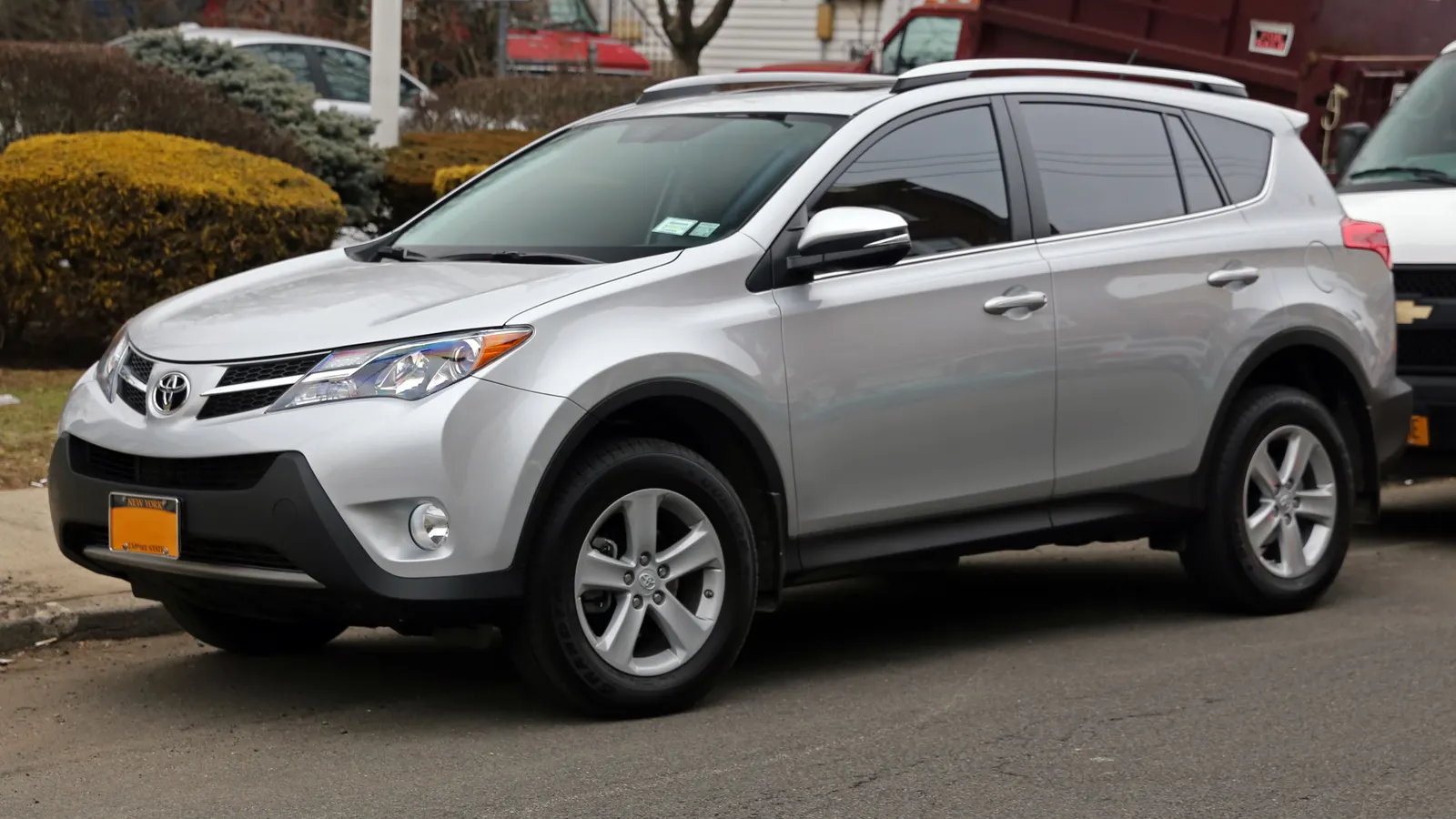
Pictured: 2013 Toyota RAV4 XLE. Photo: Mr.choppers, CC BY-SA 3.0, cropped
Owner complaints
257
50 report a crash, fire, injury or death
Recalls
2
None urgent
Most common problem
11%
of complaints: vehicle fires
Complaints per year filed
2013–2025 · peak 39
In short
Some known problemsThe 2013 Toyota RAV4 has some known problems: 63% of serious complaints that list mileage came before 50,000 miles. NHTSA has 257 owner complaints, and 50 report a crash, fire, injury or death. The most common are vehicle fires, stalling while driving and a navigation screen that is hard to see in daylight. There are 2 recalls.
Reliability
How Reliable Is the 2013 Toyota RAV4?
The 2013 RAV4 has a verdict of some known problems. The reason is timing: 63% of the serious complaints that list a mileage describe problems before 50,000 miles, which is a higher share than is typical. Owners also report some of the most serious outcomes a car can have. Fires and stalling while driving are the top two problems, and 50 complaints mention a crash, fire, injury or death. The third and fourth most common problems, a washed-out navigation screen and peeling paint, are minor by comparison.
Fire and stalling overlap. Several owners describe a car that stalled on an expressway and then caught fire, or smoke and flames near the battery. Others report the whole electrical system turning off while driving, with power steering stopping and the dashboard lighting up. That combination is the main thing to understand about this model year. A stall at speed is a safety problem on its own, and some owners link it to a fire. Owners who describe where the fire started most often point to the engine bay or the battery area.
Recall 23V734000 is the one that touches these reports. Its defect text says certain replacement 12-volt batteries may not fit properly in the battery tray, allowing the battery to move and contact the hold-down bracket, possibly causing a short circuit. The remedy is that dealers replace the battery clamp sub-assembly, battery tray and positive terminal cover free of charge. A few owners mention this recall in their fire and stalling complaints. The other recall, 15V011000, covers trailer lights and does not relate to these problems. Neither the navigation screen nor the paint has a recall for this model year. Only a handful of owners say whether repairs worked for stalling, and complaints lean toward repairs that failed.
Mileage matters when you look at a particular vehicle. Fire reports that list mileage cluster later, with a middle point around 63,000 miles and most between 53,000 and 79,500 miles. Stalling is reported earlier and across a wide span, with a middle point around 26,500 miles and a range from about 7,000 to 61,800 miles. So a low odometer does not rule out a stall, and a vehicle past 50,000 miles is in the range where fire reports start to appear. The navigation screen complaints come right after purchase, usually within the first few hundred miles.
If you are buying one, confirm the recall work, inspect the battery area and test the car for any hesitation or electrical glitches. Keep the limits of this evidence in mind. Complaints show what owners chose to report, not how many vehicles are affected, and they cannot show how a particular vehicle was maintained or whether its battery was ever replaced. A clean test drive and a clear service history count for more than any single complaint count.
Top problems
The 4 problems owners report most
Named from 257 NHTSA complaints. Open a problem for symptoms, the fix, cost and owners' accounts.
1.Vehicle catches fireCriticalAbout 1 in 9 complaints53,000–79,500 mi
Owners describe smoke from under the hood, flames near the battery, and cars that were destroyed or totaled. Most happen while driving, including on expressways, and a few within minutes of parking. Among reports that list mileage, the middle point is about 63,000 miles, and a few owners mention recall 23V734000.
What owners describe
- Smoke from under the hood43%
- Flames under the hood32%
- Fire near the battery18%
- Stalling before the fire14%
Fix
Owners don't describe a consistent repair yet. Recall 23V734000.
Mileage
63,000 mi
Middle half 53,000–79,500 mi · 11 reports
Repair cost
—
Fewer than 10 owners report a repair cost
How common
11%
28 of 257 complaints
Crash, fire or injury
100%
of these complaints
2.Stalling or shutting off while drivingCriticalAbout 1 in 10 complaints7,000–61,800 mi
Owners describe the car stalling on highways and expressways, sometimes twice, with power steering stopping and the instrument panel lighting up. Some say the car would not restart and a few report no warning at all. Among reports that list mileage, the middle point is about 26,500 miles, and one owner mentions recall 23V734000.
What owners describe
- Stalls on the highway40%
- Instrument panel lights up12%
- Will not restart12%
Fix
Most common repair owners describe: software update later propulsion system and gateway ecu found faulty (1 report).
Mileage
26,500 mi
Middle half 7,000–61,800 mi · 14 reports
Repair cost
—
Fewer than 10 owners report a repair cost
How common
10%
25 of 257 complaints
Crash, fire or injury
48%
of these complaints
In owners' words
“The car's electric system started rebooting itself a few times, and the car eventually stalled on a busy street”
Owner in CAFiled 2014NHTSA 10584988 “The engine stalled out ? Restarted ? Stalled out again ? Restarted. This was all while the vehicle was moving.”
Owner in MA2.5L 4-cylFiled 2015NHTSA 10693641 “The vehicle started to shut off while driving with all lights coming on on the dash board”
Owner in PA2.5L 4-cylFiled 2020NHTSA 11339049 4.Paint peelingMinorAbout 1 in 14 complaints46,700–67,000 mi
Owners describe paint peeling off the roof, hood and doors, sometimes in large pieces that expose a bare gray base. Some say repainted panels began peeling again soon after.
What owners describe
- Paint peeling or flaking78%
- Roof paint coming off39%
- Hood paint bubbling17%
- Repaint peels again11%
Fix
Most common repair owners describe: front door actuators (1 report).
Mileage
54,800 mi
Middle half 46,700–67,000 mi · 6 reports
Repair cost
—
Fewer than 10 owners report a repair cost
How common
7%
18 of 257 complaints
Crash, fire or injury
0%
of these complaints
Buying one
Should you buy a used 2013 Toyota RAV4?
What to check before you buy, based on the complaint and recall data.
Ask for proof of every recall repair, including the 2023 replacement-battery recall, and have the battery and its mounting checked before you buy. During a test drive, watch for any stall, loss of power steering or dashboard lights flashing on. If the vehicle has a navigation screen, check it in bright daylight. Look closely at the roof and hood paint for bubbling or peeling.
- 1Run the VIN for open recalls. NHTSA lists 2 recalls. Check at nhtsa.gov/recalls.
- 2Test-drive for vehicle fires. It's the most common safety-critical complaint, in about 1 in 9 owner complaints, usually around 63,000 miles.
- 3Get a pre-purchase inspection. An independent mechanic can spot leaks, stored fault codes and accident repairs that a test drive misses.
Toyota RAV4 model years
Early complaints are those filed in a model year's first 3 years. They follow how many were sold, so they don't show which years are better.
Crash test ratings
NHTSA 5-Star Safety Ratings.
| SUV AWD Later Release | SUV FWD Later Release | SUV AWD Early Release | SUV FWD Early Release | |
|---|---|---|---|---|
| Overall | ★★★★ | ★★★★ | ★★★★ | ★★★★ |
| Frontal crash | ★★★★ | ★★★★ | ★★★★ | ★★★★ |
| Side crash | ★★★★★ | ★★★★★ | ★★★★★ | ★★★★★ |
| Rollover | ★★★★ | ★★★★ | ★★★★ | ★★★★ |
| Rollover risk | 17% | 17% | 17% | 17% |
Owning one
If you already own one
Find your symptom, see when problems tend to show up, and check which recalls apply.
Take smoke or a burning smell from under the hood seriously and stop in a safe place right away. If the engine stalls or the electrical system shuts off while you drive, have it inspected before driving again. Check with a Toyota dealer that recall 23V734000 has been handled if you ever had a replacement 12-volt battery fitted. Report any problem to NHTSA so it is on record.
- Vehicle catches fireCriticalAbout 1 in 9 owner complaints28 of 257Median 63,000 mi
Owners don't describe a consistent repair yet.
- Stalling or shutting off while drivingCriticalAbout 1 in 10 owner complaints25 of 257Median 26,500 mi
Most common repair owners describe: software update later propulsion system and gateway ecu found faulty (1 report).
- Navigation screen hard to see in daylightMinorAbout 1 in 12 owner complaints21 of 257Median 150 mi
Most common repair owners describe: replaced entune system (1 report).
- Paint peelingMinorAbout 1 in 14 owner complaints18 of 257Median 54,800 mi
Most common repair owners describe: front door actuators (1 report).
- Sudden or unintended accelerationCriticalAbout 1 in 18 owner complaints14 of 257Median 10,000 mi
- Brake pedal sinks or brakes failCriticalAbout 1 in 20 owner complaints13 of 257Median 22,000 mi
- Transmission shudder or judderSeriousAbout 1 in 23 owner complaints11 of 257Median 78,000 mi
of complaints that list mileage (87 of 161) came in before 25,000 miles. A low odometer reading is no guarantee.
2 recalls, newest first
Open one for the risk, the remedy and what to do now.
Electrical system › 12v/24v/48v batteryCertain replacement 12-volt batteries may not fit properly in the battery tray, allowing the battery to move and…Nov 1, 20231,853,568 vehicles23V734000
- Defect
- Certain replacement 12-volt batteries may not fit properly in the battery tray, allowing the battery to move and contact the hold-down bracket, possibly causing a short circuit.
- Risk
- A battery short circuit increases the risk of a fire.
- Remedy
- Dealers will replace the battery clamp sub-assembly, battery tray, and positive terminal cover, free of charge.
Trailer hitchesThe software within the module may incorrectly detect an electrical short and preventively turn off the electrical…Jan 16, 20151,140 vehicles15V011000
- Defect
- The software within the module may incorrectly detect an electrical short and preventively turn off the electrical current and the trailer lights.
- Risk
- If the system incorrectly detects an electrical short and turns off the trailer lights while the trailer is being towed at night, there is an increased risk of a crash.
- Remedy
- Dealers will replace the trailer light module with a new unit with corrected software, free of charge.
What to do
Check the VIN at nhtsa.gov/recalls. If a recall is open, any dealer will fix it free. For NHTSA's full record of a campaign, search its number there (for example 23V734000).
Reliability history
Toyota RAV4 reliability by year
Complaints filed in each model year's first 3 years, by trouble spot. Darker cells have more complaints; counts aren't adjusted for how many were sold each year.
All problems
Every problem reported on the 2013 RAV4
Every problem found in the 257 owner complaints, by area of the vehicle.
Body, lights & visibility
51 20%- Paint peelingMinor18 7%typically at 54,800 mi54,800––
- Sunroof glass shattersSerious9 4%typically at 62,800 mi62,800––
- Door locks not workingMinor9 4%typically at 57,000 mi57,000––
- Center console slides and does not lockMinor3 1%–––
- Liftgate failureMinor3 1%–––
- Side windows do not clear dew when lowered1 0.4%–––
Show 10 more body, lights & visibility problemsShow fewer body, lights & visibility problems
- Tall headrests block the driver's view1 0.4%–––
- Wind noise1 0.4%–––
- Wipers ice up and windshield rest area not heated1 0.4%–––
- Hood shakes in crosswind1 0.4%–––
- Right brake light bulbs burn out repeatedly1 0.4%–––
- Rear window shatters1 0.4%–––
- Windshield cracking1 0.4%–––
- Headlights burn out repeatedly1 0.4%–––
- Wiper failure1 0.4%–––
- Dim low-beam headlightsSerious1 0.4%–––
Electrical
41 16%- 21 8%typically at 150 mi150––
- Battery drain or no-startSerious5 2%typically at 20,000 mi20,000––
- Instrument panel hard to read in daylightMinor4 2%–––
- Water leaks damaging electronicsSerious3 1%–––
- Speedometer reads higher than actual speed2 0.8%–––
- Wiring harness damage2 0.8%–––
Show 4 more electrical problemsShow fewer electrical problems
- Many warning lights at onceMinor2 0.8%–––
- Engine control module wiring exposed to the elements1 0.4%–––
- Instrument cluster fails or flickers1 0.4%–––
- EV system warning with reduced power1 0.4%–––
Engine
32 12%- 25 10%typically at 26,500 mi26,500––
- Sudden loss of power while drivingCritical4 2%–––
- Damp, musty smell from air vents2 0.8%–––
- Engine failure1 0.4%–––
- Push-button start will not shut off engine1 0.4%–––
- Fuel pump or fuel injector failureCritical1 0.4%–––
Show 1 more engine problemsShow fewer engine problems
- Excessive oil consumption1 0.4%–––
Transmission & drivetrain
31 12%- Transmission shudder or judderSerious11 4%typically at 78,000 mi78,000––
- Hesitation or slipping while drivingSerious7 3%typically at 60,000 mi60,000––
- Drops into neutral or loses drive while movingCritical5 2%typically at 8,400 mi8,400––
- Delayed engagement pulling away from a stopSerious5 2%–––
- Transmission failure needing replacementSerious2 0.8%–––
- Harsh, jerky shiftingSerious2 0.8%–––
Show 2 more transmission & drivetrain problemsShow fewer transmission & drivetrain problems
- Torque converter failure2 0.8%–––
- Grinding noise when shifting into reverse1 0.4%–––
Fire
28 11%- Vehicle catches fireCritical28 11%typically at 63,000 mi63,000––
Brakes
20 8%- Brake pedal sinks or brakes failCritical13 5%typically at 22,000 mi22,000––
- Brake noise and early wearMinor6 2%typically at 20,000 mi20,000––
- Brake fade on long descents1 0.4%–––
- Car shakes under hard braking1 0.4%–––
- Brake line leaks brake fluid1 0.4%–––
Acceleration & speed control
15 6%- Sudden or unintended accelerationCritical14 5%typically at 10,000 mi10,000––
- Cruise control makes RPM jump1 0.4%–––
Airbags & seat belts
14 5%- Airbags did not deploy in a crashCritical9 4%typically at 14,600 mi14,600––
- Airbags did not deflate after deploying2 0.8%–––
- Driver seat belt will not release to engage2 0.8%–––
- Seat belt did not work in a crash1 0.4%–––
Steering
11 4%- Loss of power steeringCritical3 1%–––
- Engine will not start with steering indicator light on2 0.8%–––
- Will not start; shifter and steering locked2 0.8%–––
- Clunking noise from steering column1 0.4%–––
- Steering rack failure1 0.4%–––
- Clicking noise from steering column1 0.4%–––
Show 1 more steering problemsShow fewer steering problems
- Sticky or notchy steeringSerious1 0.4%–––
Wheels & tires
5 2%- Tire or wheel defect2 0.8%–––
- Tire pressure sensor malfunction1 0.4%–––
- Tire tread separation1 0.4%–––
- Tire blowout or flat1 0.4%–––
Suspension
2 0.8%- Vehicle sits uneven side to side1 0.4%–––
- Clunks or knocks from the suspensionMinor1 0.4%–––
Driver aids & stability
2 0.8%- Blind spot monitor warns too late1 0.4%–––
- Jerking or shaking while driving1 0.4%–––
Fuel system & stalling
1 0.4%- Engine light from faulty fuel cap1 0.4%–––
69 problems found in all 257 complaints. One complaint can describe more than one problem, so counts add up to more than the total. Not counted as a defect: 12 about recall paperwork or parts delays, 12 describing no vehicle defect. Typical miles, repair cost and fix rate show only when enough owners report them.
The data
Behind the numbers
Every figure comes from NHTSA's complaint file and APIs.
- Complaints
- 257
- Recalls
- 2
- Crashes
- 22
- Fires
- 29
- Injuries
- 15
- Deaths
- 1
Crashes and fires count complaints that report one; injuries and deaths count people.
FAQ
2013 Toyota RAV4 questions
Is the 2013 Toyota RAV4 reliable?
The 2013 Toyota RAV4 has some known problems. The reason is timing: 63% of serious complaints that list mileage came before 50,000 miles. NHTSA has 257 owner complaints, and 50 of them report a crash, fire, injury or death. Vehicle fires and stalling while driving are the most serious problems owners describe.
What are the most common 2013 Toyota RAV4 problems?
The most common problems are vehicle fires (28 complaints, about 1 in 9), stalling while driving (25 complaints, about 1 in 10), a navigation screen that is hard to see in daylight (21 complaints) and peeling paint (18 complaints). Fires and stalling are rated critical, while the screen and paint problems are minor.
How many recalls does the 2013 Toyota RAV4 have?
The 2013 Toyota RAV4 has 2 recalls, and neither carries a do-not-drive or park-outside warning. Recall 23V734000 covers certain replacement 12-volt batteries that may not fit properly in the battery tray, which raises the risk of a fire. Recall 15V011000 covers trailer light module software. Check your VIN at nhtsa.gov/recalls.
Does the 2013 Toyota RAV4 catch fire?
Owners report vehicle fires in 28 complaints, about 1 in 9 complaints, often with smoke or flames under the hood or near the battery. Among reports that list mileage, the middle point is about 63,000 miles, and most fall between 53,000 and 79,500 miles. A few owners mention recall 23V734000, which covers replacement 12-volt batteries that may not fit properly in the battery tray.
Does the 2013 Toyota RAV4 stall while driving?
Owners report stalling while driving in 25 complaints, about 1 in 10. They describe stalls on highways and expressways, with power steering stopping and the instrument panel lighting up, and some cars would not restart. Among reports that list mileage, the middle point is about 26,500 miles, with the middle half between 7,000 and 61,800 miles.
What should I check before buying a 2013 Toyota RAV4?
Ask for proof of every recall repair, including recall 23V734000 for replacement 12-volt batteries, and have the battery and its mounting checked. On a test drive, watch for any stall, loss of power steering or dashboard lights flashing on. Check the navigation screen in bright daylight, and look at the roof and hood paint for bubbling or peeling.
Is the 2013 Toyota RAV4 safe?
NHTSA gives the 2013 Toyota RAV4 4 out of 5 stars overall, with 4 out of 5 stars for frontal, 5 out of 5 stars for side and 4 out of 5 stars for rollover. All front-wheel and all-wheel drive versions have the same ratings. Separately, 50 of the 257 owner complaints report a crash, fire, injury or death.
Methodology
How we researched this
- Complaints. NHTSA's owner complaint file, counted as unique complaint numbers for make TOYOTA, model RAV4, model year 2013. Data through Oct 4, 2026.
- Verdict. Judged from this model year's own complaints, not against other models, using shares rather than counts. Serious known problems: one serious problem (transmission, engine or stalling, steering, brakes, airbags, fire, fuel leaks) is in a quarter or more of complaints; or a smaller but clear cluster comes with an unusual share of crash, fire, injury or loss-of-power reports or early failures; or an urgent recall or NHTSA investigation matches a top complaint. Some known problems: one of those signals on its own. No pattern of serious problems: none of them; this doesn't mean the vehicle is trouble-free. Too few complaints to judge: under 50 complaints. Why this verdict: 63% of serious complaints that list mileage came before 50,000 miles (typical: 38%).
- No grade or class ranking. Raw complaint counts favor models that sell fewer cars, so we don't score or rank this vehicle against other models until we can adjust for sales.
- Trouble spots and history. Complaints grouped by the part owners chose when filing. The history grid counts complaints filed in each model year's first 3 years so older and newer years compare fairly; years with fewer than 3 complete years are marked too new.
- Named problems. Every one of the 257 complaints was researched and classified by its problems, severity, symptoms, repairs and any cost the owner mentions; the counts, costs and fix rates on this page are tallies of those classifications. Quotes are verbatim excerpts, checked against the original text. Engines are decoded from partial VINs with NHTSA's vPIC service.
- Repair costs and fix rates. Shown only when at least 10 owners report a repair cost, or at least 10 complaints describe whether a repair worked.
- Not adjusted for sales. Not affiliated with NHTSA. Page updated Nov 23, 2026.