2020 Toyota RAV4 Reliability & Problems
By Adrian V. LockhartUpdated All 635 NHTSA owner reports researched and classified
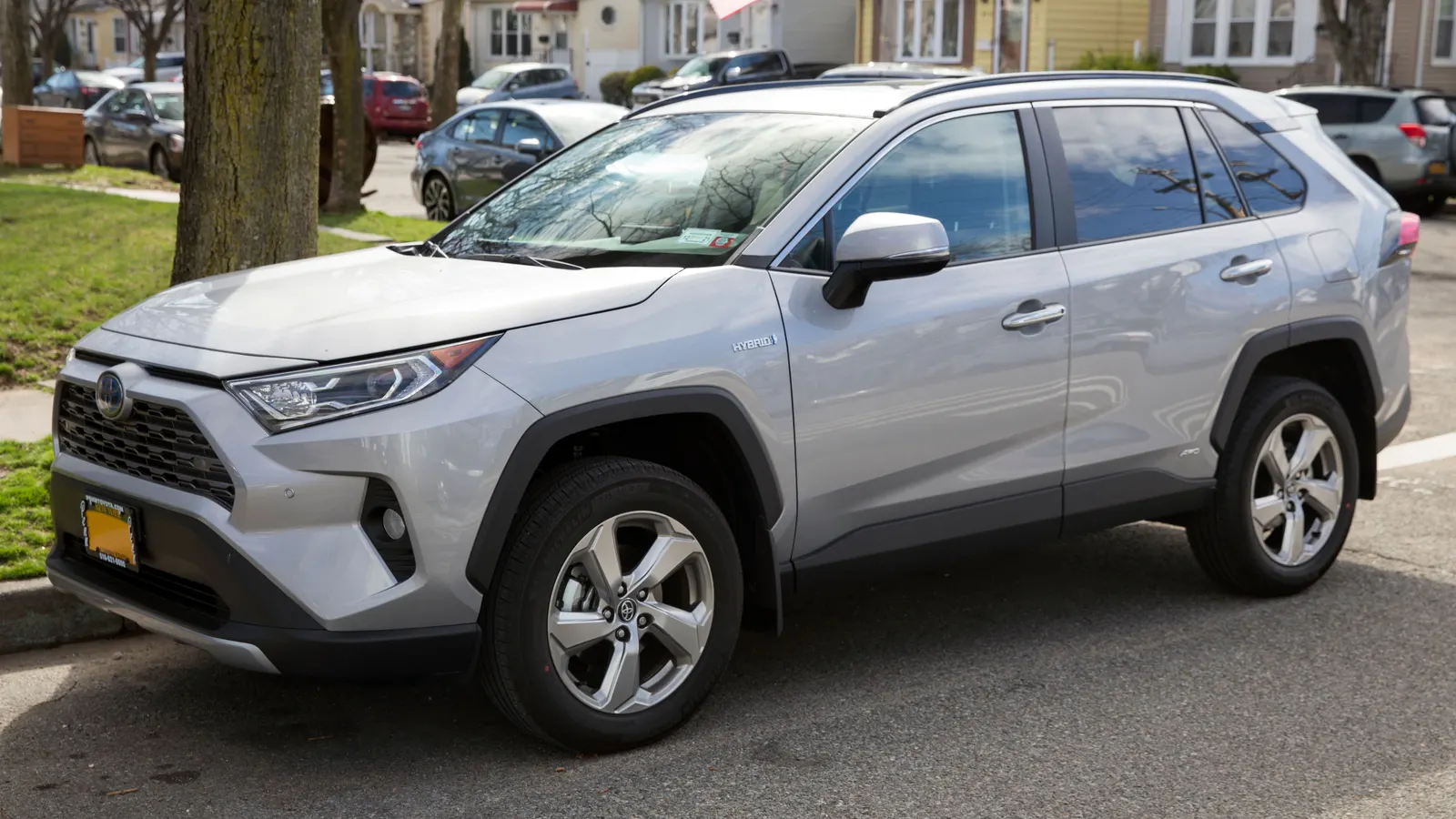
Pictured: 2020 Toyota RAV4 Hybrid Limited. Photo: Mr.choppers, CC BY-SA 3.0, cropped
Owner complaints
635
23 report a crash, fire, injury or death
Recalls
6
None urgent
Most common problem
32%
of complaints: coolant bypass valve failure
Complaints per year filed
2019–2025 · peak 176
In short
No pattern of serious problemsThe 2020 Toyota RAV4 shows no pattern of serious problems: airbag problems, its largest serious class, make up just 2% of complaints. NHTSA has 635 owner complaints, 23 reporting a crash, fire, injury or death. The most common are coolant bypass valve failure, a fuel tank that won't fill fully, and battery drain or no-start. It has 6 recalls.
Reliability
How Reliable Is the 2020 Toyota RAV4?
This model year has no pattern of serious problems. Its most common complaints are real and often frustrating, but few of them describe something that endangers people. The largest serious class is airbag problems, which is a small part of the complaints, and safety-related reports are a small part overall. No recall for this model year tells owners to stop driving or park outside, and NHTSA has no open serious investigation into it. Most of what owners describe is a warning message, a car that won't start, or a fuel tank that takes less than expected.
The biggest cluster by far is the coolant bypass valve, about 1 in 3 complaints. Owners describe an engine maintenance required message, often one that stays on, and some say it appeared soon after an oil change or dealer service. Almost all of these reports come from gas models rather than hybrids. The fuel tank complaint is the opposite: nearly all of it comes from hybrids, where owners say the pump stops at about 10 gallons and range is shorter than expected. Battery drain or no-start is reported on both gas and hybrid models, and several owners say it happened twice. A few owners say a dead battery came after the car sat for a couple of days. The liftgate and sunroof complaints are smaller in number but more worrying when they happen, with owners describing misaligned or bent liftgate hinges, exhaust fumes in the cabin at low speeds, and sunroof glass that exploded while driving at highway speeds.
Of the recalls on this model year, none describes the coolant bypass valve, the fuel tank fill problem, the battery problem, the liftgate or the sunroof. Only a few owners mention recall 20V064000, which covers porosity in the engine castings that may result in cracks that can allow coolant to leak. One mention of 23V865000 relates to a short circuit in the occupant classification sensor that may prevent the front passenger air bag from deploying, and the fix is that dealers inspect and replace the sensor as necessary. Where owners report how the coolant bypass valve repair went, 19 of 20 say it fixed the problem, and those who gave a cost most often report about $800. The battery story is different: 18 of 24 owners who reported an outcome say the repair did not fix it. Complaints do lean toward repairs that failed, so a fixed result is not guaranteed.
Mileage matters for how you read an odometer. Coolant bypass valve complaints cluster at moderate mileage, with a middle point near 47,300 miles and the middle half of reports between 35,800 and 58,900 miles. A car at 30,000 miles may not have shown the problem yet. The fuel tank fill complaint appears almost at once, with a middle point of about 500 miles and most reports by 1,100 miles, so a hybrid that has fueled normally for a while is less likely to show it. Battery complaints are also early, with a middle point near 3,500 miles. Across all complaints that include mileage, most were reported under 25,000 miles, which means many of these vehicles are still young in the data.
If you are shopping, ask for service records covering recalls, any engine maintenance message and any battery replacement, and test the liftgate and fuel fill on the drive. Complaint counts show what owners reported, not how many vehicles are affected, and they cannot show how a particular vehicle was maintained or driven. A clean record on one car does not rule out these problems, and a complaint on another does not mean it will recur.
Top problems
The 5 problems owners report most
Named from 635 NHTSA complaints. Open a problem for symptoms, the fix, cost and owners' accounts.
1.Coolant bypass valve failureSeriousAbout 1 in 3 complaints35,800–58,900 mi~$800 repair
Owners mostly describe an engine maintenance required message or light that stays on, sometimes appearing after an oil change or dealer service. Reports with mileage have a middle point near 47,300 miles, and almost all come from gas models. A couple of owners mention recalls 20V064000 and 23V865000.
What owners describe
- Engine maintenance required message26%
- Maintenance light that stays on8%
Fix
Most common repair owners describe: replaced coolant bypass valve (11 reports).
Repair worked in 98% of complaints that describe one (complaints lean toward repairs that failed)
Mileage
47,300 mi
Middle half 35,800–58,900 mi · 74 reports
Repair cost
$800
Middle half $700–$900 · 65 owner amounts
How common
32%
202 of 635 complaints
Crash, fire or injury
0%
of these complaints
In owners' words
“Dealership stated that the coolant bypass valve needs to be replaced and it could potentially cause a fire.”
Owner in GA2.5L 4-cylFiled 2023NHTSA 11519961 “I ended up paying $190+ for the diagnostic of what I already knew was going to be the issue.”
Owner in IA2.5L 4-cylFiled 2023NHTSA 11530462 “The warning advisory remained displayed, which rendered the speedometer unviewable.”
Owner in MD2.5L 4-cylFiled 2023NHTSA 11517025 2.Fuel tank won't fill to capacityMinorAbout 1 in 8 complaints350–1,100 mi
Owners say the pump shuts off at about 10 gallons at every fill up and range is shorter than expected. Reports with mileage have a middle point of about 500 miles, so it shows up early, and nearly all come from hybrids.
What owners describe
- Pump shuts off near 10 gallons38%
- Reduced driving range12%
- Early low fuel warning6%
Fix
Most common repair owners describe: fuel tank replacement recommended (1 report).
Mileage
500 mi
Middle half 350–1,100 mi · 57 reports
Repair cost
—
Fewer than 10 owners report a repair cost
How common
13%
82 of 635 complaints
By engine
- 2.5L 4-cyl hybrid96%
- 2.5L 4-cyl4%
3.Battery drain or no-startSeriousAbout 1 in 10 complaints1,900–7,300 mi
Owners describe a dead battery, often after the car was parked overnight or for a few days, and some say it happened twice. Reports with mileage have a middle point near 3,500 miles, and it appears on both gas and hybrid models. Most owners who reported an outcome say the repair did not fix it.
What owners describe
- Dead battery overnight33%
- Vehicle won't start26%
- Needs a jump start18%
- Battery charging message6%
Fix
Most common repair owners describe: battery replaced (8 reports).
Repair worked in 25% of complaints that describe one (complaints lean toward repairs that failed)
Mileage
3,500 mi
Middle half 1,900–7,300 mi · 51 reports
Repair cost
—
Fewer than 10 owners report a repair cost
How common
10%
66 of 635 complaints
By engine
- 2.5L 4-cyl61%
- 2.5L 4-cyl hybrid39%
In owners' words
“Every time I bring it to the dealership they dismiss the problem but none of their attempts have resolved the issue.”
Owner in MN2.5L 4-cyl hybridFiled 2023NHTSA 11500159 “The original battery completely drains when the car is off and no electrical equipment is kept on.”
Owner in VA2.5L 4-cyl hybridFiled 2023NHTSA 11501133 “The vehicle went dark again while driving but this time took a touch longer to re-engage.”
Owner in MA2.5L 4-cyl hybridFiled 2021NHTSA 11443634 4.Liftgate hinge or power failureSeriousAbout 1 in 19 complaints23,800–29,000 mi
Owners describe a liftgate that is misaligned, won't seal or close, or has hinges that bent or broke. A few also report exhaust fumes in the cabin at low speeds. No recall for this model year addresses it.
What owners describe
- Liftgate won't close or seal35%
- Liftgate out of alignment24%
- Hinges bent or broken15%
- Exhaust fumes in cabin6%
Fix
Most common repair owners describe: hinge hammered back into place (1 report).
Mileage
25,000 mi
Middle half 23,800–29,000 mi · 3 reports
Repair cost
—
Fewer than 10 owners report a repair cost
How common
5%
34 of 635 complaints
By engine
- 2.5L 4-cyl52%
- 2.5L 4-cyl hybrid48%
In owners' words
“The hinges on the lift gate are detaching causing my trunk not to close all the way.”
Owner in TN2.5L 4-cylFiled 2024NHTSA 11629470 5.Sunroof glass shattersSeriousAbout 1 in 33 complaints6,000–15,100 mi
Owners describe a loud bang followed by glass breaking, usually while driving on the freeway or highway, with fragments landing inside the cabin. One owner says there was no prior warning. No recall for this model year addresses it.
What owners describe
- Sunroof glass exploded89%
- Happens at highway speed53%
- Loud bang from the roof21%
- Glass fragments in the cabin16%
Fix
Most common repair owners describe: sunroof replaced (1 report).
Mileage
11,000 mi
Middle half 6,000–15,100 mi · 6 reports
Repair cost
—
Fewer than 10 owners report a repair cost
How common
3%
19 of 635 complaints
By engine
- 2.5L 4-cyl hybrid68%
- 2.5L 4-cyl32%
In owners' words
“Sunroof spontaneously shattered, with no vehicles close enough for a rock chip to be the probable cause.”
Owner in IN2.5L 4-cyl hybridFiled 2022NHTSA 11469961 “All of a sudden the sunroof exploded above us -- shattering glass fragments upwards and outwards.”
Owner in CA2.5L 4-cyl hybridFiled 2020NHTSA 11316139 “I just heard a very loud pop and all of a sudden there was glass everywhere inside the vehicle.”
Owner in CO2.5L 4-cylFiled 2022NHTSA 11451251
Buying one
Should you buy a used 2020 Toyota RAV4?
What to check before you buy, based on the complaint and recall data.
Check that all 6 recalls were completed, especially the engine casting, fuel pump, steering and front suspension arm recalls, and ask for the dealer's record. On a gas model, ask whether the coolant bypass valve has been replaced and whether an engine maintenance message has ever appeared. On a hybrid, fill the tank on a test drive to see how much fuel it takes, and ask if the 12-volt battery has ever gone flat. Look over the liftgate for misalignment and ask whether it has a panoramic sunroof.
- 1Run the VIN for open recalls. NHTSA lists 6 recalls. Check at nhtsa.gov/recalls.
- 2Check for coolant bypass valve failure. The most common complaint, in about 1 in 3 owner complaints.
- 3Get a pre-purchase inspection. An independent mechanic can spot leaks, stored fault codes and accident repairs that a test drive misses.
Toyota RAV4 model years
Early complaints are those filed in a model year's first 3 years. They follow how many were sold, so they don't show which years are better.
Crash test ratings
NHTSA 5-Star Safety Ratings.
| SUV FWD | SUV AWD | |
|---|---|---|
| Overall | ★★★★★ | ★★★★★ |
| Frontal crash | ★★★★ | ★★★★ |
| Side crash | ★★★★★ | ★★★★★ |
| Rollover | ★★★★ | ★★★★ |
| Rollover risk | 16% | 16% |
Owning one
If you already own one
Find your symptom, see when problems tend to show up, and check which recalls apply.
An engine maintenance required message is the most reported warning, so have it checked rather than waiting for it to clear. If the car won't start after sitting for a day or two, note when it happened and mention it to the dealer. Hybrid owners who see the pump shut off early at the gas station should report it. Confirm with a dealer that every recall on your VIN has been done, since all of them are free repairs.
- Coolant bypass valve failureSeriousAbout 1 in 3 owner complaints202 of 635Median 47,300 mi
Most common repair owners describe: replaced coolant bypass valve (11 reports).
- Fuel tank won't fill to capacityMinorAbout 1 in 8 owner complaints82 of 635Median 500 mi
Most common repair owners describe: fuel tank replacement recommended (1 report).
- Battery drain or no-startSeriousAbout 1 in 10 owner complaints66 of 635Median 3,500 mi
Most common repair owners describe: battery replaced (8 reports).
- Liftgate hinge or power failureSeriousAbout 1 in 19 owner complaints34 of 635Median 25,000 mi
Most common repair owners describe: hinge hammered back into place (1 report).
- Sunroof glass shattersSeriousAbout 1 in 33 owner complaints19 of 635Median 11,000 mi
Most common repair owners describe: sunroof replaced (1 report).
- Loss of power steeringCriticalAbout 1 in 53 owner complaints12 of 635Median 43,000 mi
- Coolant leakSeriousAbout 1 in 58 owner complaints11 of 635Median 31,200 mi
of complaints that list mileage (160 of 195) came in before 25,000 miles. A low odometer reading is no guarantee.
6 recalls, newest first
Open one for the risk, the remedy and what to do now.
Sensor › Occupant classificationA short circuit may develop in the Occupant Classification System (OCS) sensor, preventing the front passenger air…Dec 20, 2023999,901 vehicles23V865000
- Defect
- A short circuit may develop in the Occupant Classification System (OCS) sensor, preventing the front passenger air bag from deploying.
- Risk
- An air bag that does not deploy during a crash increases the risk of injury.
- Remedy
- Dealers will inspect and replace the sensor as necessary, free of charge.
Air bags › FrontalBreakaway pins within the steering column, designed to absorb energy and reduce injury during a crash, could have…Nov 25, 2020161 vehicles20V734000
- Defect
- Breakaway pins within the steering column, designed to absorb energy and reduce injury during a crash, could have been damaged during production, possibly affecting the performance of the driver's air bag in the event of a crash.
- Risk
- In the event of a crash, an air bag that does not perform as designed can increase the risk of injury.
- Remedy
- Dealers will replace the steering column, free of charge.
Delivery › Fuel pumpThe low-pressure fuel pump inside the fuel tank may fail.Nov 4, 20201,525,742 vehicles20V682000
- Defect
- The low-pressure fuel pump inside the fuel tank may fail.
- Risk
- If the fuel pump fails, the engine can stall while driving, increasing the risk of a crash.
- Remedy
- Dealers will replace the fuel pump assembly with an improved one, free of charge.
Steering › Electric power assist systemWater may enter through the steering gear box cover and cause a loss of electric power steering assist.Jun 24, 202046 vehicles20V373000
- Defect
- Water may enter through the steering gear box cover and cause a loss of electric power steering assist.
- Risk
- A loss of power steering assist could increase steering effort at low vehicle speeds, increasing the risk of a crash.
- Remedy
- Dealers will replace the power steering gear box, free of charge.
Control arm › Lower armThe front lower suspension arms may have cracks, which may result in the suspension arm separating from the front…May 20, 20209,502 vehicles20V286000
- Defect
- The front lower suspension arms may have cracks, which may result in the suspension arm separating from the front wheel assembly.
- Risk
- If a suspension control arm breaks, it can result in a loss of vehicle control, increasing the risk of a crash.
- Remedy
- Dealers will replace both front lower suspension arms, free of charge.
Show all 6 recallsShow fewer recalls
Engine and engine coolingPorosity in the engine castings may result in cracks than can allow coolant to leak internally and/or externally.Feb 6, 202044,191 vehicles20V064000
- Defect
- Porosity in the engine castings may result in cracks than can allow coolant to leak internally and/or externally.
- Risk
- A coolant leak can cause the engine to overheat and cause a vehicle stall in conventional gasoline vehicles, increasing the risk of a crash.
- Remedy
- Dealers will inspect and replace the engine including the engine block, as necessary, free of charge.
What to do
Check the VIN at nhtsa.gov/recalls. If a recall is open, any dealer will fix it free. For NHTSA's full record of a campaign, search its number there (for example 23V865000).
Reliability history
Toyota RAV4 reliability by year
Complaints filed in each model year's first 3 years, by trouble spot. Darker cells have more complaints; counts aren't adjusted for how many were sold each year.
All problems
Every problem reported on the 2020 RAV4
Every problem found in the 635 owner complaints, by area of the vehicle.
Engine
232 37%- Coolant bypass valve failureSerious202 32%typically at 47,300 mi · repair $800 · 98% fixed47,300$80098%
- Coolant leakSerious11 2%–––
- Stalling or shutting off while drivingCritical8 1%–––
- Fuel pump or fuel injector failureCritical6 0.9%–––
- Engine failureCritical4 0.6%–––
- Hybrid system malfunction warning with loss of powerSerious3 0.5%–––
Show 9 more engine problemsShow fewer engine problems
- Exhaust fumes or carbon monoxide in the cabinCritical2 0.3%–––
- Vehicle keeps moving in park2 0.3%–––
- Grinding noise in reverse in EV mode1 0.2%–––
- Coolant temperature sensor failure1 0.2%–––
- Engine overheating1 0.2%–––
- Loss of power and jerking on the highway1 0.2%–––
- Stalling right after refuelingCritical1 0.2%–––
- Oil leaks or low oilSerious1 0.2%–––
- Water pump failure1 0.2%–––
Electrical
96 15%- Battery drain or no-startSerious66 10%typically at 3,500 mi · 25% fixed3,500–25%
- Water leaks damaging electronicsSerious9 1%–––
- Many warning lights at onceMinor7 1%–––
- Screen or infotainment glitchesMinor6 0.9%–––
- Wiring harness damageCritical4 0.6%–––
- Displays go dark while driving3 0.5%–––
Show 7 more electrical problemsShow fewer electrical problems
- Smart key system malfunction2 0.3%–––
- Battery is charging message appears often2 0.3%–––
- Erratic electrical behavior1 0.2%–––
- Sound system amplifier failure with loud static1 0.2%–––
- Battery overheating and smoking1 0.2%–––
- Start/stop system malfunction1 0.2%–––
- Odometer mileage discrepancy1 0.2%–––
Body, lights & visibility
92 14%- 34 5%–––
- Sunroof glass shattersSerious19 3%typically at 11,000 mi11,000––
- Water collecting inside doorsMinor9 1%typically at 59,000 mi59,000––
- Side mirrors vibrateMinor5 0.8%–––
- Windshield crackingMinor5 0.8%–––
- Door locks stop respondingMinor4 0.6%–––
Show 15 more body, lights & visibility problemsShow fewer body, lights & visibility problems
- Mirror housings melting2 0.3%–––
- Power seat does not move2 0.3%–––
- Fuel door pops open when car turned on or off1 0.2%–––
- Sunlight glare off dashboard trim1 0.2%–––
- Window trim coming unstuck1 0.2%–––
- Rear window glass distortion1 0.2%–––
- Air conditioning stopped working1 0.2%–––
- Rattles from mirrors, front end and rack1 0.2%–––
- Child seat tether anchors missing or not visible1 0.2%–––
- Hood edge flexes or ripples1 0.2%–––
- Windshield defroster leaves sides icing over1 0.2%–––
- Front headrests creep upward1 0.2%–––
- Power windows stop working1 0.2%–––
- Rodents enter through unscreened windshield cowl1 0.2%–––
- Paint peeling1 0.2%–––
Fuel system & stalling
85 13%- 82 13%typically at 500 mi500––
- Fuel gauge reads inaccurately1 0.2%–––
- Fuel range well below published1 0.2%–––
- Thermostat failure1 0.2%–––
Steering
22 3%- Loss of power steeringCritical12 2%–––
- Car wanders and needs constant steering correctionSerious3 0.5%–––
- Steering pulls to one sideSerious3 0.5%–––
- Steering noise2 0.3%–––
- Steering pulls and won't self-center after start-up1 0.2%–––
- Steering becomes too light and erratic at speed1 0.2%–––
Airbags & seat belts
18 3%- Airbags did not deploy in a crashCritical9 1%typically at 8,000 mi8,000––
- Airbag warning light stays onSerious5 0.8%–––
- False rear seat belt warning chime2 0.3%–––
- False rear seatbelt warning beeping1 0.2%–––
- Roof rails lift and let water in1 0.2%–––
Driver aids & stability
13 2%- Lane tracing assist steers the car out of its laneSerious4 0.6%–––
- Automatic emergency braking activates for no reasonCritical3 0.5%–––
- Radar cruise control fails to work1 0.2%–––
- Steering pulls left when radar cruise is set1 0.2%–––
- Adaptive cruise does not slow for a car cutting in1 0.2%–––
- Lane centering pulls too close to adjacent lane1 0.2%–––
Show 2 more driver aids & stability problemsShow fewer driver aids & stability problems
- Traction control or emergency braking kicks in on bumps1 0.2%–––
- Lane departure system jerks vehicle into next lane1 0.2%–––
Brakes
12 2%- Brake pedal sinks or brakes failCritical8 1%typically at 9,000 mi9,000––
- Brake noise and early wearMinor4 0.6%–––
Acceleration & speed control
9 1%- Sudden or unintended accelerationCritical7 1%typically at 4,900 mi4,900––
- Vehicle accelerates in reverse after engine off in drive on incline1 0.2%–––
- Loss of motive power while accelerating1 0.2%–––
Transmission & drivetrain
8 1%- Harsh, jerky shiftingSerious4 0.6%–––
- Transmission failure needing replacementSerious3 0.5%–––
- Hesitation or slipping while drivingSerious2 0.3%–––
- Drops into neutral or loses drive while movingCritical1 0.2%–––
Other
7 1%- Grinding noise at highway speed1 0.2%–––
- Strong antifreeze smell from front1 0.2%–––
- Auto stop-start delays restart pulling out1 0.2%–––
- A/C condenser damaged by road debris1 0.2%–––
- Theft vulnerability via CAN bus attack1 0.2%–––
- Data communication module or remote start failure1 0.2%–––
Show 1 more other problemsShow fewer other problems
- Rear glass shatters1 0.2%–––
Suspension
5 0.8%- Clunks or knocks from the suspensionMinor4 0.6%–––
- Front lower control arm failure1 0.2%–––
Fire
3 0.5%- Vehicle catches fireCritical3 0.5%–––
Wheels & tires
2 0.3%- Tires blow out2 0.3%–––
- Tire pressure monitor reads wrong tire1 0.2%–––
93 problems found in all 635 complaints. One complaint can describe more than one problem, so counts add up to more than the total. Not counted as a defect: 34 about recall paperwork or parts delays, 12 describing no vehicle defect. Typical miles, repair cost and fix rate show only when enough owners report them.
The data
Behind the numbers
Every figure comes from NHTSA's complaint file and APIs.
- Complaints
- 635
- Recalls
- 6
- Crashes
- 17
- Fires
- 5
- Injuries
- 14
- Deaths
- 0
Crashes and fires count complaints that report one; injuries and deaths count people.
Complaints by engine
Decoded from the partial VINs owners include. Not adjusted for how many of each engine were sold.
FAQ
2020 Toyota RAV4 questions
Is the 2020 Toyota RAV4 reliable?
The 2020 Toyota RAV4 shows no pattern of serious problems. Its largest serious problem class is airbag problems, at 2% of complaints, and safety-related complaints are 5%. No recall tells owners to stop driving or park outside, and NHTSA has no open serious investigation. NHTSA has 635 owner complaints.
What are the most common 2020 Toyota RAV4 problems?
The most common is coolant bypass valve failure, about 1 in 3 owner complaints (202), usually an engine maintenance required message on gas models. Next is a fuel tank that won't fill to capacity, about 1 in 8 complaints (82), mostly on hybrids. Battery drain or no-start follows at about 1 in 10 (66).
Does the 2020 Toyota RAV4 have any recalls?
The 2020 Toyota RAV4 has 6 recalls, and none is a do-not-drive or park-outside recall. They cover the occupant classification sensor (23V865000), steering column breakaway pins (20V734000), the fuel pump (20V682000), the steering gear box (20V373000), the front lower suspension arms (20V286000) and engine casting porosity (20V064000). Check your VIN at nhtsa.gov/recalls.
Does the 2020 Toyota RAV4 have battery problems?
Yes, battery drain or no-start is reported on both gas and hybrid models: 66 complaints, about 1 in 10, rated serious. Owners describe a dead battery after the car sat overnight or a few days, with a middle point near 3,500 miles. Of 24 owners who reported an outcome, 18 say the repair did not fix it.
Does the 2020 Toyota RAV4 have sunroof problems?
Some owners report shattering sunroof glass: 19 complaints, about 1 in 33, rated serious. They describe a loud bang and glass breaking, usually at freeway or highway speed, with fragments landing inside the cabin. No recall for this model year addresses it. Ask whether a used one has a panoramic sunroof.
What should I check before buying a 2020 Toyota RAV4?
Confirm all 6 recalls were completed and ask for the dealer's record. On a gas model, ask whether the coolant bypass valve was replaced or an engine maintenance message has appeared. On a hybrid, fill the tank on a test drive and ask if the 12-volt battery has gone flat. Check the liftgate for misalignment.
What are the 2020 Toyota RAV4 crash ratings?
NHTSA gives the 2020 Toyota RAV4 5 out of 5 stars overall, with 4 out of 5 stars for frontal crash, 5 out of 5 stars for side crash and 4 out of 5 stars for rollover. The front-wheel drive and all-wheel drive SUVs have the same ratings.
Methodology
How we researched this
- Complaints. NHTSA's owner complaint file, counted as unique complaint numbers for make TOYOTA, model RAV4, model year 2020. Data through Oct 4, 2026.
- Verdict. Judged from this model year's own complaints, not against other models, using shares rather than counts. Serious known problems: one serious problem (transmission, engine or stalling, steering, brakes, airbags, fire, fuel leaks) is in a quarter or more of complaints; or a smaller but clear cluster comes with an unusual share of crash, fire, injury or loss-of-power reports or early failures; or an urgent recall or NHTSA investigation matches a top complaint. Some known problems: one of those signals on its own. No pattern of serious problems: none of them; this doesn't mean the vehicle is trouble-free. Too few complaints to judge: under 50 complaints. Why this verdict: Checked: the largest serious problem class is airbag problems (airbags not deploying in a crash, airbag warning lights), 2% of complaints; safety-related complaints are 5% (typical: 17%), and there's no do-not-drive or park-outside recall or open serious NHTSA investigation..
- No grade or class ranking. Raw complaint counts favor models that sell fewer cars, so we don't score or rank this vehicle against other models until we can adjust for sales.
- Trouble spots and history. Complaints grouped by the part owners chose when filing. The history grid counts complaints filed in each model year's first 3 years so older and newer years compare fairly; years with fewer than 3 complete years are marked too new.
- Named problems. Every one of the 635 complaints was researched and classified by its problems, severity, symptoms, repairs and any cost the owner mentions; the counts, costs and fix rates on this page are tallies of those classifications. Quotes are verbatim excerpts, checked against the original text. Engines are decoded from partial VINs with NHTSA's vPIC service.
- Repair costs and fix rates. Shown only when at least 10 owners report a repair cost, or at least 10 complaints describe whether a repair worked.
- Not adjusted for sales. Not affiliated with NHTSA. Page updated Nov 23, 2026.