2008 Toyota RAV4 Reliability & Problems
By Adrian V. LockhartUpdated All 575 NHTSA owner reports researched and classified
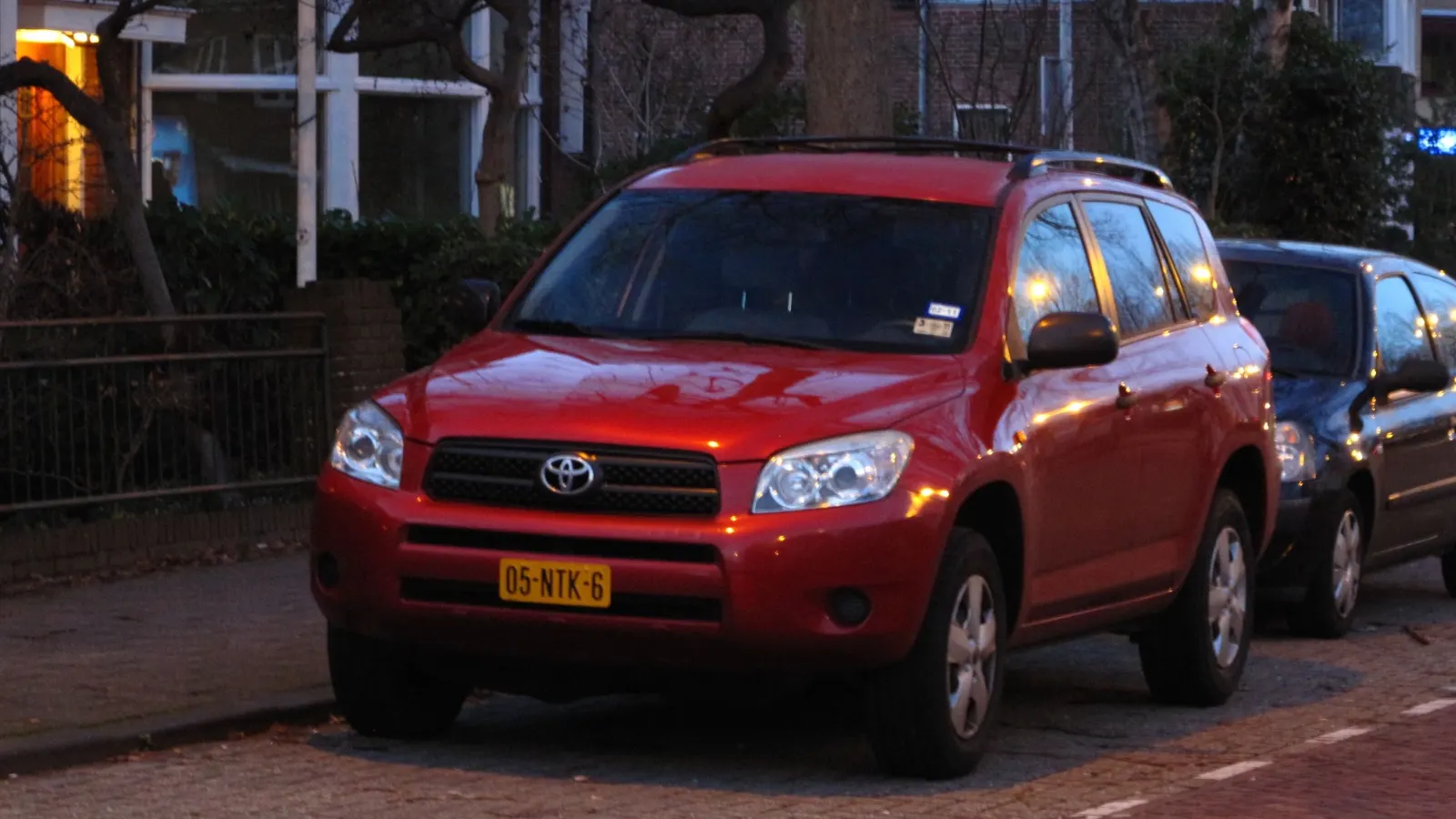
Pictured: 2008 Toyota RAV4. Photo: Rutger van der Maar, CC BY 2.0, cropped
Owner complaints
575
59 report a crash, fire, injury or death
Recalls
14
None urgent
Most common problem
22%
of complaints: oil consumption
Complaints per year filed
2008–2025 · peak 83
In short
Some known problemsThe 2008 Toyota RAV4 has some known problems: NHTSA investigated power window master switch fires and rear suspension arm failures, and both ended in recalls. NHTSA has 575 owner complaints, and 59 report a crash, fire, injury or death. The most common are excessive oil consumption, sudden acceleration and an airbag warning light that stays on. It has 14 recalls.
Reliability
How Reliable Is the 2008 Toyota RAV4?
The 2008 RAV4 has the verdict "Some known problems" because of two official NHTSA investigations. One covered power window master switch fires and closed with recall 12V491000. The other covered rear suspension arm failure and closed with recalls 12V373000 and 13V383000. Neither recall is marked do-not-drive or park-outside. Owner complaints add a mix of problems. Excessive oil consumption is the most common, and it is mostly a nuisance and a cost issue. Sudden acceleration is far more serious, because it can lead to crashes.
Oil consumption is reported mostly on the 2.4L four-cylinder, and this model year has no recall for it. Owners describe burning oil with no leaks, low or empty dipsticks and oil lights that flicker when braking. Some were quoted new pistons and rings. Of the 13 owners who reported a cost, the middle figure was $3,400, and the range between the lower and upper quarter ran from $800 to $4,000. Sudden acceleration stands out for severity. Owners describe the car accelerating while stopped at a red light, pulling into a parking space or approaching a light, sometimes with their foot on the brake. Recall 11V113000 describes an accelerator pedal that can get stuck wide open when trapped by an unsecured or incompatible driver's floor mat. That recall describes only the floor mat, and many complaints describe other situations. Brake failure and stalling complaints are fewer but also safety-related, and neither has a recall for this model year. Some brake complaints also describe the car accelerating or not stopping.
The airbag warning light is the clearest case where recalls and complaints overlap. Owners often mention spiral cable replacement, and some mention recalls 11V245000 and 14V168000. Recall 11V245000 covers the curtain shield airbag sensor assembly, which has two sensors designed to detect roll angle, and the fix is a new assembly with improved roll rate sensors. Recall 14V168000 covers electrical connections to the driver's airbag module through a spiral cable assembly, and its fix text says Toyota will notify owners. Steering clunks when turning also appear, and some owners were told the steering shaft needed replacement. This model year has no recall for that. Where owners reported repair results, there were too few reports to say how often repairs worked, and complaints lean toward repairs that failed or returned.
Mileage matters when you look at a specific vehicle. Sudden acceleration is reported early, with a median of about 24,000 miles and a middle half between about 12,000 and 48,500 miles. Brake complaints are earlier still, at a median of about 19,100 miles. Oil consumption shows up later, at a median of about 85,500 miles and mostly between about 69,900 and 118,600 miles. Airbag light complaints cluster near 80,000 miles, steering clunks near 73,000 miles and stalling near 76,300 miles. A car with high mileage and no oil history deserves extra scrutiny, while a low-mileage car can still be affected by the early problems.
When shopping, prioritize a full recall check, an oil level and consumption history, a working airbag light and a steering test drive. Keep the limits of this evidence in mind. Complaint counts show what owners reported, not how many vehicles are affected, and they can't show how a particular vehicle was maintained or driven. A clean inspection and records for recall work are the best evidence for a specific vehicle.
Top problems
The 6 problems owners report most
Named from 575 NHTSA complaints. Open a problem for symptoms, the fix, cost and owners' accounts.
1.Excessive oil consumptionSeriousAbout 1 in 5 complaints69,900–118,600 mi~$3,400 repair
Owners describe burning oil with no leaks or smoke, an empty dipstick and an oil light that flickers when braking, mostly on the 2.4L four-cylinder. Reports have a median of about 85,500 miles, with the middle half between about 69,900 and 118,600 miles. This model year has no recall for it.
What owners describe
- About a quart per 1,000 miles48%
- Burns oil with no leaks15%
- Oil light flickers or stays on14%
Fix
Most common repair owners describe: oil topped off (3 reports).
Mileage
85,500 mi
Middle half 69,900–118,600 mi · 96 reports
Repair cost
$3,400
Middle half $800–$4,000 · 13 owner amounts
How common
22%
126 of 575 complaints
Crash, fire or injury
0.8%
of these complaints
In owners' words
“Toyota will not cover the repair to fix the problem because it is out of warranty.”
Owner in CA2.4L 4-cylFiled 2012NHTSA 10479585 2.Sudden or unintended accelerationCriticalAbout 1 in 7 complaints12,000–48,500 mi
Owners describe the car accelerating on its own while approaching a red light, stopped at a light or pulling into a parking space, sometimes with a foot on the brake. Reports have a median of about 24,000 miles. Recall 11V113000 describes an accelerator pedal that can get stuck wide open when trapped by an unsecured or incompatible driver's floor mat.
What owners describe
- Engine revs while braking19%
- Accelerates on its own15%
Fix
Most common repair owners describe: dealer modified the floor mat (1 report). Recall 11V113000.
Mileage
24,000 mi
Middle half 12,000–48,500 mi · 79 reports
Repair cost
—
Fewer than 10 owners report a repair cost
How common
15%
88 of 575 complaints
By engine
- 2.4L 4-cyl63%
- 3.5L V637%
In owners' words
“On several occasions I have had the accelerator pedal become stuck fully open when accelerating to merge onto an interstate highway.”
Owner in IL3.5L V6Filed 2009NHTSA 10296767 “The same thing happened in jan of 2010 when I was driving the same vehicle and I almost crashed.”
Owner in TN2.4L 4-cylFiled 2010NHTSA 10302634 “The brake pedal was depressed to the floor, but the vehicle would not decelerate.”
Owner in MA2.4L 4-cylFiled 2009NHTSA 10295331 3.Airbag warning light stays onSeriousAbout 1 in 19 complaints70,400–88,200 mi
Owners describe the airbag light coming on randomly or staying on, and several were told the spiral cable needed replacing. Reports have a median of about 80,000 miles. Owners mention recalls 11V245000, 14V166000 and 14V168000.
What owners describe
- Airbag light stays on90%
- Spiral cable needs replacing32%
- Light comes on randomly10%
- Light comes on at startup6%
Fix
Most common repair owners describe: repaired later (1 report). Recall 11V245000.
Mileage
80,000 mi
Middle half 70,400–88,200 mi · 27 reports
Repair cost
—
Fewer than 10 owners report a repair cost
How common
5%
31 of 575 complaints
By engine
- 2.4L 4-cyl71%
- 3.5L V629%
In owners' words
“A wire in the steering column would need to be replaced and that the air bag would not deploy in the event of a crash until the repair was completed”
Owner in AR2.4L 4-cylFiled 2013NHTSA 10491971 “Airbag warning light has come on and scan shows that it is a "spiral cable" that needs to be replaced.”
Owner in AZ2.4L 4-cylFiled 2013NHTSA 10514922 “A component in the steering wheel failed, and caused the illumination of the air bag warning light.”
Owner in CAFiled 2012NHTSA 10444128 4.Clunk or looseness in the steeringSeriousAbout 1 in 19 complaints42,900–92,000 mi
Owners describe a clunk or knock from the steering column or wheel when turning, especially at low speed, and some say it gets worse. Several were told the steering shaft needed replacement. Reports have a median of about 73,000 miles, and this model year has no recall for it.
What owners describe
- Clunk when turning wheel52%
- Knocking from steering wheel10%
- Steering feels loose6%
- Noise returns after repairs6%
Fix
Most common repair owners describe: steering column needs replacing (1 report).
Mileage
73,000 mi
Middle half 42,900–92,000 mi · 29 reports
Repair cost
—
Fewer than 10 owners report a repair cost
How common
5%
31 of 575 complaints
By engine
- 3.5L V652%
- 2.4L 4-cyl48%
In owners' words
“The steering started feeling loose and there is a pronounced clunk any time you turn the wheel either when stopped or moving.”
Owner in TX3.5L V6Filed 2011NHTSA 10440240 “She heard a knocking noise while turning at various speeds and steering the vehicle became difficult.”
Owner in OR3.5L V6Filed 2013NHTSA 10553377 “They did not hear anything and I could not do anything because the vehicle was under warranty.”
Owner in PR2.4L 4-cylFiled 2014NHTSA 10632003 5.Brake pedal sinks or brakes failCriticalAbout 1 in 26 complaints12,500–34,800 mi
Owners describe no brake response, a stiff pedal, or brakes that would not stop the car, sometimes while driving over a bridge or slowing for a stop. Reports have a median of about 19,100 miles. This model year has no recall for it.
What owners describe
- No brake response23%
- ABS and slip lights on14%
- Brakes do not stop car9%
- Stiff brake pedal9%
Fix
Most common repair owners describe: brake cylinder and rear caliper replaced (1 report).
Mileage
19,100 mi
Middle half 12,500–34,800 mi · 22 reports
Repair cost
—
Fewer than 10 owners report a repair cost
How common
4%
22 of 575 complaints
By engine
- 2.4L 4-cyl72%
- 3.5L V628%
In owners' words
“Pressed all the way down, standing on the brakes, ABS, without any response and colliding into the rear of the vehicle in front of me.”
Owner in FL3.5L V6Filed 2010NHTSA 10344537 “Brake pedal was completely to the floor, so I used emergency brake to stop car before it caused further damage to car and fence.”
Owner in WA2.4L 4-cylFiled 2010NHTSA 10373078 “The brakes did not respond when he tried to slow down which caused him to crash into the rocks opposite side of the road.”
Owner in MAFiled 2010NHTSA 10303139
Show 1 more problemShow fewer problems
6.Stalling or shutting off while drivingCriticalAbout 1 in 34 complaints47,000–93,500 mi
Owners describe the car shutting down while driving at low speed or around 50 mph, sometimes with dash lights coming on or loss of power, and some say it would not restart. Reports have a median of about 76,300 miles. This model year has no recall for it.
What owners describe
- Shuts off while driving18%
- Loss of power or steering18%
- Will not restart12%
- Dash lights come on6%
Fix
Most common repair owners describe: engine replacement quoted (1 report).
Mileage
76,300 mi
Middle half 47,000–93,500 mi · 14 reports
Repair cost
—
Fewer than 10 owners report a repair cost
How common
3%
17 of 575 complaints
By engine
- 2.4L 4-cyl69%
- 3.5L V623%
- 1.8L 4-cyl8%
In owners' words
“It will suddenly stall or power down and the car just shuts off in the middle of everything.”
Owner in WI2.4L 4-cylFiled 2011NHTSA 10437771 “The vehicle slows down and the engine shuts off while driving around 65 MPH or higher”
Owner in CA2.4L 4-cylFiled 2014NHTSA 10641577 “My rav4 shut down and rolled back towards the toll booth (towards oncoming traffic).”
Owner in MA2.4L 4-cylFiled 2010NHTSA 10334811
Buying one
Should you buy a used 2008 Toyota RAV4?
What to check before you buy, based on the complaint and recall data.
Ask for proof that the power window switch recall (12V491000) and the rear suspension arm recalls (12V373000, 13V383000) were done, and check every recall on the VIN at NHTSA.gov. Check the oil level on the test drive and ask for service records that show how often oil was added, especially on a 2.4L model. Make sure the airbag light comes on at startup and then goes out. Test the steering for clunks at low speed.
- 1Run the VIN for open recalls. NHTSA lists 14 recalls. Check at nhtsa.gov/recalls.
- 2Test-drive for sudden acceleration. It's the most common safety-critical complaint, in about 1 in 7 owner complaints, usually around 24,000 miles.
- 3Check for oil consumption. The most common complaint, in about 1 in 5 owner complaints.
- 4Get a pre-purchase inspection. An independent mechanic can spot leaks, stored fault codes and accident repairs that a test drive misses.
Toyota RAV4 model years
Early complaints are those filed in a model year's first 3 years. They follow how many were sold, so they don't show which years are better.
Crash test ratings
NHTSA 5-Star Safety Ratings.
| 4-DR. w/SAB | |
|---|---|
| Overall | Not rated |
| Frontal crash | Not rated |
| Side crash | Not rated |
| Rollover | ★★★★ |
| Rollover risk | 17% |
Owning one
If you already own one
Find your symptom, see when problems tend to show up, and check which recalls apply.
Check your oil level often, because oil consumption is the most common complaint. If the airbag light stays on, have it looked at, and ask about the spiral cable and recalls 11V245000 and 14V168000. Stop driving and get help if the brake pedal sinks, the engine revs without your input, or the car shuts off while driving. Confirm with a dealer that every recall on your VIN, including the power window switch and rear suspension arm recalls, has been completed.
- Excessive oil consumptionSeriousAbout 1 in 5 owner complaints126 of 575Median 85,500 mi
Most common repair owners describe: oil topped off (3 reports).
- Sudden or unintended accelerationCriticalAbout 1 in 7 owner complaints88 of 575Median 24,000 mi
Most common repair owners describe: dealer modified the floor mat (1 report).
- Airbag warning light stays onSeriousAbout 1 in 19 owner complaints31 of 575Median 80,000 mi
Most common repair owners describe: repaired later (1 report).
- Clunk or looseness in the steeringSeriousAbout 1 in 19 owner complaints31 of 575Median 73,000 mi
Most common repair owners describe: steering column needs replacing (1 report).
- Brake pedal sinks or brakes failCriticalAbout 1 in 26 owner complaints22 of 575Median 19,100 mi
Most common repair owners describe: brake cylinder and rear caliper replaced (1 report).
- Stalling or shutting off while drivingCriticalAbout 1 in 34 owner complaints17 of 575Median 76,300 mi
Most common repair owners describe: engine replacement quoted (1 report).
- Vehicle catches fireCriticalAbout 1 in 48 owner complaints12 of 575Median 69,400 mi
- Loss of power steeringCriticalAbout 1 in 52 owner complaints11 of 575Median 49,000 mi
Show all 12 problemsShow fewer problems
- Many warning lights at onceMinorAbout 1 in 52 owner complaints11 of 575Median 77,000 mi
- Engine failureCriticalAbout 1 in 52 owner complaints11 of 575Median 92,800 mi
- Airbags did not deploy in a crashCriticalAbout 1 in 58 owner complaints10 of 575Median 96,800 mi
- Rear control arm rusting or breakingCriticalAbout 1 in 58 owner complaints10 of 575Median 83,700 mi
of complaints that list mileage (90 of 433) came in before 25,000 miles. A low odometer reading is no guarantee.
14 recalls, newest first
Open one for the risk, the remedy and what to do now.
Suspension › RearThe affected vehicles have rear suspension arms (rear tie rods) with adjusting lock nuts that may have been…Aug 12, 2016337,449 vehicles16V596000
- Defect
- The affected vehicles have rear suspension arms (rear tie rods) with adjusting lock nuts that may have been improperly tightened after servicing.
- Risk
- Failure of the rear tie rod could cause a loss of vehicle control, increasing the risk of a crash.
- Remedy
- Dealers will replace both rear suspension arms and encapsulate the locknuts, free of charge.
Front assembly › Seat heater/coolerThe electrical wiring in the seat heaters may be damaged when the seat cushion is compressed.Jun 2, 20167,749 vehicles16V396000
- Defect
- The electrical wiring in the seat heaters may be damaged when the seat cushion is compressed.
- Risk
- If damaged, the copper strand heating element may short circuit, increasing the risk of a fire.
- Remedy
- Dealers will disconnect the seat heaters, free of charge, and refund the purchase price of the seat heater accessory.
Seat belts › Rear/otherIn the event of a frontal collision, the rear seat belts for the outboard seats may be cut by the seat cushion frame.Feb 19, 20161,123,752 vehicles16V096000
- Defect
- In the event of a frontal collision, the rear seat belts for the outboard seats may be cut by the seat cushion frame.
- Risk
- A cut seat belt may not properly restrain the seat occupant, increasing their risk of injury in a crash.
- Remedy
- Dealers will install a protector over both rear seat cushion frames, free of charge.
Visibility › Power window devices and controlsDuring the manufacturing of the Power Window Master Switch (PWMS), grease lubricant may have been inconsistently…Oct 22, 20151,814,284 vehicles15V689000
- Defect
- During the manufacturing of the Power Window Master Switch (PWMS), grease lubricant may have been inconsistently applied to the sliding electrical contacts.
- Risk
- If the sliding electrical contacts are not protected by lubricant, debris and moisture that get into the switch may cause a short circuit and the switch assembly may overheat and melt, increasing the risk of a fire.
- Remedy
- Dealers will inspect the switch, applying a lubricant if no abnormality is found.
Front assembly › Seat heater/coolerThe affected vehicles may experience compression of the seat cushion which may damage the seat heater wiring.Nov 19, 20143,233 vehicles14V743000
- Defect
- The affected vehicles may experience compression of the seat cushion which may damage the seat heater wiring.
- Risk
- Damage to the seat heater wiring could cause the wires to short, increasing the risk of the seat burning and causing personal injury to the occupant.
- Remedy
- Dealers will disconnect the heaters with copper strand heating elements and refund the purchase price of the seat heater accessory, free of charge.
Show all 14 recallsShow fewer recalls
Driver side › Inflator moduleIn the affected vehicles, the steering column assembly contains electrical connections to the driver's airbag module…Apr 9, 20141,486,413 vehicles14V168000
- Defect
- In the affected vehicles, the steering column assembly contains electrical connections to the driver's airbag module housed in a spiral cable assembly, which includes a Flexible Flat Cable (FFC).
- Risk
- If the FFC is damaged, connectivity to the driver's air bag module could be lost and the air bag deactivated.
- Remedy
- Toyota will notify the Toyota vehicle owners, and General Motors will notify the Pontiac Vibe owners.
Suspension › RearIf the nuts for adjusting the rear wheel alignment are improperly tightened during service, the rear suspension arm…Aug 28, 2013780,584 vehicles13V383000
- Defect
- If the nuts for adjusting the rear wheel alignment are improperly tightened during service, the rear suspension arm (rear tie rod) may develop unwanted movement and rust leading to thread damage and eventual failure. Failure of the rear tie rod will cause an abrupt change in the vehicle's alignment.
- Risk
- Failure of the rear tie rod could cause a loss of vehicle control, increasing the risk of a crash.
- Remedy
- Dealers will inspect the tie rods and replace any that have rust or corrosion on the alignment adjustment threads.
Visibility › Power window devices and controlsThe power window master switch assemblies in some of these vehicles were built using a less precise process for…Oct 10, 20122,519,424 vehicles12V491000
- Defect
- The power window master switch assemblies in some of these vehicles were built using a less precise process for lubricating the internal components of the switch assemblies. Irregularities in this lubrication process may cause the power window master switch assemblies to malfunction and overheat.
- Risk
- If the switch overheats, it may melt, possibly resulting in a fire.
- Remedy
- Toyota will notify its owners, and dealers will inspect the switch and apply a special grease that inhibits heat build up or replace any switch damaged by the defect, free of charge.
Suspension › RearIf the nuts for adjusting the rear wheel alignment are improperly tightened during service, the rear suspension arm…Aug 2, 2012780,584 vehicles12V373000
- Defect
- If the nuts for adjusting the rear wheel alignment are improperly tightened during service, the rear suspension arm (rear tie rod) may develop unwanted movement and rust, leading to thread damage and eventual failure. Failure of the rear tie rod will cause an abrupt change in the vehicle's alignment.
- Risk
- Failure of the rear tie rod could cause a loss of vehicle control, increasing the risk of a crash.
- Remedy
- Dealers will inspect the rear tie-rod nut for looseness and replace any suspect tie-rod found loose.
Air bagsIN THE CURTAIN SHIELD AIRBAG (CSA) SYSTEM, THERE ARE TWO SENSORS IN THE AIRBAG SENSOR ASSEMBLY WHICH ARE DESIGNED TO…Apr 21, 2011307,848 vehicles11V245000
- Defect
- IN THE CURTAIN SHIELD AIRBAG (CSA) SYSTEM, THERE ARE TWO SENSORS IN THE AIRBAG SENSOR ASSEMBLY WHICH ARE DESIGNED TO DETECT VEHICLE ROLL ANGLE.
- Risk
- INADVERTENT ACTIVATION OF THE CSA AND/OR THE SEAT BELT PRETENSIONER CAN CAUSE INJURY TO A VEHICLE OCCUPANT.
- Remedy
- TOYOTA WILL REPLACE THE AIRBAG SENSOR ASSEMBLY WITH A NEW ONE CONTAINING IMPROVED ROLL RATE SENSORS, FREE OF CHARGE.
Vehicle speed control › Accelerator pedalTHE ACCELERATOR PEDAL CAN GET STUCK IN THE WIDE OPEN POSITION DUE TO ITS BEING TRAPPED BY AN UNSECURED OR…Feb 24, 20111,363,244 vehicles11V113000
- Defect
- THE ACCELERATOR PEDAL CAN GET STUCK IN THE WIDE OPEN POSITION DUE TO ITS BEING TRAPPED BY AN UNSECURED OR INCOMPATIBLE DRIVER'S FLOOR MAT.
- Risk
- A STUCK OPEN ACCELERATOR PEDAL MAY RESULT IN VERY HIGH VEHICLE SPEEDS AND MAKE IT DIFFICULT TO STOP THE VEHICLE, WHICH COULD CAUSE A CRASH, SERIOUS INJURY OR DEATH.
- Remedy
- THE REMEDY IS NOW AVAILABLE.
Other › LabelsSOUTHEAST TOYOTA IS RECALLING CERTAIN MODEL YEAR 2005-2011 PASSENGER VEHICLES FOR FAILING TO COMPLY WITH THE…Feb 3, 2010153,418 vehicles10V036000
- Defect
- SOUTHEAST TOYOTA IS RECALLING CERTAIN MODEL YEAR 2005-2011 PASSENGER VEHICLES FOR FAILING TO COMPLY WITH THE REQUIREMENTS OF FEDERAL MOTOR VEHICLE SAFETY STANDARD NO. 110, "TIRE SELECTION AND RIMS." THESE VEHICLES WERE SOLD WITHOUT THE REQUISITE LOAD CARRYING CAPACITY MODIFICATION LABELS.
- Risk
- A DRIVER MAY OVERLOAD A VEHICLE WHICH MAY INCREASE THE RISK OF A CRASH.
- Remedy
- DEALERS WILL MAIL TO CONSUMERS THE CORRECTED LABEL OR THE CUSTOMER WILL HAVE THE OPTION FOR DEALERS TO INSTALL THE LABEL FREE OF CHARGE.
Other › LabelsGULF STATES TOYOTA IS RECALLING CERTAIN MODEL YEAR 2005-2010 VEHICLES FOR FAILING TO COMPLY WITH THE REQUIREMENTS OF…Feb 3, 2010271,417 vehicles10V035000
- Defect
- GULF STATES TOYOTA IS RECALLING CERTAIN MODEL YEAR 2005-2010 VEHICLES FOR FAILING TO COMPLY WITH THE REQUIREMENTS OF FEDERAL MOTOR VEHICLE SAFETY STANDARD NO. 110, "TIRE SELECTION AND RIMS." THESE VEHICLES WERE SOLD BETWEEN SEPTEMBER 1, 2005 AND JUNE 2, 2008 WITHOUT THE REQUISITE LOAD CARRYING CAPACITY MODIFICATION LABELS.
- Risk
- THIS DOES NOT MEET THE STANDARD REQUIREMENTS.
- Remedy
- DEALERS WILL MAIL TO CONSUMERS THE CORRECTED LABEL OR THE CUSTOMER WILL HAVE THE OPTION FOR DEALERS TO INSTALL THE LABEL FREE OF CHARGE.
Other › LabelsTHESE VEHICLES WERE NOT EQUIPPED WITH LOAD CARRYING CAPACITY MODIFICATION LABELS WHICH FAILS TO CONFORM WITH THE…Jun 15, 200927,080 vehicles09V223000
- Defect
- THESE VEHICLES WERE NOT EQUIPPED WITH LOAD CARRYING CAPACITY MODIFICATION LABELS WHICH FAILS TO CONFORM WITH THE REQUIREMENTS OF FEDERAL MOTOR VEHICLE SAFETY STANDARD NO. 110, "TIRE SELECTION AND RIMS."
- Risk
- INCORRECT LOAD CARRYING CAPACITY MODIFICATION LABELS COULD RESULT IN THE VEHICLE BEING OVERLOADED, INCREASING THE RISK OF A CRASH.
- Remedy
- TOYOTA WILL NOTIFY OWNERS AND PROVIDE THEM WITH A NEW, ACCURATE LABEL TO BE INSTALLED OVER THE INACCURATE LABEL FREE OF CHARGE.
What to do
Check the VIN at nhtsa.gov/recalls. If a recall is open, any dealer will fix it free. For NHTSA's full record of a campaign, search its number there (for example 16V596000).
Reliability history
Toyota RAV4 reliability by year
Complaints filed in each model year's first 3 years, by trouble spot. Darker cells have more complaints; counts aren't adjusted for how many were sold each year.
All problems
Every problem reported on the 2008 RAV4
Every problem found in the 575 owner complaints, by area of the vehicle.
Engine
163 28%- Excessive oil consumptionSerious126 22%typically at 85,500 mi · repair $3,40085,500$3,400–
- 17 3%typically at 76,300 mi76,300––
- Engine failureCritical11 2%typically at 92,800 mi92,800––
- Water pump fails or leaksSerious8 1%typically at 59,000 mi59,000––
- Oil warning light only flickers6 1%typically at 61,500 mi61,500––
- Engine rattle or knock6 1%typically at 75,000 mi75,000––
Show 10 more engine problemsShow fewer engine problems
- Evaporative emissions system fails3 0.5%–––
- Idle speed rises unexpectedly2 0.3%–––
- Muffler or exhaust failure2 0.3%–––
- Cracked cylinder head1 0.2%–––
- Muffler corrodes early1 0.2%–––
- VVT-i bolts defective1 0.2%–––
- Sudden loss of power while driving1 0.2%–––
- Misfires or head gasket failureSerious1 0.2%–––
- Oil leaks or low oilSerious1 0.2%–––
- Corroded muffler1 0.2%–––
Acceleration & speed control
100 17%- 88 15%typically at 24,000 mi24,000––
- Vehicle fails to decelerateCritical4 0.7%–––
- Cruise control will not disengage2 0.3%–––
- Throttle hesitation then surge2 0.3%–––
- Cruise control engages on its own and car accelerates1 0.2%–––
- Cruise control fails to hold speed uphill1 0.2%–––
Show 5 more acceleration & speed control problemsShow fewer acceleration & speed control problems
- Rough idle1 0.2%–––
- Cruise control surges or opens throttle wide1 0.2%–––
- Slow acceleration1 0.2%–––
- Loss of power while accelerating1 0.2%–––
- Engine hesitation when accelerating1 0.2%–––
Steering
67 12%- 31 5%typically at 73,000 mi73,000––
- Loss of power steeringCritical11 2%typically at 49,000 mi49,000––
- Rear tie rod failsCritical4 0.7%–––
- Sticky or notchy steeringSerious4 0.7%–––
- Steering rack and shaft need replacementSerious4 0.7%–––
- Steering column weld fails and column movesCritical3 0.5%–––
Show 10 more steering problemsShow fewer steering problems
- Intermediate steering shaft failure3 0.5%–––
- Lost control of steering2 0.3%–––
- Steering motor weld failure2 0.3%–––
- Torque steer pulls the vehicle when accelerating1 0.2%–––
- Steering wanders1 0.2%–––
- Handling instability on the freeway1 0.2%–––
- Steering column mount weld fails1 0.2%–––
- Power steering pump squeals1 0.2%–––
- Fractured steering rod1 0.2%–––
- Dash air duct falls onto driver's feet1 0.2%–––
Airbags & seat belts
51 9%- 31 5%typically at 80,000 mi80,000––
- Airbags did not deploy in a crashCritical10 2%typically at 96,800 mi96,800––
- Airbags deploy without a crashCritical6 1%typically at 31,300 mi31,300––
- Airbags deploy on their own2 0.3%–––
- Seat belt locks tight around occupant1 0.2%–––
- Rear seat belt anchors overlap with child seat1 0.2%–––
Show 3 more airbags & seat belts problemsShow fewer airbags & seat belts problems
- Seat belt did not restrain driver in crash1 0.2%–––
- Passenger airbag turns off with an adult in the seatCritical1 0.2%–––
- Seat belt gets stuck1 0.2%–––
Suspension
37 6%- Rear control arm rusting or breakingCritical10 2%typically at 83,700 mi83,700––
- Rear alignment can't be adjusted after recall repairSerious9 2%typically at 105,000 mi105,000––
- Rear suspension part failsSerious6 1%typically at 85,000 mi85,000––
- Clunks or knocks from the suspensionMinor3 0.5%–––
- Unstable rear end when slowing quickly2 0.3%–––
- Sway bar link breaks2 0.3%–––
Show 5 more suspension problemsShow fewer suspension problems
- Swaying or wobbly feel2 0.3%–––
- Rear shocks or struts leaking1 0.2%–––
- Rear suspension bolt comes loose1 0.2%–––
- Rear tie rod fractures1 0.2%–––
- Broken front spring1 0.2%–––
Body, lights & visibility
36 6%- Driver sun visor won't stay upMinor9 2%typically at 69,500 mi69,500––
- Body or frame rustSerious5 0.9%–––
- Weak defroster or windows fog upMinor4 0.7%–––
- Paint peeling3 0.5%–––
- Mice entering the vehicle2 0.3%–––
- Sunroof glass shatters2 0.3%–––
Show 11 more body, lights & visibility problemsShow fewer body, lights & visibility problems
- Hood flies open while drivingCritical2 0.3%–––
- Windshield wipers stop working2 0.3%–––
- Wind noise or air pressure with windows open1 0.2%–––
- Driver window keeps closing after button released1 0.2%–––
- Rear seats wear and fray1 0.2%–––
- Rear window shatters1 0.2%–––
- Door lock mechanisms fail1 0.2%–––
- Low beam headlight not working1 0.2%–––
- Windshield chips and cracks1 0.2%–––
- Driver seat frame cuts through seat cover1 0.2%–––
- CD player stopped working1 0.2%–––
Brakes
30 5%- Brake pedal sinks or brakes failCritical22 4%typically at 19,100 mi19,100––
- Brake noise and early wearMinor4 0.7%–––
- Anti-skid applies brakes on its own1 0.2%–––
- Brake pedal too close to accelerator and engages late1 0.2%–––
- Whining noise at low speed1 0.2%–––
- Brake light switch circuit malfunction1 0.2%–––
Show 1 more brakes problemsShow fewer brakes problems
- Brake booster or master cylinder needs replacing1 0.2%–––
Electrical
21 4%- Many warning lights at onceMinor11 2%typically at 77,000 mi77,000––
- Battery drain or no-startSerious4 0.7%–––
- Alternator failing3 0.5%–––
- Wiring harness damaged2 0.3%–––
- Water leaks damaging electronicsSerious2 0.3%–––
- Battery leaks acid and corrodes parts1 0.2%–––
Transmission & drivetrain
17 3%- Power transfer unit (PTU) or 4WD failureCritical7 1%typically at 125,900 mi125,900––
- Rear differential coupling fails2 0.3%–––
- Transmission whine1 0.2%–––
- Transmission stuck in reverse1 0.2%–––
- Transmission fluid leak1 0.2%–––
- Transmission failure needing replacementSerious1 0.2%–––
Show 4 more transmission & drivetrain problemsShow fewer transmission & drivetrain problems
- Rear U-joint seized1 0.2%–––
- Harsh, jerky shiftingSerious1 0.2%–––
- Driveshaft failure1 0.2%–––
- Hesitation or slipping while drivingSerious1 0.2%–––
Wheels & tires
16 3%- Tires wear out or fall apart earlyMinor3 0.5%–––
- Rear spare tire cover blows off2 0.3%–––
- Tires wear out early2 0.3%–––
- Tire blowout1 0.2%–––
- Wheel bolts fracture1 0.2%–––
- Alloy wheels rust1 0.2%–––
Show 6 more wheels & tires problemsShow fewer wheels & tires problems
- Wheel bearing or hub fails1 0.2%–––
- Wheel speed sensor, harness or hub failure1 0.2%–––
- Plastic underbody or wheel well cover comes loose1 0.2%–––
- Rear spare tire cover falls off1 0.2%–––
- Clicking noise from steering wheel1 0.2%–––
- Steering wheel doesn't stay centered1 0.2%–––
Fire
13 2%- Vehicle catches fireCritical12 2%typically at 69,400 mi69,400––
- Power window switch burns or smokes1 0.2%–––
Fuel system & stalling
4 0.7%- Charcoal filter assembly torn off1 0.2%–––
- Vapor canister comes loose1 0.2%–––
- Fuel vapor canister hose or filter breaks1 0.2%–––
- Very low fuel economy1 0.2%–––
121 problems found in all 575 complaints. One complaint can describe more than one problem, so counts add up to more than the total. Not counted as a defect: 54 about recall paperwork or parts delays, 8 describing no vehicle defect. Typical miles, repair cost and fix rate show only when enough owners report them.
The data
Behind the numbers
Every figure comes from NHTSA's complaint file and APIs.
- Complaints
- 575
- Recalls
- 14
- Crashes
- 42
- Fires
- 16
- Injuries
- 32
- Deaths
- 2
Crashes and fires count complaints that report one; injuries and deaths count people.
Complaints by engine
Decoded from the partial VINs owners include. Not adjusted for how many of each engine were sold.
FAQ
2008 Toyota RAV4 questions
Is the 2008 Toyota RAV4 reliable?
The 2008 Toyota RAV4 has some known problems. NHTSA investigated power window master switch fires, closed with recall 12V491000, and rear suspension arm failure, closed with recalls 12V373000 and 13V383000. Owners also report excessive oil consumption, sudden acceleration and an airbag warning light that stays on.
What are the most common 2008 Toyota RAV4 problems?
Excessive oil consumption is the most common, with 126 of 575 owner complaints (about 1 in 5), mostly on the 2.4L four-cylinder. Sudden or unintended acceleration follows with 88 complaints (about 1 in 7), then the airbag warning light staying on with 31 and clunking or looseness in the steering with 31.
How many recalls does the 2008 Toyota RAV4 have?
There are 14 recalls, and none is marked do-not-drive or park-outside. They cover an accelerator pedal stuck open by a floor mat (11V113000), power window master switch overheating (12V491000, 15V689000), rear suspension arms (12V373000, 13V383000, 16V596000), seat heater wiring, rear seat belts, airbag parts and labels. Check your VIN at nhtsa.gov/recalls.
Does the 2008 Toyota RAV4 have sudden acceleration problems?
Yes, owners report it often: 88 complaints, about 1 in 7, rated critical. Owners describe the car accelerating while stopped at a light or pulling into a parking space, sometimes with a foot on the brake. Reports have a median of about 24,000 miles. Recall 11V113000 covers only a pedal trapped by a floor mat, and many complaints describe other situations.
Does the 2008 Toyota RAV4 use too much oil?
Owners report excessive oil consumption in 126 complaints, mostly on the 2.4L four-cylinder, and this model year has no recall for it. Reports have a median of about 85,500 miles, with the middle half between about 69,900 and 118,600 miles. Of 13 owners who reported a cost, the middle figure was $3,400.
What should I check before buying a 2008 Toyota RAV4?
Ask for proof that the power window switch recall (12V491000) and rear suspension arm recalls (12V373000, 13V383000) were done. Check the oil level and service records showing how often oil was added, especially on a 2.4L model. Make sure the airbag light goes out after startup, and test the steering for clunks at low speed.
Is the 2008 Toyota RAV4 safe?
NHTSA gives the 2008 Toyota RAV4 a rollover rating of 4 out of 5 stars, and its overall, frontal and side ratings are not rated. Of 575 owner complaints, 59 report a crash, fire, injury or death. Sudden acceleration, brake failure and stalling are the problems rated critical.
Methodology
How we researched this
- Complaints. NHTSA's owner complaint file, counted as unique complaint numbers for make TOYOTA, model RAV4, model year 2008. Data through Oct 4, 2026.
- Verdict. Judged from this model year's own complaints, not against other models, using shares rather than counts. Serious known problems: one serious problem (transmission, engine or stalling, steering, brakes, airbags, fire, fuel leaks) is in a quarter or more of complaints; or a smaller but clear cluster comes with an unusual share of crash, fire, injury or loss-of-power reports or early failures; or an urgent recall or NHTSA investigation matches a top complaint. Some known problems: one of those signals on its own. No pattern of serious problems: none of them; this doesn't mean the vehicle is trouble-free. Too few complaints to judge: under 50 complaints. Why this verdict: An NHTSA investigation into power window master switch fire (EA12006, closed with recall 12V491000); An NHTSA investigation into rear suspension arm assembly failure (PE12013, closed with recall 12V373000, 13V383000).
- No grade or class ranking. Raw complaint counts favor models that sell fewer cars, so we don't score or rank this vehicle against other models until we can adjust for sales.
- Trouble spots and history. Complaints grouped by the part owners chose when filing. The history grid counts complaints filed in each model year's first 3 years so older and newer years compare fairly; years with fewer than 3 complete years are marked too new.
- Named problems. Every one of the 575 complaints was researched and classified by its problems, severity, symptoms, repairs and any cost the owner mentions; the counts, costs and fix rates on this page are tallies of those classifications. Quotes are verbatim excerpts, checked against the original text. Engines are decoded from partial VINs with NHTSA's vPIC service.
- Repair costs and fix rates. Shown only when at least 10 owners report a repair cost, or at least 10 complaints describe whether a repair worked.
- Not adjusted for sales. Not affiliated with NHTSA. Page updated Nov 23, 2026.