Hyundai Kona Reliability & Common Problems
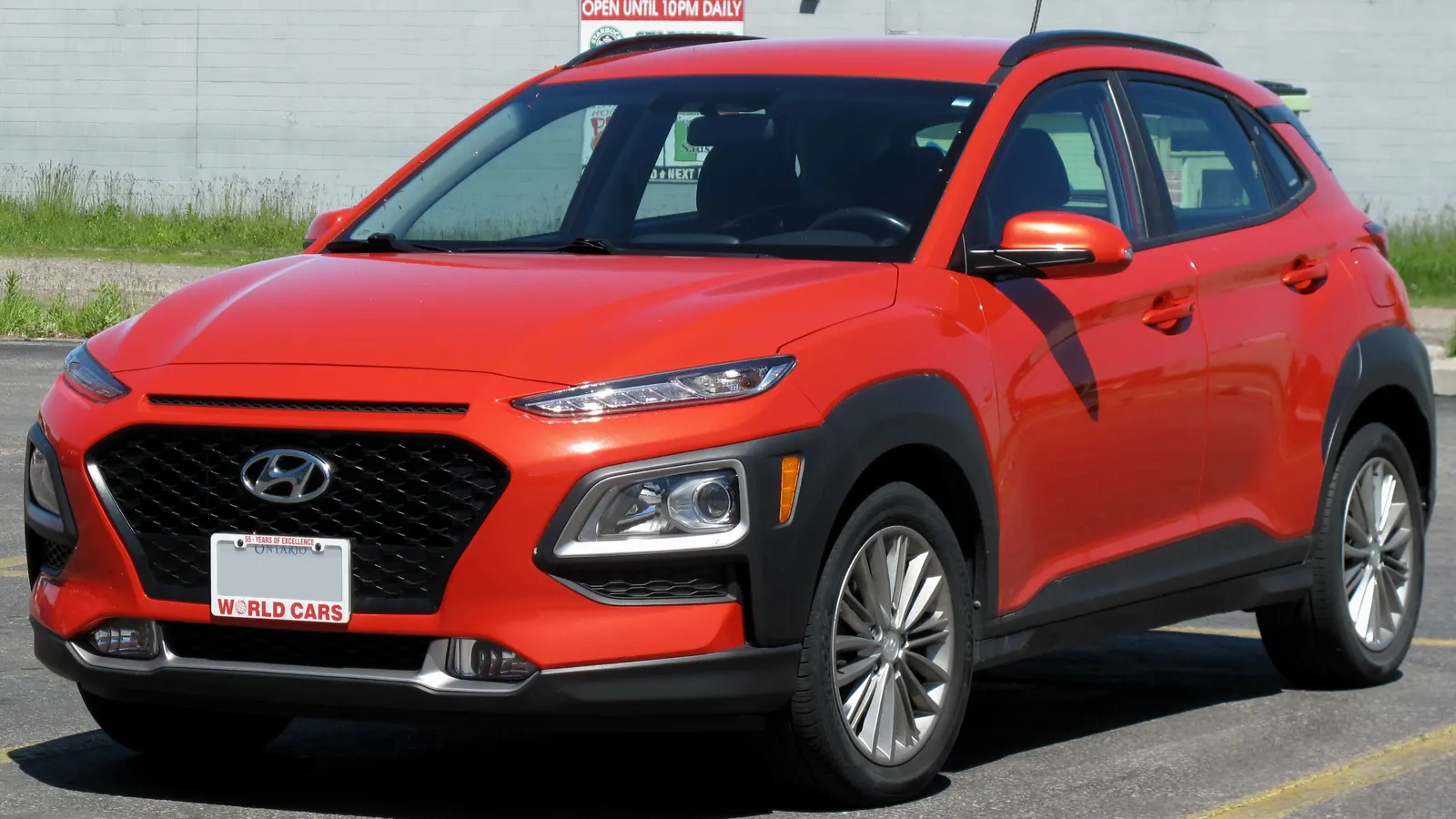
The Hyundai Kona is a subcompact SUV sold in the US since the 2018 model year, with a second generation starting in 2024. Owner complaints are heavily concentrated in the 2018 to 2021 models, where stalling, engine failure and oil consumption dominate, while the 2022 and 2023 models are mostly about a horn that stops working. Our method marks the 2018, 2019, 2020 and 2021 as years to avoid.
Model years researched
7
2018–2024
Owner complaints researched
764
filed with NHTSA through Oct 4, 2026
Recall campaigns
9
1 with a park-outside or do-not-drive warning
Years to avoid
2018–2021
judged on each year’s own complaints
Counts are owner complaints filed with NHTSA, not failure rates: they depend on how many were sold and how long each year has been on the road.
Reliability
Is the Hyundai Kona Reliable?
The Kona's complaint record splits into two clear groups, so it is more useful to look at groups of years than at the model as a whole. In the 2018 to 2021 models, the same three problems lead every year: stalling while driving, engine failure and engine oil use, with engine knocking close behind. In each of those years, a large share of complaints describe engine failure or stalling, and a large share also report a crash, fire, injury, death or a loss of power while moving, well above what is typical. That is why all four years are marked to avoid.
Recall 21V301000, covering the 2019, 2020 and 2021 models, confirms part of this pattern. Its defect text says the piston oil rings may not have been properly heat-treated, which could result in engine damage, and that a damaged engine may stall. The fix is for dealers to inspect and, if necessary, replace the engine. Owners of these years mention the recall often in their stalling, engine failure, oil use and knocking complaints, but many who describe a repair say the problem was not fixed. The recall does not cover the 2018, yet that year shows the same pattern of engine failure, stalling and oil use, and what causes it there is not established.
Mileage matters when you are looking at a particular vehicle. Engine failure complaints are typically reported at around 72,000 miles, and oil consumption at around 64,000 miles, but the spread is wide: some owners report these problems at low mileage, especially on the 2020. A low-mileage 2018 to 2021 may simply not have shown the problem yet, so a clean history on a younger example is not proof of anything.
The 2022 and 2023 models look different. Their most common complaint is a horn that makes no sound, with stalling and automatic emergency braking that activates for no reason appearing in smaller numbers. The 2022 is marked no pattern. The 2023 is marked check the recall, because a park-outside recall for a fire risk in the power train matches one of its top complaints. The 2024 is the first of the second generation and is marked no pattern, with a brief electrical blackout while driving, stalling and battery drain or no-start leading its complaints. The 2025 and 2026 have too few complaints to judge.
Keep the limits of complaint data in mind. Counts reflect how many Konas were sold and how long they have been on the road, not how likely any one vehicle is to fail, and a single complaint can describe more than one problem. The newest years have fewer complaints partly because they have had less time to collect them.
Common problems
Most Common Hyundai Kona Problems
Across the 2018–2024 Kona (764 complaints researched). A complaint can describe more than one problem, so these counts overlap.
Stalling or shutting off while driving
Critical197 complaints · 26% of all researchedmedian 37,900 mi
Owners describe the engine shutting off while driving, at highway speed, at low speed and when slowing for a light, and sometimes it will not restart. It is the most reported problem overall and is rated critical. It is reported on every year from 2018 to 2024, most on the 2019, 2020 and 2021, and a few owners say a repair fixed it. Recall 21V301000 covers the 2019 to 2021 and is mentioned in many of these complaints.
Engine failure
Critical131 complaints · 17% of all researchedmedian 72,000 mi
The engine fails or seizes and often needs to be replaced; one owner was told the engine had pieces of metal throughout. It is reported mostly on the 2018 to 2021 models and rarely after that, typically at around 72,000 miles but sometimes much earlier. The 10 owners who gave a repair cost report a median of about $5,800. Recall 21V301000 covers the 2019 to 2021, so check that it was done and what was found, and be cautious with a 2018, which has no recall for this.
Excessive oil consumption
Critical102 complaints · 13% of all researchedmedian 64,400 mi
The engine uses oil much faster than owners expect, sometimes until almost none is left, and some say they noticed it from the first weeks of ownership. It is reported on the 2018 to 2021 models and not on the later years in our reading. Dealer fixes such as a different oil grade are described as only helping briefly, and owners who describe a repair rarely say it solved the problem. Recall 21V301000 is mentioned in many of these complaints, and the oil level is worth checking on any of these years.
Engine knocking or ticking noise
Critical62 complaints · 8% of all researchedmedian 50,000 mi
The engine makes a loud knocking, rapping or ticking sound that can get louder over time, sometimes alongside a burning oil smell or a rough idle. It is reported mostly on the 2018 to 2021 models, most on the 2020, and only a couple of times on the 2022 and 2024. Owners often connect it to the same engine trouble covered by recall 21V301000. A knock on a test drive of one of these years is a serious warning sign for a buyer.
Horn stops working
Serious45 complaints · 6% of all researched
The horn makes no sound when pressed, sometimes only now and then, and the fuse often tests fine. Several owners say it failed again after a replacement. It is reported mostly on the 2022 and 2023 models and only a couple of times on the 2019 and 2020. It is a different kind of problem from the engine complaints, and no recall is mentioned in these complaints.
Automatic emergency braking activates for no reason
Critical24 complaints · 3% of all researched
Owners report the automatic emergency braking applying the brakes for no reason while driving, which can surprise the driver and the traffic behind. It is reported across the 2019 to 2024 models but in small numbers, with the most on the 2022. No recall is tied to it in these complaints, and the cause is not established.
Oil leaks or low oil
Serious22 complaints · 3% of all researchedmedian 70,500 mi
Owners report oil leaking from the engine or the oil level running low. It is reported in small numbers on the 2018 to 2023 models, most on the 2019, and typically at fairly high mileage, around 70,500 miles. No recall is tied to it in these complaints,.
Sudden loss of power while driving
Critical19 complaints · 2% of all researched
The vehicle suddenly loses power while driving and may not accelerate, which is dangerous in traffic. It is reported only on the 2019 and 2020 models, and some of these complaints mention recall 21V301000. Anyone considering one of those years should confirm that recall was performed.
Share of each year's complaints
- 2018 –
- 2019 5%
- 2020 6%
- 2021 –
- 2022 –
- 2023 –
- 2024 –
By year
Hyundai Kona Reliability by Year
Each year is judged on its own complaints. Complaint counts are context, not a ranking: they depend on how many were sold and how long they've been on the road.
First generation: 2018–2023
Engines: 2.0L four-cylinder, 1.6L turbo four-cylinder. Facelift for 2022.
- 2018AvoidEngine failure (29%); Stalling or shutting off while driving (27%); Excessive oil consumption (16%)75 complaints · no recalls
- 2019AvoidStalling or shutting off while driving (36%); Engine failure (24%); Excessive oil consumption (20%)193 complaints · 1 recall
- 2020AvoidStalling or shutting off while driving (28%); Engine failure (18%); Excessive oil consumption (16%)160 complaints · 2 recalls
- 2021AvoidStalling or shutting off while driving (36%); Engine failure (24%); Excessive oil consumption (22%)118 complaints · 1 recall
- 2022No patternHorn stops working (18%); Stalling or shutting off while driving (10%); Automatic emergency braking activates for no reason (9%)100 complaints · no recalls
- 2023Check recallHorn stops working (35%); Drops into neutral or loses drive while moving (6%); Stalling or shutting off while driving (5%)66 complaints · 1 recall
Second generation: 2024–2026
Engines: 2.0L four-cylinder, 1.6L turbo four-cylinder.
- 2024No patternBrief electrical blackout while driving (17%); Stalling or shutting off while driving (15%); Battery drain or no-start (13%)52 complaints · 4 recalls
- 2025Too fewToo few complaints to name a problem28 complaints · 1 recall
- 2026Too fewToo few complaints to name a problem9 complaints · 3 recalls
Years to avoid
Hyundai Kona Years to Avoid
Our method marks the 2018, 2019, 2020 and 2021 as years to avoid, because engine failure or stalling makes up a large share of their complaints and a large share report a crash, fire, injury or a loss of power while moving. The 2023 is marked check the recall, because of a park-outside fire-risk recall. The 2022 and 2024 show no pattern of serious problems in their own complaints. The 2025 and 2026 have too few complaints to judge yet.
- Check the recall was done
- 2023
- No pattern of serious problems
- 20222024
- Too few complaints to judge
- 20252026
Hyundai Kona years to avoid: why each year got its verdict →
Recalls
Hyundai Kona Recalls
The most important Kona recall is 23V526000, a park-outside warning on the 2023 because an oil pump controller for the Idle Stop & Go system may overheat and cause a fire. Recall 21V301000 covers the 2019 to 2021 for piston oil rings that may not have been properly heat-treated, with dealers inspecting and replacing the engine if necessary. Newer years carry recalls for a rear center seat belt buckle on the 2024 to 2026 (26V452000), front steering knuckles that may crack on the 2026 (26V069000), and an EGR valve short circuit that can cause a loss of drive power on the 2024 (24V308000). Check any Kona's VIN at nhtsa.gov/recalls before you buy; dealers do recall repairs free.
- Park outside23V526000Power train, 2023 model
All 9 Kona recalls, by model yearCheck a VIN on nhtsa.gov/recalls ↗
Model years
Explore Hyundai Kona Model Years
FAQ
Hyundai Kona Questions
Is the Hyundai Kona reliable?
It depends heavily on the model year. The 2018, 2019, 2020 and 2021 have serious known problems, mainly stalling, engine failure and oil use. The 2022 and 2024 show no pattern of serious problems in their own complaints, the 2023 has a park-outside recall to check, and the 2025 and 2026 have too few complaints to judge.
What are the most common Hyundai Kona problems?
Owners most often describe the engine stalling while driving, engine failure, excessive oil use and engine knocking, almost all on the 2018 to 2021 models. On the 2022 and 2023 the most common complaint is a horn that stops working.
Which Hyundai Kona years have engine problems?
Engine failure, oil consumption and knocking are concentrated in the 2018 to 2021 models. Engine failure drops to a handful of complaints on the 2022, and oil consumption is not reported on the 2022 or later in our reading.
Is there an engine recall on the Hyundai Kona?
Yes. Recall 21V301000 covers the 2019, 2020 and 2021 models for piston oil rings that may not have been properly heat-treated, which could result in engine damage. Dealers inspect and, if necessary, replace the engine free of charge. Check the VIN at nhtsa.gov/recalls to see whether a specific vehicle has had it.
What about the second-generation Hyundai Kona?
The second generation starts with the 2024 model year. The 2024 shows no pattern of serious problems in its own complaints, though a brief electrical blackout while driving, stalling and battery drain lead them, and it has several recalls to check. The 2025 and 2026 have too few complaints to judge yet.
Built from 764 NHTSA owner complaints, every one researched, and NHTSA's recall records. Updated Oct 12, 2026. How we make these pages.