2022 Toyota RAV4 Reliability & Problems
By Adrian V. LockhartUpdated All 145 NHTSA owner reports researched and classified
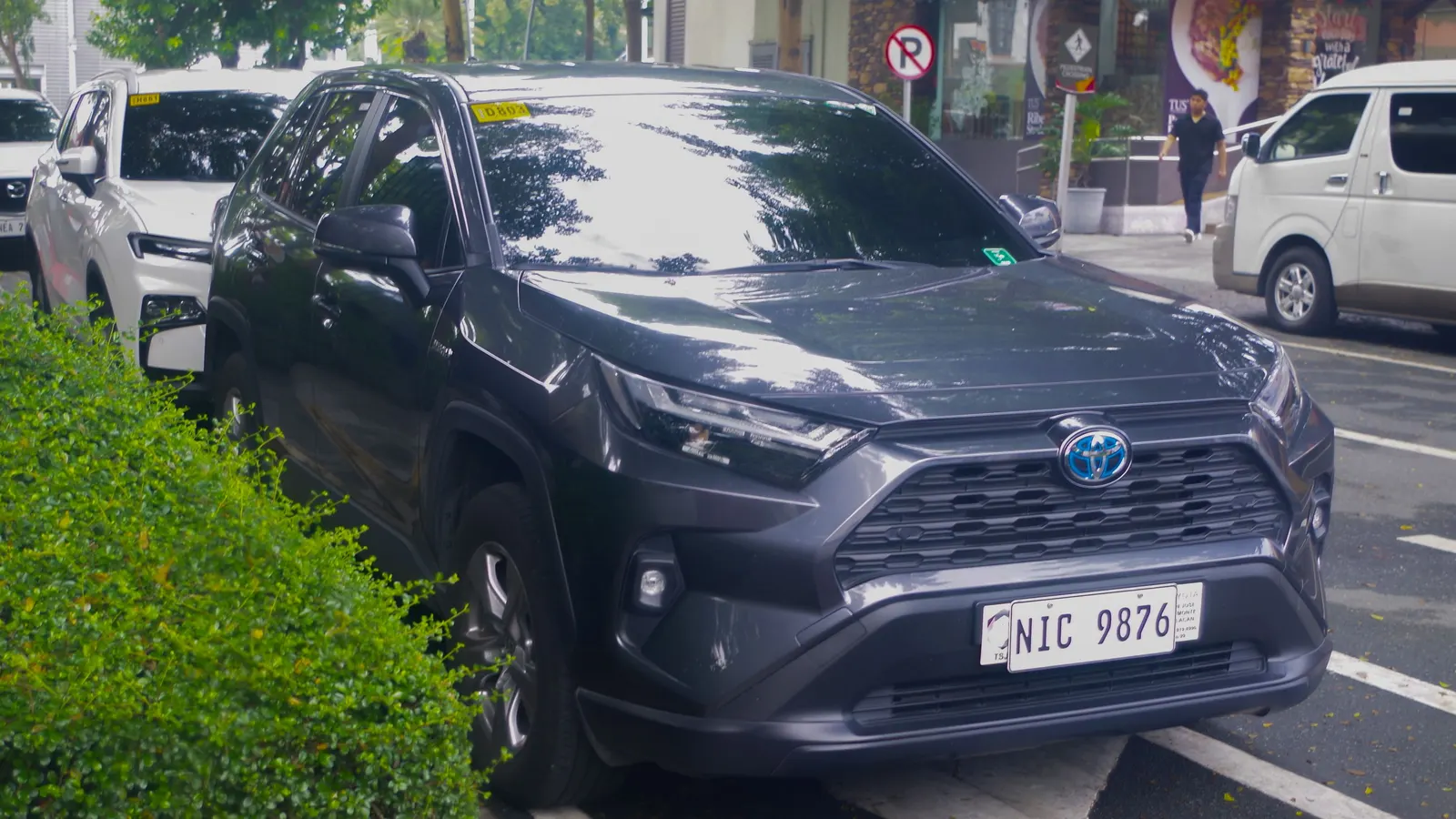
Pictured: 2022 Toyota RAV4 XLE Hybrid (Philippine model). Photo: Ethan Llamas, CC BY-SA 4.0, cropped
Owner complaints
145
14 report a crash, fire, injury or death
Recalls
1
None urgent
Most common problem
17%
of complaints: stalling while driving
Complaints per year filed
2022–2025 · peak 35
In short
Some known problemsThe 2022 Toyota RAV4 has some known problems: 26 owner complaints (18%) describe engine failure or stalling, including stalling while driving. NHTSA has 145 owner complaints, and 14 report a crash, fire, injury or death. Stalling or shutting off while driving is the most common problem, and this model year has 1 recall, for the front passenger seat sensor.
Reliability
How Reliable Is the 2022 Toyota RAV4?
This model year has the verdict of some known problems because of one issue: engine failure or stalling. About 1 in 6 owner complaints describes the engine stalling or shutting off while driving, and the wider group of engine failure complaints, which also includes fuel pump and injector failures, misfires and head gasket failures, makes up 18% of the page. A stalling engine is safety-critical, because it can leave you without power or steering assist in traffic. That is why this problem matters more than the many smaller complaints.
Owners describe the car stalling, shutting off or cutting out, often with a low power steering message or an engine stopped warning. Several describe having to restart it more than once, and one says the car would not restart until the next day. A few connect it to heavy rain, such as stalling while pulling into a parking lot during a rainstorm, though the complaints alone do not tell us why. Other owners describe jerking, shaking and sputtering, which suggests the same trouble may show up in milder forms first.
The only recall for this model year covers the front passenger seat. It says the seat may have been assembled with interference between internal parts that may cause the Occupant Classification System sensor to incorrectly detect the occupant, and dealers will inspect and repair the seat free of charge. It does not address stalling, and this model year has no recall for it. Too few owners report how repairs went to say whether dealer repairs fixed the stalling, so treat any repair history as something to ask about, not a guarantee.
Mileage reports are limited. Only a small number of owners gave an odometer reading, and the middle of those was about 26,000 miles, so the complaints describe a fairly young vehicle. That means a low-mileage example is not safe from these problems, and a low odometer reading should not replace a thorough test drive and a service history check.
If you are shopping for one, look for any record of stalling, warning messages or engine repairs, and confirm the seat recall was completed. Keep in mind the limits of the evidence. Complaint counts show what owners chose to report, not how many vehicles are affected, and they cannot show how a particular vehicle was maintained. Most RAV4 owners may never see these problems, but the ones who do describe them as a safety concern.
Top problems
The problem owners report most
Named from 145 NHTSA complaints. Open a problem for symptoms, the fix, cost and owners' accounts.
1.Stalling or shutting off while drivingCriticalAbout 1 in 6 complaints23,800–41,300 mi
Owners describe the engine stalling, shutting off or cutting out, often with a low power steering warning or an engine stopped warning, and some had to restart several times. Several reports mention heavy rain, and others mention parking lots or a drive-thru. No recall for this problem is mentioned in the complaints, and this model year has no recall for it.
What owners describe
- Engine stalls or shuts off29%
- Low power steering warning13%
- Jerking or sputtering13%
- Engine stopped warning8%
Fix
Most common repair owners describe: dealer repair (1 report).
Mileage
32,500 mi
Middle half 23,800–41,300 mi · 2 reports
Repair cost
—
Fewer than 10 owners report a repair cost
How common
17%
24 of 145 complaints
Crash, fire or injury
0%
of these complaints
Buying one
Should you buy a used 2022 Toyota RAV4?
What to check before you buy, based on the complaint and recall data.
Ask the seller whether the engine has ever stalled or shut off while driving, and test drive in a way that includes stop-and-go traffic and restarting the engine. Check that the front passenger seat recall (22V519000) was done, since dealers inspect and repair the seat free of charge. Have a dealer run the VIN for open recalls before you buy.
- 1Run the VIN for open recalls. NHTSA lists 1 recall. Check at nhtsa.gov/recalls.
- 2Test-drive for stalling while driving. It's the most common safety-critical complaint, in about 1 in 6 owner complaints, usually around 32,500 miles.
- 3Get a pre-purchase inspection. An independent mechanic can spot leaks, stored fault codes and accident repairs that a test drive misses.
Toyota RAV4 model years
Early complaints are those filed in a model year's first 3 years. They follow how many were sold, so they don't show which years are better.
Crash test ratings
NHTSA 5-Star Safety Ratings.
| SUV AWD | SUV FWD | |
|---|---|---|
| Overall | ★★★★★ | ★★★★★ |
| Frontal crash | ★★★★ | ★★★★ |
| Side crash | ★★★★★ | ★★★★★ |
| Rollover | ★★★★ | ★★★★ |
| Rollover risk | 16% | 16% |
Owning one
If you already own one
Find your symptom, see when problems tend to show up, and check which recalls apply.
Watch for the engine stalling or shutting off, a low power steering warning, an engine stopped warning, or rough running such as jerking and sputtering. If the engine cuts out while you are driving, get the car checked before relying on it again. Confirm with a dealer that the front passenger seat recall (22V519000) has been completed.
- Stalling or shutting off while drivingCriticalAbout 1 in 6 owner complaints24 of 145Median 32,500 mi
Most common repair owners describe: dealer repair (1 report).
- Water collects inside doorsMinorAbout 1 in 13 owner complaints11 of 145Median 26,000 mi
- Sunroof glass shattersSeriousAbout 1 in 14 owner complaints10 of 145Median 10,500 mi
1 recall, newest first
Open one for the risk, the remedy and what to do now.
Occupant classification › Front passengerThe front passenger seat may have been assembled with interference between internal parts that may cause the Occupant…Jul 21, 20223,533 vehicles22V519000
- Defect
- The front passenger seat may have been assembled with interference between internal parts that may cause the Occupant Classification System (OCS) sensor to incorrectly detect the occupant.
- Risk
- Incorrect detection of an occupant may result in improper air bag deployment during a crash, increasing the risk of injury.
- Remedy
- Dealers will inspect and repair the front passenger seat, as necessary, free of charge.
What to do
Check the VIN at nhtsa.gov/recalls. If a recall is open, any dealer will fix it free. For NHTSA's full record of a campaign, search its number there (for example 22V519000).
Reliability history
Toyota RAV4 reliability by year
Complaints filed in each model year's first 3 years, by trouble spot. Darker cells have more complaints; counts aren't adjusted for how many were sold each year.
All problems
Every problem reported on the 2022 RAV4
Every problem found in the 145 owner complaints, by area of the vehicle.
Body, lights & visibility
37 26%- Water collects inside doorsMinor11 8%typically at 26,000 mi26,000––
- Sunroof glass shattersSerious10 7%–––
- Windshield cracksMinor5 3%–––
- Door lock actuator failsSerious5 3%–––
- Power liftgate failsSerious4 3%–––
- Abnormal noise from window1 0.7%–––
Show 1 more body, lights & visibility problemsShow fewer body, lights & visibility problems
- Side mirror rattles1 0.7%–––
Engine
31 21%- 24 17%–––
- Sudden loss of powerCritical3 2%–––
- Fuel pump or fuel injector failureCritical2 1%–––
- Burning smell from heater vents1 0.7%–––
- Coolant bypass valve fault1 0.7%–––
- Misfires or head gasket failureSerious1 0.7%–––
Electrical
15 10%- Screen or infotainment glitchesMinor7 5%–––
- Battery drain or no-startSerious4 3%–––
- Many warning lights at onceMinor2 1%–––
- Stability control stops working1 0.7%–––
- Water leaks damaging electronicsSerious1 0.7%–––
- Electronic parking brake engages on its ownCritical1 0.7%–––
Airbags & seat belts
10 7%- Airbags did not deploy in a crashCritical6 4%–––
- Seat belts fail to latch2 1%–––
- False rear seat belt warning1 0.7%–––
- Seat belt did not retract in crash1 0.7%–––
- Airbag warning light stays onSerious1 0.7%–––
Acceleration & speed control
9 6%- Sudden or unintended accelerationCritical7 5%–––
- Hesitation when accelerating1 0.7%–––
- Accelerator pedal broke1 0.7%–––
Wheels & tires
9 6%- Steering wheel covering peels or flakesMinor3 2%–––
- Tire sidewall blowout2 1%–––
- Wheel came off while driving1 0.7%–––
- Rear camber out of spec causing tire wear1 0.7%–––
- USB port works inconsistently1 0.7%–––
- Front wheel or axle failure at speed1 0.7%–––
Show 1 more wheels & tires problemsShow fewer wheels & tires problems
- Steering wheel heater short1 0.7%–––
Driver aids & stability
8 6%- Pre-collision system does not work2 1%–––
- Front camera malfunction disables safety systems2 1%–––
- Lane keep assist unreliable1 0.7%–––
- Adaptive cruise control suddenly loses speed1 0.7%–––
- Blind spot warning misses vehicles1 0.7%–––
- Automatic emergency braking activates for no reasonCritical1 0.7%–––
Show 1 more driver aids & stability problemsShow fewer driver aids & stability problems
- False pre-collision alert1 0.7%–––
Brakes
7 5%- Brake pedal sinks or brakes failCritical4 3%–––
- ABS activates on dry roads and bumps2 1%–––
- Brake noise and early wearMinor1 0.7%–––
Fuel system & stalling
5 3%- Fuel tank takes less fuel than expected2 1%–––
- Fuel warning light comes on too early1 0.7%–––
- Fuel leaksCritical1 0.7%–––
- Gas smell in and around the car1 0.7%–––
Steering
4 3%- Loss of power steeringCritical1 0.7%–––
- Steering veers on its own1 0.7%–––
- Electric power steering low warning1 0.7%–––
- Steering drifts or pulls to the side1 0.7%–––
Other
3 2%- Excessive wind noise1 0.7%–––
- A/C condenser damaged by road debris1 0.7%–––
- High-pitched blower motor noise1 0.7%–––
- Sun visors sag1 0.7%–––
Transmission & drivetrain
2 1%- Harsh, jerky shiftingSerious1 0.7%–––
- Drops into neutral or loses drive while movingCritical1 0.7%–––
Suspension
1 0.7%- Clunks or knocks from the suspensionMinor1 0.7%–––
Fire
1 0.7%- Battery leaks and smokes1 0.7%–––
60 problems found in all 145 complaints. One complaint can describe more than one problem, so counts add up to more than the total. Not counted as a defect: 2 about recall paperwork or parts delays, 2 describing no vehicle defect. Typical miles, repair cost and fix rate show only when enough owners report them.
The data
Behind the numbers
Every figure comes from NHTSA's complaint file and APIs.
- Complaints
- 145
- Recalls
- 1
- Crashes
- 14
- Fires
- 0
- Injuries
- 12
- Deaths
- 2
Crashes and fires count complaints that report one; injuries and deaths count people.
Mileage at failure
Not enough data yet
Only 17 complaints list mileage; we chart this from 30.
Complaints by engine
Decoded from the partial VINs owners include. Not adjusted for how many of each engine were sold.
FAQ
2022 Toyota RAV4 questions
Is the 2022 Toyota RAV4 reliable?
The 2022 Toyota RAV4 has some known problems. 26 owner complaints (18%) describe engine failure or stalling, including stalling while driving, fuel pump and injector failures, misfires and head gasket failures. NHTSA has 145 owner complaints for this model year, and most owners may never see these problems.
What are the most common 2022 Toyota RAV4 problems?
Stalling or shutting off while driving is the most common problem, at 24 complaints, about 1 in 6 owner complaints. Owners describe a low power steering warning, an engine stopped warning, and jerking or sputtering. By area, body, lights and visibility has 37 complaints, including water collecting inside doors and sunroof glass that shatters.
Does the 2022 Toyota RAV4 have recalls?
The 2022 Toyota RAV4 has 1 recall, 22V519000, with no do-not-drive or park-outside warning. It covers the front passenger seat, which may have been assembled with interference between internal parts that can make the occupant sensor misread who is sitting there. Dealers inspect and repair it free of charge. Check your VIN at nhtsa.gov/recalls.
Does the 2022 Toyota RAV4 have stalling problems?
Yes, stalling is the most common complaint, with 24 complaints (17%), and it is rated critical. Owners describe the engine stalling, shutting off or cutting out while driving, sometimes needing several restarts. Several reports mention heavy rain. No recall covers stalling for this model year.
Is the 2022 Toyota RAV4 safe?
NHTSA gives the 2022 Toyota RAV4, in both AWD and FWD versions, 5 out of 5 stars overall, 4 out of 5 stars frontal, 5 out of 5 stars side and 4 out of 5 stars rollover. Owners also filed 14 complaints reporting a crash, fire, injury or death, including 2 deaths.
What should I check before buying a 2022 Toyota RAV4?
Ask the seller whether the engine has ever stalled or shut off while driving, and test drive it in stop-and-go traffic, restarting the engine. Confirm the front passenger seat recall (22V519000) was completed. Have a dealer run the VIN for open recalls, and ask about any warning messages or engine repairs.
Methodology
How we researched this
- Complaints. NHTSA's owner complaint file, counted as unique complaint numbers for make TOYOTA, model RAV4, model year 2022. Data through Oct 4, 2026.
- Verdict. Judged from this model year's own complaints, not against other models, using shares rather than counts. Serious known problems: one serious problem (transmission, engine or stalling, steering, brakes, airbags, fire, fuel leaks) is in a quarter or more of complaints; or a smaller but clear cluster comes with an unusual share of crash, fire, injury or loss-of-power reports or early failures; or an urgent recall or NHTSA investigation matches a top complaint. Some known problems: one of those signals on its own. No pattern of serious problems: none of them; this doesn't mean the vehicle is trouble-free. Too few complaints to judge: under 50 complaints. Why this verdict: 18% of complaints (26) describe engine failure or stalling (stalling while driving, fuel pump and injector failures, misfires and head gasket failures).
- No grade or class ranking. Raw complaint counts favor models that sell fewer cars, so we don't score or rank this vehicle against other models until we can adjust for sales.
- Trouble spots and history. Complaints grouped by the part owners chose when filing. The history grid counts complaints filed in each model year's first 3 years so older and newer years compare fairly; years with fewer than 3 complete years are marked too new.
- Named problems. Every one of the 145 complaints was researched and classified by its problems, severity, symptoms, repairs and any cost the owner mentions; the counts, costs and fix rates on this page are tallies of those classifications. Quotes are verbatim excerpts, checked against the original text. Engines are decoded from partial VINs with NHTSA's vPIC service.
- Repair costs and fix rates. Shown only when at least 10 owners report a repair cost, or at least 10 complaints describe whether a repair worked.
- Not adjusted for sales. Not affiliated with NHTSA. Page updated Nov 23, 2026.