2011 Toyota RAV4 Reliability & Problems
By Adrian V. LockhartUpdated All 287 NHTSA owner reports researched and classified
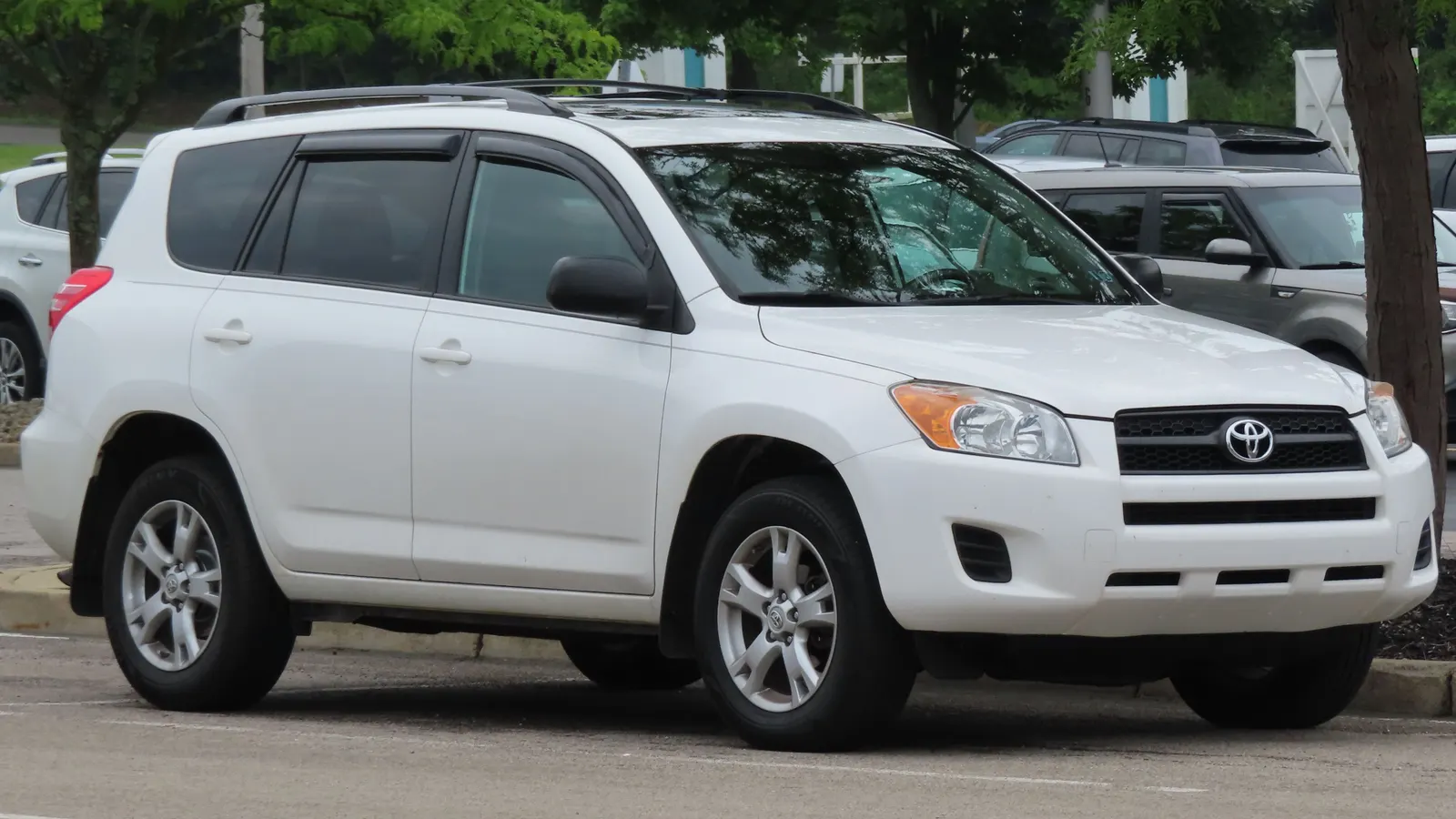
Pictured: 2011 Toyota RAV4. Photo: MercurySable99, CC BY-SA 4.0, cropped
Owner complaints
287
49 report a crash, fire, injury or death
Recalls
11
None urgent
Most common problem
28%
of complaints: sudden acceleration
Complaints per year filed
2011–2025 · peak 62
In short
No pattern of serious problemsThe 2011 Toyota RAV4 shows no pattern of serious problems in our checks: its largest serious problem class, brake failures, makes up 7% of complaints. NHTSA has 287 owner complaints, and 49 report a crash, fire, injury or death. The most common are sudden or unintended acceleration and brake pedal sinking or brake failure. It has 11 recalls.
Reliability
How Reliable Is the 2011 Toyota RAV4?
The 2011 RAV4 has a verdict of no pattern of serious problems because, when the page looks at this model year's own complaints, no single serious problem class is large enough to meet the bar. The largest one, brake failures, is 7% of complaints, and there is no do-not-drive or park-outside recall and no open serious NHTSA investigation. That verdict does not mean the complaints are harmless. Sudden or unintended acceleration is the most common complaint, at about 1 in 4, and brake pedal sinking or brake failure is next. Both are safety-critical when they happen, and owners describe crashes in connection with each.
Owners of sudden acceleration describe the vehicle surging forward or backward with slight pedal pressure, engine revs rising at a stop, and acceleration with the brakes pressed. Several describe crashing into a wall or another vehicle, and some say the airbags did not deploy. Brake complaints include the pedal going to the floor, spongy brakes, and a car that did not stop at a stop sign. The two problems overlap: some brake reports also describe the vehicle accelerating or the engine revving while the driver tried to stop. If you are looking at one of these, treat a report of either symptom as a reason for a careful inspection.
This model year has no recall for sudden acceleration or for brake failure. The recalls it does have cover other things. Three concern the rear suspension arms (rear tie rods), where the defect text says improperly tightened adjusting nuts can lead to rust, thread damage and eventual failure, which causes an abrupt change in alignment. Others cover curtain airbags that may not deploy, rear seat belts that may be cut by the seat cushion frame, seat heater wiring, the power window master switch, and wiper water drip. Owners did not report enough repair outcomes for either main problem to say whether repairs worked, so the page cannot say how often fixes held.
On mileage, sudden acceleration is reported early: the middle report is at about 31,700 miles, and a quarter of reports come before about 10,800 miles. Brake problems come a little later, with a middle report at about 37,800 miles and a quarter of reports past about 80,500 miles. So a low odometer does not rule either problem out. Complaints in general have a middle mileage of about 45,500 miles, and a third of those that give mileage are under 25,000 miles.
For a buyer, the practical step is a test drive focused on pedal feel and engine behavior at a stop, plus a recall check by VIN. Keep in mind the limits of the evidence. Complaint counts show what owners reported, not how many vehicles are affected, and they cannot show how a particular vehicle was maintained or driven.
Top problems
The 2 problems owners report most
Named from 287 NHTSA complaints. Open a problem for symptoms, the fix, cost and owners' accounts.
1.Sudden or unintended accelerationCriticalAbout 1 in 4 complaints10,800–66,700 mi
Owners describe the vehicle surging forward or backward with slight pedal pressure, engine revs rising at a stop, and acceleration with the brakes pressed, often while parking or stopped at a red light. Several report crashing into a wall or another vehicle, and some say the airbags did not deploy. Reports have a middle mileage of about 31,700 miles, and this model year has no recall for it.
What owners describe
- Crash while parking16%
Fix
Most common repair owners describe: removed aftermarket floor mat and fitted factory clips (1 report).
Mileage
31,700 mi
Middle half 10,800–66,700 mi · 74 reports
Repair cost
—
Fewer than 10 owners report a repair cost
How common
28%
81 of 287 complaints
By engine
- 2.5L 4-cyl78%
- 3.5L V622%
In owners' words
“While my foot was on the brake, the engine speed up and I had to apply extreme pressure on the brake to prevent the car from moving forward”
Owner in FLFiled 2011NHTSA 10417314 “When I depress the brake pedal, the engine revs very loudly and the vehicle feels as though it will speed in whatever gear I am in”
Owner in MA2.5L 4-cylFiled 2011NHTSA 10378897 “The engine RPMS increased as the vehicle accelerated abnormally and crashed into the vehicle ahead of him”
Owner in NY3.5L V6Filed 2011NHTSA 10396998 2.Brake pedal sinks or brakes failCriticalAbout 1 in 14 complaints18,800–80,500 mi
Owners describe the brake pedal going to the floor, spongy or loose pedal feel, and a car that did not stop at a stop sign, at speeds from about 5 mph to 65 mph. Some had to use the emergency brake. Reports have a middle mileage of about 37,800 miles, and this model year has no recall for it.
What owners describe
- Pedal goes to the floor19%
- Car does not stop19%
Fix
Most common repair owners describe: front brakes replaced before the failure (1 report).
Mileage
37,800 mi
Middle half 18,800–80,500 mi · 20 reports
Repair cost
—
Fewer than 10 owners report a repair cost
How common
7%
21 of 287 complaints
By engine
- 2.5L 4-cyl67%
- 3.5L V628%
- 2.4L 4-cyl6%
In owners' words
“When applying brakes at slow speed under 20 MPH in snow there is no braking action and the car rolls to a stop”
Owner in MIFiled 2016NHTSA 10839286 “I applied the brakes to stop at the end of my street, nothing happened, my foot went all the way to the floor”
Owner in NM2.5L 4-cylFiled 2014NHTSA 10561277 “The brakes were not responding, the vehicle was accelerating and the engine was revving”
Owner in PA3.5L V6Filed 2011NHTSA 10401568
Buying one
Should you buy a used 2011 Toyota RAV4?
What to check before you buy, based on the complaint and recall data.
Ask the seller whether the vehicle has ever surged or accelerated unexpectedly, and whether the brake pedal has ever felt soft or sunk. On a test drive, check the brake pedal feel at low speed and at a stop. Run the VIN on NHTSA's recall lookup and confirm the rear suspension, curtain airbag and seat belt recalls were completed.
- 1Run the VIN for open recalls. NHTSA lists 11 recalls. Check at nhtsa.gov/recalls.
- 2Test-drive for sudden acceleration. It's the most common safety-critical complaint, in about 1 in 4 owner complaints, usually around 31,700 miles.
- 3Get a pre-purchase inspection. An independent mechanic can spot leaks, stored fault codes and accident repairs that a test drive misses.
Toyota RAV4 model years
Early complaints are those filed in a model year's first 3 years. They follow how many were sold, so they don't show which years are better.
Crash test ratings
NHTSA 5-Star Safety Ratings.
| SUV AWD | SUV FWD | |
|---|---|---|
| Overall | ★★★ | ★★★ |
| Frontal crash | ★★★ | ★★★ |
| Side crash | ★★★★ | ★★★★ |
| Rollover | ★★★★ | ★★★★ |
| Rollover risk | 17% | 19% |
Owning one
If you already own one
Find your symptom, see when problems tend to show up, and check which recalls apply.
Watch for the engine revving or the vehicle surging when you press the brake, and for a brake pedal that feels spongy, stiff or loose. If the pedal goes to the floor or the vehicle accelerates with the brakes pressed, stop driving it and have it inspected before the next trip. Use the VIN to confirm every recall has been done.
Too few reports for a symptom finder
Only 2 symptoms reached 10 reports. If something is wrong with yours, report it at nhtsa.gov/report-a-safety-problem.
of complaints that list mileage (64 of 192) came in before 25,000 miles. A low odometer reading is no guarantee.
11 recalls, newest first
Open one for the risk, the remedy and what to do now.
Suspension › RearThe affected vehicles have rear suspension arms (rear tie rods) with adjusting lock nuts that may have been…Aug 12, 2016337,449 vehicles16V596000
- Defect
- The affected vehicles have rear suspension arms (rear tie rods) with adjusting lock nuts that may have been improperly tightened after servicing.
- Risk
- Failure of the rear tie rod could cause a loss of vehicle control, increasing the risk of a crash.
- Remedy
- Dealers will replace both rear suspension arms and encapsulate the locknuts, free of charge.
Front assembly › Seat heater/coolerThe electrical wiring in the seat heaters may be damaged when the seat cushion is compressed.Jun 2, 20167,749 vehicles16V396000
- Defect
- The electrical wiring in the seat heaters may be damaged when the seat cushion is compressed.
- Risk
- If damaged, the copper strand heating element may short circuit, increasing the risk of a fire.
- Remedy
- Dealers will disconnect the seat heaters, free of charge, and refund the purchase price of the seat heater accessory.
Seat belts › Rear/otherIn the event of a frontal collision, the rear seat belts for the outboard seats may be cut by the seat cushion frame.Feb 19, 20161,123,752 vehicles16V096000
- Defect
- In the event of a frontal collision, the rear seat belts for the outboard seats may be cut by the seat cushion frame.
- Risk
- A cut seat belt may not properly restrain the seat occupant, increasing their risk of injury in a crash.
- Remedy
- Dealers will install a protector over both rear seat cushion frames, free of charge.
Visibility › Power window devices and controlsDuring the manufacturing of the Power Window Master Switch (PWMS), grease lubricant may have been inconsistently…Oct 22, 20151,814,284 vehicles15V689000
- Defect
- During the manufacturing of the Power Window Master Switch (PWMS), grease lubricant may have been inconsistently applied to the sliding electrical contacts.
- Risk
- If the sliding electrical contacts are not protected by lubricant, debris and moisture that get into the switch may cause a short circuit and the switch assembly may overheat and melt, increasing the risk of a fire.
- Remedy
- Dealers will inspect the switch, applying a lubricant if no abnormality is found.
Visibility/wiperIn the affected vehicles, water may drip onto the joint that connects the wiper linkage to the wiper motor.Sep 18, 2015423,456 vehicles15V577000
- Defect
- In the affected vehicles, water may drip onto the joint that connects the wiper linkage to the wiper motor.
- Risk
- Over time, the dripping water may cause corrosion and wear at the joint, potentially resulting in the separation of the wiper linkage.
- Remedy
- Dealers will replace the water diverter channel.
Show all 11 recallsShow fewer recalls
Front assembly › Seat heater/coolerThe affected vehicles may experience compression of the seat cushion which may damage the seat heater wiring.Nov 19, 20143,233 vehicles14V743000
- Defect
- The affected vehicles may experience compression of the seat cushion which may damage the seat heater wiring.
- Risk
- Damage to the seat heater wiring could cause the wires to short, increasing the risk of the seat burning and causing personal injury to the occupant.
- Remedy
- Dealers will disconnect the heaters with copper strand heating elements and refund the purchase price of the seat heater accessory, free of charge.
Suspension › RearIf the nuts for adjusting the rear wheel alignment are improperly tightened during service, the rear suspension arm…Aug 28, 2013780,584 vehicles13V383000
- Defect
- If the nuts for adjusting the rear wheel alignment are improperly tightened during service, the rear suspension arm (rear tie rod) may develop unwanted movement and rust leading to thread damage and eventual failure. Failure of the rear tie rod will cause an abrupt change in the vehicle's alignment.
- Risk
- Failure of the rear tie rod could cause a loss of vehicle control, increasing the risk of a crash.
- Remedy
- Dealers will inspect the tie rods and replace any that have rust or corrosion on the alignment adjustment threads.
Other › LabelsThese vehicles were sold with labels that were outside the allowable one percent of accuracy of actual weight added.…Apr 9, 20137,525 vehicles13V123000
- Defect
- These vehicles were sold with labels that were outside the allowable one percent of accuracy of actual weight added. Thus, these vehicles fail to comply with the requirements of Federal Motor Vehicle Safety Standard (FMVSS) Number 110, "Tire Selection and Rims."
- Risk
- An inaccurate label could lead to owners overloading their vehicles and tires. An overloaded vehicle can result in a tire failure which may result in a vehicle crash, personal injury, or property damage.
- Remedy
- Southeast Toyota will notify owners and provide a corrected label with instructions concerning its installation.
Frontal › Sensor/control module-inactiveDuring modification by SET to include accessories such as leather seat covers, seat heaters or headrest DVD systems,…Jan 16, 20133,235 vehicles13V014000
- Defect
- During modification by SET to include accessories such as leather seat covers, seat heaters or headrest DVD systems, these vehicles may not have had the passenger seat occupant sensing system calibration tested.
- Risk
- If the front passenger seat occupant sensing system is out of calibration, the front passenger airbags may not deploy or they may deploy inappropriately for the passenger's size and position.
- Remedy
- Dealers will test the sensitivity of the occupant detection sensors, and recalibrate them as necessary.
Suspension › RearIf the nuts for adjusting the rear wheel alignment are improperly tightened during service, the rear suspension arm…Aug 2, 2012780,584 vehicles12V373000
- Defect
- If the nuts for adjusting the rear wheel alignment are improperly tightened during service, the rear suspension arm (rear tie rod) may develop unwanted movement and rust, leading to thread damage and eventual failure. Failure of the rear tie rod will cause an abrupt change in the vehicle's alignment.
- Risk
- Failure of the rear tie rod could cause a loss of vehicle control, increasing the risk of a crash.
- Remedy
- Dealers will inspect the rear tie-rod nut for looseness and replace any suspect tie-rod found loose.
Air bags › Side/windowIN THE CURTAIN SHIELD AIRBAGS, PROPELLANT WITH THE INCORRECT SPECIFICATION WAS USED FOR THE INITIATOR ASSEMBLED IN…Feb 1, 2012427 vehicles12V029000
- Defect
- IN THE CURTAIN SHIELD AIRBAGS, PROPELLANT WITH THE INCORRECT SPECIFICATION WAS USED FOR THE INITIATOR ASSEMBLED IN THE AIRBAG INFLATOR. IN THIS CONDITION, THE INFLATOR MAY NOT PERFORM PROPERLY, CAUSING ONE OR BOTH CURTAIN SHIELD AIRBAGS TO NOT DEPLOY.
- Risk
- IN THE EVENT OF A CRASH, THE AIRBAGS MAY NOT DEPLOY AND WILL NOT BE ABLE TO PROPERLY PROTECT AN OCCUPANT, INCREASING THE RISK OF INJURIES.
- Remedy
- DEALERS WILL CHECK THE VEHICLE IDENTIFICATION NUMBER TO IDENTIFY THE CURTAIN SHIELD ASSEMBLIES AND REPLACE THE ASSEMBLIES AS NECESSARY WITH NEW ONES FREE OF CHARGE.
What to do
Check the VIN at nhtsa.gov/recalls. If a recall is open, any dealer will fix it free. For NHTSA's full record of a campaign, search its number there (for example 16V596000).
Reliability history
Toyota RAV4 reliability by year
Complaints filed in each model year's first 3 years, by trouble spot. Darker cells have more complaints; counts aren't adjusted for how many were sold each year.
All problems
Every problem reported on the 2011 RAV4
Every problem found in the 287 owner complaints, by area of the vehicle.
Acceleration & speed control
82 29%- 81 28%typically at 31,700 mi31,700––
- Severe vibration while accelerating1 0.3%–––
Brakes
34 12%- Brake pedal sinks or brakes failCritical21 7%typically at 37,800 mi37,800––
- Brake and accelerator pedals too close togetherSerious6 2%–––
- Brake noise and early wearMinor3 1%–––
- Weak braking, pedal must be pressed hard2 0.7%–––
- Underbody, frame or brake line rust2 0.7%–––
- Vehicle fails to decelerate when braking1 0.3%–––
Show 1 more brakes problemsShow fewer brakes problems
- Brake lights come on by themselves1 0.3%–––
Body, lights & visibility
26 9%- Paint peeling or clear coat failureMinor5 2%–––
- Driver sun visor droopsMinor5 2%typically at 73,000 mi73,000––
- Windshield wiper failure2 0.7%–––
- Turn signal does not cancel1 0.3%–––
- Door opens while driving1 0.3%–––
- Third-row headrests do not fit children1 0.3%–––
Show 11 more body, lights & visibility problemsShow fewer body, lights & visibility problems
- Wind noise on the freeway1 0.3%–––
- Loud bang from underneath1 0.3%–––
- Rear liftgate latch failure1 0.3%–––
- Windows fog and heat fails in freezing weather1 0.3%–––
- Headrest pushes head too far forward1 0.3%–––
- Doors lock by themselves1 0.3%–––
- Driver sun visor will not stay up1 0.3%–––
- Driver window sticks or stops working1 0.3%–––
- Rear door lock fails1 0.3%–––
- Sunroof glass shatters1 0.3%–––
- Water spots build up on windows1 0.3%–––
Transmission & drivetrain
23 8%- Rear differential or axle seal leakSerious7 2%typically at 79,000 mi79,000––
- Transmission failure needing replacementSerious4 1%–––
- Check engine, 4WD and traction lights from oxygen sensorMinor3 1%–––
- Power transfer unit (PTU) or 4WD failureCritical2 0.7%–––
- Camshaft timing gear problem2 0.7%–––
- Rolls backward in drive1 0.3%–––
Show 6 more transmission & drivetrain problemsShow fewer transmission & drivetrain problems
- Transmission side cover leak1 0.3%–––
- Defective VVT-i gear1 0.3%–––
- Transaxle fluid leak1 0.3%–––
- Vehicle rolls away when parked1 0.3%–––
- Harsh, jerky shiftingSerious1 0.3%–––
- Transmission grinding noise1 0.3%–––
Airbags & seat belts
17 6%- Airbags did not deploy in a crashCritical8 3%typically at 37,000 mi37,000––
- Seat belt kinks and will not retract2 0.7%–––
- Passenger airbag turns off with an adult in the seatCritical2 0.7%–––
- Airbag warning light stays onSerious2 0.7%–––
- Side airbag compartment opened without deployment1 0.3%–––
- Rear seat belt jams and will not engage1 0.3%–––
Show 2 more airbags & seat belts problemsShow fewer airbags & seat belts problems
- Side curtain airbags deployed unexpectedly1 0.3%–––
- Seat belts inoperable after recall repair1 0.3%–––
Steering
15 5%- Sticky or notchy steeringSerious6 2%–––
- Shaking at highway speed2 0.7%–––
- Vehicle veers to the left on its own2 0.7%–––
- Loss of power steeringCritical2 0.7%–––
- Steering angle sensor failure1 0.3%–––
- Rear alignment adjusters seized1 0.3%–––
Show 1 more steering problemsShow fewer steering problems
- Steering gear needs replacing1 0.3%–––
Engine
14 5%- Stalling or shutting off while drivingCritical7 2%–––
- Excessive oil consumptionCritical6 2%–––
- Exhaust fumes or carbon monoxide in the cabinCritical3 1%–––
- Intermittent power loss at low speeds1 0.3%–––
- Engine rattling noise1 0.3%–––
- No oil warning until the car stops1 0.3%–––
Electrical
12 4%- Many warning lights at onceMinor5 2%typically at 64,000 mi64,000––
- Screen or infotainment glitchesMinor2 0.7%–––
- Battery drain or no-startSerious2 0.7%–––
- Radio shuts off1 0.3%–––
- Wiring harness damage1 0.3%–––
- Vehicle restarts on its own after shutoff1 0.3%–––
Wheels & tires
12 4%- Tire failure2 0.7%–––
- Rusting wheels cause slow tire leaks2 0.7%–––
- Clunk when turning the steering wheel1 0.3%–––
- Rear tires worn on the inner edge1 0.3%–––
- Corroded wheels1 0.3%–––
- Rear suspension bolt shoots out, wheel nearly falls off1 0.3%–––
Show 4 more wheels & tires problemsShow fewer wheels & tires problems
- Wheel bearing failing1 0.3%–––
- Tire pressure monitor sensors fail1 0.3%–––
- Tire keeps losing air1 0.3%–––
- Spare tire rear cover falls off1 0.3%–––
Suspension
8 3%- Rear control arm rusting or breakingCritical4 1%–––
- Clunks or knocks from the suspensionMinor1 0.3%–––
- Rear alignment adjusters frozen1 0.3%–––
- Shocks leaking oil1 0.3%–––
- Rear suspension keeps bouncing1 0.3%–––
- Defogger blows no air1 0.3%–––
Fire
5 2%- Vehicle catches fireCritical5 2%–––
Driver aids & stability
4 1%- Evaporative emissions charcoal canister failureSerious4 1%–––
Fuel system & stalling
3 1%- Fuel leaksCritical2 0.7%–––
- Poor fuel economy1 0.3%–––
85 problems found in all 287 complaints. One complaint can describe more than one problem, so counts add up to more than the total. Not counted as a defect: 47 about recall paperwork or parts delays, 8 describing no vehicle defect. Typical miles, repair cost and fix rate show only when enough owners report them.
The data
Behind the numbers
Every figure comes from NHTSA's complaint file and APIs.
- Complaints
- 287
- Recalls
- 11
- Crashes
- 44
- Fires
- 8
- Injuries
- 20
- Deaths
- 0
Crashes and fires count complaints that report one; injuries and deaths count people.
Complaints by engine
Decoded from the partial VINs owners include. Not adjusted for how many of each engine were sold.
FAQ
2011 Toyota RAV4 questions
Is the 2011 Toyota RAV4 reliable?
The 2011 Toyota RAV4 shows no pattern of serious problems. The largest serious problem class is brake problems (brake failure), at 7% of complaints, and there is no do-not-drive or park-outside recall or open serious NHTSA investigation. That does not make the complaints harmless: sudden or unintended acceleration is the most common, at about 1 in 4.
What are the most common 2011 Toyota RAV4 problems?
Sudden or unintended acceleration is the most common, with 81 complaints (28%), about 1 in 4 owner complaints. Brake pedal sinking or brake failure is next, with 21 complaints (7%). Other complaint areas include rear differential or axle seal leaks, airbags that did not deploy in a crash, and sticky or notchy steering.
How many recalls does the 2011 Toyota RAV4 have?
The 2011 Toyota RAV4 has 11 recalls, and none is a do-not-drive or park-outside recall. Three cover the rear suspension arms (rear tie rods): 16V596000, 13V383000 and 12V373000. Others cover the curtain airbags (12V029000), rear seat belts (16V096000), seat heater wiring (16V396000, 14V743000), the power window master switch (15V689000), wiper water drip (15V577000), a tire label (13V123000) and the passenger airbag sensor (13V014000). Check your VIN at nhtsa.gov/recalls.
Does the 2011 Toyota RAV4 have sudden acceleration problems?
Yes, it is the most common complaint, with 81 complaints (28%). Owners describe the vehicle surging forward or backward with slight pedal pressure, engine revs rising at a stop, and acceleration with the brakes pressed. Several report crashing into a wall or another vehicle. This model year has no recall for it.
At what mileage do 2011 Toyota RAV4 problems appear?
Sudden acceleration is reported early, with a middle report at about 31,700 miles and a quarter of reports before about 10,800 miles. Brake problems have a middle report at about 37,800 miles. Complaints overall have a middle mileage of about 45,500 miles, so a low odometer does not rule these problems out.
Is the 2011 Toyota RAV4 safe?
NHTSA rates the 2011 Toyota RAV4 at 3 out of 5 stars overall, 3 out of 5 stars for frontal crash, 4 out of 5 stars for side crash and 4 out of 5 stars for rollover. The ratings are the same for the AWD and FWD versions. Owners filed 287 complaints, and 49 of them report a crash, fire, injury or death.
What should I check before buying a 2011 Toyota RAV4?
Ask the seller whether the vehicle has ever surged or accelerated unexpectedly, or whether the brake pedal has felt soft or sunk. On a test drive, check the brake pedal feel at low speed and at a stop. Run the VIN on NHTSA's recall lookup and confirm the rear suspension, curtain airbag and seat belt recalls were completed.
Methodology
How we researched this
- Complaints. NHTSA's owner complaint file, counted as unique complaint numbers for make TOYOTA, model RAV4, model year 2011. Data through Oct 4, 2026.
- Verdict. Judged from this model year's own complaints, not against other models, using shares rather than counts. Serious known problems: one serious problem (transmission, engine or stalling, steering, brakes, airbags, fire, fuel leaks) is in a quarter or more of complaints; or a smaller but clear cluster comes with an unusual share of crash, fire, injury or loss-of-power reports or early failures; or an urgent recall or NHTSA investigation matches a top complaint. Some known problems: one of those signals on its own. No pattern of serious problems: none of them; this doesn't mean the vehicle is trouble-free. Too few complaints to judge: under 50 complaints. Why this verdict: Checked: the largest serious problem class is brake problems (brake failure), 7% of complaints; safety-related complaints are 19% (typical: 17%), and there's no do-not-drive or park-outside recall or open serious NHTSA investigation..
- No grade or class ranking. Raw complaint counts favor models that sell fewer cars, so we don't score or rank this vehicle against other models until we can adjust for sales.
- Trouble spots and history. Complaints grouped by the part owners chose when filing. The history grid counts complaints filed in each model year's first 3 years so older and newer years compare fairly; years with fewer than 3 complete years are marked too new.
- Named problems. Every one of the 287 complaints was researched and classified by its problems, severity, symptoms, repairs and any cost the owner mentions; the counts, costs and fix rates on this page are tallies of those classifications. Quotes are verbatim excerpts, checked against the original text. Engines are decoded from partial VINs with NHTSA's vPIC service.
- Repair costs and fix rates. Shown only when at least 10 owners report a repair cost, or at least 10 complaints describe whether a repair worked.
- Not adjusted for sales. Not affiliated with NHTSA. Page updated Nov 23, 2026.