2006 Toyota RAV4 Reliability & Problems
By Adrian V. LockhartUpdated All 705 NHTSA owner reports researched and classified
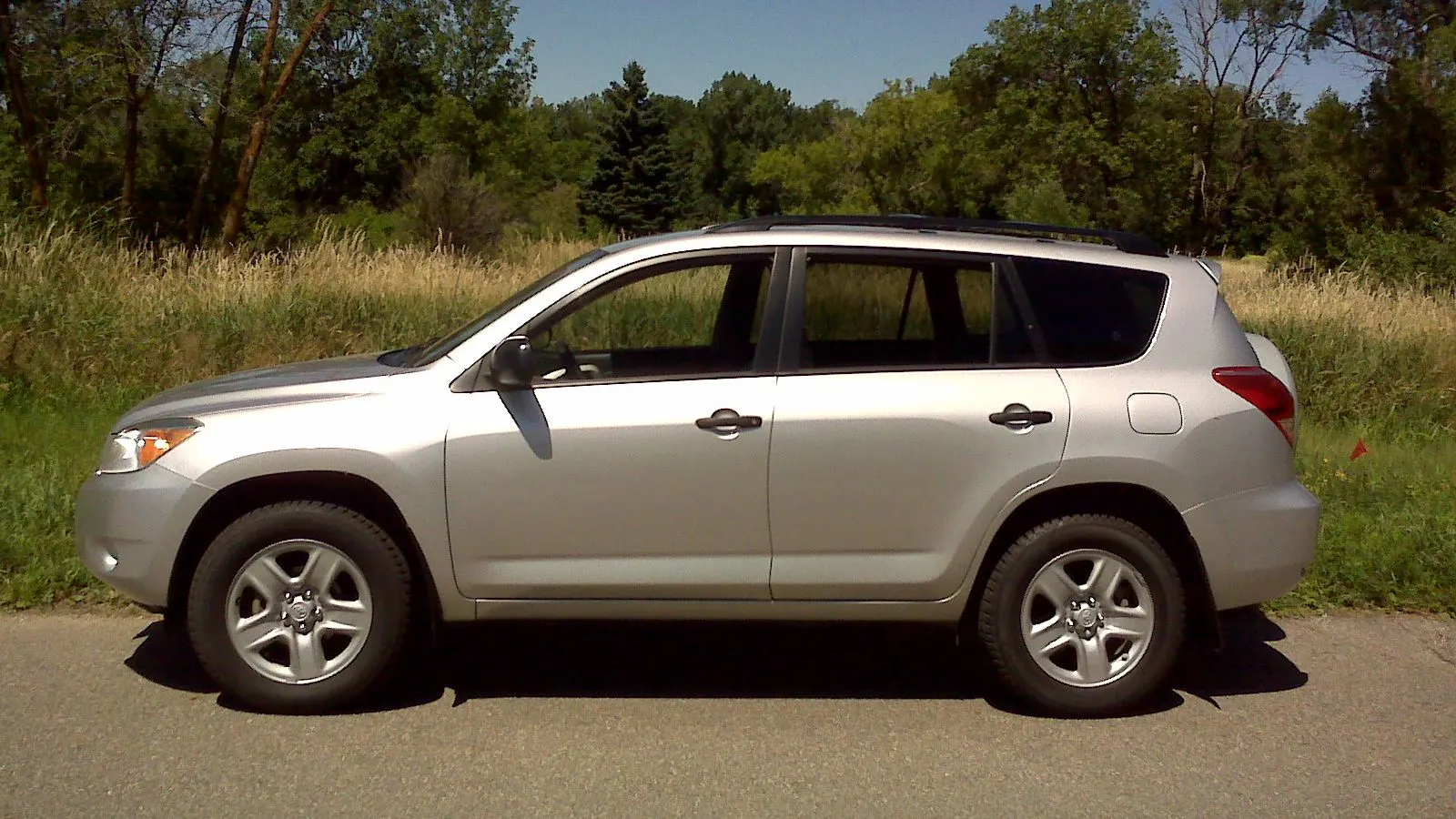
Pictured: 2006 Toyota RAV4. Photo: JBleeker, CC BY-SA 3.0, cropped
Owner complaints
705
34 report a crash, fire, injury or death
Recalls
11
None urgent
Most common problem
28%
of complaints: steering clunk
Complaints per year filed
2006–2025 · peak 122
In short
Some known problemsThe 2006 Toyota RAV4 has some known problems, mainly because an NHTSA investigation into rear suspension arm failure ended in recalls 12V373000 and 13V383000. NHTSA has 705 owner complaints, and 34 report a crash, fire, injury or death. The most common are steering clunks, oil consumption and sudden acceleration. There are 11 recalls.
Reliability
How Reliable Is the 2006 Toyota RAV4?
This model year is listed as having some known problems rather than no pattern, and the reason is official, not just owner counts. NHTSA opened an investigation (PE12013) into rear suspension arm failure, and it closed with recalls 12V373000 and 13V383000. None of the recalls for this vehicle is a do-not-drive or park-outside notice. Most of the complaints are about things that are annoying or costly, but a few describe safety-critical events such as sudden acceleration and a failing rear suspension arm.
The most common complaint by far is a clunk or knock when turning the steering wheel, reported by about 1 in 4 owners. NHTSA classes it as minor, and owners describe it getting louder over time. Excessive oil consumption comes next, reported mainly on the 2.4L engine, and owners describe the oil light coming on, an empty dipstick and in one case engine damage from low oil. The airbag warning light staying on is the third recurring electrical complaint, with several owners quoted a spiral cable or clock spring replacement. Sudden or unintended acceleration is less common but far more serious, and some of those reports describe crashes. A few owners mention floor mats among the repairs they were given, and this model year has recall 11V113000, in which the accelerator pedal can get stuck wide open because an unsecured or incompatible driver's floor mat traps it.
The recalls confirm the rear suspension problem. Recalls 12V373000 and 13V383000 describe rear suspension arms (rear tie rods) that can rust and fail if the alignment adjusting nuts are improperly tightened during service, which causes an abrupt change in the vehicle's alignment. Recall 16V596000 covers the same arms, where the lock nuts may have been improperly tightened after servicing, with dealers replacing both arms. Owners who report a broken arm describe a loud bang, a wheel out of alignment and swerving, and complaints lean toward repairs that failed, though the number reporting an outcome is small. The airbag light complaints link to recall 14V168000, which covers the spiral cable assembly that connects the driver's airbag, but the recall's fix is a notification, so owners should confirm what was done. The steering clunk, oil consumption and sudden acceleration complaints have no recall for them beyond the floor mat recall. Of the 31 owners who said whether a steering repair worked, 10 said it fixed the problem, 6 said partly and 15 said no, so complaints lean toward repairs that failed.
Mileage helps when you look at a particular vehicle. Sudden acceleration is reported early, with a median of about 24,000 miles, and so are steering clunks at about 40,000 miles. Oil consumption shows up later, with a median of about 99,000 miles and the middle half of reports between about 76,000 and 134,000 miles. The airbag light is reported around 89,500 miles, and rear control arm failure and loss of power steering are both reported at around 100,000 miles or more. A vehicle in that range with an unchecked rear suspension is the one most worth inspecting.
If you are buying, the rear suspension recall history, the oil level and a steering test drive matter most. Repair costs for steering clunks reported by owners had a middle value of about $700, and airbag light repairs about $509. Complaint counts show what owners reported, not how many vehicles are affected, and they cannot show how a particular vehicle was maintained. A service history and a pre-purchase inspection will tell you more about one vehicle than the totals can.
Top problems
The 10 problems owners report most
Named from 705 NHTSA complaints. Open a problem for symptoms, the fix, cost and owners' accounts.
1.Steering clunk or knock when turningMinorAbout 1 in 4 complaints27,500–54,800 mi~$700 repair
Owners describe clunking in the steering column or from the steering wheel when turning, often at low speed, and say the noise gets louder over time. Reports have a median of about 40,000 miles, with the middle half between about 27,500 and 54,800 miles. No recall is mentioned for this problem.
What owners describe
- Noise from steering column28%
- Noise getting louder8%
- Clunk when turning wheel7%
Fix
Most common repair owners describe: steering shaft replaced (2 reports).
Repair worked in 42% of complaints that describe one (complaints lean toward repairs that failed)
Mileage
40,000 mi
Middle half 27,500–54,800 mi · 170 reports
Repair cost
$700
Middle half $500–$1,001 · 37 owner amounts
How common
28%
194 of 705 complaints
By engine
- 2.4L 4-cyl59%
- 3.5L V641%
In owners' words
“Since day one there was a knocking/popping sound coming from the steering column when turning the wheel at park and low speeds.”
Owner in GA2.4L 4-cylFiled 2009NHTSA 10253513 “I have a loud knocking sound in the steering column of my rav4 when I make low-turn speeds.”
Owner in KYFiled 2007NHTSA 10204035 “I have begun to notice the knocking/creaking noise when making turns at slow speeds.”
Owner in PAFiled 2007NHTSA 10212875 2.Excessive oil consumptionSeriousAbout 1 in 8 complaints76,000–134,000 mi
Owners describe an empty dipstick, an oil light coming on, and having to add oil often, mostly on the 2.4L engine. Some say the oil light flickers when braking hard. Reports have a median of about 99,000 miles. No recall is mentioned for this problem.
What owners describe
- Oil light on or flickering22%
- Burns oil between changes20%
Fix
Most common repair owners describe: added oil (2 reports).
Mileage
99,000 mi
Middle half 76,000–134,000 mi · 65 reports
Repair cost
—
Fewer than 10 owners report a repair cost
How common
12%
86 of 705 complaints
Crash, fire or injury
2%
of these complaints
In owners' words
“I was advised to keep checking & adding oil as needed and I would be notified when the parts arrived”
Owner in PA2.4L 4-cylFiled 2016NHTSA 10823745 “It failed the consumption test & I was told that as soon as parts became available I'd be contacted”
Owner in WI2.4L 4-cylFiled 2015NHTSA 10779438 “Vehicle suddenly started consuming large amounts of oil, approximately 1 quart per 1,000 miles.”
Owner in TN2.4L 4-cylFiled 2015NHTSA 10672453 3.Sudden or unintended accelerationCriticalAbout 1 in 13 complaints11,700–54,000 mi
Owners describe the engine racing while stopped, the vehicle lurching forward or reversing at speed, and in some cases hitting another vehicle. Reports have a median of about 24,000 miles. Recall 11V113000 covers an accelerator pedal that can get stuck wide open because it is trapped by an unsecured or incompatible driver's floor mat.
What owners describe
- Lurches forward suddenly11%
- Crash after surge9%
- Engine racing while stopped6%
Fix
Most common repair owners describe: computer replaced (1 report). Recall 11V113000.
Mileage
24,000 mi
Middle half 11,700–54,000 mi · 47 reports
Repair cost
—
Fewer than 10 owners report a repair cost
How common
8%
53 of 705 complaints
By engine
- 2.4L 4-cyl67%
- 3.5L V633%
In owners' words
“While his foot was on the brake and he was stopped at a light, the vehicle lurched forward and struck the vehicle in front of him.”
Owner in NY3.5L V6Filed 2007NHTSA 10179165 “The contact had to depress hard on the brakes and/or shift into neutral in order to keep the vehicle from entering into traffic.”
Owner in PA2.4L 4-cylFiled 2008NHTSA 10219888 “Noticed soon after that car would surge forward, especially when you want to slow down and let your foot off the brake to coast.”
Owner in TN2.4L 4-cylFiled 2009NHTSA 10277042 4.Airbag warning light stays onSeriousAbout 1 in 16 complaints73,500–106,400 mi~$500 repair
Owners describe the airbag light coming on while driving or shortly after starting, and many are quoted a spiral cable or clock spring replacement. Reports have a median of about 89,500 miles. Recall 14V168000, which covers the spiral cable assembly connected to the driver's airbag, is mentioned.
What owners describe
- Airbag light stays on49%
- Clock spring needs replacing33%
- Light after starting9%
Fix
Most common repair owners describe: spiral cable replacement quoted (5 reports). Recall 14V168000.
Mileage
89,500 mi
Middle half 73,500–106,400 mi · 39 reports
Repair cost
$509
Middle half $493–$592 · 11 owner amounts
How common
6%
45 of 705 complaints
By engine
- 2.4L 4-cyl68%
- 3.5L V632%
In owners' words
“They told me that the spiral cable is not working and my airbag will most likely not deploy if I am in an accident.”
Owner in AZ2.4L 4-cylFiled 2015NHTSA 10759708 “While driving the car the srs warning light illuminated indicating that the air bags had been deactivated.”
Owner in VA2.4L 4-cylFiled 2017NHTSA 11032271 5.Delayed or inconsistent throttle responseSeriousAbout 1 in 25 complaints550–6,600 mi
Owners describe a delay of a second or more before the engine responds, bogging down when merging or pulling away, and sometimes a lurch afterwards. Reports have a median of about 1,000 miles, so many come early in ownership. No recall is mentioned for this problem.
What owners describe
- Hesitation when merging32%
- Delay before engine responds29%
- Engine bogs down14%
- Lurch after the delay14%
Fix
Owners don't describe a consistent repair yet.
Mileage
1,000 mi
Middle half 550–6,600 mi · 19 reports
Repair cost
—
Fewer than 10 owners report a repair cost
How common
4%
28 of 705 complaints
By engine
- 2.4L 4-cyl79%
- 3.5L V621%
In owners' words
“From a coasting position there is a delay in response when engaging the accelerator, usually followed by a sudden high speed acceleration.”
Owner in CA3.5L V6Filed 2006NHTSA 10167760 “The dealer checked the engine computer and told me that the degree of malfunctioning is "normal" and could not be addressed.”
Owner in NH2.4L 4-cylFiled 2006NHTSA 10167098 “There is a significant delay in delivering forward speed regardless of how much pressure is put on the foot feed.”
Owner in GA2.4L 4-cylFiled 2006NHTSA 10166246
Show 5 more problemsShow fewer problems
6.Rear control arm rusting or breakingCriticalAbout 1 in 31 complaints88,400–120,900 mi
Owners describe a loud bang from the rear, a rear wheel out of alignment and swerving in turns, and some say they lost control. Reports have a median of about 100,000 miles. Recalls 13V383000, 16V596000 and 12V373000 are mentioned.
What owners describe
- Broken or bent tie rod26%
- Loud bang from rear22%
- Rear wheel out of alignment17%
- Swerving or sway in turns13%
Fix
Most common repair owners describe: recall rear lower suspension arm repair (2 reports). Recalls 13V383000, 16V596000, 12V373000.
Mileage
100,000 mi
Middle half 88,400–120,900 mi · 20 reports
Repair cost
—
Fewer than 10 owners report a repair cost
How common
3%
23 of 705 complaints
By engine
- 2.4L 4-cyl63%
- 3.5L V637%
In owners' words
“Even the smallest bump would cause the rear of the vehicle to feel as if I was losing traction and "fish-tailing."”
Owner in NC2.4L 4-cylFiled 2017NHTSA 10992061 “A bumping noise was heard coming from the rear of the vehicle and the vehicle would not drive in a straight line.”
Owner in IL2.4L 4-cylFiled 2018NHTSA 11153373 “The rear suspension arm on my Toyota rav4 failed, causing the wheel to drop off the car as I entered I-95.”
Owner in VA2.4L 4-cylFiled 2015NHTSA 10703432 7.Many warning lights at onceMinorAbout 1 in 32 complaints22,400–81,800 mi
Owners describe the stability, traction and speed control lights coming on together or all the dash lights lighting up, sometimes after driving in snow. Reports have a median of about 55,000 miles. No recall is mentioned for this problem.
What owners describe
- All dash lights come on27%
- ABS and brake lights on23%
- Stability and traction off23%
- Lights after snow driving14%
Fix
Most common repair owners describe: cut rotors replaced front and rear rotors and brakes (1 report).
Mileage
55,000 mi
Middle half 22,400–81,800 mi · 22 reports
Repair cost
—
Fewer than 10 owners report a repair cost
How common
3%
22 of 705 complaints
By engine
- 2.4L 4-cyl65%
- 3.5L V635%
In owners' words
“I had to slam on the brakes and all my warning lights came on the ABS light the traction control, the brake like.”
Owner in TX3.5L V6Filed 2008NHTSA 10223416 “Computer problems causing all the lights to come on the dashboard and disabling the shifting solenoid.”
Owner in NJFiled 2017NHTSA 10980441 8.Sun visor won't stay upMinorAbout 1 in 34 complaints50,000–96,000 mi
Owners describe the driver's visor dropping in front of their face, blocking the view, or hitting their head while driving. Reports have a median of about 68,000 miles. No recall is mentioned for this problem.
What owners describe
- Visor blocks the view38%
- Visor will not stay up19%
- Visor drops in front of face19%
- Visor sags or hits head10%
Fix
Most common repair owners describe: dealer offered fix for a fee (1 report).
Mileage
68,000 mi
Middle half 50,000–96,000 mi · 17 reports
Repair cost
—
Fewer than 10 owners report a repair cost
How common
3%
21 of 705 complaints
By engine
- 2.4L 4-cyl62%
- 3.5L V638%
In owners' words
“The drivers side sun visor will not stay up and this creates a problem while driving to the extent where it is a visibility hazard.”
Owner in MO2.4L 4-cylFiled 2011NHTSA 10390171 “Sun visor will not stay in up position leading to a safety hazard obscuring drivers sight and a collision hazard.”
Owner in MNFiled 2010NHTSA 10342395 “Passenger sunvisor will not stay in up locked position. Falls down and my wife has hit her head getting in rav.”
Owner in NYFiled 2012NHTSA 10463060 9.Oil leaks or sudden oil lossSeriousAbout 1 in 35 complaints46,000–71,400 mi
Owners describe a dipstick with no oil, smoke from under the hood, and an oil pipe or hose coming off or splitting while driving. Reports have a median of about 59,200 miles and most come from the 3.5L V6. No recall is mentioned for this problem.
What owners describe
- No oil on dipstick30%
- Oil pipe or hose failure30%
- Smoke from hood or engine20%
- Knocking or lost power10%
Fix
Most common repair owners describe: vvti oil pipe on order (1 report).
Mileage
59,200 mi
Middle half 46,000–71,400 mi · 19 reports
Repair cost
—
Fewer than 10 owners report a repair cost
How common
3%
20 of 705 complaints
By engine
- 3.5L V671%
- 2.4L 4-cyl29%
In owners' words
“The oil was just running out - the bottom of the car was covered with splattered oil and in about 15minutes - no oil left!”
Owner in MN3.5L V6Filed 2009NHTSA 10268902 “A rubber hose that ran from the valve cover to the oil pump reservoir had split and pumped out all the oil.”
Owner in VA3.5L V6Filed 2009NHTSA 10282239 “He placed five quarts of oil in the vehicle and within 30 minutes, all five quarts had leaked out.”
Owner in IAFiled 2009NHTSA 10278383 10.Loss of power steeringCriticalAbout 1 in 44 complaints49,000–126,800 mi
Owners describe the power steering light coming on and the steering going out suddenly, in some cases while driving at highway speed or on an exit ramp. Reports have a median of about 102,000 miles. No recall is mentioned for this problem.
What owners describe
- Sudden loss of assist31%
- Hard to turn the wheel25%
- Power steering light on19%
- Works again after restart13%
Fix
Most common repair owners describe: dealer said internal computer needed replacing (1 report).
Mileage
102,000 mi
Middle half 49,000–126,800 mi · 15 reports
Repair cost
—
Fewer than 10 owners report a repair cost
How common
2%
16 of 705 complaints
By engine
- 2.4L 4-cyl75%
- 3.5L V625%
In owners' words
“Moments later the contact noticed that the vehicle no longer had power steering or anti-lock brakes.”
Owner in PA2.4L 4-cylFiled 2009NHTSA 10289794 “The power steering in my 2006 Toyota rav4 went out suddenly when I was driving this month.”
Owner in NJ2.4L 4-cylFiled 2009NHTSA 10285203 “The power steering seized and the airbag dashboard warning light came on at the same time”
Owner in CA2.4L 4-cylFiled 2016NHTSA 10871061
Buying one
Should you buy a used 2006 Toyota RAV4?
What to check before you buy, based on the complaint and recall data.
Ask for proof that the rear suspension arm recalls (12V373000, 13V383000 and 16V596000) were done, and have the rear suspension checked for rust. Test drive for clunking when turning the steering wheel, and on the 2.4L engine check the oil level and ask how often oil has been added. Make sure the airbag warning light comes on briefly and then goes out. Check that the airbag spiral cable recall (14V168000) and the other recalls were completed.
- 1Run the VIN for open recalls. NHTSA lists 11 recalls. Check at nhtsa.gov/recalls.
- 2Test-drive for sudden acceleration. It's the most common safety-critical complaint, in about 1 in 13 owner complaints, usually around 24,000 miles.
- 3Check for steering clunk. The most common complaint, in about 1 in 4 owner complaints.
- 4Get a pre-purchase inspection. An independent mechanic can spot leaks, stored fault codes and accident repairs that a test drive misses.
Toyota RAV4 model years
Early complaints are those filed in a model year's first 3 years. They follow how many were sold, so they don't show which years are better.
Crash test ratings
NHTSA 5-Star Safety Ratings.
| 4-DR. w/SAB | 4-DR. | |
|---|---|---|
| Overall | Not rated | Not rated |
| Frontal crash | Not rated | Not rated |
| Side crash | Not rated | Not rated |
| Rollover | ★★★★ | ★★★★ |
| Rollover risk | 17% | 17% |
Owning one
If you already own one
Find your symptom, see when problems tend to show up, and check which recalls apply.
Treat a rear wheel that looks out of line, a loud bang from the rear or swerving in turns as a reason to stop driving and have the rear suspension inspected. Check the oil level often, especially if the oil light flickers. Keep the driver's floor mat secured, and have a steering clunk or a lit airbag light looked at promptly. Confirm that every recall on your vehicle has been done.
- Steering clunk or knock when turningMinorAbout 1 in 4 owner complaints194 of 705Median 40,000 mi
Most common repair owners describe: steering shaft replaced (2 reports).
- Excessive oil consumptionSeriousAbout 1 in 8 owner complaints86 of 705Median 99,000 mi
Most common repair owners describe: added oil (2 reports).
- Sudden or unintended accelerationCriticalAbout 1 in 13 owner complaints53 of 705Median 24,000 mi
Most common repair owners describe: computer replaced (1 report).
- Airbag warning light stays onSeriousAbout 1 in 16 owner complaints45 of 705Median 89,500 mi
Most common repair owners describe: spiral cable replacement quoted (5 reports).
- Delayed or inconsistent throttle responseSeriousAbout 1 in 25 owner complaints28 of 705Median 1,000 mi
Owners don't describe a consistent repair yet.
- Rear control arm rusting or breakingCriticalAbout 1 in 31 owner complaints23 of 705Median 100,000 mi
Most common repair owners describe: recall rear lower suspension arm repair (2 reports).
- Many warning lights at onceMinorAbout 1 in 32 owner complaints22 of 705Median 55,000 mi
Most common repair owners describe: cut rotors replaced front and rear rotors and brakes (1 report).
- Sun visor won't stay upMinorAbout 1 in 34 owner complaints21 of 705Median 68,000 mi
Most common repair owners describe: dealer offered fix for a fee (1 report).
Show all 16 problemsShow fewer problems
- Oil leaks or sudden oil lossSeriousAbout 1 in 35 owner complaints20 of 705Median 59,200 mi
Most common repair owners describe: vvti oil pipe on order (1 report).
- Loss of power steeringCriticalAbout 1 in 44 owner complaints16 of 705Median 102,000 mi
Most common repair owners describe: dealer said internal computer needed replacing (1 report).
- Water leaks damaging electronicsSeriousAbout 1 in 47 owner complaints15 of 705Median 21,000 mi
- Engine failureCriticalAbout 1 in 50 owner complaints14 of 705Median 75,000 mi
- Brake pedal sinks or brakes failCriticalAbout 1 in 59 owner complaints12 of 705Median 36,900 mi
- Misfires or head gasket failureSeriousAbout 1 in 59 owner complaints12 of 705Median 61,000 mi
- Oil warning light came on lateSeriousAbout 1 in 64 owner complaints11 of 705Median 83,900 mi
- Ignition coil failureSeriousAbout 1 in 64 owner complaints11 of 705Median 56,500 mi
of complaints that list mileage (113 of 540) came in before 25,000 miles. A low odometer reading is no guarantee.
11 recalls, newest first
Open one for the risk, the remedy and what to do now.
Suspension › RearThe affected vehicles have rear suspension arms (rear tie rods) with adjusting lock nuts that may have been…Aug 12, 2016337,449 vehicles16V596000
- Defect
- The affected vehicles have rear suspension arms (rear tie rods) with adjusting lock nuts that may have been improperly tightened after servicing.
- Risk
- Failure of the rear tie rod could cause a loss of vehicle control, increasing the risk of a crash.
- Remedy
- Dealers will replace both rear suspension arms and encapsulate the locknuts, free of charge.
Front assembly › Seat heater/coolerThe electrical wiring in the seat heaters may be damaged when the seat cushion is compressed.Jun 2, 20167,749 vehicles16V396000
- Defect
- The electrical wiring in the seat heaters may be damaged when the seat cushion is compressed.
- Risk
- If damaged, the copper strand heating element may short circuit, increasing the risk of a fire.
- Remedy
- Dealers will disconnect the seat heaters, free of charge, and refund the purchase price of the seat heater accessory.
Seat belts › Rear/otherIn the event of a frontal collision, the rear seat belts for the outboard seats may be cut by the seat cushion frame.Feb 19, 20161,123,752 vehicles16V096000
- Defect
- In the event of a frontal collision, the rear seat belts for the outboard seats may be cut by the seat cushion frame.
- Risk
- A cut seat belt may not properly restrain the seat occupant, increasing their risk of injury in a crash.
- Remedy
- Dealers will install a protector over both rear seat cushion frames, free of charge.
Visibility › Power window devices and controlsDuring the manufacturing of the Power Window Master Switch (PWMS), grease lubricant may have been inconsistently…Oct 22, 20151,814,284 vehicles15V689000
- Defect
- During the manufacturing of the Power Window Master Switch (PWMS), grease lubricant may have been inconsistently applied to the sliding electrical contacts.
- Risk
- If the sliding electrical contacts are not protected by lubricant, debris and moisture that get into the switch may cause a short circuit and the switch assembly may overheat and melt, increasing the risk of a fire.
- Remedy
- Dealers will inspect the switch, applying a lubricant if no abnormality is found.
Driver side › Inflator moduleIn the affected vehicles, the steering column assembly contains electrical connections to the driver's airbag module…Apr 9, 20141,486,413 vehicles14V168000
- Defect
- In the affected vehicles, the steering column assembly contains electrical connections to the driver's airbag module housed in a spiral cable assembly, which includes a Flexible Flat Cable (FFC).
- Risk
- If the FFC is damaged, connectivity to the driver's air bag module could be lost and the air bag deactivated.
- Remedy
- Toyota will notify the Toyota vehicle owners, and General Motors will notify the Pontiac Vibe owners.
Show all 11 recallsShow fewer recalls
Suspension › RearIf the nuts for adjusting the rear wheel alignment are improperly tightened during service, the rear suspension arm…Aug 28, 2013780,584 vehicles13V383000
- Defect
- If the nuts for adjusting the rear wheel alignment are improperly tightened during service, the rear suspension arm (rear tie rod) may develop unwanted movement and rust leading to thread damage and eventual failure. Failure of the rear tie rod will cause an abrupt change in the vehicle's alignment.
- Risk
- Failure of the rear tie rod could cause a loss of vehicle control, increasing the risk of a crash.
- Remedy
- Dealers will inspect the tie rods and replace any that have rust or corrosion on the alignment adjustment threads.
Suspension › RearIf the nuts for adjusting the rear wheel alignment are improperly tightened during service, the rear suspension arm…Aug 2, 2012780,584 vehicles12V373000
- Defect
- If the nuts for adjusting the rear wheel alignment are improperly tightened during service, the rear suspension arm (rear tie rod) may develop unwanted movement and rust, leading to thread damage and eventual failure. Failure of the rear tie rod will cause an abrupt change in the vehicle's alignment.
- Risk
- Failure of the rear tie rod could cause a loss of vehicle control, increasing the risk of a crash.
- Remedy
- Dealers will inspect the rear tie-rod nut for looseness and replace any suspect tie-rod found loose.
Vehicle speed control › Accelerator pedalTHE ACCELERATOR PEDAL CAN GET STUCK IN THE WIDE OPEN POSITION DUE TO ITS BEING TRAPPED BY AN UNSECURED OR…Feb 24, 20111,363,244 vehicles11V113000
- Defect
- THE ACCELERATOR PEDAL CAN GET STUCK IN THE WIDE OPEN POSITION DUE TO ITS BEING TRAPPED BY AN UNSECURED OR INCOMPATIBLE DRIVER'S FLOOR MAT.
- Risk
- A STUCK OPEN ACCELERATOR PEDAL MAY RESULT IN VERY HIGH VEHICLE SPEEDS AND MAKE IT DIFFICULT TO STOP THE VEHICLE, WHICH COULD CAUSE A CRASH, SERIOUS INJURY OR DEATH.
- Remedy
- THE REMEDY IS NOW AVAILABLE.
Other › LabelsSOUTHEAST TOYOTA IS RECALLING CERTAIN MODEL YEAR 2005-2011 PASSENGER VEHICLES FOR FAILING TO COMPLY WITH THE…Feb 3, 2010153,418 vehicles10V036000
- Defect
- SOUTHEAST TOYOTA IS RECALLING CERTAIN MODEL YEAR 2005-2011 PASSENGER VEHICLES FOR FAILING TO COMPLY WITH THE REQUIREMENTS OF FEDERAL MOTOR VEHICLE SAFETY STANDARD NO. 110, "TIRE SELECTION AND RIMS." THESE VEHICLES WERE SOLD WITHOUT THE REQUISITE LOAD CARRYING CAPACITY MODIFICATION LABELS.
- Risk
- A DRIVER MAY OVERLOAD A VEHICLE WHICH MAY INCREASE THE RISK OF A CRASH.
- Remedy
- DEALERS WILL MAIL TO CONSUMERS THE CORRECTED LABEL OR THE CUSTOMER WILL HAVE THE OPTION FOR DEALERS TO INSTALL THE LABEL FREE OF CHARGE.
Other › LabelsGULF STATES TOYOTA IS RECALLING CERTAIN MODEL YEAR 2005-2010 VEHICLES FOR FAILING TO COMPLY WITH THE REQUIREMENTS OF…Feb 3, 2010271,417 vehicles10V035000
- Defect
- GULF STATES TOYOTA IS RECALLING CERTAIN MODEL YEAR 2005-2010 VEHICLES FOR FAILING TO COMPLY WITH THE REQUIREMENTS OF FEDERAL MOTOR VEHICLE SAFETY STANDARD NO. 110, "TIRE SELECTION AND RIMS." THESE VEHICLES WERE SOLD BETWEEN SEPTEMBER 1, 2005 AND JUNE 2, 2008 WITHOUT THE REQUISITE LOAD CARRYING CAPACITY MODIFICATION LABELS.
- Risk
- THIS DOES NOT MEET THE STANDARD REQUIREMENTS.
- Remedy
- DEALERS WILL MAIL TO CONSUMERS THE CORRECTED LABEL OR THE CUSTOMER WILL HAVE THE OPTION FOR DEALERS TO INSTALL THE LABEL FREE OF CHARGE.
Other › LabelsTHESE VEHICLES WERE NOT EQUIPPED WITH LOAD CARRYING CAPACITY MODIFICATION LABELS WHICH FAILS TO CONFORM WITH THE…Jun 15, 200927,080 vehicles09V223000
- Defect
- THESE VEHICLES WERE NOT EQUIPPED WITH LOAD CARRYING CAPACITY MODIFICATION LABELS WHICH FAILS TO CONFORM WITH THE REQUIREMENTS OF FEDERAL MOTOR VEHICLE SAFETY STANDARD NO. 110, "TIRE SELECTION AND RIMS."
- Risk
- INCORRECT LOAD CARRYING CAPACITY MODIFICATION LABELS COULD RESULT IN THE VEHICLE BEING OVERLOADED, INCREASING THE RISK OF A CRASH.
- Remedy
- TOYOTA WILL NOTIFY OWNERS AND PROVIDE THEM WITH A NEW, ACCURATE LABEL TO BE INSTALLED OVER THE INACCURATE LABEL FREE OF CHARGE.
What to do
Check the VIN at nhtsa.gov/recalls. If a recall is open, any dealer will fix it free. For NHTSA's full record of a campaign, search its number there (for example 16V596000).
Reliability history
Toyota RAV4 reliability by year
Complaints filed in each model year's first 3 years, by trouble spot. Darker cells have more complaints; counts aren't adjusted for how many were sold each year.
All problems
Every problem reported on the 2006 RAV4
Every problem found in the 705 owner complaints, by area of the vehicle.
Steering
213 30%- 194 28%typically at 40,000 mi · repair $700 · 42% fixed40,000$70042%
- Loss of power steeringCritical16 2%typically at 102,000 mi102,000––
- Steering rack failure or rattleSerious3 0.4%–––
- Sticky or notchy steeringSerious3 0.4%–––
- Power steering computer failure1 0.1%–––
Engine
149 21%- Excessive oil consumptionSerious86 12%typically at 99,000 mi99,000––
- Oil leaks or sudden oil lossSerious20 3%typically at 59,200 mi59,200––
- Engine failureCritical14 2%typically at 75,000 mi75,000––
- Misfires or head gasket failureSerious12 2%typically at 61,000 mi61,000––
- Oil warning light came on late11 2%typically at 83,900 mi83,900––
- Ignition coil failureSerious11 2%typically at 56,500 mi56,500––
Show 14 more engine problemsShow fewer engine problems
- Fume canister torn off by water or debrisSerious8 1%typically at 42,500 mi42,500––
- Stalling or shutting off while drivingCritical7 1.0%typically at 85,000 mi85,000––
- Engine computer (ECM) failure4 0.6%–––
- Engine knocking or rattling3 0.4%–––
- Water pump failure2 0.3%–––
- Timing chain failure1 0.1%–––
- Engine coolant leak1 0.1%–––
- Vapor canister failure1 0.1%–––
- Exhaust system rusting through1 0.1%–––
- Alternator and water pump failure1 0.1%–––
- Rusted exhaust center pipe and catalytic converter1 0.1%–––
- Charcoal canister and O2 sensor failure1 0.1%–––
- Check engine and VSC lights come on1 0.1%–––
- Engine overheats when oil runs out1 0.1%–––
Acceleration & speed control
83 12%- 53 8%typically at 24,000 mi24,000––
- 28 4%typically at 1,000 mi1,000––
- Loss of power and poor acceleration3 0.4%–––
- Gas pedal slow to return to idle1 0.1%–––
- Throttle body failure and loss of power1 0.1%–––
- Pause in acceleration1 0.1%–––
Airbags & seat belts
57 8%- 45 6%typically at 89,500 mi · repair $50989,500$509–
- Passenger airbag turns off with an adult in the seatCritical3 0.4%–––
- Airbags did not deploy in a crashCritical3 0.4%–––
- Airbag deployed while driving with no crash2 0.3%–––
- Spiral cable failure2 0.3%–––
- No inside release for rear hatch1 0.1%–––
Show 4 more airbags & seat belts problemsShow fewer airbags & seat belts problems
- Seat belt anchor bolt came loose1 0.1%–––
- Seat belts do not retract or hold properly1 0.1%–––
- Rear seat belt would not release1 0.1%–––
- Seat belt did not lock in a crash1 0.1%–––
Electrical
42 6%- 22 3%typically at 55,000 mi55,000––
- Water leaks damaging electronicsSerious15 2%typically at 21,000 mi21,000––
- Battery drain or no-startSerious3 0.4%–––
- Screen or infotainment glitchesMinor2 0.3%–––
- Loss of all electrical power while driving2 0.3%–––
- Climate control display hard to read in sunlight1 0.1%–––
Show 1 more electrical problemsShow fewer electrical problems
- Ignition key buttons falling apart1 0.1%–––
Body, lights & visibility
41 6%- 21 3%typically at 68,000 mi68,000––
- Windshield cracks easily2 0.3%–––
- Rear window shatters on its own2 0.3%–––
- Paint chipping2 0.3%–––
- Rear subframe rusted through2 0.3%–––
- Sunroof glass shatters1 0.1%–––
Show 11 more body, lights & visibility problemsShow fewer body, lights & visibility problems
- Head restraints too far forward and not adjustable1 0.1%–––
- Daytime running lights and lit dash can be mistaken for headlights on, tail lights off1 0.1%–––
- Second-row seat does not lock in place1 0.1%–––
- Passenger seat vibrates and rattles1 0.1%–––
- Doors automatically re-lock after unlocking1 0.1%–––
- Driver seat back does not return when adjusted1 0.1%–––
- Front cup holders do not hold cups securely1 0.1%–––
- Driver sun visor will not stay up1 0.1%–––
- Doors auto-lock with key in ignition1 0.1%–––
- Power window master switch works intermittently1 0.1%–––
- Power window stops working1 0.1%–––
Suspension
40 6%- 23 3%typically at 100,000 mi100,000––
- Clunks or knocks from the suspensionMinor6 0.9%typically at 63,900 mi63,900––
- Rear alignment no longer adjustable after recallSerious5 0.7%–––
- Rear shock absorber failure2 0.3%–––
- Frame and chassis corrosion2 0.3%–––
- Worn rear suspension bushing1 0.1%–––
Show 3 more suspension problemsShow fewer suspension problems
- Struts rotting or failing early1 0.1%–––
- Rear vibration after recall repair1 0.1%–––
- Broken sway bar end link1 0.1%–––
Transmission & drivetrain
27 4%- Hesitation or slipping while drivingSerious5 0.7%–––
- Harsh, jerky shiftingSerious4 0.6%–––
- Power transfer unit (PTU) or 4WD failureCritical4 0.6%–––
- Delayed engagement pulling away from a stopSerious2 0.3%–––
- Whining noise from transmission2 0.3%–––
- Transmission failure needing replacementSerious2 0.3%–––
Show 8 more transmission & drivetrain problemsShow fewer transmission & drivetrain problems
- Droning noise1 0.1%–––
- Check engine, VSC and 4WD lights keep coming on after refueling1 0.1%–––
- Will not start unless shifter is jiggled1 0.1%–––
- Clunking noise from transaxle1 0.1%–––
- Gear shifter problems1 0.1%–––
- Drops into neutral or loses drive while movingCritical1 0.1%–––
- Drive shaft broke1 0.1%–––
- Grinding noise from underneath at speed1 0.1%–––
Brakes
21 3%- Brake pedal sinks or brakes failCritical12 2%typically at 36,900 mi36,900––
- Brake noise and early wearMinor4 0.6%–––
- Engine keeps pushing after brake is pressed1 0.1%–––
- ABS takes over braking on slippery or bumpy surfaces1 0.1%–––
- Brake and accelerator pedals too close together1 0.1%–––
- ABS sensor failure and loss of ABS and traction control1 0.1%–––
Show 1 more brakes problemsShow fewer brakes problems
- Fails to decelerate1 0.1%–––
Wheels & tires
20 3%- Wheel speed sensor failureSerious4 0.6%–––
- Alloy wheels and TPMS valves corroding2 0.3%–––
- Wheel bearing or hub failure1 0.1%–––
- Spare tire cover blows off1 0.1%–––
- Tire pressure system cannot be used with a second set of wheels1 0.1%–––
- Repeated flat tires1 0.1%–––
Show 10 more wheels & tires problemsShow fewer wheels & tires problems
- Sluggish or delayed throttle response1 0.1%–––
- Wheel bolts or studs breaking1 0.1%–––
- Steering wheel locks while driving1 0.1%–––
- Tires wearing unevenly1 0.1%–––
- Rusted wheels1 0.1%–––
- Wheel locks up and ABS shudders without braking1 0.1%–––
- Wheel finish corroding and flaking1 0.1%–––
- Spare tire cover very hard to remove1 0.1%–––
- Tire bulges and blowouts1 0.1%–––
- Steering wheel locks up1 0.1%–––
Fire
5 0.7%- Vehicle catches fireCritical3 0.4%–––
- VVT-i oil hose burst with smoke1 0.1%–––
- Muffler failure with smoke and fumes1 0.1%–––
Fuel system & stalling
2 0.3%- Fuel leaksCritical1 0.1%–––
- Oxygen sensor failure1 0.1%–––
Other
1 0.1%- Idle RPM jumping1 0.1%–––
117 problems found in all 705 complaints. One complaint can describe more than one problem, so counts add up to more than the total. Not counted as a defect: 29 about recall paperwork or parts delays, 15 describing no vehicle defect. Typical miles, repair cost and fix rate show only when enough owners report them.
The data
Behind the numbers
Every figure comes from NHTSA's complaint file and APIs.
- Complaints
- 705
- Recalls
- 11
- Crashes
- 26
- Fires
- 5
- Injuries
- 10
- Deaths
- 1
Crashes and fires count complaints that report one; injuries and deaths count people.
Complaints by engine
Decoded from the partial VINs owners include. Not adjusted for how many of each engine were sold.
FAQ
2006 Toyota RAV4 questions
Is the 2006 Toyota RAV4 reliable?
The 2006 Toyota RAV4 has some known problems. The reason is official: an NHTSA investigation into rear suspension arm assembly failure (PE12013) closed with recalls 12V373000 and 13V383000. NHTSA has 705 owner complaints for this model year, and 34 of them report a crash, fire, injury or death.
What are the most common 2006 Toyota RAV4 problems?
The most common complaint is a clunk or knock when turning the steering wheel, about 1 in 4 owner complaints, with a median of about 40,000 miles. Excessive oil consumption is next at about 1 in 8, then sudden or unintended acceleration at about 1 in 13 and an airbag warning light that stays on at about 1 in 16.
Does the 2006 Toyota RAV4 have any recalls?
There are 11 recalls, and none is a do-not-drive or park-outside notice. They cover the rear suspension arms (12V373000, 13V383000, 16V596000), seat heater wiring (16V396000), rear seat belts (16V096000), the power window master switch (15V689000), the driver's airbag spiral cable (14V168000), the accelerator pedal and floor mat (11V113000) and missing tire load labels (10V036000, 10V035000, 09V223000). Check your VIN at nhtsa.gov/recalls.
Does the 2006 Toyota RAV4 have sudden acceleration problems?
Owners report sudden or unintended acceleration, rated critical, in 53 complaints, about 1 in 13. They describe the engine racing while stopped and the vehicle lurching forward, and some reports describe crashes. Reports have a median of about 24,000 miles. Recall 11V113000 covers an accelerator pedal that can get stuck wide open when an unsecured or incompatible driver's floor mat traps it.
Does the 2006 Toyota RAV4 have rear suspension problems?
Yes, rear control arm rusting or breaking is rated critical, with 23 complaints, about 1 in 31. Owners describe a loud bang from the rear, a rear wheel out of alignment and swerving in turns, with a median of about 100,000 miles. Recalls 12V373000, 13V383000 and 16V596000 cover the rear suspension arms (rear tie rods), which can rust and fail.
Does the 2006 Toyota RAV4 use too much oil?
Excessive oil consumption is the second most common complaint, with 86 complaints, about 1 in 8, and it is rated serious. Owners mostly describe it on the 2.4L engine, with an empty dipstick and the oil light coming on. Reports have a median of about 99,000 miles, with the middle half between about 76,000 and 134,000 miles. No recall is mentioned for it.
What should I check before buying a 2006 Toyota RAV4?
Ask for proof that the rear suspension arm recalls (12V373000, 13V383000 and 16V596000) were done, and have the rear suspension checked for rust. Test drive for clunking when turning the steering wheel, check the oil level on the 2.4L engine, and make sure the airbag warning light goes out after starting. Also confirm recall 14V168000 for the airbag spiral cable was handled.
Methodology
How we researched this
- Complaints. NHTSA's owner complaint file, counted as unique complaint numbers for make TOYOTA, model RAV4, model year 2006. Data through Oct 4, 2026.
- Verdict. Judged from this model year's own complaints, not against other models, using shares rather than counts. Serious known problems: one serious problem (transmission, engine or stalling, steering, brakes, airbags, fire, fuel leaks) is in a quarter or more of complaints; or a smaller but clear cluster comes with an unusual share of crash, fire, injury or loss-of-power reports or early failures; or an urgent recall or NHTSA investigation matches a top complaint. Some known problems: one of those signals on its own. No pattern of serious problems: none of them; this doesn't mean the vehicle is trouble-free. Too few complaints to judge: under 50 complaints. Why this verdict: An NHTSA investigation into rear suspension arm assembly failure (PE12013, closed with recall 12V373000, 13V383000).
- No grade or class ranking. Raw complaint counts favor models that sell fewer cars, so we don't score or rank this vehicle against other models until we can adjust for sales.
- Trouble spots and history. Complaints grouped by the part owners chose when filing. The history grid counts complaints filed in each model year's first 3 years so older and newer years compare fairly; years with fewer than 3 complete years are marked too new.
- Named problems. Every one of the 705 complaints was researched and classified by its problems, severity, symptoms, repairs and any cost the owner mentions; the counts, costs and fix rates on this page are tallies of those classifications. Quotes are verbatim excerpts, checked against the original text. Engines are decoded from partial VINs with NHTSA's vPIC service.
- Repair costs and fix rates. Shown only when at least 10 owners report a repair cost, or at least 10 complaints describe whether a repair worked.
- Not adjusted for sales. Not affiliated with NHTSA. Page updated Nov 23, 2026.