2016 Mazda CX-5 Reliability & Problems
By Adrian V. LockhartUpdated All 510 NHTSA owner reports researched and classified
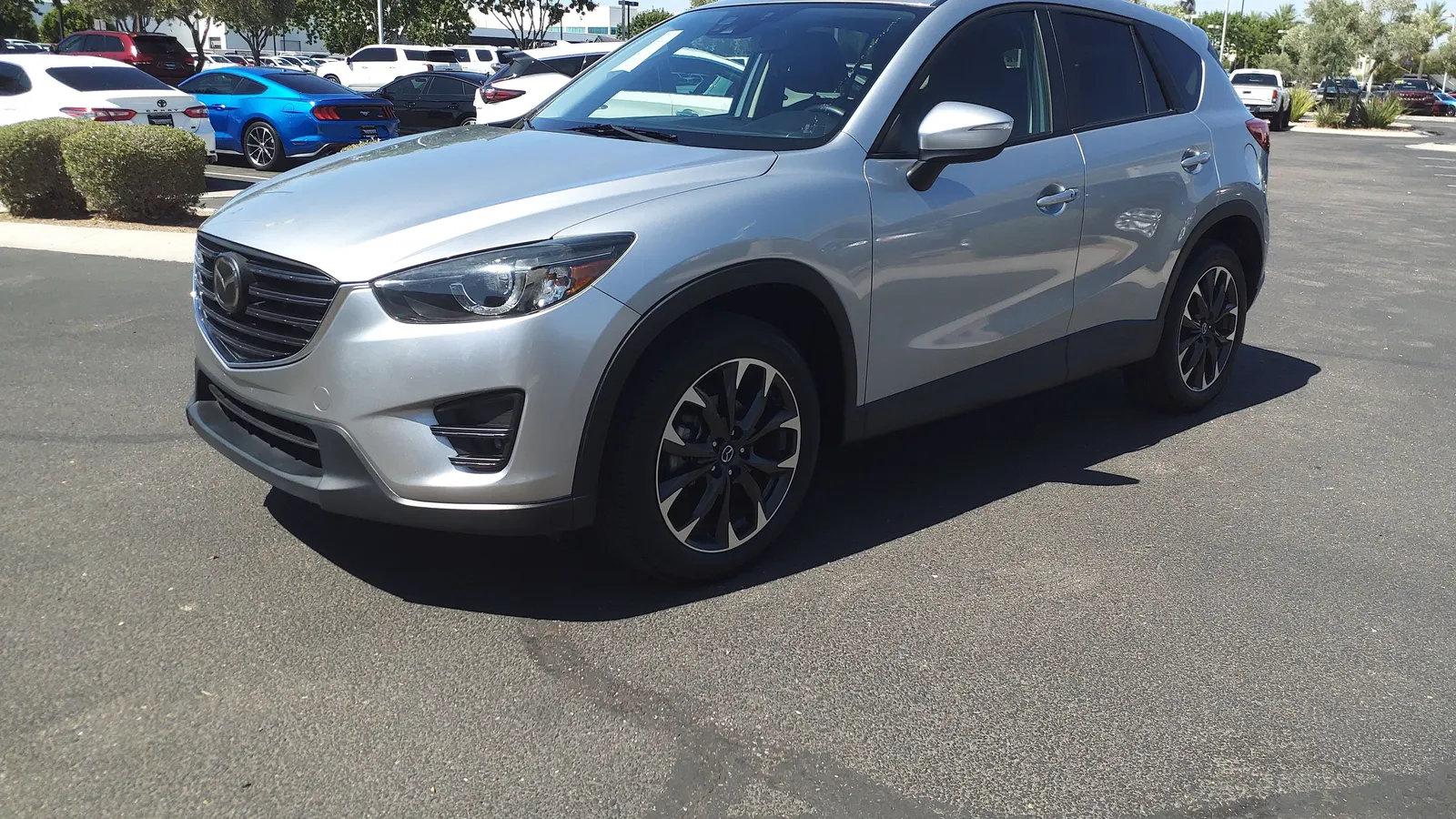
Pictured: 2016 Mazda CX-5 Grand Touring.
Owner complaints
510
43 report a crash, fire, injury or death
Recalls
5
None urgent
Most common problem
29%
of complaints: headlight or daytime running light failure
Complaints per year filed
2015–2025 · peak 119
In short
Some known problemsThe 2016 Mazda CX-5 has some known problems: 79% of its serious complaints that list mileage came before 50,000 miles. NHTSA has 510 owner complaints, and 43 report a crash, fire, injury or death. The most common are LED headlight or daytime running light failures, windshield cracks and the parking brake engaging on its own. There are 5 recalls.
Reliability
How Reliable Is the 2016 Mazda CX-5?
This model year has some known problems, and the main reason is timing. Among the serious complaints that list mileage, 79% came before 50,000 miles, so these cars are reporting significant trouble while still fairly young. Most complaints are not about safety, though. The largest group is LED headlight and daytime running light failures, which are a minor but common nuisance. The more worrying reports are fewer and sit behind it: transmission trouble, the electronic parking brake engaging on its own, and sudden acceleration.
Several of the serious problems are linked. Delayed engagement when pulling away, harsh or jerky shifting and outright transmission failure share many of the same descriptions: the engine revs loudly without the car moving, the car rolls backward, or it lurches once the gear catches. Owners in the failure group most often report a replacement transmission. Brake noise and early wear overlaps with the parking brake reports, with some owners describing worn rear pads and rotors after the electronic parking brake stayed engaged. Sudden or unintended acceleration is the most severe group: 70% of those reports are classed as severe, and owners describe the car jumping a curb, hitting a building or garage wall, or not stopping with the brake pressed. Owners who described repairs for it mostly report no clear fix, such as a dealer monitoring the car and finding nothing.
The recalls cover only some of this. Recall 20V063000 addresses the LED daytime running lights, which "may fail while driving"; dealers will inspect the headlights and replace the sealing gasket or headlight assemblies, as necessary. Many headlight complaints mention it, and some say recall parts were not available. Among the 19 owners who described an outcome for headlight repairs, 4 said the repair fixed it, 10 said partly and 5 said not, and complaints lean toward repairs that failed to fully solve the problem. Owners who reported a cost gave a median of $1,200. The other recalls concern the liftgate support struts, the fuel filler pipe, the front strut mounting hardware and a windshield bracket. This model year has no recall for windshield cracking, the parking brake, sudden acceleration or the transmission problems.
Mileage helps you read a particular car. Transmission failures are reported very early, with a median around 2,000 miles, and delayed engagement around 4,000 miles. Harsh shifting follows at about 6,300 miles. Sudden acceleration is reported at a median of about 16,000 miles, and windshield cracks at about 5,500 miles. The parking brake and brake wear reports come later, at about 35,000 and 29,100 miles. Headlight and daytime running light failures arrive latest, with a median of about 39,500 miles and a middle range of 30,000 to 51,500 miles. A car well past those marks without these problems has already come through the periods when most were reported, but that does not rule out a failure later.
If you are shopping for one, test the lights, the pull-away behavior and the parking brake, and confirm all recall work is done. Keep the limits of the evidence in mind. Complaint counts show what owners reported, not how many vehicles are affected, and they cannot show how any particular car was maintained or driven. A clean test drive and a complete service record tell you more about one car than these totals can.
Top problems
The 9 problems owners report most
Named from 510 NHTSA complaints. Open a problem for symptoms, the fix, cost and owners' accounts.
1.LED headlight or daytime running light failsMinorAbout 1 in 3 complaints30,000–51,500 mi~$1,200 repair
Owners describe daytime running lights that fail, flicker or go very dim, sometimes on one side and then the other months later. Reports are centered around 39,500 miles, with a middle range of 30,000 to 51,500 miles. Many mention recall 20V063000, and some say recall parts were not available.
What owners describe
- Daytime running light stops working33%
- Light flickers22%
- Light is very dim14%
Fix
Most common repair owners describe: replace entire headlight assembly (5 reports). Recall 20V063000.
Repair worked in 47% of complaints that describe one (complaints lean toward repairs that failed)
Mileage
39,500 mi
Middle half 30,000–51,500 mi · 123 reports
Repair cost
$1,200
Middle half $1,000–$1,281 · 64 owner amounts
How common
29%
146 of 510 complaints
Crash, fire or injury
0%
of these complaints
In owners' words
“They stated that my headlights were the wrong production dates so they did nothing for the recall yet marked the repair as "completed" according to Mazda.”
Owner in WA2.5L 4-cylFiled 2022NHTSA 11459871 “Mazda knows about the condition and claims that this is not a safety issue and refuses to replace it”
Owner in CA2.5L 4-cylFiled 2020NHTSA 11308988 “The consumer stated the lights failed. They were replaced but, the failure recurred.”
Owner in OH2.5L 4-cylFiled 2021NHTSA 11424557 2.Windshield cracksSeriousAbout 1 in 15 complaints2,600–15,000 mi
Owners describe cracks starting from the bottom, edge or mirror mount and growing into the driver's view, often found after parking and with no visible impact. Reports are early, with a median of about 5,500 miles and three quarters of them by 15,000 miles. Some owners say a replacement was on back order, and this model year has no recall for it.
What owners describe
- Crack spreads into view24%
- Crack from the edge15%
- Cracks with no impact15%
- Repeated cracked windshields6%
Fix
Most common repair owners describe: windshield replaced (4 reports).
Mileage
5,500 mi
Middle half 2,600–15,000 mi · 32 reports
Repair cost
—
Fewer than 10 owners report a repair cost
How common
7%
34 of 510 complaints
Crash, fire or injury
0%
of these complaints
In owners' words
“I had to drive around for 2.5 months with a cracked windshield until one finally became available.”
Owner in CA2.5L 4-cylFiled 2016NHTSA 10819113 “Our dealer [north point mazda, in sherwood ar] also claims there is an invisible impact mark.”
Owner in AR2.5L 4-cylFiled 2015NHTSA 10725853 “Glass cracked from top, middle portion of windshield glass, no apparent sign of rock chip.”
Owner in MIFiled 2015NHTSA 10725192 3.Electronic parking brake engages on its ownCriticalAbout 1 in 16 complaints31,700–53,400 mi
Owners describe the parking brake light flashing, the brake engaging while driving, or the brake not releasing when the car is started. Reports are centered around 35,000 miles. This model year has no recall for it.
What owners describe
- Parking brake light flashing25%
- Brake engages while driving25%
- Brake will not release19%
- Rear brakes wear early19%
Fix
Most common repair owners describe: epb module replacement quoted (2 reports).
Mileage
35,000 mi
Middle half 31,700–53,400 mi · 22 reports
Repair cost
—
Fewer than 10 owners report a repair cost
How common
6%
32 of 510 complaints
By engine
- 2.5L 4-cyl97%
- 2.0L 4-cyl3%
In owners' words
“I paid $140 for a diagnostic and was told that the parking brake module shorted out and needed to be replaced”
Owner in NY2.5L 4-cylFiled 2020NHTSA 11324625 “These brakes were replaced 1500 miles ago and should not be showing this kind of wear.”
Owner in CA2.5L 4-cylFiled 2025NHTSA 11653599 4.Screen or infotainment glitchesMinorAbout 1 in 19 complaints6,700–46,500 mi
Owners describe the infotainment system shutting off and restarting, or losing navigation and Bluetooth, mostly while driving. Reports are early, with a median of about 22,400 miles. This model year has no recall for it.
What owners describe
- Navigation or GPS fails37%
- Bluetooth or radio drops out37%
- System shuts off and restarts15%
Fix
Most common repair owners describe: blown fuse (1 report).
Mileage
22,400 mi
Middle half 6,700–46,500 mi · 10 reports
Repair cost
—
Fewer than 10 owners report a repair cost
How common
5%
27 of 510 complaints
Crash, fire or injury
4%
of these complaints
In owners' words
“I contacted Mazda and explained how distracting this is to drive and they explained there is nothing they could do but give me a $250.00 credit.”
Owner in CT2.5L 4-cylFiled 2021NHTSA 11426814 “The display in the dashboard continuously resets, causing the view from the back-up camera to disappear completely or dim”
Owner in WA2.5L 4-cylFiled 2022NHTSA 11452163 “Mazda connect infotainment system reboots continuously through multiple screens and cannot be turned off or disabled.”
Owner in TX2.5L 4-cylFiled 2020NHTSA 11377550 5.Sudden or unintended accelerationCriticalAbout 1 in 19 complaints7,000–28,200 mi
Owners describe the car accelerating on its own while pulling into or stopping in a parking space, then jumping a curb or hitting a building or garage wall. Some say the brake pedal did not respond. Reports are centered around 16,000 miles, and this model year has no recall for it.
What owners describe
- Happens while parking59%
- Accelerates on its own48%
- Brakes do not stop the car22%
- Airbags did not deploy7%
Fix
Most common repair owners describe: battery replaced (1 report).
Mileage
16,000 mi
Middle half 7,000–28,200 mi · 21 reports
Repair cost
—
Fewer than 10 owners report a repair cost
How common
5%
27 of 510 complaints
Crash, fire or injury
70%
of these complaints
In owners' words
“All of the warning lights on the dashboard lit up and the car started accelerating on its own”
Owner in NYFiled 2015NHTSA 10811431 “I was stopped but did not have the car in park when vehicle lunged forward at high speed”
Owner in IL2.5L 4-cylFiled 2019NHTSA 11164998 “Then suddenly with no reason the car accelerated, jumped the curb and hit building”
Owner in MO2.5L 4-cylFiled 2019NHTSA 11241842
Show 4 more problemsShow fewer problems
6.Delayed engagement pulling away from a stopSeriousAbout 1 in 20 complaints1,900–18,600 mi
Owners describe the engine revving without the car moving, rolling backward, or a lurch after several seconds, mostly when shifting into drive or pulling away at a light. Reports are very early, with a median of about 4,000 miles, and many owners mention a transmission replacement. This model year has no recall for it.
What owners describe
- Lurch or thud into gear42%
- Engine revs without moving27%
- Delay before gear engages19%
- Car rolls backward12%
Fix
Most common repair owners describe: transmission replacement (3 reports).
Mileage
4,300 mi
Middle half 1,900–18,600 mi · 26 reports
Repair cost
—
Fewer than 10 owners report a repair cost
How common
5%
26 of 510 complaints
Crash, fire or injury
0%
of these complaints
In owners' words
“The gear shift indicated that the car was in drive, but the vehicle continued to roll backward as if it was in neutral”
Owner in MA2.5L 4-cylFiled 2020NHTSA 11321459 “The vehicle stalls to go into to drive for a couple of seconds, the engine revs then there is a forceful jolt”
Owner in TX2.5L 4-cylFiled 2019NHTSA 11255874 “Car hesitated then it felt like I was being hit from behind the transmission engaged with a big thud”
Owner in PA2.5L 4-cylFiled 2015NHTSA 10760020 7.Brake noise and early wearMinorAbout 1 in 23 complaints20,700–32,000 mi
Owners describe squeaking, grinding, a burning smell and rear pads and rotors worn or corroded early, some after regular parking brake use. Reports are centered around 29,100 miles. This model year has no recall for it.
What owners describe
- Rear pads and rotors worn82%
- Squeaking or grinding23%
- Rusted or corroded brakes14%
- Burning smell9%
Fix
Most common repair owners describe: rear pads and rotors replaced (2 reports).
Mileage
29,100 mi
Middle half 20,700–32,000 mi · 17 reports
Repair cost
—
Fewer than 10 owners report a repair cost
How common
4%
22 of 510 complaints
By engine
- 2.5L 4-cyl90%
- 2.0L 4-cyl10%
In owners' words
“Mazda ran my vin and stated that is came up as a tsb but stated that I was out of warranty and that they would not cover it”
Owner in NJ2.5L 4-cylFiled 2018NHTSA 11131029 “They are telling me because I live at the beach the salt corroded the brakes and it is not covered by warranty”
Owner in FLFiled 2019NHTSA 11173934 8.Harsh, jerky shiftingSeriousAbout 1 in 32 complaints3,300–24,300 mi
Owners describe a hard clunk or violent jerk when the gear engages, sudden downshifts, and the engine revving without movement, often when pulling away at a stop light. Reports are early, with a median of about 6,300 miles. This model year has no recall for it.
What owners describe
- Hard jerk or clunk into gear63%
- Engine revs without moving31%
- Sudden downshifts19%
- Gear fails to engage19%
Fix
Most common repair owners describe: transmission replacement (1 report).
Mileage
6,300 mi
Middle half 3,300–24,300 mi · 15 reports
Repair cost
—
Fewer than 10 owners report a repair cost
How common
3%
16 of 510 complaints
Crash, fire or injury
0%
of these complaints
9.Transmission failure needing replacementSeriousAbout 1 in 34 complaints1,300–11,800 mi
Owners describe the engine revving loudly without the car moving, a long wait before a gear engages and a lurch forward, mostly when shifting into drive or pulling away at a light. Reports are very early, with a median of about 2,000 miles, and replacement is the most common repair. This model year has no recall for it.
What owners describe
- Engine revs, car will not move27%
- Acts like neutral in drive20%
- Long delay before gear engages20%
- Limp mode7%
Fix
Most common repair owners describe: transmission replaced (4 reports).
Mileage
2,000 mi
Middle half 1,300–11,800 mi · 15 reports
Repair cost
—
Fewer than 10 owners report a repair cost
How common
3%
15 of 510 complaints
Crash, fire or injury
0%
of these complaints
In owners' words
“The professional diagnostic was that something within the transmission was broken/coming apart.”
Owner in CA2.5L 4-cylFiled 2020NHTSA 11365565
Buying one
Should you buy a used 2016 Mazda CX-5?
What to check before you buy, based on the complaint and recall data.
Check that the LED daytime running lights and headlights work on both sides, and ask whether recall 20V063000 was done, since replacement parts were reported as hard to get. Look at the windshield for cracks and chips. On the test drive, pull away from a stop several times and watch for revving without movement, a long hesitation or a hard jolt. Ask for proof that all five recalls, including the liftgate support and fuel filler pipe recalls, were completed.
- 1Run the VIN for open recalls. NHTSA lists 5 recalls. Check at nhtsa.gov/recalls.
- 2Test-drive for electronic parking brake problem. It's the most common safety-critical complaint, in about 1 in 16 owner complaints, usually around 35,000 miles.
- 3Check for headlight or daytime running light failure. The most common complaint, in about 1 in 3 owner complaints.
- 4Get a pre-purchase inspection. An independent mechanic can spot leaks, stored fault codes and accident repairs that a test drive misses.
Mazda CX-5 model years
Which Mazda CX-5 years to avoid? Every model year compared
Early complaints are those filed in a model year's first 3 years. They follow how many were sold, so they don't show which years are better. The tag on 2016 is its verdict from our research of its owner complaints.
Crash test ratings
NHTSA 5-Star Safety Ratings.
| SUV AWD | SUV FWD | |
|---|---|---|
| Overall | ★★★★ | ★★★★ |
| Frontal crash | ★★★★ | ★★★★ |
| Side crash | ★★★★★ | ★★★★★ |
| Rollover | ★★★★ | ★★★★ |
| Rollover risk | 17% | 17% |
Owning one
If you already own one
Find your symptom, see when problems tend to show up, and check which recalls apply.
Have the daytime running lights checked as soon as one flickers or goes out, and confirm recall 20V063000 was done. If the parking brake light flashes or the brake seems to stay on while you drive, have it inspected right away. If the engine revs but the car will not move, or the car surges forward while you are stopping, stop driving it and get it looked at before you continue. Confirm with a Mazda dealer that every recall is closed.
- LED headlight or daytime running light failsMinorAbout 1 in 3 owner complaints146 of 510Median 39,500 mi
Most common repair owners describe: replace entire headlight assembly (5 reports).
- Windshield cracksSeriousAbout 1 in 15 owner complaints34 of 510Median 5,500 mi
Most common repair owners describe: windshield replaced (4 reports).
- Electronic parking brake engages on its ownCriticalAbout 1 in 16 owner complaints32 of 510Median 35,000 mi
Most common repair owners describe: epb module replacement quoted (2 reports).
- Screen or infotainment glitchesMinorAbout 1 in 19 owner complaints27 of 510Median 22,400 mi
Most common repair owners describe: blown fuse (1 report).
- Sudden or unintended accelerationCriticalAbout 1 in 19 owner complaints27 of 510Median 16,000 mi
Most common repair owners describe: battery replaced (1 report).
- Delayed engagement pulling away from a stopSeriousAbout 1 in 20 owner complaints26 of 510Median 4,300 mi
Most common repair owners describe: transmission replacement (3 reports).
- Brake noise and early wearMinorAbout 1 in 23 owner complaints22 of 510Median 29,100 mi
Most common repair owners describe: rear pads and rotors replaced (2 reports).
- Harsh, jerky shiftingSeriousAbout 1 in 32 owner complaints16 of 510Median 6,300 mi
Most common repair owners describe: transmission replacement (1 report).
Show all 12 problemsShow fewer problems
- Transmission failure needing replacementSeriousAbout 1 in 34 owner complaints15 of 510Median 2,000 mi
Most common repair owners describe: transmission replaced (4 reports).
- Stalling or shutting off while drivingCriticalAbout 1 in 42 owner complaints12 of 510Median 48,300 mi
- Airbag warning light stays onSeriousAbout 1 in 46 owner complaints11 of 510Median 45,000 mi
- Sunroof glass shattersSeriousAbout 1 in 46 owner complaints11 of 510Median 42,000 mi
of complaints that list mileage (141 of 335) came in before 25,000 miles. A low odometer reading is no guarantee.
5 recalls, newest first
Open one for the risk, the remedy and what to do now.
Exterior lighting › HeadlightsThe LED Daytime Running Lights (DRL) may fail while driving.Feb 6, 202036,761 vehicles20V063000
- Defect
- The LED Daytime Running Lights (DRL) may fail while driving.
- Risk
- If the DRL fails, the vehicle's visibility may be reduced to other drivers on the road, increasing the risk of a crash.
- Remedy
- Dealers will inspect the headlights, and replace the sealing gasket or headlight assemblies, as necessary, free of charge.
Body › Hatchback/liftgateOn the affected vehicles, the lift gate support struts may corrode, possibly causing the struts to break and/or the…Sep 6, 2016580,455 vehicles16V644000
- Defect
- On the affected vehicles, the lift gate support struts may corrode, possibly causing the struts to break and/or the lift gate to drop unexpectedly.
- Risk
- If the lift gate falls unexpectedly, it may hit the user, increasing their risk of injury.
- Remedy
- Mazda dealers will replace the both lift gate supports, free of charge, however parts are not currently available.
SteeringThe lower mounting nuts and bolts that attach the front strut assembly to the steering knuckle may loosen, allowing…Apr 11, 2016578 vehicles16V203000
- Defect
- The lower mounting nuts and bolts that attach the front strut assembly to the steering knuckle may loosen, allowing the steering knuckle to separate.
- Risk
- If the steering knuckle separates from the strut assembly, it can cause a loss of steering control, increasing the risk of a crash.
- Remedy
- Dealers will inspect the lower mounting nuts and bolts that secure the front strut assembly to the steering knuckle.
Tank assembly › Filler pipe and capThe affected vehicles have a fuel filler pipe that may rupture in the event of a crash. As such, these vehicles fail…Feb 3, 2016268,799 vehicles16V064000
- Defect
- The affected vehicles have a fuel filler pipe that may rupture in the event of a crash. As such, these vehicles fail to comply with the requirements of Federal Motor Vehicle Safety Standard (FMVSS) number 301, "Fuel System Integrity."
- Risk
- A rupture of the fuel filler pipe may result in a fuel leak, increasing the risk of a fire.
- Remedy
- Dealers will alter the attachment between the fuel filler pipe and the left rear side of the bracket of the fuel filler pipe, free of charge.
Visibility › WindshieldThe affected windshields have a bracket mounted on the inside to hold a laser sensor or LIDAR device for the Smart…Jan 19, 2016193 vehicles16E002000
- Defect
- The affected windshields have a bracket mounted on the inside to hold a laser sensor or LIDAR device for the Smart City Brake Support system. These brackets were improperly affixed with only tape instead of tape and urethane and therefore may loosen.
- Risk
- If the bracket loosens or detaches from the windshield, the safety features of the Smart City Brake Support system may be disabled and therefore increase the risk of a crash.
- Remedy
- Pilkington will contact the wholesalers and retailers that purchased the windshields to try to identify the affected customers.
What to do
Check the VIN at nhtsa.gov/recalls. If a recall is open, any dealer will fix it free. For NHTSA's full record of a campaign, search its number there (for example 20V063000).
Reliability history
Mazda CX-5 reliability by year
Complaints filed in each model year's first 3 years, by trouble spot. Darker cells have more complaints; counts aren't adjusted for how many were sold each year.
All problems
Every problem reported on the 2016 CX-5
Every problem found in the 510 owner complaints, by area of the vehicle.
Body, lights & visibility
228 45%- 146 29%typically at 39,500 mi · repair $1,200 · 47% fixed39,500$1,20047%
- Windshield cracksSerious34 7%typically at 5,500 mi5,500––
- Sunroof glass shattersSerious11 2%typically at 42,000 mi42,000––
- Windshield wipers stop workingSerious6 1%–––
- Side window shattersSerious4 0.8%–––
- Liftgate supports failMinor3 0.6%–––
Show 20 more body, lights & visibility problemsShow fewer body, lights & visibility problems
- Head restraints too far forward2 0.4%–––
- Seat heater not warming2 0.4%–––
- Windshield and wipers ice up in snow2 0.4%–––
- Chrome vent trim reflects into mirrors2 0.4%–––
- Horn does not work2 0.4%–––
- Automatic headlight function does not work2 0.4%–––
- Power driver seat fails to adjust2 0.4%–––
- Power seat moves on its own2 0.4%–––
- Headlight lens coating melting or running1 0.2%–––
- Power window stops working1 0.2%–––
- A-pillar trim melting1 0.2%–––
- Paint peeling1 0.2%–––
- Turn signal hard to see next to LED running lights1 0.2%–––
- Driver seat back reclines on its own1 0.2%–––
- Side mirror folded and housing popped off1 0.2%–––
- Driver's door sensor reports door closed when open1 0.2%–––
- Heater core clogs1 0.2%–––
- Power seat squealing1 0.2%–––
- Dim low-beam headlightsSerious1 0.2%–––
- Wiper and headlight stalk markings not lit at night1 0.2%–––
Electrical
76 15%- 32 6%typically at 35,000 mi35,000––
- 27 5%typically at 22,400 mi22,400––
- Many warning lights at onceMinor7 1%typically at 28,400 mi28,400––
- Battery drain or no-startSerious6 1%–––
- Walk-away auto lock does not lockMinor3 0.6%–––
- Wiring harness damaged3 0.6%–––
Show 2 more electrical problemsShow fewer electrical problems
- Keyless entry stopped working1 0.2%–––
- Car cranks but will not start (electrical)1 0.2%–––
Transmission & drivetrain
47 9%- 26 5%typically at 4,300 mi4,300––
- Harsh, jerky shiftingSerious16 3%typically at 6,300 mi6,300––
- 15 3%typically at 2,000 mi2,000––
- Hesitation or slipping while drivingSerious9 2%typically at 3,500 mi3,500––
- Drops into neutral or loses drive while movingCritical5 1.0%typically at 4,500 mi4,500––
- Vehicle rolls away or shifts out of park2 0.4%–––
Show 6 more transmission & drivetrain problemsShow fewer transmission & drivetrain problems
- Front control arm or axle separates2 0.4%–––
- Transmission warning messagesMinor1 0.2%–––
- Car abruptly slows or stops on its own1 0.2%–––
- Transmission fluid leak1 0.2%–––
- Power transfer unit (PTU) or 4WD failureCritical1 0.2%–––
- Whining noise from transaxle1 0.2%–––
Brakes
42 8%- 22 4%typically at 29,100 mi29,100––
- Brake pedal sinks or brakes failCritical9 2%typically at 2,800 mi2,800––
- Brake caliper failure3 0.6%–––
- Rear brake caliper seizesSerious3 0.6%–––
- Brake caliper sticks and overheats the brake2 0.4%–––
- Brakes grab and car jerks when braking1 0.2%–––
Show 4 more brakes problemsShow fewer brakes problems
- Smart City Brake Support and adaptive high beams disabled1 0.2%–––
- Rear brakes overheat1 0.2%–––
- Rear brake caliper not working1 0.2%–––
- CV joint failure1 0.2%–––
Engine
39 8%- Stalling or shutting off while drivingCritical12 2%typically at 48,300 mi48,300––
- Fuel pump or fuel injector failureCritical9 2%–––
- Engine failureCritical7 1%–––
- Drive belt tensioner leaking or failingSerious4 0.8%–––
- Cracked cylinder headSerious3 0.6%–––
- Engine uses too much oil3 0.6%–––
Show 12 more engine problemsShow fewer engine problems
- Can be switched off in Drive with no warning, car rolls2 0.4%–––
- Engine revs climb with foot off the gas1 0.2%–––
- Engine keeps running after the driver leaves1 0.2%–––
- Oil leaks or low oilSerious1 0.2%–––
- Thermostat failed to open1 0.2%–––
- Water pump failure1 0.2%–––
- Coolant leak1 0.2%–––
- Check engine light stays on1 0.2%–––
- Oil warning did not come on1 0.2%–––
- Loud hooting noise from air conditioning1 0.2%–––
- Heater core clogged after coolant service1 0.2%–––
- Catalytic converter and sensor failure1 0.2%–––
Acceleration & speed control
28 5%- 27 5%typically at 16,000 mi16,000––
- Cruise control does not cancel1 0.2%–––
Airbags & seat belts
21 4%- Airbag warning light stays onSerious11 2%typically at 45,000 mi45,000––
- Airbags did not deploy in a crashCritical7 1%typically at 44,100 mi44,100––
- Passenger airbag turns off with an adult in the seatCritical2 0.4%–––
- Airbag deployed in a minor impact1 0.2%–––
- Rear seat belt does not retract1 0.2%–––
- Airbag deployed late in crash1 0.2%–––
Show 5 more airbags & seat belts problemsShow fewer airbags & seat belts problems
- Seat belt failed to restrain in crash1 0.2%–––
- Passenger airbag housing visible under dash1 0.2%–––
- Side curtain airbags deployed unexpectedly1 0.2%–––
- Seat or seat belt fractured in a crash1 0.2%–––
- Seat belt detached from seat1 0.2%–––
Fire
11 2%- Seat heater overheats or catches fireCritical8 2%–––
- Vehicle catches fireCritical3 0.6%–––
Suspension
8 2%- Clunks or knocks from the suspensionMinor5 1.0%typically at 44,200 mi44,200––
- Rear subframe corrosion2 0.4%–––
- Rear shock mount failure1 0.2%–––
Wheels & tires
5 1.0%- Faulty rear hub and wheel bearing1 0.2%–––
- Steering wheel covering peeling1 0.2%–––
- Tire tread separation and blowout1 0.2%–––
- Tire valve stem breaks1 0.2%–––
- Tire sidewall cracking1 0.2%–––
Driver aids & stability
3 0.6%- Automatic emergency braking activates for no reasonCritical3 0.6%–––
Steering
3 0.6%- Loss of power steeringCritical1 0.2%–––
- Vibration and grinding feel at speed1 0.2%–––
- Front lower ball joint wears and cracks1 0.2%–––
Fuel system & stalling
1 0.2%- Water in the fuel1 0.2%–––
Other
1 0.2%- A/C stops cooling (evaporator leak, compressor failure)1 0.2%–––
103 problems found in all 510 complaints. One complaint can describe more than one problem, so counts add up to more than the total. Not counted as a defect: 19 about recall paperwork or parts delays, 4 describing no vehicle defect. Typical miles, repair cost and fix rate show only when enough owners report them.
The data
Behind the numbers
Every figure comes from NHTSA's complaint file and APIs.
- Complaints
- 510
- Recalls
- 5
- Crashes
- 31
- Fires
- 10
- Injuries
- 13
- Deaths
- 0
Crashes and fires count complaints that report one; injuries and deaths count people.
FAQ
2016 Mazda CX-5 questions
Is the 2016 Mazda CX-5 reliable?
The 2016 Mazda CX-5 has some known problems, mainly because of timing: 79% of serious complaints that list mileage came before 50,000 miles. NHTSA has 510 owner complaints, and 43 report a crash, fire, injury or death. Most complaints are not about safety, though.
What are the most common 2016 Mazda CX-5 problems?
The most common problem is LED headlight or daytime running light failure, about 1 in 3 owner complaints (146 complaints). Windshield cracks follow with 34 complaints, then the electronic parking brake engaging on its own with 32. Screen or infotainment glitches add 27 complaints. Transmission and sudden acceleration reports are fewer but more serious.
How many recalls does the 2016 Mazda CX-5 have?
The 2016 Mazda CX-5 has 5 recalls, and none carries a do-not-drive or park-outside warning. They cover the LED daytime running lights (20V063000), the liftgate support struts (16V644000), the front strut mounting nuts and bolts (16V203000), the fuel filler pipe (16V064000) and a windshield bracket (16E002000). Check your VIN at nhtsa.gov/recalls.
Does the 2016 Mazda CX-5 have sudden acceleration problems?
Owners filed 27 complaints about sudden or unintended acceleration, about 1 in 19 owner complaints, and it is rated critical. Owners describe the car accelerating while parking, then jumping a curb or hitting a building or garage wall, and some say the brake pedal did not respond. Reports are centered around 16,000 miles, and this model year has no recall for it.
Does the 2016 Mazda CX-5 have transmission problems?
Yes, owners report three serious transmission problems: delayed engagement pulling away (26 complaints), harsh or jerky shifting (16) and transmission failure needing replacement (15). Owners describe the engine revving without the car moving. Reports come early, with a median of about 2,000 miles for failure and about 6,300 miles for harsh shifting. There is no recall for them.
What should I check before buying a 2016 Mazda CX-5?
Check that the LED daytime running lights and headlights work on both sides, and look for windshield cracks. On the test drive, pull away from a stop several times and watch for revving without movement or a hard jolt. Test the parking brake, and ask for proof that all 5 recalls were completed.
How safe is the 2016 Mazda CX-5 in crash tests?
NHTSA rates the 2016 Mazda CX-5 4 out of 5 stars overall. Frontal crash is 4 out of 5 stars, side crash is 5 out of 5 stars and rollover is 4 out of 5 stars. The AWD and FWD versions have the same ratings.
Which Mazda CX-5 years should you avoid?
No Mazda CX-5 model year shows serious known problems in owner complaints. The 2013–2014 and 2016 are worth checking carefully: complaints show some known problems. The 2015 and 2017–2023 show no pattern of serious problems. The 2024–2026 have too few complaints to judge. Every model year is compared on the Mazda CX-5 years-to-avoid page.
Methodology
How we researched this
- Complaints. NHTSA's owner complaint file, counted as unique complaint numbers for make MAZDA, model CX-5, model year 2016. Data through Oct 4, 2026.
- Verdict. Judged from this model year's own complaints, not against other models, using shares rather than counts. Serious known problems: one serious problem (transmission, engine or stalling, steering, brakes, airbags, fire, fuel leaks) is in a quarter or more of complaints; or a smaller but clear cluster comes with an unusual share of crash, fire, injury or loss-of-power reports or early failures; or an urgent recall or NHTSA investigation matches a top complaint. Some known problems: one of those signals on its own. No pattern of serious problems: none of them; this doesn't mean the vehicle is trouble-free. Too few complaints to judge: under 50 complaints. Why this verdict: 79% of serious complaints that list mileage came before 50,000 miles (typical: 49%).
- No grade or class ranking. Raw complaint counts favor models that sell fewer cars, so we don't score or rank this vehicle against other models until we can adjust for sales.
- Trouble spots and history. Complaints grouped by the part owners chose when filing. The history grid counts complaints filed in each model year's first 3 years so older and newer years compare fairly; years with fewer than 3 complete years are marked too new.
- Named problems. Every one of the 510 complaints was researched and classified by its problems, severity, symptoms, repairs and any cost the owner mentions; the counts, costs and fix rates on this page are tallies of those classifications. Quotes are verbatim excerpts, checked against the original text. Engines are decoded from partial VINs with NHTSA's vPIC service.
- Repair costs and fix rates. Shown only when at least 10 owners report a repair cost, or at least 10 complaints describe whether a repair worked.
- Not adjusted for sales. Not affiliated with NHTSA. Page updated Nov 5, 2026.