2021 Hyundai Palisade Reliability & Problems
By Adrian V. LockhartUpdated All 440 NHTSA owner reports researched and classified
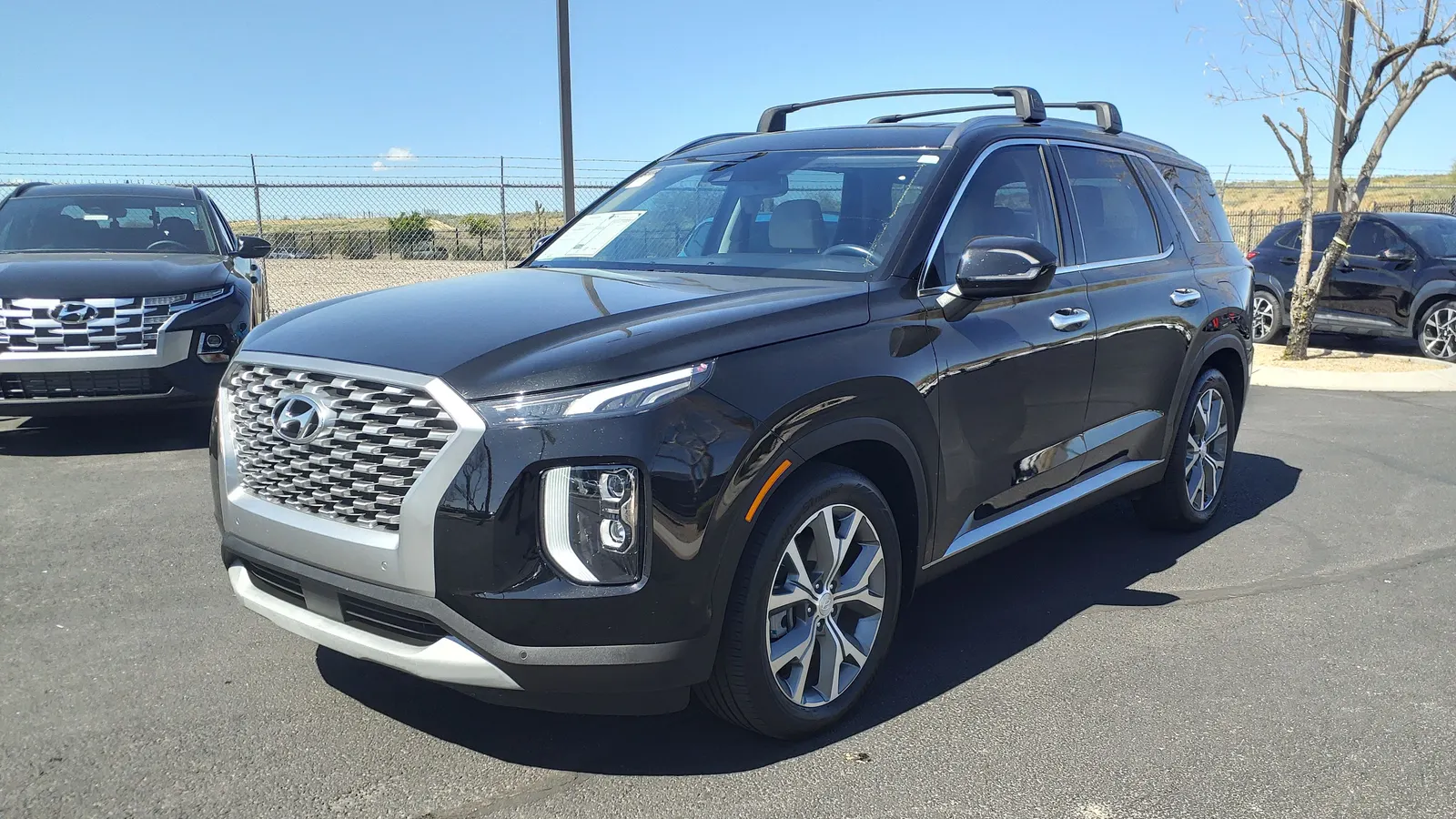
Pictured: 2021 Hyundai Palisade SEL.
Owner complaints
440
13 report a crash, fire, injury or death
Recalls
6
1 with a park-outside warning
Most common problem
20%
of complaints: seat belt unlatching
Complaints per year filed
2020–2025 · peak 118
In short
Some known problemsThe 2021 Hyundai Palisade has some known problems: an NHTSA investigation into seat belts unlatching ended in recall 25V607, and about 1 in 5 owner complaints describe the issue. NHTSA has 440 owner complaints, 13 of them reporting a crash, fire, injury or death. Windshield cracks and oil consumption are the next most common. The model year has 6 recalls.
Reliability
How Reliable Is the 2021 Hyundai Palisade?
This model year is marked as having some known problems, and the reason is official rather than a count of complaints. NHTSA opened an investigation into inadvertent seat belt unlatching, and it closed with recall 25V607. The recall's defect text says the seat belt buckles in the driver, passenger and second-row window seats may fail to latch. Owner complaints match this closely. Seat belts unlatching is the most reported problem, at about 1 in 5 complaints, and owners describe belts that come undone while driving, will not click in, or sound the belt alarm. That is a safety issue, not an annoyance, because a belt that is not secured does not protect anyone in a crash.
After the belts, the complaints are spread over several different problems. Windshields that crack easily, often from a small stone, make up about 1 in 10 complaints. Oil consumption follows at about 1 in 13. Owners also report the engine shutting off while driving, sunroof glass shattering on its own, a child safety lock that clicks or shows a failure message, and rear shocks that leak or knock. Stalling and oil consumption overlap: some owners who report the engine shutting off also mention no oil in the engine. Shattering sunroof glass and engine shutdowns are the most worrying for safety, though each is reported far less often than the belts.
Only the seat belt problem has a recall that matches it. Recall 26V034 covers third-row side curtain air bags, which may deploy improperly in a crash, and a few seat belt complaints mention it. Other recalls on this model year cover windshield wipers, a brake master cylinder and fluid, and a tow hitch module where a short can cause a fire, for which owners are advised to park outside until it is repaired. This model year has no recall for windshield cracking, oil consumption, stalling, sunroof glass or the child lock. Where owners describe repairs for those problems, complaints lean toward repairs that failed to solve it, with oil consumption cases ending in engine replacement being recommended.
Mileage helps when you look at a specific vehicle. Windshield cracking is reported very early, with a typical report at about 3,100 miles and most by 7,000 miles, so it can affect a nearly new vehicle. Seat belt complaints range widely, with a typical report at about 42,900 miles and a middle range of 18,000 to 63,000 miles, so a low odometer does not rule them out. Oil consumption is reported much later, with a typical report at about 94,700 miles and a middle range of 86,000 to 100,000 miles. A high-mileage Palisade deserves a closer look at oil level and service records.
If you are shopping for one, confirm the recall work, test the belts and check how the oil level has been holding. Remember the limits of this evidence. Complaint counts show what owners chose to report, not how many vehicles are affected, and they cannot show how any individual vehicle was driven or maintained. Many complaints are also recorded early in ownership, so later problems may be under-reported for newer vehicles.
Top problems
The 8 problems owners report most
Named from 440 NHTSA complaints. Open a problem for symptoms, the fix, cost and owners' accounts.
1.Seat belts unlatch while drivingSeriousAbout 1 in 5 complaints18,000–63,000 mi
Owners describe belts that unlatch while driving, take several attempts to latch, or set off the belt alarm, often in the second row and with booster seats. Reports of this problem typically come at about 42,900 miles, with a middle range of 18,000 to 63,000 miles. Recall 25V607 is mentioned by owners, and a few also mention recall 26V034.
What owners describe
- Second-row belt problems26%
- Belt comes undone while driving8%
Fix
Most common repair owners describe: recall repair (5 reports). Recall 25V607000.
Mileage
42,900 mi
Middle half 18,000–63,000 mi · 15 reports
Repair cost
—
Fewer than 10 owners report a repair cost
How common
20%
87 of 440 complaints
Crash, fire or injury
1%
of these complaints
In owners' words
“The passenger rear seatbelt had released on its own when braking hard with a child buckled in a booster seat”
Owner in CAFiled 2026NHTSA 11741410 “Since the technician could not replicate the problem that day, they tell me there is nothing to be done.”
Owner in CO3.8LFiled 2025NHTSA 11644690 “Middle row seat behind the driver the seatbelt has come unbuckled while the car is in motion many times.”
Owner in OR3.8LFiled 2026NHTSA 11734433 2.Windshield cracks easilySeriousAbout 1 in 10 complaints1,100–7,000 mi
Owners describe spiderweb cracks and chips from tiny pebbles, often on the highway, and some report damage within days of buying the vehicle. Reports typically come at about 3,100 miles, with most by 7,000 miles. This model year has no recall for it.
What owners describe
- Chips found after driving21%
- Crack from a small pebble16%
- Replacement and camera calibration9%
- Crack that spreads7%
Fix
Most common repair owners describe: windshield replaced (3 reports).
Mileage
3,100 mi
Middle half 1,100–7,000 mi · 18 reports
Repair cost
—
Fewer than 10 owners report a repair cost
How common
10%
43 of 440 complaints
Crash, fire or injury
0%
of these complaints
3.Engine burns oilSeriousAbout 1 in 13 complaints86,000–100,000 mi
Owners describe an empty dipstick, a check engine light, loss of power and in some cases complete engine failure. Reports typically come at about 94,700 miles, with a middle range of 86,000 to 100,000 miles. This model year has no recall for it.
What owners describe
- Check engine light or lost power20%
- Little or no oil on the dipstick17%
- Frequent oil top-ups needed14%
- Engine misfire or rattling9%
Fix
Most common repair owners describe: oil consumption test (3 reports).
Mileage
94,700 mi
Middle half 86,000–100,000 mi · 13 reports
Repair cost
—
Fewer than 10 owners report a repair cost
How common
8%
35 of 440 complaints
Crash, fire or injury
0%
of these complaints
In owners' words
“Hyundai has repeatedly denied my claim, citing maintenance issues and gross negligence without justification.”
Owner in NYFiled 2026NHTSA 11753118 “I noticed at around 110,000 miles that my oil was getting low before each oil change.”
Owner in TN3.8LFiled 2026NHTSA 11740741 4.Engine stalls while drivingCriticalAbout 1 in 18 complaints77,000–94,700 mi
Owners describe the car shutting off at a red light, on the highway and going up a hill, sometimes with the brakes feeling unresponsive or the car not restarting for about 15 minutes. Some also mention no oil in the engine. This model year has no recall for it.
What owners describe
- Engine shuts off while driving38%
- Will not restart right away13%
- Check engine light8%
- No oil in the engine8%
Fix
Most common repair owners describe: in the shop for diagnosis (1 report).
Mileage
90,000 mi
Middle half 77,000–94,700 mi · 5 reports
Repair cost
—
Fewer than 10 owners report a repair cost
How common
5%
24 of 440 complaints
Crash, fire or injury
0%
of these complaints
In owners' words
“The vehicle would shut off when idling at lights or in reverse and have delayed acceleration after stops.”
Owner in TX3.8LFiled 2026NHTSA 11734796 “Every single warning light lit up at once then the car completely shut off within a matter of seconds.”
Owner in OH3.8LFiled 2026NHTSA 11757900 “Since the issue is intermittent and can't be replicated at the dealership, there is no fix offered.”
Owner in MD3.8LFiled 2026NHTSA 11728587 5.Sunroof glass shatters suddenlySeriousAbout 1 in 19 complaints19,600–49,900 mi
Owners describe a loud bang followed by shattered glass, often on the interstate or at highway speed, with glass falling inside the cabin or onto cars behind. Few reports give a mileage. This model year has no recall for it.
What owners describe
- Sunroof glass shatters87%
- Loud bang or explosion sound30%
- Hole in the glass13%
Fix
Most common repair owners describe: dealer repair (1 report).
Mileage
34,700 mi
Middle half 19,600–49,900 mi · 2 reports
Repair cost
—
Fewer than 10 owners report a repair cost
How common
5%
23 of 440 complaints
Crash, fire or injury
4%
of these complaints
In owners' words
“Moving portion of panoramic sunroof glass exploded outwards while driving 60 MPH.”
Owner in VA3.8LFiled 2026NHTSA 11728856
Show 3 more problemsShow fewer problems
6.Child safety lock clicks or failsMinorAbout 1 in 20 complaints20,500–30,000 mi
Owners mostly describe a dash message reading child safety lock failure, along with rear door locks that cycle and click constantly. It happens while parked or driving. This model year has no recall for it.
What owners describe
- Child safety lock failure message73%
- Rear doors lock and unlock27%
- Lock clicks continuously18%
Fix
Most common repair owners describe: dealer replaced a part (1 report).
Mileage
30,000 mi
Middle half 20,500–30,000 mi · 3 reports
Repair cost
—
Fewer than 10 owners report a repair cost
How common
5%
22 of 440 complaints
Crash, fire or injury
0%
of these complaints
7.Rear shock absorbers failSeriousAbout 1 in 23 complaints56,000–70,000 mi
Owners describe leaking shocks, knocking or popping from the rear and a bouncy ride over bumps, with some saying the shocks were replaced twice. One mentions a technical service bulletin. This model year has no recall for it.
What owners describe
- Knocking or popping from the rear37%
- Bumpy, bouncy ride32%
- Leaking shocks16%
- Rear end instability5%
Fix
Most common repair owners describe: rear shocks replaced twice (2 reports).
Mileage
65,000 mi
Middle half 56,000–70,000 mi · 9 reports
Repair cost
—
Fewer than 10 owners report a repair cost
How common
4%
19 of 440 complaints
Crash, fire or injury
0%
of these complaints
In owners' words
“Early issues at 56,000 miles with rear shock suspension causing excessive bouncing.”
Owner in MN3.8LFiled 2026NHTSA 11710377 8.Clunks or knocks from suspensionMinorAbout 1 in 29 complaints55,000–68,000 mi
Owners describe a thud, knock or pop from the rear over bumps or when turning slowly, and some mention leaking shocks. Reports with a mileage are few. This model year has no recall for it.
What owners describe
- Knock or clunk from the rear53%
- Bumpy ride20%
- Pop over bumps or in turns13%
- Leaking shocks13%
Fix
Most common repair owners describe: husband reset the mechanism (1 report).
Mileage
62,100 mi
Middle half 55,000–68,000 mi · 5 reports
Repair cost
—
Fewer than 10 owners report a repair cost
How common
3%
15 of 440 complaints
Crash, fire or injury
0%
of these complaints
In owners' words
“The last dealership has told me it is normal noise for the age and mileage of the vehicle.”
Owner in MD3.8LFiled 2026NHTSA 11719335
Buying one
Should you buy a used 2021 Hyundai Palisade?
What to check before you buy, based on the complaint and recall data.
Before buying, ask the seller for proof that recall 25V607 on the seat belt buckles has been done, and test every belt in every seat, including the second row. Check the windshield for chips or cracks and ask whether the sunroof glass has ever broken. Ask for oil change records and look for any history of oil top-ups or an oil consumption test. Check the VIN for open recalls, including the tow hitch fire recall 22V633.
- 1Run the VIN for open recalls. NHTSA lists 6 recalls, and 1 carries a do-not-drive or park-outside warning (22V633000). Check at nhtsa.gov/recalls.
- 2Test-drive for stalling. It's the most common safety-critical complaint, in about 1 in 18 owner complaints, usually around 90,000 miles.
- 3Check for seat belt unlatching. The most common complaint, in about 1 in 5 owner complaints.
- 4Get a pre-purchase inspection. An independent mechanic can spot leaks, stored fault codes and accident repairs that a test drive misses.
Hyundai Palisade model years
Which Hyundai Palisade years to avoid? Every model year compared
Early complaints are those filed in a model year's first 3 years. They follow how many were sold, so they don't show which years are better. The tag on 2021 is its verdict from our research of its owner complaints.
Crash test ratings
NHTSA 5-Star Safety Ratings.
| SUV FWD | SUV AWD | |
|---|---|---|
| Overall | ★★★★★ | ★★★★★ |
| Frontal crash | ★★★★★ | ★★★★★ |
| Side crash | ★★★★★ | ★★★★★ |
| Rollover | ★★★★ | ★★★★ |
| Rollover risk | 16% | 14% |
Owning one
If you already own one
Find your symptom, see when problems tend to show up, and check which recalls apply.
Press each seat belt firmly into its buckle and tug it to confirm it is secured, as the recall advice says, until the recall repair is done. Watch for belts that come undone while driving, a belt alarm, a low oil level or a check engine light. If the engine shuts off, loses power or runs out of oil, pull over safely and have the vehicle checked before driving on. Confirm that recalls 25V607 and 26V034 have been completed, and park outside if the tow hitch recall 22V633 is still open.
- Seat belts unlatch while drivingSeriousAbout 1 in 5 owner complaints87 of 440Median 42,900 mi
Most common repair owners describe: recall repair (5 reports).
- Windshield cracks easilySeriousAbout 1 in 10 owner complaints43 of 440Median 3,100 mi
Most common repair owners describe: windshield replaced (3 reports).
- Engine burns oilSeriousAbout 1 in 13 owner complaints35 of 440Median 94,700 mi
Most common repair owners describe: oil consumption test (3 reports).
- Engine stalls while drivingCriticalAbout 1 in 18 owner complaints24 of 440Median 90,000 mi
Most common repair owners describe: in the shop for diagnosis (1 report).
- Sunroof glass shatters suddenlySeriousAbout 1 in 19 owner complaints23 of 440Median 34,700 mi
Most common repair owners describe: dealer repair (1 report).
- Child safety lock clicks or failsMinorAbout 1 in 20 owner complaints22 of 440Median 30,000 mi
Most common repair owners describe: dealer replaced a part (1 report).
- Rear shock absorbers failSeriousAbout 1 in 23 owner complaints19 of 440Median 65,000 mi
Most common repair owners describe: rear shocks replaced twice (2 reports).
- Clunks or knocks from suspensionMinorAbout 1 in 29 owner complaints15 of 440Median 62,100 mi
Most common repair owners describe: husband reset the mechanism (1 report).
Show all 14 problemsShow fewer problems
- Wipers stop working when snow builds upSeriousAbout 1 in 34 owner complaints13 of 440Median 2,000 mi
- Sunroof stops working or breaksSeriousAbout 1 in 37 owner complaints12 of 440Median 94,600 mi
- No low-oil warning before oil runs lowCriticalAbout 1 in 37 owner complaints12 of 440Median 64,000 mi
- Second-row seat belts hard to buckleSeriousAbout 1 in 44 owner complaints10 of 440Median 290 mi
- Sunroof wind deflector failureSeriousAbout 1 in 44 owner complaints10 of 440Median 70,500 mi
- Engine failure needing replacementCriticalAbout 1 in 44 owner complaints10 of 440Median 99,500 mi
of complaints that list mileage (38 of 58) came in before 25,000 miles. A low odometer reading is no guarantee.
6 recalls, newest first
Open one for the risk, the remedy and what to do now.
Side/window › CurtainThe side curtain air bags for third-row occupants may deploy improperly in a crash. As such, these vehicles fail to…Jan 23, 2026568,576 vehicles26V034000
- Defect
- The side curtain air bags for third-row occupants may deploy improperly in a crash. As such, these vehicles fail to comply with the requirements of Federal Motor Vehicle Safety Standard (FMVSS) number 226, "Ejection Mitigation."
- Risk
- Improper side curtain air bag deployment increases the risk of injury during a crash.
- Remedy
- Dealers will install a protective film over the rear window and remove padding, as necessary free of charge.
Rear/other › Buckle assemblyThe seat belt buckles in the driver, passenger, and second-row window seats may fail to latch.Sep 12, 2025568,580 vehicles25V607000
- Defect
- The seat belt buckles in the driver, passenger, and second-row window seats may fail to latch.
- Risk
- Seat belt buckles that fail to latch may not properly restrain occupants in a crash, increasing the risk of injury.
- Remedy
- Passengers are advised to insert the belt firmly into the buckle with a quick and direct motion, pulling on the belt to confirm the seat belt is fully secured, until the recall remedy is performed.
Visibility/wiperThe windshield wiper motor may operate intermittently or fail to operate due to snow or ice buildup on the…Mar 17, 2023167,085 vehicles23V180000
- Defect
- The windshield wiper motor may operate intermittently or fail to operate due to snow or ice buildup on the windshield, causing the wipers to fail.
- Risk
- Windshield wiper failure can reduce visibility, increasing the risk of a crash.
- Remedy
- Dealers will replace the driver-side windshield wiper arm, free of charge.
Trailer hitchesPark outsideDebris and moisture accumulation on the tow hitch harness module printed circuit board (PCB) may cause an electrical…Aug 18, 2022244,980 vehicles22V633000
- Defect
- Debris and moisture accumulation on the tow hitch harness module printed circuit board (PCB) may cause an electrical short, which can result in a fire.
- Risk
- A fire while parked or driving can increase the risk of injury.
- Remedy
- Owners are advised to park outside and away from structures until the recall repair is complete.
- What to do
- Park outside and away from buildings until the recall repair is done.
Windshield wiper/washer › MotorThe windshield wiper motor may become inoperative, causing the wipers to fail.Aug 15, 2022122,949 vehicles22V627000
- Defect
- The windshield wiper motor may become inoperative, causing the wipers to fail.
- Risk
- Windshield wiper failure can reduce visibility, increasing the risk of a crash.
- Remedy
- Dealers will replace the driver-side windshield wiper arm, free of charge.
Show all 6 recallsShow fewer recalls
Service brakes, hydraulic › FluidThe brake fluid may be contaminated, which can cause the brake master cylinder inner-cup seals to swell, and reduce…Oct 27, 2021995 vehicles21V840000
- Defect
- The brake fluid may be contaminated, which can cause the brake master cylinder inner-cup seals to swell, and reduce braking performance.
- Risk
- Reduced braking performance can extend the distance required to stop the vehicle, increasing the risk of a crash.
- Remedy
- Dealers will replace the brake master cylinder, and flush the brake fluid, free of charge.
What to do
Check the VIN at nhtsa.gov/recalls. If a recall is open, any dealer will fix it free. For NHTSA's full record of a campaign, search its number there (for example 26V034000).
Reliability history
Hyundai Palisade reliability by year
Complaints filed in each model year's first 3 years, by trouble spot. Darker cells have more complaints; counts aren't adjusted for how many were sold each year.
All problems
Every problem reported on the 2021 Palisade
Every problem found in the 440 owner complaints, by area of the vehicle.
Body, lights & visibility
124 28%- Windshield cracks easilySerious43 10%typically at 3,100 mi3,100––
- 23 5%–––
- Wipers stop working when snow builds upSerious13 3%typically at 2,000 mi2,000––
- Sunroof stops working or breaksSerious12 3%–––
- Sunroof wind deflector failureSerious10 2%–––
- Chemical odor inside the cabinSerious5 1%–––
Show 13 more body, lights & visibility problemsShow fewer body, lights & visibility problems
- Power seat locking or folding failureSerious5 1%–––
- Liftgate struts or lift mechanism failSerious3 0.7%–––
- Doors lock themselves and won't unlock2 0.5%–––
- Door trim comes loose2 0.5%–––
- Door glass develops a crack1 0.2%–––
- Sharp edge on bottom of door1 0.2%–––
- Low beams too bright for oncoming drivers1 0.2%–––
- Headlight shadow distorts view of the road1 0.2%–––
- Window glass shatters on its own1 0.2%–––
- Passenger mirror stops tilting or adjusting1 0.2%–––
- Paint chips or peels1 0.2%–––
- Door lock actuator clicking and child lock message1 0.2%–––
- Driver seat frame weld failure1 0.2%–––
Airbags & seat belts
101 23%- 87 20%typically at 42,900 mi42,900––
- Second-row seat belts hard to buckleSerious10 2%–––
- Seat belt chime or indicator faulty3 0.7%–––
- Seat belt does not retractSerious3 0.7%–––
- Seat belt locks and traps occupant2 0.5%–––
- Airbags did not deploy in a crashCritical1 0.2%–––
Show 3 more airbags & seat belts problemsShow fewer airbags & seat belts problems
- Seat belt will not retract1 0.2%–––
- Passenger airbag deployed in the wrong direction1 0.2%–––
- Airbag warning light stays onSerious1 0.2%–––
Engine
66 15%- Engine burns oilSerious35 8%typically at 94,700 mi94,700––
- Engine stalls while drivingCritical24 5%typically at 90,000 mi90,000––
- No low-oil warning before oil runs low12 3%–––
- Engine failure needing replacementCritical10 2%typically at 99,500 mi99,500––
- Oil leaks or low oilSerious7 2%–––
- Misfires or head gasket failureSerious4 0.9%–––
Show 7 more engine problemsShow fewer engine problems
- Fuel pump or fuel injector failureCritical2 0.5%–––
- Coolant leak2 0.5%–––
- Engine rattling or knocking2 0.5%–––
- Cam timing (VVT) fault code1 0.2%–––
- Shaking and limited power with check engine light1 0.2%–––
- Engine starts on its own1 0.2%–––
- Rear exhaust overheating and melting body panels1 0.2%–––
Electrical
51 12%- 22 5%–––
- Many warning lights at onceMinor9 2%–––
- Screen or infotainment glitchesMinor8 2%typically at 299 mi299––
- Battery drain or no-startSerious4 0.9%–––
- Alternator failure2 0.5%–––
- Instrument cluster goes blank2 0.5%–––
Show 6 more electrical problemsShow fewer electrical problems
- Electronic parking brake engages on its ownCritical1 0.2%–––
- Analog speedometer shows wrong speed1 0.2%–––
- Alarm and rear occupancy alert go off when locking1 0.2%–––
- Key fob not detected1 0.2%–––
- Wiring harness damage1 0.2%–––
- Catalytic converter efficiency fault1 0.2%–––
Suspension
28 6%- Rear shock absorbers failSerious19 4%typically at 65,000 mi65,000––
- 15 3%typically at 62,100 mi62,100––
- Interior rattles2 0.5%–––
Driver aids & stability
22 5%- Automatic emergency braking activates for no reasonCritical6 1%–––
- Driver-assist sensors or cameras not workingMinor5 1%–––
- Lane keeping steers the car out of laneSerious4 0.9%–––
- Rear parking sensor failure2 0.5%–––
- Automatic emergency braking did not activate2 0.5%–––
- Backup camera or parking sensor fails1 0.2%–––
Show 2 more driver aids & stability problemsShow fewer driver aids & stability problems
- False blind spot warnings and driver-assist dropouts1 0.2%–––
- Rear camera display flickers or goes blank1 0.2%–––
Transmission & drivetrain
17 4%- Transmission failure needing replacementSerious6 1%–––
- Power transfer unit (PTU) or 4WD failureCritical4 0.9%–––
- Vibration and rumble at highway speedSerious3 0.7%–––
- Drops into neutral or loses drive while movingCritical2 0.5%–––
- Harsh, jerky shiftingSerious2 0.5%–––
- Hesitation or slipping while drivingSerious2 0.5%–––
Show 2 more transmission & drivetrain problemsShow fewer transmission & drivetrain problems
- Shift buttons easy to confuse (drive vs reverse)1 0.2%–––
- Transmission shudder or judderSerious1 0.2%–––
Steering
11 3%- Loss of power steeringCritical5 1%–––
- Steering grinding noise2 0.5%–––
- Shaking and hard to keep steering straight1 0.2%–––
- Sticky or notchy steeringSerious1 0.2%–––
- Steering jerks when auto-stop restarts engine1 0.2%–––
- Vehicle pulls to the right1 0.2%–––
Brakes
9 2%- Brake pedal sinks or brakes failCritical7 2%–––
- Brake noise and early wearMinor1 0.2%–––
- Loss of engine braking when downshifting1 0.2%–––
Other
4 0.9%- A/C condenser damaged through open grille1 0.2%–––
- Wind noise or whistle1 0.2%–––
- Exterior lights stopped working after recall fuse removal1 0.2%–––
- Tachometer reads wrong or fails1 0.2%–––
Acceleration & speed control
2 0.5%- Sudden or unintended accelerationCritical2 0.5%–––
Wheels & tires
2 0.5%- Steering wheel leather cracks1 0.2%–––
- Tire sidewall cracking1 0.2%–––
Fire
1 0.2%- Vehicle catches fire1 0.2%–––
89 problems found in all 440 complaints. One complaint can describe more than one problem, so counts add up to more than the total. Not counted as a defect: 30 about recall paperwork or parts delays, 4 describing no vehicle defect. Typical miles, repair cost and fix rate show only when enough owners report them.
The data
Behind the numbers
Every figure comes from NHTSA's complaint file and APIs.
- Complaints
- 440
- Recalls
- 6
- Crashes
- 8
- Fires
- 1
- Injuries
- 20
- Deaths
- 0
Crashes and fires count complaints that report one; injuries and deaths count people.
FAQ
2021 Hyundai Palisade questions
Is the 2021 Hyundai Palisade reliable?
The 2021 Hyundai Palisade has some known problems, and the reason is official. NHTSA investigated inadvertent seat belt unlatching (PE24021), which closed with recall 25V607000 for seat belt buckles that may fail to latch. About 1 in 5 of the 440 owner complaints describe the same issue.
What are the most common 2021 Hyundai Palisade problems?
Seat belts that unlatch while driving are the most reported problem, at about 1 in 5 of 440 owner complaints. Windshields that crack easily follow at about 1 in 10, and oil consumption at about 1 in 13. Owners also report the engine stalling, sunroof glass shattering, child safety lock failure and rear shock failure.
Does the 2021 Hyundai Palisade have recalls?
Yes, there are 6 recalls. Recall 22V633000 says debris and moisture on the tow hitch harness module circuit board may cause a short and a fire, so park outside and away from structures until it is repaired. Others cover third-row side curtain air bags (26V034000), seat belt buckles (25V607000), wiper motors (23V180000, 22V627000) and brake fluid (21V840000). Check your VIN at nhtsa.gov/recalls.
Does the 2021 Hyundai Palisade have seat belt problems?
Yes. Seat belt unlatching is the most reported problem, with 87 owner complaints. Owners describe belts that come undone while driving, take several attempts to latch, or set off the belt alarm, often in the second row and with booster seats. Recall 25V607000 covers buckles that may fail to latch in the driver, passenger and second-row window seats.
At what mileage do 2021 Hyundai Palisade problems appear?
It depends on the problem. Windshield cracking is reported very early, typically at about 3,100 miles and mostly by 7,000 miles. Seat belt complaints typically come at about 42,900 miles, with a middle range of 18,000 to 63,000 miles. Oil consumption comes much later, typically at about 94,700 miles, with a middle range of 86,000 to 100,000 miles.
What should I check before buying a 2021 Hyundai Palisade?
Ask for proof that recall 25V607000 on the seat belt buckles has been done, and test every belt in every seat, including the second row. Check the windshield for chips or cracks, ask whether the sunroof glass has ever broken, and ask for oil change records. Check the VIN for open recalls, including the tow hitch fire recall 22V633000.
Is the 2021 Hyundai Palisade safe?
NHTSA gives the 2021 Hyundai Palisade 5 out of 5 stars overall, 5 out of 5 stars for frontal crash, 5 out of 5 stars for side crash and 4 out of 5 stars for rollover. The ratings are the same for front-wheel drive and all-wheel drive. Separately, recall 25V607000 covers seat belt buckles that may fail to latch.
Which Hyundai Palisade years should you avoid?
Avoid the 2024 Hyundai Palisade: owner complaints for that year show serious known problems. The 2023 is worth checking carefully: complaints show some known problems. For the 2020–2022 and 2025, make sure the recall repairs were done: an urgent recall matters more than their complaint pattern. The 2026 shows no pattern of serious problems. Every model year is compared on the Hyundai Palisade years-to-avoid page.
Methodology
How we researched this
- Complaints. NHTSA's owner complaint file, counted as unique complaint numbers for make HYUNDAI, model PALISADE, model year 2021. Data through Oct 4, 2026.
- Verdict. Judged from this model year's own complaints, not against other models, using shares rather than counts. Serious known problems: one serious problem (transmission, engine or stalling, steering, brakes, airbags, fire, fuel leaks) is in a quarter or more of complaints; or a smaller but clear cluster comes with an unusual share of crash, fire, injury or loss-of-power reports or early failures; or an urgent recall or NHTSA investigation matches a top complaint. Some known problems: one of those signals on its own. No pattern of serious problems: none of them; this doesn't mean the vehicle is trouble-free. Too few complaints to judge: under 50 complaints. Why this verdict: An NHTSA investigation into inadvertent seat belt unlatch (PE24021, closed with recall 25V607), matching a top complaint.
- No grade or class ranking. Raw complaint counts favor models that sell fewer cars, so we don't score or rank this vehicle against other models until we can adjust for sales.
- Trouble spots and history. Complaints grouped by the part owners chose when filing. The history grid counts complaints filed in each model year's first 3 years so older and newer years compare fairly; years with fewer than 3 complete years are marked too new.
- Named problems. Every one of the 440 complaints was researched and classified by its problems, severity, symptoms, repairs and any cost the owner mentions; the counts, costs and fix rates on this page are tallies of those classifications. Quotes are verbatim excerpts, checked against the original text. Engines are decoded from partial VINs with NHTSA's vPIC service.
- Repair costs and fix rates. Shown only when at least 10 owners report a repair cost, or at least 10 complaints describe whether a repair worked.
- Not adjusted for sales. Not affiliated with NHTSA. Page updated Nov 5, 2026.