2019 Mazda CX-5 Reliability & Problems
By Adrian V. LockhartUpdated All 270 NHTSA owner reports researched and classified
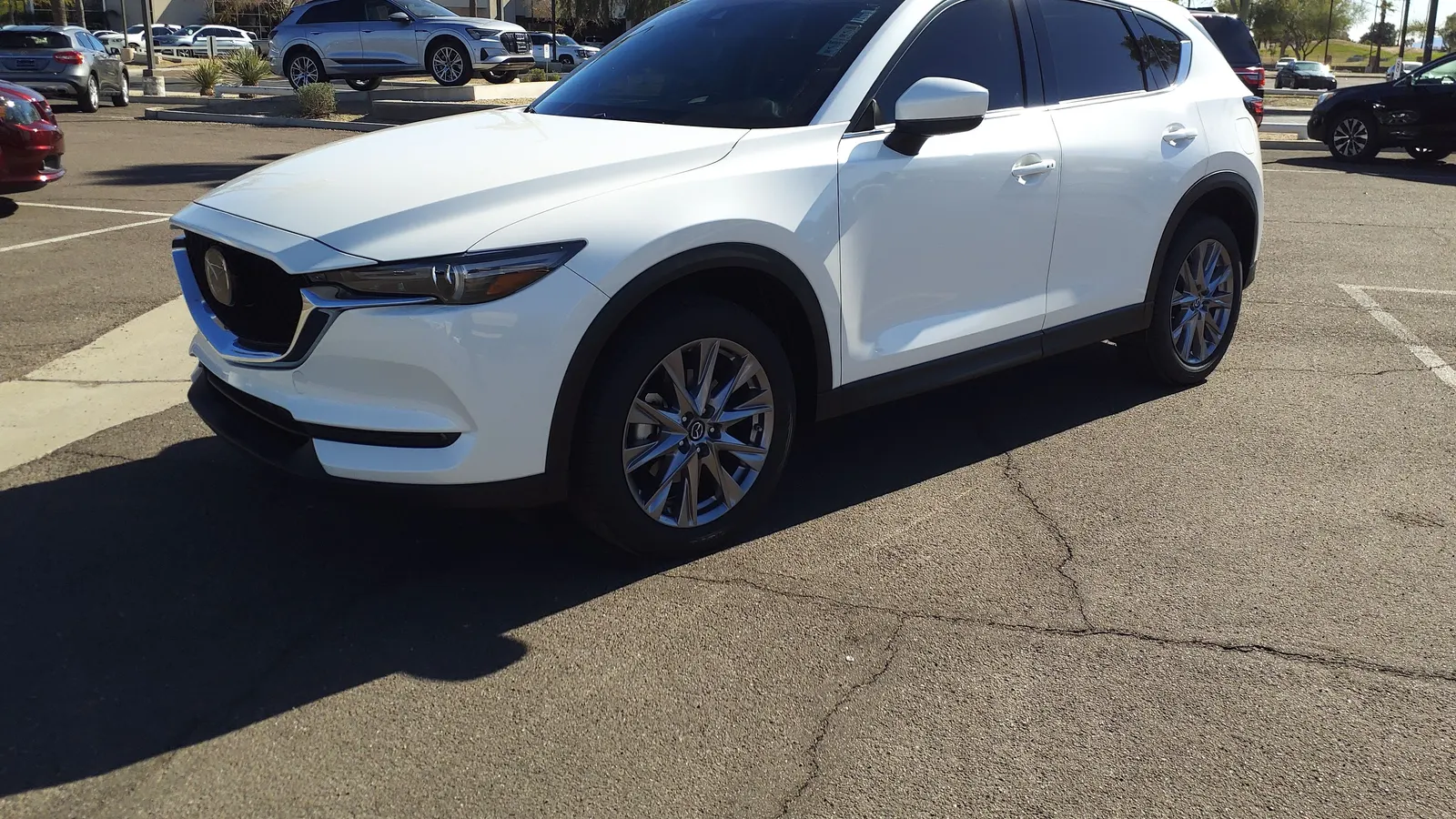
Pictured: 2019 Mazda CX-5 Grand Touring Reserve.
Owner complaints
270
10 report a crash, fire, injury or death
Recalls
2
None urgent
Most common problem
37%
of complaints: cracked cylinder head
Complaints per year filed
2019–2025 · peak 60
In short
No pattern of serious problemsThe 2019 Mazda CX-5 shows no pattern of serious problems: its largest serious class, engine failure or stalling, is 6% of complaints. NHTSA has 270 owner complaints, and 10 report a crash, fire, injury or death. The most common are cracked cylinder heads, oil leaks and screen glitches. It has 2 recalls.
Reliability
How Reliable Is the 2019 Mazda CX-5?
This model year has no pattern of serious problems in its owner complaints. The most serious group, engine failure or stalling, makes up a small share of complaints, and safety-related complaints are lower than typical. No recall for this model year is a do-not-drive or park-outside recall, and there is no open serious NHTSA investigation. That verdict describes the complaint mix. It does not mean owners have had no trouble.
What dominates the complaints is the engine. About 1 in 3 complaints describe a cracked cylinder head, and about 1 in 3 describe oil leaks or low oil. The two overlap heavily. Owners with a cracked head often first notice an oil leak, a burning oil smell, smoke or a low oil light, and many of the oil leak reports end in a cylinder head repair or replacement. If you see an oil leak on one of these cars, treat it as a possible sign of the same fault. Owners who gave a repair cost reported a median of about $5,550 for the cylinder head problem. Most of these complaints describe the 2.5L 4-cylinder engine.
Neither the cracked cylinder head nor the oil leak problem has a recall for this model year. Owners who reported the outcome of the repair were split. Of 13 reports for each problem, 7 said the repair fixed it and 6 said it did not, and complaints lean toward repairs that failed. The two recalls that do exist cover other defects. One says the impeller inside the low-pressure fuel pump may crack and deform, potentially causing the fuel pump to fail, and dealers will replace the fuel pumps free of charge. The other says a software error in the powertrain control module may cause the engine to stall, and dealers will reprogram the software free of charge.
Mileage matters for the engine problems. Cracked cylinder heads were reported at a median of about 54,300 miles, with the middle half between about 38,500 and 67,000 miles. Oil leaks show a similar range, with a median of about 51,700 miles and the middle half between about 35,800 and 72,000 miles. A car in this range deserves a close look, and a low odometer reading does not clear a car, because some owners reported problems earlier. Screen glitches, mostly the display tapping or changing settings by itself, are a minor annoyance, and too few owners gave a mileage to say when they start.
If you are buying, favor a car with documented oil level checks, proof the recalls were done and no sign of leaking. Have a mechanic inspect the engine bay before you commit. Keep the limits of this evidence in mind. Complaint counts show what owners reported, not how many vehicles are affected, and they cannot show how any particular car was maintained or driven.
Top problems
The 3 problems owners report most
Named from 270 NHTSA complaints. Open a problem for symptoms, the fix, cost and owners' accounts.
1.Cracked cylinder headSeriousAbout 1 in 3 complaints38,500–67,000 mi~$5,600 repair
Owners describe a cracked cylinder head, oil leaking onto the exhaust manifold, a burning oil smell and smoke from the engine. Many say it happened while driving, and some say there was no warning light. Reports have a median of about 54,300 miles, and none of these complaints mention a recall.
What owners describe
- Oil leak under the car55%
- Smoke from the engine41%
- Burning oil smell29%
Fix
Most common repair owners describe: cylinder head replacement (11 reports).
Repair worked in 54% of complaints that describe one (complaints lean toward repairs that failed)
Mileage
54,300 mi
Middle half 38,500–67,000 mi · 46 reports
Repair cost
$5,550
Middle half $4,825–$6,947 · 30 owner amounts
How common
37%
100 of 270 complaints
Crash, fire or injury
0%
of these complaints
In owners' words
“I also felt a slightly reduced engine performance and could see the car emitting smoke from the engine bay.”
Owner in MI2.5L 4-cylFiled 2025NHTSA 11645265 “Service advisor told me that my car is having a blown cylinder #3 and oil leaks from cracked cylinder head”
Owner in CA2.5L 4-cylFiled 2021NHTSA 11432084 “Oil started leaking while car was idling causing smoke to enter the cabin as well as all under the hood.”
Owner in CO2.5L 4-cylFiled 2025NHTSA 11637185 2.Oil leaks or low oilSeriousAbout 1 in 3 complaints35,800–72,000 mi
Owners describe oil leaks, a burning oil smell, smoke and oil dripping onto the exhaust manifold, often while driving. Some also report a low oil light, and many of the repairs mentioned are cylinder head repairs or replacements. Reports have a median of about 51,700 miles, and none of these complaints mention a recall.
What owners describe
- Oil leak or drips70%
- Smoke from the engine45%
- Burning oil smell27%
Fix
Most common repair owners describe: cylinder head replacement (9 reports).
Repair worked in 54% of complaints that describe one (complaints lean toward repairs that failed)
Mileage
51,700 mi
Middle half 35,800–72,000 mi · 44 reports
Repair cost
—
Fewer than 10 owners report a repair cost
How common
34%
92 of 270 complaints
Crash, fire or injury
1%
of these complaints
In owners' words
“A burning oil smell began, then thick white smoke came from under the hood while driving and after stopping.”
Owner in CA2.5L 4-cylFiled 2025NHTSA 11704576 3.Screen or infotainment glitchesMinorAbout 1 in 5 complaints4,700–40,000 mi
The most common report is ghost touch, where the screen taps, changes settings or places phone calls by itself, usually while driving. Others say the center screen goes blank or CarPlay and navigation stop. None of these complaints mention a recall.
What owners describe
- Ghost touch on the screen34%
- CarPlay or navigation stops34%
- Unintended phone calls8%
Fix
Most common repair owners describe: parts replaced (1 report).
Mileage
24,000 mi
Middle half 4,700–40,000 mi · 9 reports
Repair cost
—
Fewer than 10 owners report a repair cost
How common
19%
50 of 270 complaints
Crash, fire or injury
2%
of these complaints
In owners' words
“The screen is experiencing frequent “ghost touch” or phantom button presses, where functions are activated without any input.”
Owner in CA2.5L 4-cylFiled 2025NHTSA 11661882 “Pressing random buttons, drastically increasing the volume, the carplay disconnecting while I'm following GPS directions”
Owner in NJ2.5L 4-cylFiled 2025NHTSA 11673522 “They will not cover the display which they allege is the problem in my car and told me it is a $600 replacement fee”
Owner in VA2.5L 4-cylFiled 2025NHTSA 11669052
Buying one
Should you buy a used 2019 Mazda CX-5?
What to check before you buy, based on the complaint and recall data.
Ask for the full service history and check that both recalls, the fuel pump (21V875000) and the engine stalling software (19V497000), were completed. Look under the hood and at the ground where the car has been parked for oil leaks, and ask about any burning oil smell. Ask the seller whether the cylinder head was ever repaired or replaced. Test the touchscreen for random taps or menu changes before you buy.
- 1Run the VIN for open recalls. NHTSA lists 2 recalls. Check at nhtsa.gov/recalls.
- 2Check for cracked cylinder head. The most common complaint, in about 1 in 3 owner complaints.
- 3Get a pre-purchase inspection. An independent mechanic can spot leaks, stored fault codes and accident repairs that a test drive misses.
Mazda CX-5 model years
Which Mazda CX-5 years to avoid? Every model year compared
Early complaints are those filed in a model year's first 3 years. They follow how many were sold, so they don't show which years are better. The tag on 2019 is its verdict from our research of its owner complaints.
Crash test ratings
NHTSA 5-Star Safety Ratings.
| SUV AWD | SUV FWD | |
|---|---|---|
| Overall | ★★★★★ | ★★★★★ |
| Frontal crash | ★★★★★ | ★★★★★ |
| Side crash | ★★★★★ | ★★★★★ |
| Rollover | ★★★★ | ★★★★ |
| Rollover risk | 17% | 17% |
Owning one
If you already own one
Find your symptom, see when problems tend to show up, and check which recalls apply.
Watch for oil leaks, a burning oil smell, smoke from the engine or a low oil light, and have them checked right away. If smoke appears or the oil light comes on while driving, pull over safely rather than continuing. Check the oil level often. Confirm with a Mazda dealer that the fuel pump recall (21V875000) and the engine stalling recall (19V497000) were done on your car.
- Cracked cylinder headSeriousAbout 1 in 3 owner complaints100 of 270Median 54,300 mi
Most common repair owners describe: cylinder head replacement (11 reports).
- Oil leaks or low oilSeriousAbout 1 in 3 owner complaints92 of 270Median 51,700 mi
Most common repair owners describe: cylinder head replacement (9 reports).
- Screen or infotainment glitchesMinorAbout 1 in 5 owner complaints50 of 270Median 24,000 mi
Most common repair owners describe: parts replaced (1 report).
- Stalling or shutting off while drivingCriticalAbout 1 in 19 owner complaints14 of 270Median 5,000 mi
- Automatic emergency braking activates for no reasonCriticalAbout 1 in 27 owner complaints10 of 270Median 23,600 mi
of complaints that list mileage (24 of 43) came in before 25,000 miles. A low odometer reading is no guarantee.
2 recalls, newest first
Open one for the risk, the remedy and what to do now.
Delivery › Fuel pumpThe impeller inside the low-pressure fuel pump may crack and deform, potentially causing the fuel pump to fail.Nov 12, 2021121,038 vehicles21V875000
- Defect
- The impeller inside the low-pressure fuel pump may crack and deform, potentially causing the fuel pump to fail.
- Risk
- Fuel pump failure may cause an engine stall, increasing the risk of a crash.
- Remedy
- Dealers will replace the fuel pumps, free of charge.
EngineA software error in the powertrain control module (PCM) may cause the engine to stall.Jun 27, 2019262,220 vehicles19V497000
- Defect
- A software error in the powertrain control module (PCM) may cause the engine to stall.
- Risk
- An unexpected stall increases the risk of a crash.
- Remedy
- Dealers will reprogram the PCM software, free of charge.
What to do
Check the VIN at nhtsa.gov/recalls. If a recall is open, any dealer will fix it free. For NHTSA's full record of a campaign, search its number there (for example 21V875000).
Reliability history
Mazda CX-5 reliability by year
Complaints filed in each model year's first 3 years, by trouble spot. Darker cells have more complaints; counts aren't adjusted for how many were sold each year.
All problems
Every problem reported on the 2019 CX-5
Every problem found in the 270 owner complaints, by area of the vehicle.
Engine
141 52%- Cracked cylinder headSerious100 37%typically at 54,300 mi · repair $5,550 · 54% fixed54,300$5,55054%
- Oil leaks or low oilSerious92 34%typically at 51,700 mi · 54% fixed51,700–54%
- Stalling or shutting off while drivingCritical14 5%typically at 5,000 mi5,000––
- Coolant leak9 3%–––
- Fuel pump or fuel injector failureCritical4 1%–––
- Coolant control valve fault, engine runs too cool3 1%–––
Show 8 more engine problemsShow fewer engine problems
- Engine ticking or valve tickSerious3 1%–––
- Engine failure2 0.7%–––
- Misfires or head gasket failureSerious2 0.7%–––
- Oil consumption2 0.7%–––
- Speed limited to 20 mph while driving2 0.7%–––
- Car slows down suddenly without warning1 0.4%–––
- Exhaust fumes or carbon monoxide in the cabinCritical1 0.4%–––
- Engine RPM does not match speed1 0.4%–––
Electrical
58 21%- 50 19%typically at 24,000 mi24,000––
- Battery drain or no-startSerious4 1%–––
- Instrument panel malfunctionSerious3 1%–––
- Many warning lights at onceMinor3 1%–––
- Displays too small or hard to read2 0.7%–––
Body, lights & visibility
29 11%- Sunroof glass shattersSerious5 2%–––
- Wind noiseMinor5 2%–––
- Auto-folding side mirrors fail to open fullySerious4 1%–––
- Windshield chips and cracks3 1%–––
- Paint chips easily2 0.7%–––
- Windows will not lower in cold weather1 0.4%–––
Show 9 more body, lights & visibility problemsShow fewer body, lights & visibility problems
- Rear window shatters by itself1 0.4%–––
- Mirror vibration1 0.4%–––
- Rear seat back rattles and does not latch tight1 0.4%–––
- Underbody shield falls off1 0.4%–––
- Low-beam headlights inoperable1 0.4%–––
- Wiper failure1 0.4%–––
- Headrest ripped out in a rear-end crash1 0.4%–––
- Physical key does not open the driver door1 0.4%–––
- Power seat moved unexpectedly1 0.4%–––
Driver aids & stability
14 5%- Automatic emergency braking activates for no reasonCritical10 4%–––
- Rearview camera turns off2 0.7%–––
- Front radar blocked message disables driver aids in snow1 0.4%–––
- Radar cruise control slows the car in turns1 0.4%–––
Transmission & drivetrain
11 4%- Harsh, jerky shiftingSerious5 2%–––
- Transmission failure needing replacementSerious3 1%–––
- Vehicle rolled away after being parked2 0.7%–––
- Loss of power in low gears in freezing weather1 0.4%–––
- Hesitation or slipping while drivingSerious1 0.4%–––
Airbags & seat belts
5 2%- Airbag warning light stays onSerious3 1%–––
- Passenger airbag turns off with an adult in the seatCritical1 0.4%–––
- Airbags did not deploy in a crash1 0.4%–––
Acceleration & speed control
4 1%- Sudden or unintended accelerationCritical4 1%–––
Wheels & tires
2 0.7%- Temporary spare tire does not fit the front axle2 0.7%–––
- Tire separated while driving1 0.4%–––
Brakes
2 0.7%- Steering jerks and brakes apply after battery drain1 0.4%–––
- Smart City Brake Support malfunction message1 0.4%–––
Fuel system & stalling
1 0.4%- Low fuel light and range readout come on too late1 0.4%–––
Steering
1 0.4%- Loss of power steeringCritical1 0.4%–––
Fire
1 0.4%- Vehicle catches fireCritical1 0.4%–––
54 problems found in all 270 complaints. One complaint can describe more than one problem, so counts add up to more than the total. Not counted as a defect: 6 about recall paperwork or parts delays, 2 describing no vehicle defect. Typical miles, repair cost and fix rate show only when enough owners report them.
The data
Behind the numbers
Every figure comes from NHTSA's complaint file and APIs.
- Complaints
- 270
- Recalls
- 2
- Crashes
- 7
- Fires
- 2
- Injuries
- 5
- Deaths
- 0
Crashes and fires count complaints that report one; injuries and deaths count people.
FAQ
2019 Mazda CX-5 questions
Is the 2019 Mazda CX-5 reliable?
The 2019 Mazda CX-5 shows no pattern of serious problems in its owner complaints. Its largest serious group, engine failure or stalling, is 6% of complaints, and none of its recalls is a do-not-drive or park-outside recall. That does not mean owners have had no trouble: cracked cylinder heads and oil leaks are the main complaints.
What are the most common 2019 Mazda CX-5 problems?
Engine problems lead. Cracked cylinder heads make up about 1 in 3 owner complaints (100 complaints), and oil leaks or low oil are also about 1 in 3 (92 complaints). The two overlap heavily. Screen or infotainment glitches, mostly the display tapping or changing settings by itself, are about 1 in 5.
Does the 2019 Mazda CX-5 have any recalls?
The 2019 Mazda CX-5 has 2 recalls, and neither is a do-not-drive or park-outside recall. 21V875000 covers a low-pressure fuel pump impeller that may crack and deform, and dealers will replace the fuel pumps free of charge. 19V497000 covers a powertrain control module software error that may cause the engine to stall, fixed by a free reprogram. Check your VIN at nhtsa.gov/recalls.
At what mileage does the 2019 Mazda CX-5 get a cracked cylinder head?
Owners reported cracked cylinder heads at a median of about 54,300 miles, with the middle half between about 38,500 and 67,000 miles. Some owners reported problems earlier, so a low odometer reading does not clear a car. Owners who gave a repair cost reported a median of about $5,550.
Is the 2019 Mazda CX-5 safe?
NHTSA gives the 2019 Mazda CX-5 5 out of 5 stars overall, with 5 out of 5 stars for frontal crash, 5 out of 5 stars for side crash and 4 out of 5 stars for rollover. The ratings are the same for the AWD and FWD versions. Of 270 owner complaints, 10 report a crash, fire, injury or death.
What should I check before buying a 2019 Mazda CX-5?
Ask for the full service history and proof that both recalls, 21V875000 (fuel pump) and 19V497000 (engine stalling software), were done. Look under the hood and on the ground where the car has been parked for oil leaks, ask about any burning oil smell, and ask whether the cylinder head was ever repaired or replaced. Test the touchscreen for random taps.
Which Mazda CX-5 years should you avoid?
No Mazda CX-5 model year shows serious known problems in owner complaints. The 2013–2014 and 2016 are worth checking carefully: complaints show some known problems. The 2015 and 2017–2023 show no pattern of serious problems. The 2024–2026 have too few complaints to judge. Every model year is compared on the Mazda CX-5 years-to-avoid page.
Methodology
How we researched this
- Complaints. NHTSA's owner complaint file, counted as unique complaint numbers for make MAZDA, model CX-5, model year 2019. Data through Oct 4, 2026.
- Verdict. Judged from this model year's own complaints, not against other models, using shares rather than counts. Serious known problems: one serious problem (transmission, engine or stalling, steering, brakes, airbags, fire, fuel leaks) is in a quarter or more of complaints; or a smaller but clear cluster comes with an unusual share of crash, fire, injury or loss-of-power reports or early failures; or an urgent recall or NHTSA investigation matches a top complaint. Some known problems: one of those signals on its own. No pattern of serious problems: none of them; this doesn't mean the vehicle is trouble-free. Too few complaints to judge: under 50 complaints. Why this verdict: Checked: the largest serious problem class is engine failure or stalling (stalling while driving, fuel pump and injector failures, misfires and head gasket failures), 6% of complaints; safety-related complaints are 9% (typical: 17%), and there's no do-not-drive or park-outside recall or open serious NHTSA investigation..
- No grade or class ranking. Raw complaint counts favor models that sell fewer cars, so we don't score or rank this vehicle against other models until we can adjust for sales.
- Trouble spots and history. Complaints grouped by the part owners chose when filing. The history grid counts complaints filed in each model year's first 3 years so older and newer years compare fairly; years with fewer than 3 complete years are marked too new.
- Named problems. Every one of the 270 complaints was researched and classified by its problems, severity, symptoms, repairs and any cost the owner mentions; the counts, costs and fix rates on this page are tallies of those classifications. Quotes are verbatim excerpts, checked against the original text. Engines are decoded from partial VINs with NHTSA's vPIC service.
- Repair costs and fix rates. Shown only when at least 10 owners report a repair cost, or at least 10 complaints describe whether a repair worked.
- Not adjusted for sales. Not affiliated with NHTSA. Page updated Nov 5, 2026.