2020 Kia Telluride Reliability & Problems
By Adrian V. LockhartUpdated All 768 NHTSA owner reports researched and classified
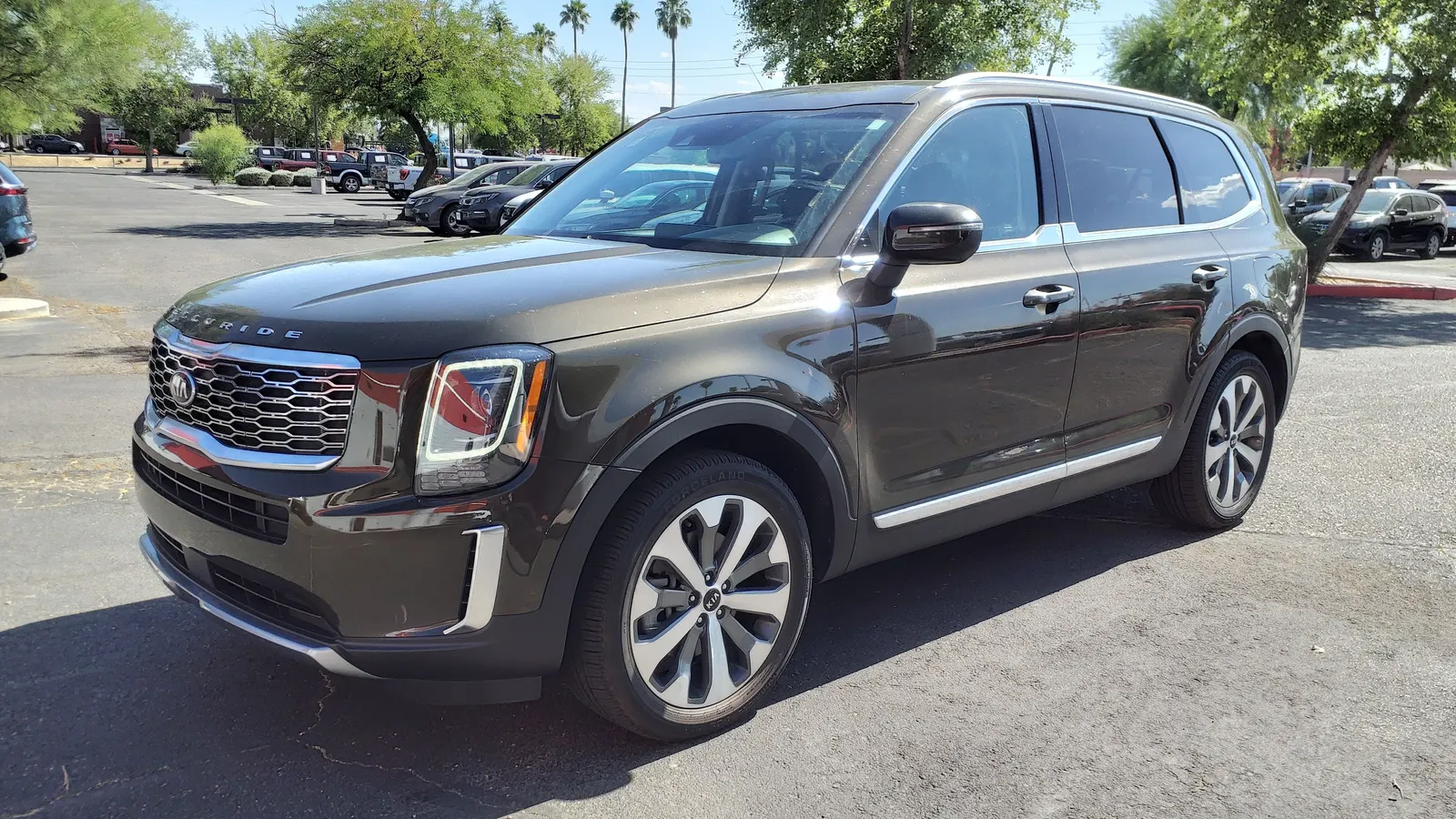
Pictured: 2020 Kia Telluride EX.
Owner complaints
768
23 report a crash, fire, injury or death
Recalls
7
3 with a park-outside warning
Most common problem
19%
of complaints: high beam failure
Complaints per year filed
2019–2025 · peak 151
In short
Some known problemsThe 2020 Kia Telluride has some known problems, mainly because of 3 park-outside recalls for fire risk in the trailer hitches and seats. NHTSA has 768 owner complaints, and 23 report a crash, fire, injury or death. The most common are high beams that stop working, windshields that crack easily and heavy oil use. It has 7 recalls.
Reliability
How Reliable Is the 2020 Kia Telluride?
This model year is rated Some known problems, and the main reason is official. Three recalls tell owners to park outside until the repair is done: 22V626000 for a fire risk in the trailer hitches, and 24V407000 and 26V430000 for a fire risk in the seats. Owner complaints add to the picture rather than create it. Most of the complaints are about lights, glass and oil, and a smaller number describe stalling and engine failure, which are the most serious of the group.
Three problems dominate. High beams that stop working are the most common, at about 1 in 5 complaints. Windshields that crack or chip easily follow at about the same share. Excessive oil consumption comes next, at about 1 in 8. Oil leaks or low oil, stalling and engine failure appear in smaller numbers, and they overlap. Owners describe engines that were low or empty of oil, often with no warning light, and some of those cases ended in stalling, lost power or a recommended engine replacement. If you see oil trouble on a vehicle, treat the engine as the real question, not just the oil level.
The recalls cover other defects. The seat recall text says the front power seat motor may overheat and cause a fire while parked or driving, and 26V430000 adds that an improper 24V407 repair can cause the same thing. Recall 24V214000 says the intermediate shaft and right front driveshaft may not be fully engaged, which can allow roll away in PARK. Recall 24V148000 says the high beam headlights may fail, and dealers will inspect and repair or replace them free of charge. But high beam complaints are numerous, and owners who reported the outcome mostly said repairs did not fix it, with new bulbs often not helping. This model year has no recall for oil consumption, oil leaks, stalling, engine failure or the cracking windshields. Across the problems where owners described results, complaints lean toward repairs that failed.
Mileage tells you what to look for. Windshield complaints come early, with a median around 4,300 miles, and dim low-beam complaints earlier still, around 1,700 miles. High beam failures show up later, with a middle range of about 60,000 to 77,500 miles. The engine problems come later again: oil consumption is reported at a median of about 93,700 miles, engine failure at about 92,300, stalling at about 75,900 and oil leaks at about 85,900. So a vehicle in the 60,000 to 100,000 mile range deserves a close look at the oil level, service history and any engine warning lights.
When shopping, confirm every recall is completed and check the lights and windshield in person. Remember the limits of this evidence. Complaint counts show what owners chose to report, not how many vehicles are affected, and they cannot show how any particular vehicle was driven or maintained. A clean inspection and records of regular oil checks matter more for one specific vehicle than any pattern across the model year.
Top problems
The 10 problems owners report most
Named from 768 NHTSA complaints. Open a problem for symptoms, the fix, cost and owners' accounts.
1.High beams stop workingSeriousAbout 1 in 5 complaints60,000–77,500 mi~$1,900 repair
Owners say the high beams stopped working, often both at once and with no warning, and that new bulbs did not help. It is mostly noticed during night driving. Reports with mileage have a middle range of about 60,000 to 77,500 miles, and recall 24V148000 says the high beam headlights may fail.
What owners describe
- High beams will not turn on37%
- Both high beams quit at once10%
Fix
Most common repair owners describe: bulbs replaced (5 reports).
Repair worked in 5% of complaints that describe one (complaints lean toward repairs that failed)
Mileage
68,000 mi
Middle half 60,000–77,500 mi · 19 reports
Repair cost
$1,900
Middle half $1,725–$2,468 · 10 owner amounts
How common
19%
147 of 768 complaints
Crash, fire or injury
1%
of these complaints
In owners' words
“High beam is low again and I am afraid to drive in early morning, dusk, or evening”
Owner in VA3.8L V6Filed 2025NHTSA 11664738 2.Windshield cracks or chips easilySeriousAbout 1 in 5 complaints1,700–9,600 mi~$850 repair
Owners describe small rocks or pebbles causing large cracks that spread quickly, and some cracks with no visible impact. Many happen on the highway or interstate. Reports are early, with a middle range of about 1,700 to 9,600 miles, and this model year has no recall for it.
What owners describe
- Small rock causes large crack11%
- Cracks with no visible impact11%
- Crack spreads quickly10%
Fix
Most common repair owners describe: windshield replaced (9 reports).
Repair worked in 4% of complaints that describe one (complaints lean toward repairs that failed)
Mileage
4,400 mi
Middle half 1,700–9,600 mi · 104 reports
Repair cost
$834
Middle half $750–$1,225 · 12 owner amounts
How common
18%
141 of 768 complaints
Crash, fire or injury
0%
of these complaints
In owners' words
“Very small chip in windshield and within an hour before we could get it filled it ran from one side to the other”
Owner in TX3.8L V6Filed 2019NHTSA 11231577 “I am told windshield for this vehicle is on backorder and have been waiting over a month for a replacement”
Owner in NC3.8L V6Filed 2019NHTSA 11244483 “They also stated it would be 2-8 weeks before a windshield will be available to install from kia”
Owner in MO3.8L V6Filed 2019NHTSA 11242644 3.Excessive oil consumptionSeriousAbout 1 in 8 complaints76,100–112,300 mi
Owners describe burning oil, frequent top-offs and empty dipsticks, often with no low oil warning or no warning lights. Some also report shaking or stalling. Reports are late, with a middle range of about 76,100 to 112,300 miles, and this model year has no recall for it.
What owners describe
- Frequent oil top-offs18%
- No low oil warning9%
- Burning oil smell9%
- No oil on the dipstick6%
Fix
Most common repair owners describe: oil change (2 reports).
Repair worked in 18% of complaints that describe one (complaints lean toward repairs that failed)
Mileage
93,700 mi
Middle half 76,100–112,300 mi · 32 reports
Repair cost
—
Fewer than 10 owners report a repair cost
How common
13%
96 of 768 complaints
Crash, fire or injury
0%
of these complaints
In owners' words
“An oil consumption test was conducted in January 2025, and result is the need for a new engine, $10,000.”
Owner in MD3.8L V6Filed 2025NHTSA 11636792 “Excessive oil consumption (a quart every ~600 miles) and extreme shaking at speeds between 20-50mph”
Owner in VA3.8L V6Filed 2025NHTSA 11639835 4.Paint peels or chips offMinorAbout 1 in 14 complaints49,300–69,500 mi
Owners mostly describe white pearl paint peeling or chipping, especially on the roof and above the windshield, sometimes exposing bare metal. Some say it keeps getting worse. This model year has no recall for it.
What owners describe
- Paint peeling off the roof51%
- White pearl paint chipping38%
- Peeling above the windshield11%
Fix
Most common repair owners describe: recall repairs attempted (1 report).
Mileage
57,000 mi
Middle half 49,300–69,500 mi · 8 reports
Repair cost
—
Fewer than 10 owners report a repair cost
How common
7%
55 of 768 complaints
Crash, fire or injury
0%
of these complaints
5.Stalling or shutting off while drivingCriticalAbout 1 in 16 complaints59,500–92,300 mi
Owners describe losing power, stalling and the vehicle shutting off, mostly on the highway or interstate, sometimes with no warning lights or no low oil warning. One owner also lost brakes. Reports with mileage have a median of about 75,900 miles, and this model year has no recall for it.
What owners describe
- Vehicle shuts off45%
- Lost power while driving12%
- No warning before it happens10%
- Will not restart10%
Fix
Most common repair owners describe: oil change (2 reports).
Repair worked in 9% of complaints that describe one (complaints lean toward repairs that failed)
Mileage
75,900 mi
Middle half 59,500–92,300 mi · 20 reports
Repair cost
—
Fewer than 10 owners report a repair cost
How common
6%
49 of 768 complaints
Crash, fire or injury
2%
of these complaints
In owners' words
“The vehicle stopped in the roadway, would not immediately restart, and restarted later after sitting.”
Owner in OH3.8L V6Filed 2026NHTSA 11723555 “Every time this has happened the suv loses all power and needs to be placed in park to be restarted”
Owner in IA3.8L V6Filed 2021NHTSA 11417474 “My car has stalled out on multiple occasions and at one point wouldn't go above 60 on the highway.”
Owner in PA3.8L V6Filed 2026NHTSA 11709446
Show 5 more problemsShow fewer problems
6.Oil leaks or low oilSeriousAbout 1 in 19 complaints60,300–109,500 mi
Owners describe oil housing and filter housing leaks, an oil pan leak, and engines found empty of oil, often with a check engine light or no warning light. A few report stalls. Reports with mileage have a median of about 85,900 miles, and this model year has no recall for it.
What owners describe
- Oil filter housing leak41%
- Check engine light17%
- Oil pan leak12%
- Engine empty of oil10%
Fix
Most common repair owners describe: oil consumption test (2 reports).
Repair worked in 19% of complaints that describe one (complaints lean toward repairs that failed)
Mileage
85,900 mi
Middle half 60,300–109,500 mi · 10 reports
Repair cost
—
Fewer than 10 owners report a repair cost
How common
5%
41 of 768 complaints
Crash, fire or injury
2%
of these complaints
In owners' words
“The heat from metal and pressure causes the plastic component to crack, become warped and this leads to oil leaks”
Owner in CA3.8L V6Filed 2026NHTSA 11711241 “Oil leak that I’ve put so much effort in getting fixed or replaced and nothing is working.”
Owner in TX3.8L V6Filed 2026NHTSA 11730781 “The car leaked 5 quarts of oil without any engine or low oil light being illuminated”
Owner in PA3.8L V6Filed 2025NHTSA 11696909 7.Engine failureCriticalAbout 1 in 19 complaints72,100–98,300 mi
Owners describe lost power, misfires, white smoke and stalling, sometimes with no warning lights, while driving on the highway or interstate. Several say an engine replacement was needed or approved. Reports with mileage have a median of about 92,300 miles.
What owners describe
- Sudden loss of power15%
- Engine replacement needed10%
- White smoke8%
- Misfiring cylinders5%
Fix
Most common repair owners describe: engine replaced (3 reports).
Mileage
92,300 mi
Middle half 72,100–98,300 mi · 20 reports
Repair cost
—
Fewer than 10 owners report a repair cost
How common
5%
40 of 768 complaints
Crash, fire or injury
5%
of these complaints
In owners' words
“Kia has denied the claim despite being under the warranty period because I cannot supply complete oil change records.”
Owner in MD3.8L V6Filed 2025NHTSA 11673462 “We noticed a blue smoke coming from the engine upon acceleration and a knocking noise from engine.”
Owner in TN3.8L V6Filed 2025NHTSA 11671496 “The check engine and oil pressure light will start to flash when starting to brake.”
Owner in PA3.8L V6Filed 2025NHTSA 11666969 8.Sunroof breaks or comes off its trackSeriousAbout 1 in 20 complaints54,500–63,300 mi~$4,700 repair
Owners describe a sunroof that would not close, a broken wind deflector, a sunroof off its track or stuck open, and in some cases parts flying off on the interstate. Several say it happened when opening the sunroof. This model year has no recall for it.
What owners describe
- Sunroof off its track51%
- Sunroof will not close33%
- Wind deflector breaks18%
- Parts come loose at speed18%
Fix
Most common repair owners describe: plastic put over roof (1 report).
Mileage
58,500 mi
Middle half 54,500–63,300 mi · 4 reports
Repair cost
$4,700
Middle half $4,000–$6,000 · 13 owner amounts
How common
5%
39 of 768 complaints
Crash, fire or injury
3%
of these complaints
In owners' words
“The wind deflector and track assembly on the sunroof of our 2020 Kia Telluride (56K miles) broke when trying to open the sunroof”
Owner in IL3.8L V6Filed 2026NHTSA 11745064 “The sunroof glass/panel traveled to full open and the track mechanism broke at that point, preventing normal closure”
Owner in GAFiled 2026NHTSA 11748612 “It sounded like a giant explosion. I heard glass moving around and realized something happened to my sunroof.”
Owner in OH3.8L V6Filed 2026NHTSA 11735035 9.Dim low-beam headlightsSeriousAbout 1 in 23 complaints200–6,500 mi
Owners describe poor visibility on unlit roads and in turns, a sharp cutoff of the low beams, and being hesitant to drive at night. Reports with mileage have a median of about 1,700 miles, so the complaint starts early. This model year has no recall for it.
What owners describe
- Hard to see at night29%
- Poor view on unlit roads24%
- Little light when turning21%
- Sharp low beam cutoff6%
Fix
Most common repair owners describe: aftermarket led bulbs installed (2 reports).
Mileage
1,700 mi
Middle half 200–6,500 mi · 21 reports
Repair cost
—
Fewer than 10 owners report a repair cost
How common
4%
34 of 768 complaints
Crash, fire or injury
3%
of these complaints
10.Rear shocks fail or ride becomes harshSeriousAbout 1 in 40 complaints30,000–55,000 mi
Owners describe noises from the rear over bumps and inclines, stiff or bumpy rides, and failed self-leveling shocks, including when towing. One mentions the problem after a trailer hitch recall repair. This model year has no recall for it.
What owners describe
- Harsh or bumpy ride42%
- Noise from the rear suspension16%
- Unsafe feeling when towing11%
Fix
Most common repair owners describe: rear struts shocks replaced twice (1 report).
Mileage
35,000 mi
Middle half 30,000–55,000 mi · 5 reports
Repair cost
—
Fewer than 10 owners report a repair cost
How common
2%
19 of 768 complaints
Crash, fire or injury
0%
of these complaints
Buying one
Should you buy a used 2020 Kia Telluride?
What to check before you buy, based on the complaint and recall data.
Ask the seller for proof that the park-outside recalls (22V626000, 24V407000 and 26V430000) and the driveshaft recall (24V214000) were completed, and check the VIN on NHTSA's recall lookup yourself. Test both high beams on a dark road, look closely at the windshield, and check the oil level and service records for oil top-offs. Be cautious of any vehicle with an engine warning light, stalling history or a pending engine decision.
- 1Run the VIN for open recalls. NHTSA lists 7 recalls, and 3 carry a do-not-drive or park-outside warning (26V430000, 24V407000, 22V626000). Check at nhtsa.gov/recalls.
- 2Test-drive for stalling. It's the most common safety-critical complaint, in about 1 in 16 owner complaints, usually around 75,900 miles.
- 3Check for high beam failure. The most common complaint, in about 1 in 5 owner complaints.
- 4Get a pre-purchase inspection. An independent mechanic can spot leaks, stored fault codes and accident repairs that a test drive misses.
Kia Telluride model years
Which Kia Telluride years to avoid? Every model year compared
Early complaints are those filed in a model year's first 3 years. They follow how many were sold, so they don't show which years are better. The tag on 2020 is its verdict from our research of its owner complaints.
Crash test ratings
NHTSA 5-Star Safety Ratings.
| SUV AWD | SUV FWD | |
|---|---|---|
| Overall | ★★★★★ | ★★★★★ |
| Frontal crash | ★★★★ | ★★★★ |
| Side crash | ★★★★★ | ★★★★★ |
| Rollover | ★★★★ | ★★★★ |
| Rollover risk | 14% | 16% |
Owning one
If you already own one
Find your symptom, see when problems tend to show up, and check which recalls apply.
Park outside and away from structures until the seat and trailer hitch fire recalls are repaired. Engage the emergency parking brake before leaving the vehicle until the driveshaft recall is done. Check the oil level between changes, because some owners reported low oil with no warning light. If the engine loses power, stalls or shows warning lights while driving, pull over safely and have it inspected before driving on.
- High beams stop workingSeriousAbout 1 in 5 owner complaints147 of 768Median 68,000 mi
Most common repair owners describe: bulbs replaced (5 reports).
- Windshield cracks or chips easilySeriousAbout 1 in 5 owner complaints141 of 768Median 4,400 mi
Most common repair owners describe: windshield replaced (9 reports).
- Excessive oil consumptionSeriousAbout 1 in 8 owner complaints96 of 768Median 93,700 mi
Most common repair owners describe: oil change (2 reports).
- Paint peels or chips offMinorAbout 1 in 14 owner complaints55 of 768Median 57,000 mi
Most common repair owners describe: recall repairs attempted (1 report).
- Stalling or shutting off while drivingCriticalAbout 1 in 16 owner complaints49 of 768Median 75,900 mi
Most common repair owners describe: oil change (2 reports).
- Oil leaks or low oilSeriousAbout 1 in 19 owner complaints41 of 768Median 85,900 mi
Most common repair owners describe: oil consumption test (2 reports).
- Engine failureCriticalAbout 1 in 19 owner complaints40 of 768Median 92,300 mi
Most common repair owners describe: engine replaced (3 reports).
- Sunroof breaks or comes off its trackSeriousAbout 1 in 20 owner complaints39 of 768Median 58,500 mi
Most common repair owners describe: plastic put over roof (1 report).
Show all 17 problemsShow fewer problems
- Dim low-beam headlightsSeriousAbout 1 in 23 owner complaints34 of 768Median 1,700 mi
Most common repair owners describe: aftermarket led bulbs installed (2 reports).
- Rear shocks fail or ride becomes harshSeriousAbout 1 in 40 owner complaints19 of 768Median 35,000 mi
Most common repair owners describe: rear struts shocks replaced twice (1 report).
- Sunroof wind deflector or track failureSeriousAbout 1 in 40 owner complaints19 of 768Median 52,500 mi
- No low-oil warning before oil runs very lowSeriousAbout 1 in 45 owner complaints17 of 768Median 97,900 mi
- Hesitation or slipping while drivingSeriousAbout 1 in 59 owner complaints13 of 768Median 91,400 mi
- Many warning lights at onceMinorAbout 1 in 64 owner complaints12 of 768Median 38,800 mi
- Engine knockingCriticalAbout 1 in 64 owner complaints12 of 768Median 92,200 mi
- Brake pedal sinks or brakes failCriticalAbout 1 in 70 owner complaints11 of 768Median 65,000 mi
- Vehicle catches fireCriticalAbout 1 in 77 owner complaints10 of 768Median 70,000 mi
of complaints that list mileage (148 of 195) came in before 25,000 miles. A low odometer reading is no guarantee.
7 recalls, newest first
Open one for the risk, the remedy and what to do now.
Front assembly › Power adjustPark outsideThe front power seat motor may overheat due to a stuck power seat slide knob or an improper recall 24V407 repair,…Jul 2, 2026462,869 vehicles26V430000
- Defect
- The front power seat motor may overheat due to a stuck power seat slide knob or an improper recall 24V407 repair, which can result in a fire while parked or driving.
- Risk
- A fire increases the risk of injury.
- Remedy
- Owners are advised to park outside and away from structures until the recall repair is complete.
- What to do
- Park outside and away from buildings until the recall repair is done.
Front assembly › Power adjustPark outsideThe front power seat motor may overheat due to a stuck power seat slide knob, which can result in a fire while parked…Jun 5, 2024462,869 vehicles24V407000
- Defect
- The front power seat motor may overheat due to a stuck power seat slide knob, which can result in a fire while parked or driving.
- Risk
- A fire increases the risk of injury.
- Remedy
- Owners are advised to park outside and away from structures until the recall repair is complete.
- What to do
- Park outside and away from buildings until the recall repair is done.
Driveline › DriveshaftThe intermediate shaft and right front driveshaft may not be fully engaged, which can result in vehicle roll away…Mar 20, 2024427,407 vehicles24V214000
- Defect
- The intermediate shaft and right front driveshaft may not be fully engaged, which can result in vehicle roll away while in PARK.
- Risk
- A vehicle roll away increases the risk of a crash or injury.
- Remedy
- Owners are advised to manually engage the emergency parking brake prior to exiting the vehicle until the recall remedy is performed.
Exterior lighting › HeadlightsThe high beam headlights may fail.Feb 26, 202435,031 vehicles24V148000
- Defect
- The high beam headlights may fail.
- Risk
- Inoperable high beam headlights may reduce visibility, increasing the risk of a crash.
- Remedy
- Dealers will inspect and repair or replace the high beam headlights, as necessary free of charge.
Trailer hitchesPark outsideDebris and moisture accumulation on the tow hitch harness module printed circuit board (PCB) may cause an electrical…Aug 15, 202236,417 vehicles22V626000
- Defect
- Debris and moisture accumulation on the tow hitch harness module printed circuit board (PCB) may cause an electrical short, which can result in a fire.
- Risk
- A fire while parked or driving can increase the risk of injury.
- Remedy
- Owners are advised to park outside and away from structures until the recall repair is complete.
- What to do
- Park outside and away from buildings until the recall repair is done.
Show all 7 recallsShow fewer recalls
Electrical system › WiringWhen a trailer is connected to the vehicle, the trailer brake lights will not illuminate when the SCC applies the…Jul 28, 202086,921 vehicles20V436000
- Defect
- When a trailer is connected to the vehicle, the trailer brake lights will not illuminate when the SCC applies the brakes. As such, these vehicles fail to comply with the requirements of Federal Motor Vehicle Safety Standard (FMVSS) number 108, "Lamps, Reflective Devices, and Associated Equipment."
- Risk
- Inoperative trailer brake lights can fail to warn other drivers that the vehicle is slowing, increasing the risk of a crash.
- Remedy
- Dealers will install an additional wire harness to the main fuse box to signal the trailer brake lights, free of charge.
Seat belts › Rear/otherThe seat belt assemblies in the front passenger, second, and/or third row seats may not tightly secure a child…Aug 13, 201930,168 vehicles19V594000
- Defect
- The seat belt assemblies in the front passenger, second, and/or third row seats may not tightly secure a child restraint system in the event of a crash.
- Risk
- If a child seat is not properly secured, there is an increased risk of injury to the occupant in a crash.
- Remedy
- Dealers will inspect the vehicles and replace any incorrect seat belt assemblies.
What to do
Check the VIN at nhtsa.gov/recalls. If a recall is open, any dealer will fix it free. For NHTSA's full record of a campaign, search its number there (for example 26V430000).
Reliability history
Kia Telluride reliability by year
Complaints filed in each model year's first 3 years, by trouble spot. Darker cells have more complaints; counts aren't adjusted for how many were sold each year.
All problems
Every problem reported on the 2020 Telluride
Every problem found in the 768 owner complaints, by area of the vehicle.
Body, lights & visibility
467 61%- High beams stop workingSerious147 19%typically at 68,000 mi · repair $1,900 · 5% fixed68,000$1,9005%
- 141 18%typically at 4,400 mi · repair $834 · 4% fixed4,400$8344%
- 55 7%typically at 57,000 mi57,000––
- 39 5%repair $4,700–$4,700–
- Dim low-beam headlightsSerious34 4%typically at 1,700 mi1,700––
- Sunroof wind deflector or track failureSerious19 2%–––
Show 32 more body, lights & visibility problemsShow fewer body, lights & visibility problems
- Headlight failureSerious8 1%–––
- Sunroof glass shattersSerious7 0.9%–––
- Side mirror does not fold or unfold4 0.5%–––
- Driver window will not close fully3 0.4%–––
- Rear seats fold or slide forward by themselves3 0.4%–––
- Windshield cracks on its own2 0.3%–––
- Power folding mirror sticks2 0.3%–––
- Metal window trim comes loose2 0.3%–––
- Rear seat folds forward while driving1 0.1%–––
- Door will not open1 0.1%–––
- Washer fluid pools instead of spraying the glass1 0.1%–––
- Wind noise from driver's side1 0.1%–––
- Liftgate or cargo door will not open1 0.1%–––
- Dark factory tint at top of windshield hurts night vision1 0.1%–––
- Windows will not close fully at highway speed1 0.1%–––
- Low beams blind oncoming drivers1 0.1%–––
- Doors lock with keys inside1 0.1%–––
- Seats, mirror and auto-off act on their own1 0.1%–––
- Door handle or hinge failure1 0.1%–––
- Rear seat reclines or moves on its own1 0.1%–––
- Side mirror motor fails1 0.1%–––
- Paint peels or chips1 0.1%–––
- Child seat tether anchor breaks off1 0.1%–––
- Doors will not unlock1 0.1%–––
- Heater and defogger stop working1 0.1%–––
- Wipers stop working1 0.1%–––
- Power seat switch fails1 0.1%–––
- Muffler developed a hole1 0.1%–––
- Headlights aimed too high1 0.1%–––
- Rear seat tries to fold on its own1 0.1%–––
- Wipers stop working when snow packs the cowl1 0.1%–––
- Door belt molding trim coming loose1 0.1%–––
Engine
165 21%- Excessive oil consumptionSerious96 13%typically at 93,700 mi · 18% fixed93,700–18%
- 49 6%typically at 75,900 mi · 9% fixed75,900–9%
- Oil leaks or low oilSerious41 5%typically at 85,900 mi · 19% fixed85,900–19%
- Engine failureCritical40 5%typically at 92,300 mi92,300––
- No low-oil warning before oil runs very low17 2%–––
- Engine knocking12 2%–––
Show 15 more engine problemsShow fewer engine problems
- Misfires or head gasket failureSerious9 1%typically at 63,700 mi63,700––
- Coolant leak2 0.3%–––
- Coolant hose bursts2 0.3%–––
- Intermittent loss of power while driving2 0.3%–––
- Overheating after engine replacement (no coolant)2 0.3%–––
- Fuel pump or fuel injector failureCritical2 0.3%–––
- Engine overheating1 0.1%–––
- Exhaust tip burns people at the tailgate1 0.1%–––
- High-pitched whistle from engine bay1 0.1%–––
- Heater blows cold at idle1 0.1%–––
- Loss of engine power1 0.1%–––
- Hopping or loss of grip in slow turns1 0.1%–––
- Engine sputters and hesitates1 0.1%–––
- Cooling fan runs with engine off1 0.1%–––
- Engine hesitation and power loss1 0.1%–––
Transmission & drivetrain
53 7%- Hesitation or slipping while drivingSerious13 2%typically at 91,400 mi91,400––
- Harsh, jerky shiftingSerious8 1%–––
- Highway-speed vibration and humMinor7 0.9%typically at 115 mi115––
- Power transfer unit (PTU) or 4WD failureCritical5 0.7%–––
- Transmission failure needing replacementSerious5 0.7%–––
- Transmission shudder or judderSerious5 0.7%–––
Show 14 more transmission & drivetrain problemsShow fewer transmission & drivetrain problems
- Drops into neutral or loses drive while movingCritical4 0.5%–––
- Torque converter failing4 0.5%–––
- Vehicle rolls away while parkedCritical3 0.4%–––
- Delayed engagement pulling away from a stopSerious3 0.4%–––
- CV axle boot leaks grease3 0.4%–––
- Vibration at highway speed2 0.3%–––
- Front axles leaking2 0.3%–––
- Transfer case or axle seal leak1 0.1%–––
- Cannot shift out of park1 0.1%–––
- Shifts into reverse when drive is selected1 0.1%–––
- CV axle vibration1 0.1%–––
- Transmission warning messagesMinor1 0.1%–––
- Axle boot torn1 0.1%–––
- Gear indicator shows Drive in Park1 0.1%–––
Electrical
35 5%- Many warning lights at onceMinor12 2%–––
- Battery drain or no-startSerious8 1%–––
- Screen or infotainment glitchesMinor7 0.9%–––
- Instrument cluster goes deadSerious3 0.4%–––
- Electronic parking brake engages on its ownCritical3 0.4%–––
- Alternator failure2 0.3%–––
Show 10 more electrical problemsShow fewer electrical problems
- Windows or sunroof open on their ownMinor2 0.3%–––
- Low beams look like high beams1 0.1%–––
- Electrical modules lose communication1 0.1%–––
- Wiring harness damage1 0.1%–––
- Digital gauges show wrong readings1 0.1%–––
- Vehicle drives without the key fob inside1 0.1%–––
- Speedometer and turn signals not working1 0.1%–––
- Heater stops blowing heat1 0.1%–––
- Drivability problems after emissions software update1 0.1%–––
- Radiator fan will not shut off1 0.1%–––
Suspension
27 4%- 19 2%typically at 35,000 mi35,000––
- Clunks or knocks from the suspensionMinor7 0.9%–––
- Shaking or vibration while driving2 0.3%–––
- Bouncy or harsh suspension1 0.1%–––
- Rear struts leaking1 0.1%–––
Brakes
15 2%- Brake pedal sinks or brakes failCritical11 1%–––
- Brake noise and early wearMinor2 0.3%–––
- Trailer brake lights fail with Auto Hold1 0.1%–––
- AWD and ABS ineffective in snow1 0.1%–––
Driver aids & stability
12 2%- Automatic emergency braking activates for no reasonCritical4 0.5%–––
- Collision warning malfunctionSerious3 0.4%–––
- Blind spot warning malfunctions1 0.1%–––
- Forward collision warning fails1 0.1%–––
- Forward collision sensor says it is not working1 0.1%–––
- Lane assist pulls the vehicle off course1 0.1%–––
Show 1 more driver aids & stability problemsShow fewer driver aids & stability problems
- Parking sensor harness corrosion1 0.1%–––
Fire
10 1%- Vehicle catches fireCritical10 1%–––
Steering
8 1%- Loss of power steeringCritical8 1%–––
Wheels & tires
8 1%- Spare tire hoist cable stuck2 0.3%–––
- Included tire jack collapses1 0.1%–––
- Wheel lug nuts and bolts came loose1 0.1%–––
- Steering wheel seizes1 0.1%–––
- Hands-on-wheel sensor warns falsely1 0.1%–––
- Front wheel wobble when braking1 0.1%–––
Show 1 more wheels & tires problemsShow fewer wheels & tires problems
- Loose steering wheel and worn steering parts1 0.1%–––
Airbags & seat belts
6 0.8%- Seat belt will not retract3 0.4%–––
- Airbags did not deploy in a crashCritical2 0.3%–––
- Seat belt does not latch reliably1 0.1%–––
Other
4 0.5%- Air conditioning not blowing coldSerious4 0.5%–––
Acceleration & speed control
4 0.5%- Sudden or unintended accelerationCritical3 0.4%–––
- Smart cruise slows to side-road speed limit1 0.1%–––
Fuel system & stalling
1 0.1%- Difficulty filling the fuel tank1 0.1%–––
127 problems found in all 768 complaints. One complaint can describe more than one problem, so counts add up to more than the total. Not counted as a defect: 12 about recall paperwork or parts delays, 3 describing no vehicle defect. Typical miles, repair cost and fix rate show only when enough owners report them.
The data
Behind the numbers
Every figure comes from NHTSA's complaint file and APIs.
- Complaints
- 768
- Recalls
- 7
- Crashes
- 8
- Fires
- 9
- Injuries
- 11
- Deaths
- 1
Crashes and fires count complaints that report one; injuries and deaths count people.
FAQ
2020 Kia Telluride questions
Is the 2020 Kia Telluride reliable?
The 2020 Kia Telluride has some known problems, and the main reason is official. 3 recalls tell owners to park outside until the repair is done: 22V626000 for a fire risk in the trailer hitches, and 24V407000 and 26V430000 for a fire risk in the seats. NHTSA has 768 owner complaints for this model year.
What are the most common 2020 Kia Telluride problems?
High beams that stop working are the most common, at about 1 in 5 owner complaints. Windshields that crack or chip easily follow at about 1 in 5, then excessive oil consumption at about 1 in 8. Oil leaks or low oil, stalling and engine failure appear in smaller numbers.
How many recalls does the 2020 Kia Telluride have?
It has 7 recalls. Three tell owners to park outside and away from structures until repaired: 22V626000 (fire risk from the trailer hitch harness module), 24V407000 and 26V430000 (front power seat motor overheating, risking fire). The others cover the driveshaft (24V214000), high beam headlights (24V148000), trailer brake lights (20V436000) and rear seat belts and child seats (19V594000). Check your VIN at nhtsa.gov/recalls.
Does the 2020 Kia Telluride have engine problems?
Yes, engine complaints are 21% of the total. The main ones are excessive oil consumption, stalling and oil leaks or low oil. Engine failure is about 1 in 19 complaints, and several owners say an engine replacement was needed or approved. This model year has no recall for oil consumption, oil leaks, stalling or engine failure.
At what mileage do 2020 Kia Telluride problems appear?
Windshield cracking and dim low-beam headlights are reported early, with dim low beams at a median of about 1,700 miles. High beam failures have a middle range of about 60,000 to 77,500 miles. Oil consumption is reported at a median of about 93,700 miles and stalling at about 75,900 miles.
What should I check before buying a 2020 Kia Telluride?
Ask the seller for proof that the park-outside recalls (22V626000, 24V407000 and 26V430000) and the driveshaft recall (24V214000) were completed, and check the VIN at nhtsa.gov/recalls. Test both high beams on a dark road, inspect the windshield, and check the oil level and service records for oil top-offs.
Is the 2020 Kia Telluride safe?
NHTSA rates the 2020 Kia Telluride 5 out of 5 stars overall, with 4 out of 5 stars for frontal crash, 5 out of 5 stars for side crash and 4 out of 5 stars for rollover. The ratings are the same for the AWD and FWD versions. 23 of the 768 owner complaints report a crash, fire, injury or death.
Which Kia Telluride years should you avoid?
Avoid the 2025 Kia Telluride: owner complaints for that year show serious known problems. For the 2020–2024, make sure the recall repairs were done: an urgent recall matters more than their complaint pattern. The 2027 has too few complaints to judge. Every model year is compared on the Kia Telluride years-to-avoid page.
Methodology
How we researched this
- Complaints. NHTSA's owner complaint file, counted as unique complaint numbers for make KIA, model TELLURIDE, model year 2020. Data through Oct 4, 2026.
- Verdict. Judged from this model year's own complaints, not against other models, using shares rather than counts. Serious known problems: one serious problem (transmission, engine or stalling, steering, brakes, airbags, fire, fuel leaks) is in a quarter or more of complaints; or a smaller but clear cluster comes with an unusual share of crash, fire, injury or loss-of-power reports or early failures; or an urgent recall or NHTSA investigation matches a top complaint. Some known problems: one of those signals on its own. No pattern of serious problems: none of them; this doesn't mean the vehicle is trouble-free. Too few complaints to judge: under 50 complaints. Why this verdict: A park-outside recall (22V626000) for a fire risk in the trailer hitches; A park-outside recall (24V407000) for a fire risk in the seats; A park-outside recall (26V430000) for a fire risk in the seats.
- No grade or class ranking. Raw complaint counts favor models that sell fewer cars, so we don't score or rank this vehicle against other models until we can adjust for sales.
- Trouble spots and history. Complaints grouped by the part owners chose when filing. The history grid counts complaints filed in each model year's first 3 years so older and newer years compare fairly; years with fewer than 3 complete years are marked too new.
- Named problems. Every one of the 768 complaints was researched and classified by its problems, severity, symptoms, repairs and any cost the owner mentions; the counts, costs and fix rates on this page are tallies of those classifications. Quotes are verbatim excerpts, checked against the original text. Engines are decoded from partial VINs with NHTSA's vPIC service.
- Repair costs and fix rates. Shown only when at least 10 owners report a repair cost, or at least 10 complaints describe whether a repair worked.
- Not adjusted for sales. Not affiliated with NHTSA. Page updated Nov 5, 2026.