2014 Jeep Cherokee Reliability & Problems
By Adrian V. LockhartUpdated All 2,647 NHTSA owner reports researched and classified
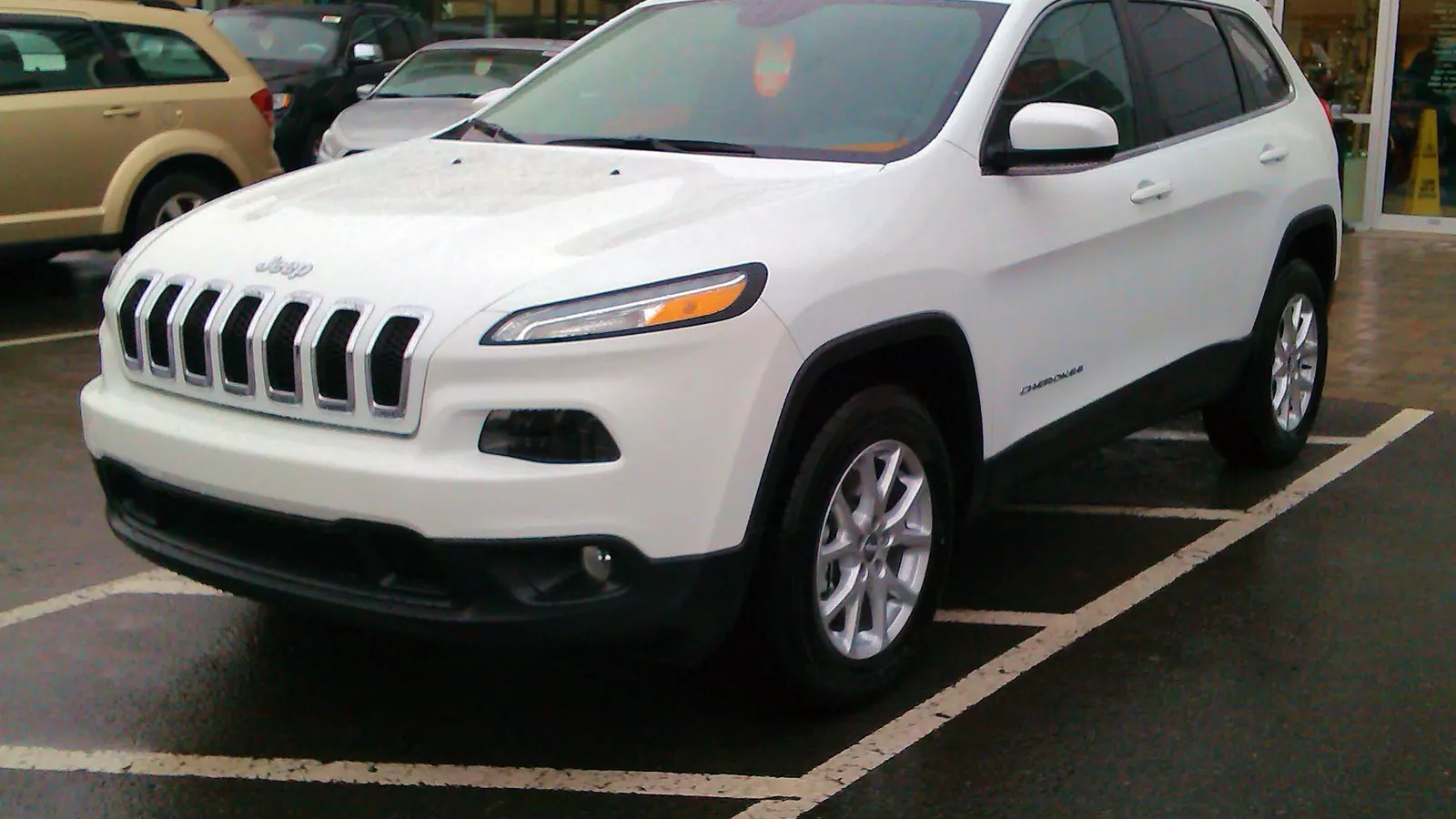
Pictured: 2014 Jeep Cherokee North (Canadian model). Photo: Shadiac, CC BY-SA 3.0, cropped
Owner complaints
2,647
77 report a crash, fire, injury or death
Recalls
13
1 with a park-outside warning
Most common problem
23%
of complaints: loss of drive or unexpected neutral
Complaints per year filed
2014–2025 · peak 398
In short
Serious known problemsThe 2014 Jeep Cherokee has serious known problems: 597 owner complaints (23%) describe dropping into neutral or losing drive while moving, a safety-critical failure. NHTSA has 2,647 complaints, and 77 report a crash, fire, injury or death. Harsh shifting and stalling are also common. There are 13 recalls.
Reliability
How Reliable Is the 2014 Jeep Cherokee?
The 2014 Cherokee's record is dominated by one component: its nine-speed automatic transmission. About half of all owner complaints describe a transmission fault, and the most common is not a comfort issue. It is the transmission dropping into neutral or losing drive while the vehicle is moving, which can leave a driver without power in traffic. Harsh shifting, hesitation when pulling away and transmission warning messages make up much of the rest. Many complaints describe several of these at once, so the transmission figures overlap rather than add up.
Two recalls confirm that the shift to neutral is a real defect rather than a matter of perception. Recall 16V529000 addresses wiring in the transmission sensor harness that can cause an unexpected shift to neutral, and 19V447000 addresses a clutch that can stick and lead the transmission software to shift to neutral. Both remedies are mainly software updates, with the wiring harness replaced only where needed. The complaints are less reassuring: among owners who described what happened after a repair, few said it fixed the problem. That leans negative, because owners whose problem was solved rarely file a complaint, but it means a completed recall alone is not evidence that a particular Cherokee's transmission is healthy.
Beyond the transmission, several problems carry real safety weight. Stalling while driving is nearly as common as the main transmission complaints, often reported alongside transmission warnings, and no recall for this model year addresses it; the complaints don't establish a cause. On four-wheel-drive versions the power transfer unit can fail and cut drive, and its recall (20V343000) adds software that engages rear-wheel drive and applies the parking brake if the part fails rather than replacing it. The electronic parking brake can engage on its own or refuse to release. Separately, recall 23V338000 warns that the power liftgate module can short and start a fire, and tells owners to park outside until it is repaired.
The timing differs by problem, which matters when you look at a particular vehicle's odometer. Harsh shifting and hesitation tend to come early, at a median of 20,000 to 25,000 miles, and many owners noticed them when the vehicle was nearly new; loss of drive is reported somewhat later. The parking brake and power transfer unit problems appear much later, the power transfer unit at a median of around 84,000 miles. A higher-mileage Cherokee that has escaped the early transmission faults can still be heading into the later ones, and a low-mileage one is no guarantee either.
For a buyer, this is a model year where the individual vehicle's history matters more than usual. Records showing the transmission, power transfer unit and liftgate recalls were completed, and what was done whenever symptoms appeared, are worth more than a low price. A test drive should include pulling away from stops and highway driving, where owners most often report trouble. Front-wheel-drive versions have no power transfer unit, so that failure doesn't apply to them. Keep the limits of this evidence in mind: complaint counts show what owners reported, not how many vehicles were affected, and they can't show how well a particular Cherokee has been maintained or repaired.
Top problems
The 10 problems owners report most
Named from 2,647 NHTSA complaints. Open a problem for symptoms, the fix, cost and owners' accounts.
1.Drops into neutral or loses driveCriticalAbout 1 in 4 complaints14,500–66,800 mi
Owners report the vehicle shifting to neutral, losing power or not accelerating, often with a service transmission message or light. It mostly happens while driving on the highway or at various speeds, at a median of around 39,000 miles. Owners most often mention recalls 16V529000 and 19V447000.
What owners describe
- Shifts into neutral36%
- Service transmission message15%
- Loses power13%
- Will not accelerate5%
Fix
Most common repair owners describe: transmission replaced (10 reports). Recalls 16V529000, 19V447000, 20V343000.
Repair worked in 9% of complaints that describe one (complaints lean toward repairs that failed)
Mileage
38,500 mi
Middle half 14,500–66,800 mi · 486 reports
Repair cost
—
Fewer than 10 owners report a repair cost
How common
23%
597 of 2,647 complaints
By engine
- 3.2L V663%
- 2.4L 4-cyl37%
In owners' words
“We were turning left on a busy city street when my vehicle would not accelerate and was only able to creep through the intersection at less than 5 MPH”
Owner in CO3.2L V6Filed 2014NHTSA 10628598 “Our brand new 2014 Jeep Cherokee that had only bought 2 days before shifted in to neutral on its own and rolled backwards when the gas was pressed”
Owner in VA2.4L 4-cylFiled 2014NHTSA 10608199 “Transmission stopped working while driving to work. Error messages appeared on the dashboard as the accelerator lost all power”
Owner in GA3.2L V6Filed 2014NHTSA 10597539 2.Harsh, jerky shiftingSeriousAbout 1 in 5 complaints7,000–54,000 mi
Owners describe hard shifts, jerking, lurching and gears that slam into place, sometimes with a service transmission message. It is often noticed while accelerating or pulling away from a stop, at a median of around 25,000 miles. Some owners mention recalls 16V529000 and 19V447000.
What owners describe
- Jerking or lurching33%
- Hard or rough shifts26%
- Service transmission message5%
Fix
Most common repair owners describe: software updates (22 reports). Recalls 16V529000, 19V447000.
Repair worked in 6% of complaints that describe one (complaints lean toward repairs that failed)
Mileage
25,000 mi
Middle half 7,000–54,000 mi · 476 reports
Repair cost
—
Fewer than 10 owners report a repair cost
How common
22%
587 of 2,647 complaints
By engine
- 3.2L V655%
- 2.4L 4-cyl44%
In owners' words
“When accelerating from a stop, the transmission either grabs and lurches or it seems to slip while it searches for the right gear.”
Owner in CA3.2L V6Filed 2015NHTSA 10695215 “Transmission refuses to downshift on hills, lunges forward at stops, sometimes does not shift in to drive for several seconds”
Owner in PA2.4L 4-cylFiled 2015NHTSA 10703781 “The 9-spd automatic will rev high in first gear until the vehicle is steady at 10 MPH and slam hard into second gear”
Owner in OK2.4L 4-cylFiled 2014NHTSA 10611425 3.Stalling or shutting off while drivingCriticalAbout 1 in 5 complaints22,800–70,000 mi
Owners say the vehicle stalled or shut off, often without warning and sometimes with a service transmission or shift to park message. Most reports are while driving, at various speeds or on the highway, at a median of around 42,000 miles. Recall 16V529000 is the one owners mention most.
What owners describe
- Stalls without warning49%
- Shuts off while driving17%
- Shift to park message7%
Fix
Most common repair owners describe: transmission replaced (8 reports).
Repair worked in 5% of complaints that describe one (complaints lean toward repairs that failed)
Mileage
42,000 mi
Middle half 22,800–70,000 mi · 415 reports
Repair cost
—
Fewer than 10 owners report a repair cost
How common
19%
504 of 2,647 complaints
By engine
- 2.4L 4-cyl57%
- 3.2L V642%
In owners' words
“Just entering the highway doing the speed limit of 70 MPH with my newborn child all of a sudden my car suddenly stalled / shook/ and halted”
Owner in FL3.2L V6Filed 2015NHTSA 10683163 “I was in the middle of intersection when this happened. Hurried to turn car off and turn back on and it drove.”
Owner in LA2.4L 4-cylFiled 2014NHTSA 10576862 “On december 25 the car again lost all power while driving (lost engine, power steering, and power breaks).”
Owner in PA3.2L V6Filed 2015NHTSA 10676223 4.Transmission warning messagesMinorAbout 1 in 6 complaints17,400–68,300 mi
Owners report service transmission and shift to park messages, check engine lights and limp mode, sometimes with lost power or a stall. These usually appear while driving or on the highway, at a median of around 40,000 miles. Owners mention recalls 16V529000 and 19V447000.
What owners describe
- Service transmission message33%
- Shift to park message10%
- Lost power7%
Fix
Most common repair owners describe: towed to dealer (15 reports). Recalls 16V529000, 19V447000, 20V343000.
Repair worked in 7% of complaints that describe one (complaints lean toward repairs that failed)
Mileage
39,900 mi
Middle half 17,400–68,300 mi · 380 reports
Repair cost
—
Fewer than 10 owners report a repair cost
How common
17%
456 of 2,647 complaints
By engine
- 3.2L V665%
- 2.4L 4-cyl35%
In owners' words
“My service transmission light has come on and I've already heard about problems with the transmission.”
Owner in GA2.4L 4-cylFiled 2017NHTSA 11030718 “The transmission made a very loud bang (like somebody hit the bottom of the vehicle with a mallet)”
Owner in AZFiled 2015NHTSA 10724459 “The service transmission message along with several lights indicated a transmission problem.”
Owner in PA3.2L V6Filed 2015NHTSA 10808875 5.Hesitation or delayed engagementSeriousAbout 1 in 8 complaints5,000–44,000 mi
Owners describe hesitation, delayed acceleration and lunging forward, often along with hard shifts or a service transmission message. It is most often reported when accelerating or pulling away from a stop, at a median of around 20,000 miles. Some owners mention recall 16V529000.
What owners describe
- Hesitation on acceleration18%
- Hard shifts or jerking15%
- Lunges forward7%
Fix
Most common repair owners describe: software updates (15 reports). Recalls 16V529000, 19V447000.
Repair worked in 5% of complaints that describe one (complaints lean toward repairs that failed)
Mileage
20,000 mi
Middle half 5,000–44,000 mi · 285 reports
Repair cost
—
Fewer than 10 owners report a repair cost
How common
13%
342 of 2,647 complaints
By engine
- 3.2L V667%
- 2.4L 4-cyl32%
In owners' words
“When starting vehicle from a stop (not initial start up), the Jeep has a tenancy to loose power and becomes unresponsive from the gas peddle.”
Owner in AL3.2L V6Filed 2014NHTSA 10630342 “When I am proceeding to leave from a stop sign the Jeep will start to go and then it act as if it doesn't know which gear to change to.”
Owner in GA3.2L V6Filed 2015NHTSA 10706562 “The transmission failed to shift with the RPM's rose to 5000 which failed to allow us to get up to the speed of the adjacent traffic.”
Owner in PA3.2L V6Filed 2015NHTSA 10713504
Show 5 more problemsShow fewer problems
6.Electronic parking brake engages on its ownCriticalAbout 1 in 12 complaints25,400–90,000 mi~$1,300 repair
Owners report service parking brake messages, a parking brake that engaged by itself or would not release, and abrupt stops. Some say a corroded module was found. Reports often say it happened while driving, at a median of around 63,000 miles, and 17 owners reported a repair cost with a median of $1,275.
What owners describe
- Service parking brake message18%
- Brake will not release16%
- Corroded module8%
- Brake engages by itself5%
Fix
Most common repair owners describe: towed to dealer (4 reports).
Repair worked in 21% of complaints that describe one (complaints lean toward repairs that failed)
Mileage
62,500 mi
Middle half 25,400–90,000 mi · 114 reports
Repair cost
$1,275
Middle half $919–$1,700 · 17 owner amounts
How common
8%
216 of 2,647 complaints
By engine
- 3.2L V669%
- 2.4L 4-cyl31%
In owners' words
“I parked my car on main street in town to pick up my mail. When I got ready to leave my emergency parking break was on.”
Owner in NY3.2L V6Filed 2019NHTSA 11196920 “When I put my foot an the gas the car jurked forward and would not move because the ebrake eniaged”
Owner in TX3.2L V6Filed 2018NHTSA 11080617 “The last time it worked my car automatically turned the emergency brake on while I was driving”
Owner in MI2.4L 4-cylFiled 2017NHTSA 11044107 7.Power transfer unit or 4WD failureCriticalAbout 1 in 13 complaints50,100–117,000 mi~$3,500 repair
Owners report service 4WD lights and messages, a failed power transfer unit, grinding noises and loss of motive power. Reports are at a median of around 84,000 miles, and 23 owners reported a repair cost with a median of $3,500. Recall 20V343000 is the one owners mention most.
What owners describe
- Service 4WD light or message21%
- Lost motive power6%
- Grinding noise5%
Fix
Most common repair owners describe: ptu replaced (4 reports). Recall 20V343000.
Repair worked in 14% of complaints that describe one (complaints lean toward repairs that failed)
Mileage
84,000 mi
Middle half 50,100–117,000 mi · 97 reports
Repair cost
$3,500
Middle half $2,850–$4,000 · 23 owner amounts
How common
7%
197 of 2,647 complaints
By engine
- 3.2L V682%
- 2.4L 4-cyl18%
In owners' words
“My car switch from 4wd to neutral and started making a very loud noise, then suddenly stops in the middle of the road.”
Owner in WI2.4L 4-cylFiled 2019NHTSA 11235206 “Upon acceleration from full stop my Jeep made a loud clunking sound from the rear of the vehicle”
Owner in IL3.2L V6Filed 2015NHTSA 10722460 “After the inspection, the dealership told us that the PTU on our 2014 Jeep Cherokee was busted”
Owner in GA3.2L V6Filed 2020NHTSA 11300107 8.Transmission failure needing replacementSeriousAbout 1 in 16 complaints12,000–60,800 mi
Owners describe the transmission going out, a new transmission being needed or ordered, and sometimes a check engine light, hard shifts or stalling first. Reports are at a median of around 31,000 miles. Owners mention recalls 15V509000, 16V529000 and 19V447000.
What owners describe
- Hard or rough shifting12%
- Stalls or goes to neutral11%
- Check engine light9%
- Transmission went out8%
Fix
Most common repair owners describe: transmission replaced (27 reports).
Repair worked in 8% of complaints that describe one (complaints lean toward repairs that failed)
Mileage
31,000 mi
Middle half 12,000–60,800 mi · 144 reports
Repair cost
—
Fewer than 10 owners report a repair cost
How common
6%
170 of 2,647 complaints
By engine
- 3.2L V661%
- 2.4L 4-cyl38%
In owners' words
“The next three time I was parked but the transmission says it was in park, but still gives away and if your not quick on the brakes it will roll away.”
Owner in MO3.2L V6Filed 2015NHTSA 10731333 “The vehicle was towed to another Jeep dealership where the transmission was replaced under warranty.”
Owner in WI3.2L V6Filed 2015NHTSA 10714065 “It had died on me at a busy intersection wouldnt shift and check engine light on.”
Owner in GA2.4L 4-cylFiled 2015NHTSA 10777704 9.Service shifter warningMinorAbout 1 in 18 complaints41,000–82,000 mi
Owners report a service shifter message, light or warning, and some say all the gear lights came on or turned red. It is most often reported while driving, at a median of around 64,000 miles. Some owners mention recalls 16V529000 and 19V447000.
What owners describe
- Service shifter message58%
- All gear lights lit14%
- Red shifter lights10%
Fix
Most common repair owners describe: software update (2 reports). Recall 16V529000.
Repair worked in 4% of complaints that describe one (complaints lean toward repairs that failed)
Mileage
64,000 mi
Middle half 41,000–82,000 mi · 121 reports
Repair cost
—
Fewer than 10 owners report a repair cost
How common
6%
147 of 2,647 complaints
By engine
- 3.2L V672%
- 2.4L 4-cyl25%
- 2.8L 4-cyl2%
In owners' words
“While driving my gear shift suddenly has all lights engaged (park, drive, reverse, and neutral) simultaneously.”
Owner in MO2.4L 4-cylFiled 2019NHTSA 11217586 “When I started the vehicle it gave an error message saying service shifter and all red lights”
Owner in VA3.2L V6Filed 2019NHTSA 11245966 “This started after they fixed the recall from the reprogram transmission control.”
Owner in KY3.2L V6Filed 2019NHTSA 11244903 10.Stalling right after refuelingCriticalAbout 1 in 26 complaints36,100–80,000 mi
Owners say the vehicle stalls after filling the tank, sometimes every time, and can be hard to restart. Some report bucking or a shudder. Reports are at a median of around 57,000 miles.
What owners describe
- Stalls after filling75%
- Bucking or shudder13%
- Shift to park message9%
Fix
Most common repair owners describe: fills tank only to 75 percent (1 report).
Repair worked in 8% of complaints that describe one (complaints lean toward repairs that failed)
Mileage
57,000 mi
Middle half 36,100–80,000 mi · 70 reports
Repair cost
—
Fewer than 10 owners report a repair cost
How common
4%
102 of 2,647 complaints
By engine
- 3.2L V660%
- 2.4L 4-cyl39%
In owners' words
“Been having issues with my car every time I fill up. Shortly after, the car acts as if it wants to shut off or it does.”
Owner in TX3.2L V6Filed 2018NHTSA 11072221 “After filling up vehicle with gas (2 separate occurrences), the vehicle will cut-off while driving for 1-2 blocks.”
Owner in NYFiled 2018NHTSA 11082089 “Every time I fill up my Jeep with gasoline it stalls out or stops working while I'm driving.”
Owner in SC2.4L 4-cylFiled 2017NHTSA 11052725
Buying one
Should you buy a used 2014 Jeep Cherokee?
What to check before you buy, based on the complaint and recall data.
Ask for the full service history and check that recalls 16V529000 and 19V447000 (both transmission) and 20V343000 (power transfer unit) were completed. On a test drive, include highway speeds and pulling away from a stop, and watch for jerky shifts, stalling or any service transmission message. If the seller cannot show recall work, have a dealer check it before you buy. Be cautious with any vehicle that has warning lights on.
- 1Run the VIN for open recalls. NHTSA lists 13 recalls, and 1 carries a do-not-drive or park-outside warning (23V338000). Check at nhtsa.gov/recalls.
- 2Test-drive for loss of drive or unexpected neutral. It's the most common safety-critical complaint, in about 1 in 4 owner complaints, usually around 38,500 miles.
- 3Ask for software update records. 22% of complaints mention a software update or reflash.
- 4Get a pre-purchase inspection. An independent mechanic can spot leaks, stored fault codes and accident repairs that a test drive misses.
Jeep Cherokee model years
Early complaints are those filed in a model year's first 3 years. They follow how many were sold, so they don't show which years are better.
- 2014This year999 early complaints
- 2015726 early complaints
- 2016306 early complaints
- 2017408 early complaints
- 2018309 early complaints
- 2019614 early complaints
Crash test ratings
NHTSA 5-Star Safety Ratings.
| SUV 2WD | SUV 4WD | |
|---|---|---|
| Overall | ★★★★ | ★★★★ |
| Frontal crash | ★★★★ | ★★★★ |
| Side crash | ★★★★★ | ★★★★★ |
| Rollover | ★★★★ | ★★★★ |
| Rollover risk | 17% | 17% |
Owning one
If you already own one
Find your symptom, see when problems tend to show up, and check which recalls apply.
Watch for service transmission, service shifter, service parking brake or service 4WD messages, and for hard shifts, lost power or stalling. If the vehicle drops into neutral, stalls or loses power while driving, pull over safely and stop. Confirm with a dealer that every open recall is done, including 23V338000, which advises parking outside until the repair is complete.
- Drops into neutral or loses driveCriticalAbout 1 in 4 owner complaints597 of 2,647Median 38,500 mi
Most common repair owners describe: transmission replaced (10 reports).
- Harsh, jerky shiftingSeriousAbout 1 in 5 owner complaints587 of 2,647Median 25,000 mi
Most common repair owners describe: software updates (22 reports).
- Stalling or shutting off while drivingCriticalAbout 1 in 5 owner complaints504 of 2,647Median 42,000 mi
Most common repair owners describe: transmission replaced (8 reports).
- Transmission warning messagesMinorAbout 1 in 6 owner complaints456 of 2,647Median 39,900 mi
Most common repair owners describe: towed to dealer (15 reports).
- Hesitation or delayed engagementSeriousAbout 1 in 8 owner complaints342 of 2,647Median 20,000 mi
Most common repair owners describe: software updates (15 reports).
- Electronic parking brake engages on its ownCriticalAbout 1 in 12 owner complaints216 of 2,647Median 62,500 mi
Most common repair owners describe: towed to dealer (4 reports).
- Power transfer unit or 4WD failureCriticalAbout 1 in 13 owner complaints197 of 2,647Median 84,000 mi
Most common repair owners describe: ptu replaced (4 reports).
- Transmission failure needing replacementSeriousAbout 1 in 16 owner complaints170 of 2,647Median 31,000 mi
Most common repair owners describe: transmission replaced (27 reports).
Show all 36 problemsShow fewer problems
- Service shifter warningMinorAbout 1 in 18 owner complaints147 of 2,647Median 64,000 mi
Most common repair owners describe: software update (2 reports).
- Stalling right after refuelingCriticalAbout 1 in 26 owner complaints102 of 2,647Median 57,000 mi
Most common repair owners describe: fills tank only to 75 percent (1 report).
- Water leaks damaging electronicsSeriousAbout 1 in 27 owner complaints99 of 2,647Median 67,800 mi
- Oil leaks or low oilSeriousAbout 1 in 32 owner complaints84 of 2,647Median 54,000 mi
- Front-end wobble or shimmySeriousAbout 1 in 34 owner complaints77 of 2,647Median 4,500 mi
- Battery drain or no-startSeriousAbout 1 in 36 owner complaints74 of 2,647Median 53,000 mi
- Many warning lights at onceMinorAbout 1 in 38 owner complaints70 of 2,647Median 21,000 mi
- Loss of power steeringCriticalAbout 1 in 38 owner complaints69 of 2,647Median 38,800 mi
- Sudden or unintended accelerationCriticalAbout 1 in 41 owner complaints64 of 2,647Median 16,500 mi
- Liftgate failureSeriousAbout 1 in 68 owner complaints39 of 2,647Median 42,000 mi
- Brake pedal sinks or brakes failCriticalAbout 1 in 76 owner complaints35 of 2,647Median 43,100 mi
- Fuel tank will not fill properlySeriousAbout 1 in 78 owner complaints34 of 2,647Median 58,400 mi
- Transmission shudder or judderSeriousAbout 1 in 83 owner complaints32 of 2,647Median 15,100 mi
- Vehicle fails to slow when off the throttleSeriousAbout 1 in 98 owner complaints27 of 2,647Median 3,200 mi
- Screen or infotainment glitchesMinorAbout 1 in 106 owner complaints25 of 2,647Median 30,000 mi
- Vehicle rolls away in parkCriticalAbout 1 in 120 owner complaints22 of 2,647Median 61,300 mi
- Wiring harness damageCriticalAbout 1 in 132 owner complaints20 of 2,647Median 60,500 mi
- Fuel pump or fuel injector failureCriticalAbout 1 in 156 owner complaints17 of 2,647Median 38,300 mi
- Airbag warning light stays onSeriousAbout 1 in 156 owner complaints17 of 2,647Median 24,300 mi
- Airbags did not deployCriticalAbout 1 in 165 owner complaints16 of 2,647Median 48,000 mi
- Dim low-beam headlightsSeriousAbout 1 in 204 owner complaints13 of 2,647Median 8,800 mi
- Automatic emergency braking activates for no reasonCriticalAbout 1 in 204 owner complaints13 of 2,647Median 12,300 mi
- Violent jerking when flat-towedSeriousAbout 1 in 204 owner complaints13 of 2,647Median 14,100 mi
- Transmission slow to shift or holds gearSeriousAbout 1 in 221 owner complaints12 of 2,647Median 1,500 mi
- Vehicle fireCriticalAbout 1 in 221 owner complaints12 of 2,647Median 40,000 mi
- Engine overheatingSeriousAbout 1 in 241 owner complaints11 of 2,647Median 69,000 mi
- Will not engage gearSeriousAbout 1 in 241 owner complaints11 of 2,647Median 2,000 mi
- Instrument cluster goes blankSeriousAbout 1 in 265 owner complaints10 of 2,647Median 28,600 mi
of complaints that list mileage (731 of 1,884) came in before 25,000 miles. A low odometer reading is no guarantee.
13 recalls, newest first
Open one for the risk, the remedy and what to do now.
Wiring › Rear compartment/trunkPark outsideAn electrical short in the power liftgate module may lead to a vehicle fire with the ignition on or off.May 11, 2023132,099 vehicles23V338000
- Defect
- An electrical short in the power liftgate module may lead to a vehicle fire with the ignition on or off.
- Risk
- A fire while parked or driving can increase the risk of injury.
- Remedy
- Owners are advised to park outside and away from structures until the recall repair is complete.
- What to do
- Park outside and away from buildings until the recall repair is done.
Driveline › Differential unitRelative movement in the Power Transfer Unit (PTU) between the differential input splines and the transmission output…Jun 11, 202067,248 vehicles20V343000
- Defect
- Relative movement in the Power Transfer Unit (PTU) between the differential input splines and the transmission output shaft may cause some input spline teeth to wear off, which may eventually cause a loss of engagement between the transmission and the differential inside the PTU.
- Risk
- A loss of drive can cause a vehicle crash without prior warning. A loss of the Park function can cause unintended vehicle rollaway which can increase the risk of a crash or injury.
- Remedy
- Dealers will perform a software update that will maintain vehicle propulsion by engaging rear wheel drive and prevent rolling in Park by activating the electronic parking brake if a failed input spline occurs.
Power train › Automatic transmissionIn the event that a clutch becomes stuck in the transmission, the transmission software may shift the transmission to…Jun 13, 201981,615 vehicles19V447000
- Defect
- In the event that a clutch becomes stuck in the transmission, the transmission software may shift the transmission to neutral.
- Risk
- An unexpected shift to neutral would result in a loss of drive, increasing the risk of crash.
- Remedy
- Dealers will update the transmission software, free of charge.
Electrical system › WiringThese vehicles are being recalled to address a defect that could prevent the cruise control system from disengaging.May 17, 20184,815,661 vehicles18V332000
- Defect
- These vehicles are being recalled to address a defect that could prevent the cruise control system from disengaging.
- Risk
- If the vehicle maintains its speed or accelerates despite attempts to deactivate the cruise control, there would be an increased risk of a crash.
- Remedy
- Dealers will inspect the software, and perform a software flash on the engine or powertrain control module, free of charge.
EquipmentChrysler (FCA US LLC) is recalling various Dodge, Chrysler, and RAM vehicles equipped with Kidde Plastic-Handle or…Dec 21, 201761,791 vehicles17V824000
- Defect
- Chrysler (FCA US LLC) is recalling various Dodge, Chrysler, and RAM vehicles equipped with Kidde Plastic-Handle or Push Button 'Pindicator' Fire Extinguishers.
- Risk
- If the fire extinguisher does not function properly, it can increase the risk of injury in the event of a fire.
- Remedy
- Chrysler will notify owners instructing them to contact Kidde for a replacement fire extinguisher, free of charge.
Show all 13 recallsShow fewer recalls
SeatsThe seat fasteners on the first or second row seats may not have been tightened to the proper torque specification.Aug 10, 20161,827 vehicles16V590000
- Defect
- The seat fasteners on the first or second row seats may not have been tightened to the proper torque specification.
- Risk
- Loose fasteners may allow the seats to move, increasing the risk of injury to the seat occupants in the event of a crash.
- Remedy
- Dealers will replace the seats or seat sets, free of charge.
Power train › Automatic transmissionThe transmission sensor clusters may have insufficient crimps in the transmission wire harness, and as a result, the…Jul 12, 2016329,540 vehicles16V529000
- Defect
- The transmission sensor clusters may have insufficient crimps in the transmission wire harness, and as a result, the transmission may unexpectedly shift to neutral.
- Risk
- If the vehicle unexpectedly shifts to neutral, there is an increased risk of a crash.
- Remedy
- Dealers will reprogram the Powertrain Control Module and the Transmission Control Module and if necessary replace the transaxle range sensor wire harness, free of charge.
Visibility › Windshield wiper/washerUse of the front windshield wipers on dry glass may cause damage to the body control module (BCM).Aug 12, 2015158,684 vehicles15V509000
- Defect
- Use of the front windshield wipers on dry glass may cause damage to the body control module (BCM).
- Risk
- BCM damage may result in the failure of the windshield wipers, impairing the driver's vision and increasing the risk of a vehicle crash.
- Remedy
- Dealers will install a ground strap to protect the BCM from damage, free of charge.
Electrical › Radio/tape deck/cd etc.The affected vehicles are equipped with radios that have software vulnerabilities that can allow third-party access…Jul 23, 20151,416,903 vehicles15V461000
- Defect
- The affected vehicles are equipped with radios that have software vulnerabilities that can allow third-party access to certain networked vehicle control systems.
- Risk
- Exploitation of the software vulnerability may result in unauthorized remote modification and control of certain vehicle systems, increasing the risk of a crash.
- Remedy
- Chrysler will notify and mail affected owners a USB drive that includes a software update that eliminates the vulnerability, free of charge.
Body › Hatchback/liftgateIn the affected vehicles, water may enter the Power Liftgate Control Module and cause a high resistance short circuit…Jun 22, 201599,399 vehicles15V393000
- Defect
- In the affected vehicles, water may enter the Power Liftgate Control Module and cause a high resistance short circuit in the module.
- Risk
- A short circuit in the liftgate control module may result in a fire.
- Remedy
- Dealers will inspect the power liftgate control module and connectors for corrosion, substitute a bolt for the threaded grommet installed to seal an attachment point used in non-power liftgate vehicles and cover the power liftgate control module in a foam water shield, free of charge.
Air bags › Side/windowThe affected vehicles may experience unintended side curtain and seat air bag deployment during vehicle operation.Jan 28, 2015230,290 vehicles15V041000
- Defect
- The affected vehicles may experience unintended side curtain and seat air bag deployment during vehicle operation.
- Risk
- If the air bags deploy unexpectedly during vehicle operation, it can increase the risk of personal injury and increase the risk of a crash.
- Remedy
- Dealers will re-flash the occupant restraint control module software, free of charge.
Rear › Shock absorberDue to an insufficient weld, the rear shocks may detach from the vehicle at one end and possibly damage other chassis…Jul 2, 201420,347 vehicles14V392000
- Defect
- Due to an insufficient weld, the rear shocks may detach from the vehicle at one end and possibly damage other chassis components, the tire or result in reduced braking.
- Risk
- Damage to the tire or reduced braking increases the risk of a vehicle crash.
- Remedy
- Dealers will inspect the rear shocks and replace any affected ones, free of charge.
Vehicle speed control › Accelerator pedalWhen the adaptive cruise control is engaged and the driver presses the accelerator pedal to increase the vehicle's…Jun 4, 20146,120 vehicles14V293000
- Defect
- When the adaptive cruise control is engaged and the driver presses the accelerator pedal to increase the vehicle's speed more than the cruise control system would on its own, the vehicle may continue to accelerate briefly after the accelerator pedal is released.
- Risk
- The unintended continued acceleration may increase the risk of a crash.
- Remedy
- Dealers will re-flash the Driver Assistance System Module (DASM), free of charge.
What to do
Check the VIN at nhtsa.gov/recalls. If a recall is open, any dealer will fix it free. For NHTSA's full record of a campaign, search its number there (for example 23V338000).
Reliability history
Jeep Cherokee reliability by year
Complaints filed in each model year's first 3 years, by trouble spot. Darker cells have more complaints; counts aren't adjusted for how many were sold each year.
| Trouble spot | 2014 | 2015 | 2016 | 2017 | 2018 | 2019 |
|---|---|---|---|---|---|---|
| Transmission & drivetrain | 2014 Transmission & drivetrain: 610 complaints in the first 3 years. | 2015 Transmission & drivetrain: 469 complaints in the first 3 years. | 2016 Transmission & drivetrain: 111 complaints in the first 3 years. | 2017 Transmission & drivetrain: 169 complaints in the first 3 years. | 2018 Transmission & drivetrain: 98 complaints in the first 3 years. | 2019 Transmission & drivetrain: 155 complaints in the first 3 years. |
| Engine | 2014 Engine: 195 complaints in the first 3 years. | 2015 Engine: 145 complaints in the first 3 years. | 2016 Engine: 92 complaints in the first 3 years. | 2017 Engine: 112 complaints in the first 3 years. | 2018 Engine: 84 complaints in the first 3 years. | 2019 Engine: 274 complaints in the first 3 years. |
| Fuel system & stalling | 2014 Fuel system & stalling: 25 complaints in the first 3 years. | 2015 Fuel system & stalling: 16 complaints in the first 3 years. | 2016 Fuel system & stalling: 14 complaints in the first 3 years. | 2017 Fuel system & stalling: 8 complaints in the first 3 years. | 2018 Fuel system & stalling: 9 complaints in the first 3 years. | 2019 Fuel system & stalling: 26 complaints in the first 3 years. |
| Electrical | 2014 Electrical: 139 complaints in the first 3 years. | 2015 Electrical: 86 complaints in the first 3 years. | 2016 Electrical: 50 complaints in the first 3 years. | 2017 Electrical: 105 complaints in the first 3 years. | 2018 Electrical: 104 complaints in the first 3 years. | 2019 Electrical: 182 complaints in the first 3 years. |
| Driver aids & stability | 2014 Driver aids & stability: 43 complaints in the first 3 years. | 2015 Driver aids & stability: 16 complaints in the first 3 years. | 2016 Driver aids & stability: 10 complaints in the first 3 years. | 2017 Driver aids & stability: 23 complaints in the first 3 years. | 2018 Driver aids & stability: 16 complaints in the first 3 years. | 2019 Driver aids & stability: 36 complaints in the first 3 years. |
| Brakes | 2014 Brakes: 46 complaints in the first 3 years. | 2015 Brakes: 38 complaints in the first 3 years. | 2016 Brakes: 22 complaints in the first 3 years. | 2017 Brakes: 12 complaints in the first 3 years. | 2018 Brakes: 12 complaints in the first 3 years. | 2019 Brakes: 49 complaints in the first 3 years. |
| Steering | 2014 Steering: 68 complaints in the first 3 years. | 2015 Steering: 28 complaints in the first 3 years. | 2016 Steering: 18 complaints in the first 3 years. | 2017 Steering: 16 complaints in the first 3 years. | 2018 Steering: 16 complaints in the first 3 years. | 2019 Steering: 70 complaints in the first 3 years. |
| Suspension | 2014 Suspension: 42 complaints in the first 3 years. | 2015 Suspension: 20 complaints in the first 3 years. | 2016 Suspension: 7 complaints in the first 3 years. | 2017 Suspension: 1 complaints in the first 3 years. | 2018 Suspension: 3 complaints in the first 3 years. | 2019 Suspension: 2 complaints in the first 3 years. |
| Airbags & seat belts | 2014 Airbags & seat belts: 31 complaints in the first 3 years. | 2015 Airbags & seat belts: 18 complaints in the first 3 years. | 2016 Airbags & seat belts: 7 complaints in the first 3 years. | 2017 Airbags & seat belts: 10 complaints in the first 3 years. | 2018 Airbags & seat belts: 5 complaints in the first 3 years. | 2019 Airbags & seat belts: 20 complaints in the first 3 years. |
| Body, lights & visibility | 2014 Body, lights & visibility: 125 complaints in the first 3 years. | 2015 Body, lights & visibility: 60 complaints in the first 3 years. | 2016 Body, lights & visibility: 33 complaints in the first 3 years. | 2017 Body, lights & visibility: 6 complaints in the first 3 years. | 2018 Body, lights & visibility: 3 complaints in the first 3 years. | 2019 Body, lights & visibility: 34 complaints in the first 3 years. |
| Acceleration & speed control | 2014 Acceleration & speed control: 82 complaints in the first 3 years. | 2015 Acceleration & speed control: 59 complaints in the first 3 years. | 2016 Acceleration & speed control: 29 complaints in the first 3 years. | 2017 Acceleration & speed control: 24 complaints in the first 3 years. | 2018 Acceleration & speed control: 12 complaints in the first 3 years. | 2019 Acceleration & speed control: 46 complaints in the first 3 years. |
| Wheels & tires | 2014 Wheels & tires: 14 complaints in the first 3 years. | 2015 Wheels & tires: 12 complaints in the first 3 years. | 2016 Wheels & tires: 6 complaints in the first 3 years. | 2017 Wheels & tires: 5 complaints in the first 3 years. | 2018 Wheels & tires: 2 complaints in the first 3 years. | 2019 Wheels & tires: 11 complaints in the first 3 years. |
All problems
Every problem reported on the 2014 Cherokee
Every problem found in the 2,647 owner complaints, by area of the vehicle.
Transmission & drivetrain
1,698 64%- 597 23%typically at 38,500 mi · 9% fixed38,500–9%
- Harsh, jerky shiftingSerious587 22%typically at 25,000 mi · 6% fixed25,000–6%
- 456 17%typically at 39,900 mi · 7% fixed39,900–7%
- 342 13%typically at 20,000 mi · 5% fixed20,000–5%
- 197 7%typically at 84,000 mi · repair $3,500 · 14% fixed84,000$3,50014%
- 170 6%typically at 31,000 mi · 8% fixed31,000–8%
Show 27 more transmission & drivetrain problemsShow fewer transmission & drivetrain problems
- 147 6%typically at 64,000 mi · 4% fixed64,000–4%
- Front-end wobble or shimmySerious77 3%typically at 4,500 mi · 9% fixed4,500–9%
- Transmission shudder or judderSerious32 1%typically at 15,100 mi · 0% fixed15,100–0%
- Vehicle rolls away in parkCritical22 0.8%typically at 61,300 mi61,300––
- Transmission slow to shift or holds gearSerious12 0.5%typically at 1,500 mi1,500––
- Will not engage gearSerious11 0.4%typically at 2,000 mi2,000––
- Gear shifter sticksSerious6 0.2%–––
- Driveshaft failure4 0.2%–––
- Axle breaks3 0.1%–––
- Rear differential failure2 0.1%–––
- Turn signals stick or fail2 0.1%–––
- Transmission fluid leak2 0.1%–––
- Shifts into reverse when drive is selected2 0.1%–––
- Transmission will not shift into top gear2 0.1%–––
- Shifter gives poor feedback and risks wrong gear2 0.1%–––
- Vehicle shakes at highway speed2 0.1%–––
- Shifts gears on its own1 0.0%–––
- Gear lever fails to engage1 0.0%–––
- Shifter locked in drive1 0.0%–––
- Vehicle shakes violently while driving1 0.0%–––
- Knocking noise from transmission when turning1 0.0%–––
- Shifter locks out drive or reverse after software update1 0.0%–––
- Loud whistling noise1 0.0%–––
- Shifter knob button falls off1 0.0%–––
- Shifter indicator lights out1 0.0%–––
- Shift solenoid fault code1 0.0%–––
- Axle shaft clicking noise1 0.0%–––
Engine
660 25%- 504 19%typically at 42,000 mi · 5% fixed42,000–5%
- Stalling right after refuelingCritical102 4%typically at 57,000 mi · 8% fixed57,000–8%
- Oil leaks or low oilSerious84 3%typically at 54,000 mi · 23% fixed54,000–23%
- Fuel pump or fuel injector failureCritical17 0.6%typically at 38,300 mi38,300––
- Engine overheatingSerious11 0.4%typically at 69,000 mi69,000––
- Misfires or head gasket failureSerious9 0.3%typically at 78,000 mi78,000––
Show 25 more engine problemsShow fewer engine problems
- Oil pressure sensor failureMinor8 0.3%typically at 37,700 mi37,700––
- Engine failure needing replacementCritical5 0.2%typically at 73,200 mi73,200––
- Moldy odor from air vents2 0.1%–––
- Engine vibration at stops2 0.1%–––
- Oil pump or sensor failure2 0.1%–––
- Starter failure2 0.1%–––
- Engine idles up and down1 0.0%–––
- Engine coolant leak1 0.0%–––
- Engine will not shut off1 0.0%–––
- Loud whistling noise from engine area1 0.0%–––
- Diesel limp mode and slowdown1 0.0%–––
- Engine found running after parking1 0.0%–––
- Oil reaching MAP sensor causing faults1 0.0%–––
- Check engine light comes on1 0.0%–––
- Engine seizes or loses power with oil consumption1 0.0%–––
- Intermittent loss of power on the highway1 0.0%–––
- Recurring check engine light with no fault found1 0.0%–––
- Engine mounts fracture1 0.0%–––
- Active grille shutter failure1 0.0%–––
- Engine knocking or ticking1 0.0%–––
- Upper coolant hose breaks at plastic connector1 0.0%–––
- Cracked exhaust pipe1 0.0%–––
- Catalytic converter failure1 0.0%–––
- Engine lifters ticking1 0.0%–––
- Loss of power with check engine light1 0.0%–––
Electrical
422 16%- 216 8%typically at 62,500 mi · repair $1,275 · 21% fixed62,500$1,27521%
- Water leaks damaging electronicsSerious99 4%typically at 67,800 mi · 37% fixed67,800–37%
- Battery drain or no-startSerious74 3%typically at 53,000 mi · 16% fixed53,000–16%
- Many warning lights at onceMinor70 3%typically at 21,000 mi · 7% fixed21,000–7%
- Screen or infotainment glitchesMinor25 0.9%typically at 30,000 mi30,000––
- Wiring harness damage20 0.8%typically at 60,500 mi60,500––
Show 24 more electrical problemsShow fewer electrical problems
- Instrument cluster goes blankSerious10 0.4%typically at 28,600 mi28,600––
- Infotainment or Uconnect failureMinor4 0.2%–––
- Low voltage and driver-assist unavailable warnings3 0.1%–––
- Alternator failure3 0.1%–––
- Dash and electrical systems cut out intermittently2 0.1%–––
- Air conditioning failure1 0.0%–––
- ParkSense false alerts while driving1 0.0%–––
- Electrical systems drop out while driving1 0.0%–––
- Abnormal odor in the cabin1 0.0%–––
- Moldy odor from vents1 0.0%–––
- Fog lights stop working1 0.0%–––
- Key fob fails to unlock1 0.0%–––
- Engine starts by itself (keyless ignition)1 0.0%–––
- Key stuck in ignition1 0.0%–––
- Sun visor wiring shorts and burns1 0.0%–––
- Poor radio reception1 0.0%–––
- Dome lights stop working1 0.0%–––
- Speedometer jumps1 0.0%–––
- Start/stop system fault1 0.0%–––
- Key fob not detected1 0.0%–––
- Speedometer not working1 0.0%–––
- Odometer flashes constantly1 0.0%–––
- Dashboard goes dark while driving1 0.0%–––
- Vehicle limited to low speed with warning lights1 0.0%–––
Body, lights & visibility
118 4%- Liftgate failureSerious39 1%typically at 42,000 mi · 5% fixed42,000–5%
- Dim low-beam headlightsSerious13 0.5%typically at 8,800 mi8,800––
- Headlight bulbs burn outSerious5 0.2%typically at 60,000 mi60,000––
- Windshield will not defog4 0.2%–––
- Rear window shattersSerious4 0.2%–––
- Windshield cracks easilyMinor3 0.1%–––
Show 47 more body, lights & visibility problemsShow fewer body, lights & visibility problems
- Electrical malfunctions (wipers, lights, indicators)2 0.1%–––
- Wipers run on their own2 0.1%–––
- Panoramic sunroof shatters2 0.1%–––
- Cracked frame2 0.1%–––
- Condensation in headlight housing1 0.0%–––
- Panoramic sunroof glass shatters1 0.0%–––
- Seat heaters get too hot1 0.0%–––
- Windshield smears and hard to see in rain1 0.0%–––
- Headlights found off despite auto setting1 0.0%–––
- Wipers freeze to windshield in ice1 0.0%–––
- Headlight switch pushes into dash1 0.0%–––
- Cracked heated windshield shorts and overheats1 0.0%–––
- Plastic skid plate comes loose1 0.0%–––
- Wiper pushes water onto driver side1 0.0%–––
- Tow bar bracket welds broke1 0.0%–––
- Sunroof shattered while driving1 0.0%–––
- Doors lock and alarm sound on their own1 0.0%–––
- Weather stripping and trim coming off1 0.0%–––
- Wipers do not clean windshield1 0.0%–––
- Windshield washer nozzles burst in freezing weather1 0.0%–––
- Sunroof makes excessive noise1 0.0%–––
- Electric shock from wiper control1 0.0%–––
- Frame fractures1 0.0%–––
- Small side mirrors and intrusive head restraint1 0.0%–––
- Tail light or turn signal fails1 0.0%–––
- Dashboard lights flicker off and on1 0.0%–––
- Headlights go out1 0.0%–––
- Power door locks fail1 0.0%–––
- Wipers shut off on high speed1 0.0%–––
- Wipers fail or act on their own1 0.0%–––
- Windshield washer does not work1 0.0%–––
- Wiper failure1 0.0%–––
- Key fob will not unlock doors1 0.0%–––
- Key-in-ignition warning and door lock fault1 0.0%–––
- Lights and wiper motor shut off while driving1 0.0%–––
- Horn and cruise control not working1 0.0%–––
- Wipers run uncontrolled and turn signals fail1 0.0%–––
- Washer fluid does not spray1 0.0%–––
- Sunroof seal melts and tears1 0.0%–––
- Passenger seat track broken1 0.0%–––
- Doors lock with key in ignition1 0.0%–––
- Rear door handle falls off1 0.0%–––
- Headlights and high beams switch erratically1 0.0%–––
- Hood flies open while drivingCritical1 0.0%–––
- Wiper switch failure1 0.0%–––
- Windshield wipers stop working1 0.0%–––
- Body control module failure1 0.0%–––
Acceleration & speed control
96 4%- Sudden or unintended accelerationCritical64 2%typically at 16,500 mi · 4% fixed16,500–4%
- Vehicle fails to slow when off the throttleSerious27 1%typically at 3,200 mi3,200––
- Cruise control speeds up above set speed1 0.0%–––
- Cruise control slows hard when set-minus held1 0.0%–––
- Stuttering or bucking under acceleration1 0.0%–––
- Forward detection limited warning1 0.0%–––
Show 2 more acceleration & speed control problemsShow fewer acceleration & speed control problems
- Cruise control accelerates and will not disengage1 0.0%–––
- Accelerator pedal fault limits speed1 0.0%–––
Steering
94 4%- Loss of power steeringCritical69 3%typically at 38,800 mi · 10% fixed38,800–10%
- Violent jerking when flat-towedSerious13 0.5%typically at 14,100 mi14,100––
- Noisy steering4 0.2%–––
- Steering rack and pinion failure2 0.1%–––
- Violent wobble when flat-towed2 0.1%–––
- Vehicle steers on its own1 0.0%–––
Show 3 more steering problemsShow fewer steering problems
- Vehicle veers opposite to steering input1 0.0%–––
- Vehicle fails to follow steering input1 0.0%–––
- Sticky or notchy steeringSerious1 0.0%–––
Fuel system & stalling
53 2%- Fuel tank will not fill properlySerious34 1%typically at 58,400 mi58,400––
- Poor fuel economy6 0.2%typically at 20,900 mi20,900––
- Fuel vapor separator valve failure2 0.1%–––
- Fuel nozzle keeps shutting off while filling2 0.1%–––
- Fuel cap cracked with warning lights1 0.0%–––
- Fuel gauge stopped working1 0.0%–––
Show 8 more fuel system & stalling problemsShow fewer fuel system & stalling problems
- Fuel leaking into engine1 0.0%–––
- Gas cap warning light1 0.0%–––
- Blocked fuel tank vent line1 0.0%–––
- Fuel gauge stuck at a quarter tank1 0.0%–––
- EVAP system fault1 0.0%–––
- Fuel tank repeatedly fails1 0.0%–––
- Gas sprays out of tank during refueling1 0.0%–––
- Fuel spills out while refueling1 0.0%–––
Brakes
44 2%- Brake pedal sinks or brakes failCritical35 1%typically at 43,100 mi43,100––
- Brake noise and early wearMinor6 0.2%–––
- Engine revs high when braking2 0.1%–––
- Cruise control will not cancel with brake or cancel button1 0.0%–––
- Brakes installed incorrectly at service1 0.0%–––
Airbags & seat belts
38 1%- Airbag warning light stays onSerious17 0.6%typically at 24,300 mi24,300––
- Airbags did not deployCritical16 0.6%typically at 48,000 mi48,000––
- Airbag deployed unexpectedlyCritical3 0.1%–––
- Rear seat belts lock up and will not release1 0.0%–––
- Rear seat belts unlatch while driving1 0.0%–––
- Driver seatbelt will not retract1 0.0%–––
Driver aids & stability
26 1.0%- Automatic emergency braking activates for no reasonCritical13 0.5%typically at 12,300 mi12,300––
- Backup camera failsSerious9 0.3%typically at 46,000 mi46,000––
- Lane Sense steers car on its own1 0.0%–––
- Stability control fault1 0.0%–––
- Adaptive cruise control fails to slow for stopped traffic1 0.0%–––
- Forward collision warning malfunction1 0.0%–––
Suspension
15 0.6%- Clunks or knocks from the suspensionMinor7 0.3%typically at 44,000 mi44,000––
- Rear control arm rusting or breakingCritical3 0.1%–––
- Rear shock lost its fluid1 0.0%–––
- Tow bar mounting frame welds break1 0.0%–––
- Cracked suspension bushings1 0.0%–––
- Front suspension bolts sheared1 0.0%–––
Show 1 more suspension problemsShow fewer suspension problems
- Front suspension came apart1 0.0%–––
Wheels & tires
15 0.6%- Wheel bearing failureSerious4 0.2%–––
- Steering wheel locks while driving2 0.1%–––
- Vibration from the steering wheel center2 0.1%–––
- Steering wheel seizes2 0.1%–––
- Wheel falls off, lug bolts fail1 0.0%–––
- Wheel rim fractures1 0.0%–––
Show 3 more wheels & tires problemsShow fewer wheels & tires problems
- Alignment problems and early tire wear1 0.0%–––
- Horn cruise and steering wheel controls stop working1 0.0%–––
- Capped lug bolts swell and seize1 0.0%–––
Fire
12 0.5%- Vehicle fireCritical12 0.5%typically at 40,000 mi40,000––
Other
5 0.2%- Instrument cluster goes blank1 0.0%–––
- Moldy odor from AC/heater1 0.0%–––
- Whistle on cold start1 0.0%–––
- Body control module failure1 0.0%–––
- Climate control module failure1 0.0%–––
217 problems found in all 2,647 complaints. One complaint can describe more than one problem, so counts add up to more than the total. Not counted as a defect: 152 about recall paperwork or parts delays, 7 describing no vehicle defect. Typical miles, repair cost and fix rate show only when enough owners report them.
The data
Behind the numbers
Every figure comes from NHTSA's complaint file and APIs.
- Complaints
- 2,647
- Recalls
- 13
- Crashes
- 56
- Fires
- 16
- Injuries
- 39
- Deaths
- 0
Crashes and fires count complaints that report one; injuries and deaths count people.
Complaints by engine
Decoded from the partial VINs owners include. Not adjusted for how many of each engine were sold.
FAQ
2014 Jeep Cherokee questions
Is the 2014 Jeep Cherokee reliable?
The 2014 Jeep Cherokee has serious known problems. 50% of complaints (1,325) describe transmission problems such as loss of drive or unexpected neutral, harsh shifting and power transfer unit failure, and 43% report a crash, fire, injury or death, or a loss of power while moving. Recall 23V338000, an electrical short in the power liftgate module that may cause a fire, tells owners to park outside.
What are the most common 2014 Jeep Cherokee problems?
The most common problem is the transmission dropping into neutral or losing drive while moving, with 597 complaints, about 1 in 4 owner complaints. Harsh, jerky shifting follows with 587 complaints, then stalling or shutting off while driving with 504 and transmission warning messages with 456. Many complaints describe several of these at once.
Does the 2014 Jeep Cherokee have recalls?
The 2014 Jeep Cherokee has 13 recalls, and one says to park outside. Recall 23V338000 covers an electrical short in the power liftgate module that may cause a fire, so owners should park outside and away from structures until it is repaired. Others include 16V529000 (transmission shifting to neutral), 20V343000 (power transfer unit) and 15V041000 (unintended side air bag deployment). Check your VIN at nhtsa.gov/recalls.
Does the 2014 Jeep Cherokee have transmission problems?
Yes. 50% of complaints (1,325) describe transmission problems. The leading ones are dropping into neutral or losing drive (597 complaints), harsh shifting (587) and warning messages (456). Recalls 16V529000 (transmission sensor wiring that can cause an unexpected shift to neutral) and 19V447000 (a stuck clutch that can lead the software to shift to neutral) address the neutral problem.
At what mileage do 2014 Jeep Cherokee problems appear?
It depends on the problem. Harsh shifting and hesitation tend to come early, at a median of around 25,000 and 20,000 miles, and loss of drive at around 39,000 miles. The electronic parking brake problem appears at a median of around 63,000 miles and power transfer unit failure at around 84,000 miles.
What should you check before buying a 2014 Jeep Cherokee?
Ask for the full service history and check that recalls 16V529000 and 19V447000 (both transmission) and 20V343000 (power transfer unit) were completed. On a test drive, include highway speeds and pulling away from a stop, and watch for jerky shifts, stalling or any service transmission message. If the seller cannot show recall work, have a dealer check it before you buy.
Is the 2014 Jeep Cherokee safe?
NHTSA rates both the 2WD and 4WD 2014 Jeep Cherokee 4 out of 5 stars overall, with 4 out of 5 stars for frontal, 5 out of 5 stars for side and 4 out of 5 stars for rollover. Separately, 77 of the 2,647 owner complaints report a crash, fire, injury or death.
Methodology
How we researched this
- Complaints. NHTSA's owner complaint file, counted as unique complaint numbers for make JEEP, model CHEROKEE, model year 2014. Data through Oct 4, 2026.
- Verdict. Judged from this model year's own complaints, not against other models, using shares rather than counts. Serious known problems: one serious problem (transmission, engine or stalling, steering, brakes, airbags, fire, fuel leaks) is in a quarter or more of complaints; or a smaller but clear cluster comes with an unusual share of crash, fire, injury or loss-of-power reports or early failures; or an urgent recall or NHTSA investigation matches a top complaint. Some known problems: one of those signals on its own. No pattern of serious problems: none of them; this doesn't mean the vehicle is trouble-free. Too few complaints to judge: under 50 complaints. Why this verdict: 50% of complaints (1,325) describe transmission problems (loss of drive or unexpected neutral, harsh shifting, power transfer unit failure); 43% of complaints report a crash, fire, injury or death, or a loss of power while moving (typical: 17%); 59% of serious complaints that list mileage came before 50,000 miles (typical: 42%); A park-outside recall (23V338000) for a fire risk in the electrical system, matching a top complaint.
- No grade or class ranking. Raw complaint counts favor models that sell fewer cars, so we don't score or rank this vehicle against other models until we can adjust for sales.
- Trouble spots and history. Complaints grouped by the part owners chose when filing. The history grid counts complaints filed in each model year's first 3 years so older and newer years compare fairly; years with fewer than 3 complete years are marked too new.
- Named problems. Every one of the 2,647 complaints was researched and classified by its problems, severity, symptoms, repairs and any cost the owner mentions; the counts, costs and fix rates on this page are tallies of those classifications. Quotes are verbatim excerpts, checked against the original text. Engines are decoded from partial VINs with NHTSA's vPIC service.
- Repair costs and fix rates. Shown only when at least 10 owners report a repair cost, or at least 10 complaints describe whether a repair worked.
- Not adjusted for sales. Not affiliated with NHTSA. Page updated Nov 5, 2026.