2014 Mazda CX-5 Reliability & Problems
By Adrian V. LockhartUpdated All 377 NHTSA owner reports researched and classified
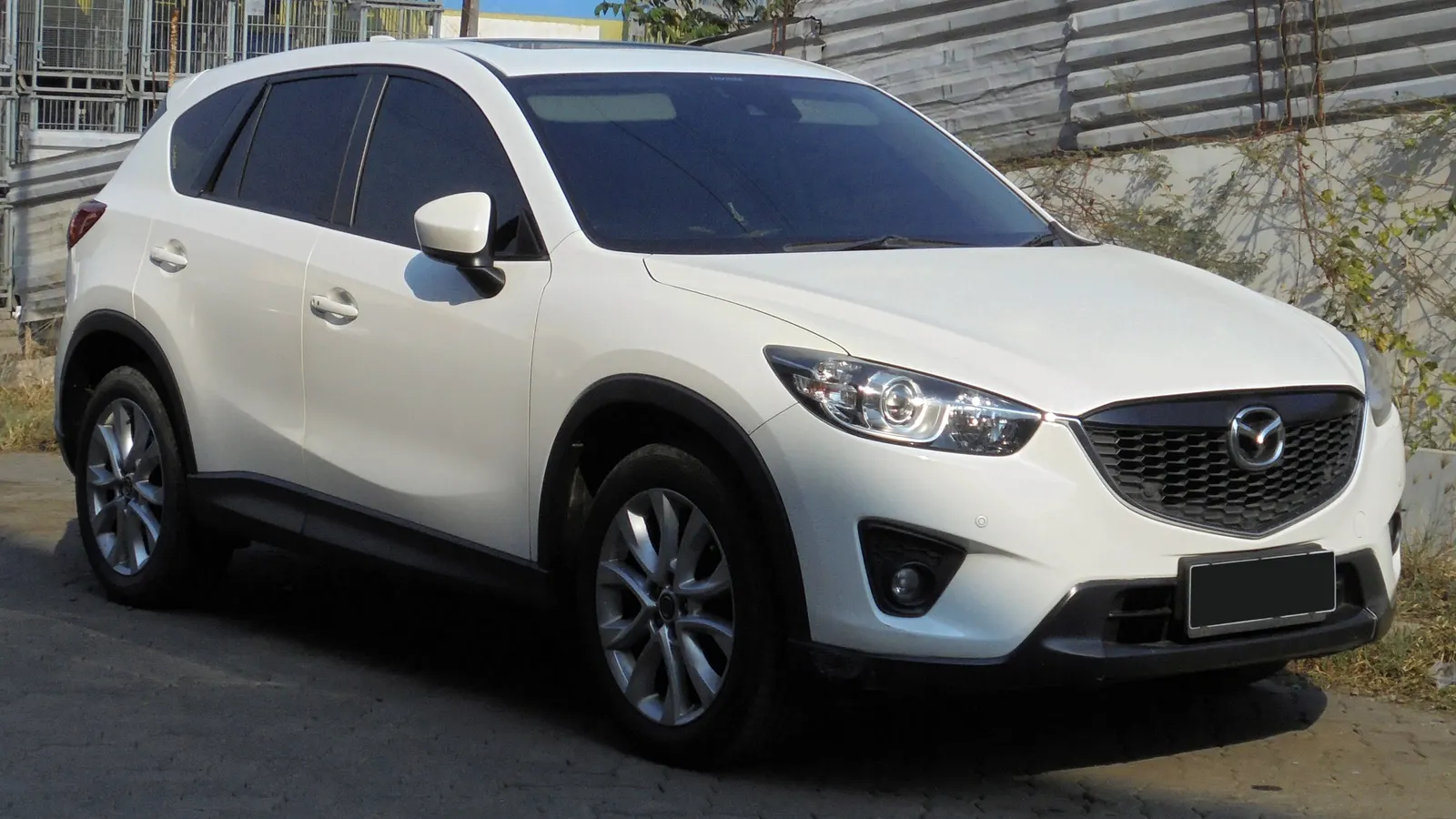
Pictured: 2014 Mazda CX-5 Grand Touring 2.5. Photo: オーバードライブ83, CC BY-SA 4.0, cropped
Owner complaints
377
9 report a crash, fire, injury or death
Recalls
4
None urgent
Most common problem
43%
of complaints: ignition that won't shut off
Complaints per year filed
2013–2025 · peak 66
In short
Some known problemsThe 2014 Mazda CX-5 has some known problems: 77% of its serious complaints that list mileage came before 50,000 miles. NHTSA has 377 owner complaints, and 9 report a crash, fire, injury or death. The most common are the ignition not shutting off, cracking windshields and battery drain. There are 4 recalls.
Reliability
How Reliable Is the 2014 Mazda CX-5?
The 2014 Mazda CX-5 is listed as having some known problems because owners' serious complaints cluster early. 77% of serious complaints that list mileage came before 50,000 miles. No recall in this model year is a do-not-drive or park-outside recall, so the verdict comes from the complaints alone. Most complaints are about electrical behavior and glass rather than anything that affects how the car drives, and 9 of the 377 complaints mention a crash, fire, injury or death.
The ignition problem dominates, with about 1 in 3 owner complaints describing a car that will not shut off. Owners say the radio and accessories stay on, the ignition stays in accessory mode, or the doors won't lock after they park. It overlaps heavily with the battery drain and no-start complaints, where owners describe a battery that drains or dies, a car that does not detect park and a shift to park message. Together they mean a car that may not power down properly and may not start the next day. The battery complaints are the ones rated serious, because a few owners were stranded and one described a complete electrical failure.
Neither of these electrical problems has a recall in this model year. Owners who report on repairs for the ignition problem say it was mostly not fixed, with 12 of 13 saying no, and the most common repairs they mention are a new battery or a new shifter. The windshield complaints are different: of 18 owners who report on repairs, 11 say a replacement fixed it, though a few had to replace it two or three times. Across all of these, complaints lean toward repairs that failed. The four recalls cover other matters: lift gate struts that may corrode, front strut bolts that may loosen, a fuel filler pipe that may rupture in a crash, and a windshield sensor bracket that may loosen. The windshield recall concerns the bracket, not the cracking owners report.
Mileage shows when to look closely. Windshield cracks are reported very early, with a typical report at about 10,100 miles and a quarter of them under 2,100 miles. Brake wear complaints come next, at a typical 33,600 miles. The ignition problem typically appears around 62,000 miles, and battery drain around 67,500 miles, with a quarter of battery reports above 83,500 miles. So a CX-5 with under 50,000 miles may still be ahead of the electrical problems, while one past 60,000 miles is in the range where owners report them most.
When shopping, treat the ignition and battery behavior as the main thing to test, and ask for repair records instead of assuming a battery swap solved it. Complaint counts show what owners reported, not how many vehicles are affected, and they cannot show how a particular car was maintained or driven. A clean test drive does not rule these problems out, but it does help you spot a car that already shows them.
Top problems
The 4 problems owners report most
Named from 377 NHTSA complaints. Open a problem for symptoms, the fix, cost and owners' accounts.
1.Ignition won't shut offMinorAbout 1 in 3 complaints50,000–80,000 mi
Owners say the radio and accessories stay on, the ignition stays in accessory mode and the doors won't lock, most often in park or after parking. Many also report a drained battery. Typical reports come at about 62,000 miles, with half falling between 50,000 and 80,000 miles. No recall is mentioned for this problem.
What owners describe
- Accessories stay powered12%
- Radio stays on after parking7%
Fix
Most common repair owners describe: battery replaced (5 reports).
Repair worked in 4% of complaints that describe one (complaints lean toward repairs that failed)
Mileage
62,000 mi
Middle half 50,000–80,000 mi · 110 reports
Repair cost
—
Fewer than 10 owners report a repair cost
How common
43%
161 of 377 complaints
By engine
- 2.5L 4-cyl82%
- 2.0L 4-cyl18%
In owners' words
“After stopped and put the vehicle into the park position, and pushed the start/stop button to turn off the vehicle, it would not shut off.”
Owner in CA2.5L 4-cylFiled 2016NHTSA 10893225 “The dealer was not obligated to repair the vehicle and stated that it was not covered under the extended warranty”
Owner in MA2.5L 4-cylFiled 2018NHTSA 11075171 “It stays in the accessories mode with some instruments and accessories still on and can not be locked.”
Owner in FL2.0L 4-cylFiled 2017NHTSA 11000772 2.Windshield cracks easilyMinorAbout 1 in 5 complaints2,100–17,500 mi
Owners describe cracks that start from the top center, grow while driving, or appear overnight or while parked. Typical reports come at about 10,100 miles, with half between 2,100 and 17,500 miles. No recall is mentioned for this problem.
What owners describe
- Crack appears while parked34%
- Crack grows while driving13%
- Stress crack at the top center10%
Fix
Most common repair owners describe: windshield replaced (14 reports).
Repair worked in 64% of complaints that describe one (complaints lean toward repairs that failed)
Mileage
10,100 mi
Middle half 2,100–17,500 mi · 66 reports
Repair cost
—
Fewer than 10 owners report a repair cost
How common
19%
71 of 377 complaints
By engine
- 2.5L 4-cyl89%
- 2.0L 4-cyl11%
In owners' words
“A crack mysteriously appeared in the front windshield of my car, as it was parked in our driveway.”
Owner in MDFiled 2014NHTSA 10566741 “Stress crack appeared from exact middle of top of windshield and spread down during the drive.”
Owner in NY2.5L 4-cylFiled 2014NHTSA 10569210 3.Battery drain or no-startSeriousAbout 1 in 7 complaints50,000–83,500 mi
Owners report a drained or dead battery, a car that does not detect park and a shift to park message, usually tied to shutting the car off in park. Some were stranded. Typical reports come at about 67,500 miles, with half between 50,000 and 83,500 miles. No recall is mentioned for this problem.
What owners describe
- Battery drains overnight or while parked43%
- Dead battery, car won't start20%
- Stranded6%
Fix
Most common repair owners describe: battery replaced (6 reports).
Mileage
67,500 mi
Middle half 50,000–83,500 mi · 34 reports
Repair cost
—
Fewer than 10 owners report a repair cost
How common
14%
51 of 377 complaints
By engine
- 2.5L 4-cyl88%
- 2.0L 4-cyl13%
In owners' words
“Vehicle repeatedly failed to start after sitting un-driven for more than one day.”
Owner in SCFiled 2014NHTSA 10566000 4.Brake noise and early wearMinorAbout 1 in 24 complaints26,900–35,500 mi
Owners describe worn rear pads, grinding from the rear and rotors needing replacement early. Typical reports come at about 33,600 miles. No recall is mentioned for this problem.
What owners describe
- Rear pads worn early38%
- Rotors need replacing31%
- Grinding from the rear19%
- Sticking calipers6%
Fix
Most common repair owners describe: brakes replaced twice (1 report).
Mileage
33,600 mi
Middle half 26,900–35,500 mi · 15 reports
Repair cost
—
Fewer than 10 owners report a repair cost
How common
4%
16 of 377 complaints
By engine
- 2.5L 4-cyl93%
- 2.0L 4-cyl7%
In owners' words
“The rear brake pads on my mazda cx 5 grand touring model is worn out to (0.2 per dealer) at approx 34200 miles.”
Owner in CA2.5L 4-cylFiled 2015NHTSA 10810038 “Took vehicle in for 35,00 mile service and was told rear breaks and rotors needed to be replaced.”
Owner in NY2.5L 4-cylFiled 2016NHTSA 10883310 “Mazda did not honor it because they said the service manager said the pads wore out evenly”
Owner in DE2.5L 4-cylFiled 2016NHTSA 10885757
Buying one
Should you buy a used 2014 Mazda CX-5?
What to check before you buy, based on the complaint and recall data.
Before buying, shut the car off in park a few times and check that the radio, accessories and dash go dark and the doors will lock. Ask whether the battery has been replaced and whether the windshield is original or has been replaced. Look at the windshield for cracks, and check that all 4 recalls were completed, including the lift gate struts, since the lift gate recall notice said parts were not yet available.
- 1Run the VIN for open recalls. NHTSA lists 4 recalls. Check at nhtsa.gov/recalls.
- 2Check for ignition that won't shut off. The most common complaint, in about 1 in 3 owner complaints.
- 3Get a pre-purchase inspection. An independent mechanic can spot leaks, stored fault codes and accident repairs that a test drive misses.
Mazda CX-5 model years
Which Mazda CX-5 years to avoid? Every model year compared
Early complaints are those filed in a model year's first 3 years. They follow how many were sold, so they don't show which years are better. The tag on 2014 is its verdict from our research of its owner complaints.
Crash test ratings
NHTSA 5-Star Safety Ratings.
| SUV AWD | SUV FWD | |
|---|---|---|
| Overall | ★★★★★ | ★★★★★ |
| Frontal crash | ★★★★★ | ★★★★★ |
| Side crash | ★★★★★ | ★★★★★ |
| Rollover | ★★★★ | ★★★★ |
| Rollover risk | 17% | 17% |
Owning one
If you already own one
Find your symptom, see when problems tend to show up, and check which recalls apply.
Watch for the engine or accessories staying on after you press off in park, a battery that is dead after the car sits, and a shift to park message that won't clear. A repeatedly drained battery can leave you stranded, so get it checked early rather than just replacing it. Stop driving and have it inspected if the brakes grind or a fuel odor appears. Ask a Mazda dealer to confirm that the lift gate, front strut, fuel filler pipe and windshield bracket recalls were done on your vehicle.
- Ignition won't shut offMinorAbout 1 in 3 owner complaints161 of 377Median 62,000 mi
Most common repair owners describe: battery replaced (5 reports).
- Windshield cracks easilyMinorAbout 1 in 5 owner complaints71 of 377Median 10,100 mi
Most common repair owners describe: windshield replaced (14 reports).
- Battery drain or no-startSeriousAbout 1 in 7 owner complaints51 of 377Median 67,500 mi
Most common repair owners describe: battery replaced (6 reports).
- Brake noise and early wearMinorAbout 1 in 24 owner complaints16 of 377Median 33,600 mi
Most common repair owners describe: brakes replaced twice (1 report).
of complaints that list mileage (100 of 281) came in before 25,000 miles. A low odometer reading is no guarantee.
4 recalls, newest first
Open one for the risk, the remedy and what to do now.
Body › Hatchback/liftgateOn the affected vehicles, the lift gate support struts may corrode, possibly causing the struts to break and/or the…Sep 6, 2016580,455 vehicles16V644000
- Defect
- On the affected vehicles, the lift gate support struts may corrode, possibly causing the struts to break and/or the lift gate to drop unexpectedly.
- Risk
- If the lift gate falls unexpectedly, it may hit the user, increasing their risk of injury.
- Remedy
- Mazda dealers will replace the both lift gate supports, free of charge, however parts are not currently available.
SteeringThe lower mounting nuts and bolts that attach the front strut assembly to the steering knuckle may loosen, allowing…Apr 11, 2016578 vehicles16V203000
- Defect
- The lower mounting nuts and bolts that attach the front strut assembly to the steering knuckle may loosen, allowing the steering knuckle to separate.
- Risk
- If the steering knuckle separates from the strut assembly, it can cause a loss of steering control, increasing the risk of a crash.
- Remedy
- Dealers will inspect the lower mounting nuts and bolts that secure the front strut assembly to the steering knuckle.
Tank assembly › Filler pipe and capThe affected vehicles have a fuel filler pipe that may rupture in the event of a crash. As such, these vehicles fail…Feb 3, 2016268,799 vehicles16V064000
- Defect
- The affected vehicles have a fuel filler pipe that may rupture in the event of a crash. As such, these vehicles fail to comply with the requirements of Federal Motor Vehicle Safety Standard (FMVSS) number 301, "Fuel System Integrity."
- Risk
- A rupture of the fuel filler pipe may result in a fuel leak, increasing the risk of a fire.
- Remedy
- Dealers will alter the attachment between the fuel filler pipe and the left rear side of the bracket of the fuel filler pipe, free of charge.
Visibility › WindshieldThe affected windshields have a bracket mounted on the inside to hold a laser sensor or LIDAR device for the Smart…Jan 19, 2016193 vehicles16E002000
- Defect
- The affected windshields have a bracket mounted on the inside to hold a laser sensor or LIDAR device for the Smart City Brake Support system. These brackets were improperly affixed with only tape instead of tape and urethane and therefore may loosen.
- Risk
- If the bracket loosens or detaches from the windshield, the safety features of the Smart City Brake Support system may be disabled and therefore increase the risk of a crash.
- Remedy
- Pilkington will contact the wholesalers and retailers that purchased the windshields to try to identify the affected customers.
What to do
Check the VIN at nhtsa.gov/recalls. If a recall is open, any dealer will fix it free. For NHTSA's full record of a campaign, search its number there (for example 16V644000).
Reliability history
Mazda CX-5 reliability by year
Complaints filed in each model year's first 3 years, by trouble spot. Darker cells have more complaints; counts aren't adjusted for how many were sold each year.
All problems
Every problem reported on the 2014 CX-5
Every problem found in the 377 owner complaints, by area of the vehicle.
Electrical
179 47%- 161 43%typically at 62,000 mi · 4% fixed62,000–4%
- Battery drain or no-startSerious51 14%typically at 67,500 mi67,500––
- Many warning lights at onceMinor9 2%typically at 53,000 mi53,000––
- Screen or infotainment glitchesMinor2 0.5%–––
- Water leaks damaging electronicsSerious2 0.5%–––
- Start/stop button flashes amber1 0.3%–––
Body, lights & visibility
107 28%- 71 19%typically at 10,100 mi · 64% fixed10,100–64%
- Sunroof glass shattersSerious9 2%typically at 24,400 mi24,400––
- Mirror and overhead console vibrateMinor3 0.8%–––
- Windshield ices over, wipers and defroster cannot clear itSerious3 0.8%–––
- Dim low-beam headlightsSerious3 0.8%–––
- Liftgate does not latch properly3 0.8%–––
Show 13 more body, lights & visibility problemsShow fewer body, lights & visibility problems
- Exterior trim piece comes off2 0.5%–––
- Key fob or door unlock not responding2 0.5%–––
- Power seat motor failure2 0.5%–––
- Won't move in drive, rolls backward2 0.5%–––
- Paint peeling or fading2 0.5%–––
- Headlights flicker or fail1 0.3%–––
- Doors stay locked after pressing unlock1 0.3%–––
- Dash rattles and crackles1 0.3%–––
- Driver seat heats up on its own1 0.3%–––
- Headlights stay bright or dim erratically1 0.3%–––
- Rear window shatters1 0.3%–––
- Seats squeak1 0.3%–––
- Rear seat latch won't lock1 0.3%–––
Transmission & drivetrain
26 7%- Drops into neutral or loses drive while movingCritical7 2%typically at 11,000 mi11,000––
- Transmission warning messagesMinor6 2%–––
- Harsh, jerky shiftingSerious5 1%typically at 22,200 mi22,200––
- Hesitation or slipping while drivingSerious4 1%–––
- Delayed engagement pulling away from a stopSerious3 0.8%–––
- Shift to Park message prevents shutoff2 0.5%–––
Show 2 more transmission & drivetrain problemsShow fewer transmission & drivetrain problems
- Transmission failure needing replacementSerious1 0.3%–––
- Differential failure1 0.3%–––
Brakes
21 6%- 16 4%typically at 33,600 mi33,600––
- Brake pedal sinks or brakes failCritical3 0.8%–––
- Rear brakes seize up1 0.3%–––
- Brake pedal sits high above gas pedal1 0.3%–––
- Rear brake caliper seizing1 0.3%–––
Engine
16 4%- Sudden loss of engine powerCritical9 2%typically at 48,000 mi48,000––
- Stalling or shutting off while drivingCritical4 1%–––
- Misfires or head gasket failureSerious1 0.3%–––
- Engine revs higher when slowing down1 0.3%–––
- Engine failure1 0.3%–––
- Engine overheating1 0.3%–––
Show 1 more engine problemsShow fewer engine problems
- Heater core failure1 0.3%–––
Wheels & tires
8 2%- Suspension parts separate and wheel detachesCritical4 1%–––
- Tire blowout with tread separation1 0.3%–––
- Wheel cracks after hitting road debris1 0.3%–––
- Tire pressure sensors fail repeatedly1 0.3%–––
- Steering wheel vibration1 0.3%–––
Airbags & seat belts
8 2%- Airbags did not deploy in a crashCritical2 0.5%–––
- Passenger airbag turns off with an adult in the seatCritical2 0.5%–––
- Seat belt would not engage2 0.5%–––
- Airbag warning light stays onSerious2 0.5%–––
- Airbag deployed without a crash1 0.3%–––
Acceleration & speed control
6 2%- Sudden or unintended accelerationCritical6 2%typically at 37,900 mi37,900––
Steering
4 1%- Loss of power steeringCritical3 0.8%–––
- Front end collapses over bumps1 0.3%–––
Fuel system & stalling
4 1%- Fuel leaksCritical3 0.8%–––
- Gasoline smell outside vehicle1 0.3%–––
Suspension
4 1%- Clunks or knocks from the suspensionMinor3 0.8%–––
- Control arm bolt sheared off1 0.3%–––
- Rear shock mount failure1 0.3%–––
Other
2 0.5%- Headrest tilts forward uncomfortably1 0.3%–––
- Rattle from rear cabin1 0.3%–––
65 problems found in all 377 complaints. One complaint can describe more than one problem, so counts add up to more than the total. Not counted as a defect: 21 about recall paperwork or parts delays, 2 describing no vehicle defect. Typical miles, repair cost and fix rate show only when enough owners report them.
The data
Behind the numbers
Every figure comes from NHTSA's complaint file and APIs.
- Complaints
- 377
- Recalls
- 4
- Crashes
- 7
- Fires
- 0
- Injuries
- 6
- Deaths
- 0
Crashes and fires count complaints that report one; injuries and deaths count people.
Complaints by engine
Decoded from the partial VINs owners include. Not adjusted for how many of each engine were sold.
FAQ
2014 Mazda CX-5 questions
Is the 2014 Mazda CX-5 reliable?
The 2014 Mazda CX-5 has some known problems, because owners' serious complaints cluster early: 77% of serious complaints that list mileage came before 50,000 miles. NHTSA has 377 owner complaints, and 9 mention a crash, fire, injury or death. Most are about electrical behavior and glass.
What are the most common 2014 Mazda CX-5 problems?
The most common problem is an ignition that won't shut off, with 161 complaints, about 1 in 3 owner complaints. Owners say the radio and accessories stay on after parking. Next come windshield cracking (71 complaints, about 1 in 5) and battery drain or no-start (51 complaints, about 1 in 7).
Does the 2014 Mazda CX-5 have any recalls?
There are 4 recalls, and none is a do-not-drive or park-outside recall. 16V644000 covers lift gate struts that may corrode, 16V203000 front strut bolts that may loosen, 16V064000 a fuel filler pipe that may rupture in a crash, and 16E002000 a windshield sensor bracket that may loosen. Check your VIN at nhtsa.gov/recalls.
Does the 2014 Mazda CX-5 have battery problems?
Yes, battery drain or no-start is a serious problem for the 2014 Mazda CX-5, with 51 complaints, about 1 in 7 owner complaints. Owners report a drained or dead battery, and some were stranded. Typical reports come at about 67,500 miles, and the most common repair owners describe is a replaced battery (6 reports).
At what mileage do 2014 Mazda CX-5 problems appear?
Windshield cracks are reported earliest, with a typical report at about 10,100 miles. Brake noise and early wear come next, at about 33,600 miles. The ignition problem typically appears around 62,000 miles, and battery drain around 67,500 miles, so a car past 60,000 miles is in the range where owners report the electrical problems most.
What should I check before buying a 2014 Mazda CX-5?
Shut the car off in park a few times and check that the radio, accessories and dash go dark and the doors will lock. Ask whether the battery has been replaced and whether the windshield is original. Also confirm all 4 recalls were completed, including the lift gate struts, since parts were not yet available when that recall was announced.
Is the 2014 Mazda CX-5 safe?
NHTSA rates the 2014 Mazda CX-5 at 5 out of 5 stars overall, with 5 out of 5 stars for frontal and side crash protection and 4 out of 5 stars for rollover. The ratings are the same for the AWD and FWD versions. Separately, 4 recalls apply, so check your VIN at nhtsa.gov/recalls.
Which Mazda CX-5 years should you avoid?
No Mazda CX-5 model year shows serious known problems in owner complaints. The 2013–2014 and 2016 are worth checking carefully: complaints show some known problems. The 2015 and 2017–2023 show no pattern of serious problems. The 2024–2026 have too few complaints to judge. Every model year is compared on the Mazda CX-5 years-to-avoid page.
Methodology
How we researched this
- Complaints. NHTSA's owner complaint file, counted as unique complaint numbers for make MAZDA, model CX-5, model year 2014. Data through Oct 4, 2026.
- Verdict. Judged from this model year's own complaints, not against other models, using shares rather than counts. Serious known problems: one serious problem (transmission, engine or stalling, steering, brakes, airbags, fire, fuel leaks) is in a quarter or more of complaints; or a smaller but clear cluster comes with an unusual share of crash, fire, injury or loss-of-power reports or early failures; or an urgent recall or NHTSA investigation matches a top complaint. Some known problems: one of those signals on its own. No pattern of serious problems: none of them; this doesn't mean the vehicle is trouble-free. Too few complaints to judge: under 50 complaints. Why this verdict: 77% of serious complaints that list mileage came before 50,000 miles (typical: 42%).
- No grade or class ranking. Raw complaint counts favor models that sell fewer cars, so we don't score or rank this vehicle against other models until we can adjust for sales.
- Trouble spots and history. Complaints grouped by the part owners chose when filing. The history grid counts complaints filed in each model year's first 3 years so older and newer years compare fairly; years with fewer than 3 complete years are marked too new.
- Named problems. Every one of the 377 complaints was researched and classified by its problems, severity, symptoms, repairs and any cost the owner mentions; the counts, costs and fix rates on this page are tallies of those classifications. Quotes are verbatim excerpts, checked against the original text. Engines are decoded from partial VINs with NHTSA's vPIC service.
- Repair costs and fix rates. Shown only when at least 10 owners report a repair cost, or at least 10 complaints describe whether a repair worked.
- Not adjusted for sales. Not affiliated with NHTSA. Page updated Nov 5, 2026.