2022 Jeep Cherokee Reliability & Problems
By Adrian V. LockhartUpdated All 51 NHTSA owner reports researched and classified
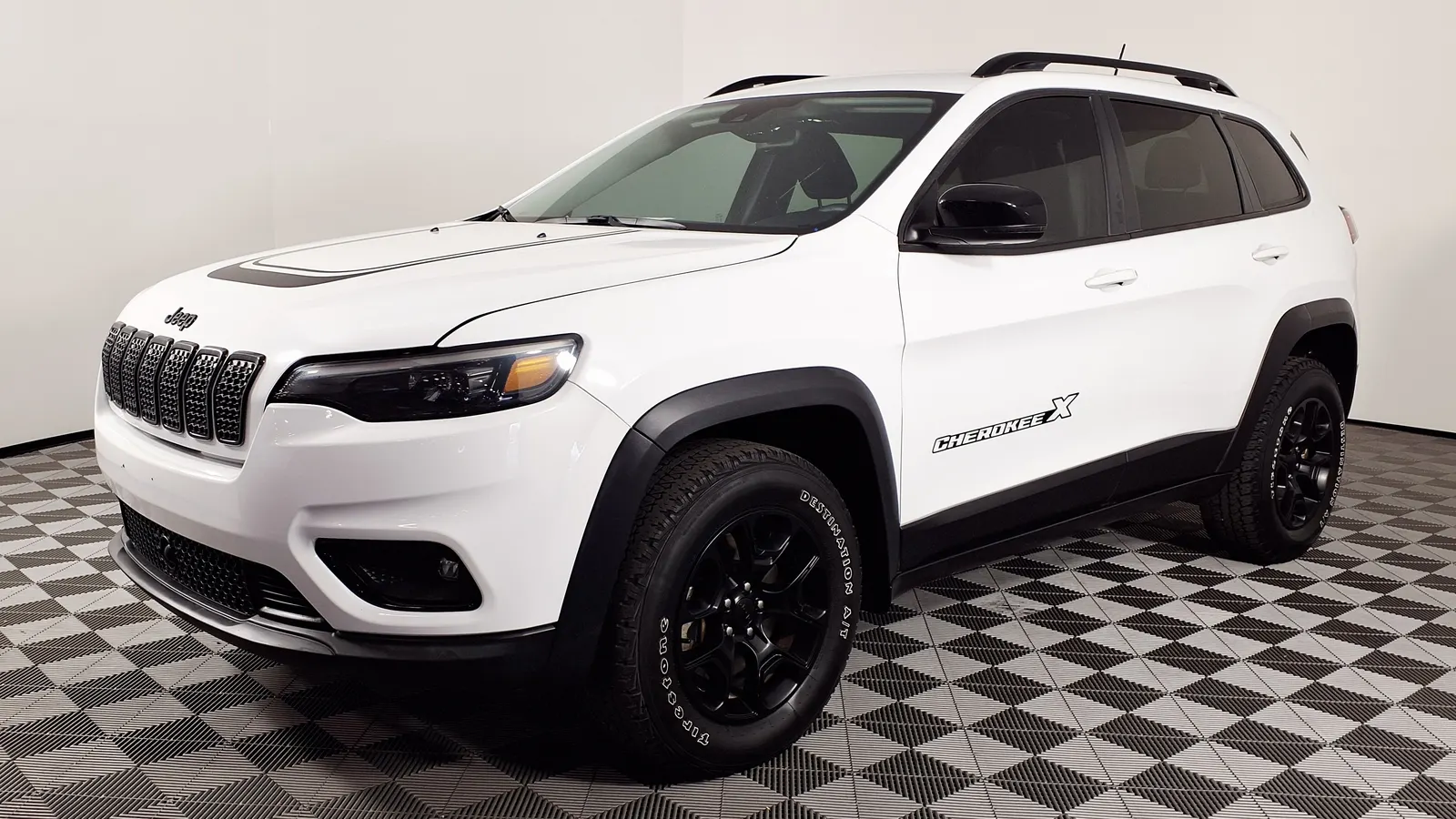
Pictured: 2022 Jeep Cherokee X.
Owner complaints
51
4 report a crash, fire, injury or death
Recalls
3
None urgent
Most common problem
39%
of complaints: power transfer unit failure
Complaints per year filed
2022–2025 · peak 10
In short
Serious known problemsThe 2022 Jeep Cherokee has serious known problems: 23 of its 51 NHTSA owner complaints (45%) describe transmission problems, including power transfer unit failures, the transmission dropping into neutral and harsh shifting. Four complaints report a crash, fire, injury or death. The most common single problem is power transfer unit or 4WD failure. This model year has 3 recalls.
Reliability
How Reliable Is the 2022 Jeep Cherokee?
This model year has serious known problems because transmission and drivetrain complaints dominate what owners report. Nearly half of the 51 complaints describe transmission problems, from power transfer unit failures to the transmission dropping into neutral and harsh, jerky shifting. These are not minor annoyances. Owners describe losing power on the freeway, a vehicle that would not move into drive, and a vehicle that rolled backwards, all of which can put people at risk in traffic.
The power transfer unit is the standout. About 1 in 3 complaints is about a power transfer unit or 4WD failure, and the most common repair owners mention is replacing the power transfer unit. Owners often first notice a Service 4WD light, a scary noise, a fluid leak or metal shavings. Some describe sudden power loss or the emergency braking applying suddenly. Because these reports overlap with the wider transmission complaints, a drivetrain warning on a used Cherokee should be taken seriously.
Recall 26V290000 is the one that matters most here. It states that the power transfer unit may fail, and the remedy is for dealers to update the Drivetrain Control Module, power transfer unit and Electronic Park Brake software, and replace the power transfer unit as necessary, free of charge. This recall was issued in 2026 and covers 61,711 vehicles. It does not cover every transmission complaint, such as shifting problems, and this model year has no recall for those. There is not enough repair feedback from owners to say how well the remedy works.
Mileage reports are limited, so treat them as a rough guide. Only a few owners gave a mileage for the power transfer unit problem, and those reports run from about 38,600 to 67,500 miles, with a middle value near 63,000 miles. Across all complaints that gave a mileage, the middle value was about 44,500 miles, and some problems appeared under 25,000 miles. A low odometer reading does not rule these problems out.
For a buyer, the practical steps are to confirm the recall was completed, ask for drivetrain service records, and test the vehicle for warning lights, noises and hesitation. The limits of the evidence matter too. Complaint counts show what owners chose to report, not how many vehicles are affected, and they cannot show how any particular vehicle was driven or maintained. A vehicle with a clean history may be fine, but the pattern here justifies a careful inspection.
Top problems
The problem owners report most
Named from 51 NHTSA complaints. Open a problem for symptoms, the fix, cost and owners' accounts.
1.Power transfer unit or 4WD failureCriticalAbout 1 in 3 complaints38,600–67,500 mi
Owners describe a Service 4WD light, scary noises, fluid leaks, metal shavings, lost power and, in some cases, a vehicle that rolled backwards or would not move into drive. It has happened on the freeway, on a parkway, with cruise control on and when pulling away at a stop light. Recall 26V290000 addresses a power transfer unit that may fail.
What owners describe
- Service 4WD light25%
- Sudden loss of power20%
- Noise from the drivetrain15%
- Rolling back or not moving15%
Fix
Most common repair owners describe: ptu replacement (8 reports). Recall 26V290000.
Mileage
63,000 mi
Middle half 38,600–67,500 mi · 6 reports
Repair cost
—
Fewer than 10 owners report a repair cost
How common
39%
20 of 51 complaints
Crash, fire or injury
0%
of these complaints
In owners' words
“Was told the PTU power transfer unit has gone out and needs to be replaced and cannot use four wheel drive until replaced”
Owner in FL3.2L V6Filed 2024NHTSA 11582923 “Suddenly the emergency collision braking system applied and all of the lights on my vehicle lit up.”
Owner in WA3.2L V6Filed 2024NHTSA 11575065
Buying one
Should you buy a used 2022 Jeep Cherokee?
What to check before you buy, based on the complaint and recall data.
Ask the seller whether recall 26V290000 for the power transfer unit has been done, and have a Jeep dealer confirm it by VIN. On a test drive, watch for a Service 4WD light, noise from the drivetrain, and any hesitation or lurching when pulling away. Check for a record of power transfer unit work, and be cautious if the vehicle has had repeated drivetrain visits.
- 1Run the VIN for open recalls. NHTSA lists 3 recalls. Check at nhtsa.gov/recalls.
- 2Test-drive for power transfer unit failure. It's the most common safety-critical complaint, in about 1 in 3 owner complaints, usually around 63,000 miles.
- 3Ask for software update records. 12% of complaints mention a software update or reflash.
- 4Get a pre-purchase inspection. An independent mechanic can spot leaks, stored fault codes and accident repairs that a test drive misses.
Jeep Cherokee model years
Early complaints are those filed in a model year's first 3 years. They follow how many were sold, so they don't show which years are better.
Crash test ratings
NHTSA 5-Star Safety Ratings.
| SUV AWD | SUV FWD | |
|---|---|---|
| Overall | ★★★★ | ★★★★ |
| Frontal crash | ★★★★ | ★★★★ |
| Side crash | ★★★★★ | ★★★★★ |
| Rollover | ★★★★ | ★★★★ |
| Rollover risk | 17% | 17% |
Owning one
If you already own one
Find your symptom, see when problems tend to show up, and check which recalls apply.
Watch for a Service 4WD light, unusual noise, a fluid leak, lost power, or the vehicle rolling backwards or refusing to go into drive. If power drops or the vehicle will not move properly, especially in traffic or on a highway, stop driving and get it checked. Confirm with a dealer that recall 26V290000 for the power transfer unit has been completed, and also check the other two recalls on this model year.
Too few reports for a symptom finder
Only 1 symptom reached 10 reports. If something is wrong with yours, report it at nhtsa.gov/report-a-safety-problem.
3 recalls, newest first
Open one for the risk, the remedy and what to do now.
Power trainThe power transfer unit (PTU) may fail.May 7, 202661,711 vehicles26V290000
- Defect
- The power transfer unit (PTU) may fail.
- Risk
- A failed PTU may result in a loss of drive power or vehicle rollaway, increasing the risk of a crash or injury.
- Remedy
- Dealers will update the Drivetrain Control Drivetrain Control Module, PTU, and Electronic Park Brake software, and replace the PTU, as necessary, free of charge.
Side/window › CurtainAn improperly secured connector for the right-side curtain air bag may prevent the air bag from deploying as…Jul 8, 202413 vehicles24V516000
- Defect
- An improperly secured connector for the right-side curtain air bag may prevent the air bag from deploying as intended. As such, these vehicles fail to comply with the requirements of Federal Motor Vehicle Safety Standard numbers 214, "Side Impact Protection" and 226, "Ejection Mitigation."
- Risk
- An air bag that does not deploy as intended can increase the risk of injury in a crash.
- Remedy
- Dealers will secure the connector, free of charge.
Exterior lighting › Turn signalThe turn signal self-canceling feature may not function properly. As such, these vehicles fail to comply with the…Mar 28, 202412,221 vehicles24V239000
- Defect
- The turn signal self-canceling feature may not function properly. As such, these vehicles fail to comply with the requirements of Federal Motor Vehicle Safety Standard number 108, "Lamps, Reflective Devices, and Associated Equipment."
- Risk
- Turn signals that do not function properly may fail to indicate the driver's intention to change vehicle direction, increasing the risk of a crash.
- Remedy
- Dealers will inspect and replace the steering column control module as necessary, free of charge.
What to do
Check the VIN at nhtsa.gov/recalls. If a recall is open, any dealer will fix it free. For NHTSA's full record of a campaign, search its number there (for example 26V290000).
Reliability history
Jeep Cherokee reliability by year
Complaints filed in each model year's first 3 years, by trouble spot. Darker cells have more complaints; counts aren't adjusted for how many were sold each year.
| Trouble spot | 2017 | 2018 | 2019 | 2020 | 2021 | 2022 | 2023 | 2026 |
|---|---|---|---|---|---|---|---|---|
| Transmission & drivetrain | 2017 Transmission & drivetrain: 169 complaints in the first 3 years. | 2018 Transmission & drivetrain: 98 complaints in the first 3 years. | 2019 Transmission & drivetrain: 155 complaints in the first 3 years. | 2020 Transmission & drivetrain: 12 complaints in the first 3 years. | 2021 Transmission & drivetrain: 15 complaints in the first 3 years. | 2022 Transmission & drivetrain: 9 complaints in the first 3 years. | 2023 Transmission & drivetrain: 1 complaints in the first 3 years. | 2026 Transmission & drivetrain: too new, fewer than 3 complete years. |
| Engine | 2017 Engine: 112 complaints in the first 3 years. | 2018 Engine: 84 complaints in the first 3 years. | 2019 Engine: 274 complaints in the first 3 years. | 2020 Engine: 11 complaints in the first 3 years. | 2021 Engine: 10 complaints in the first 3 years. | 2022 Engine: 6 complaints in the first 3 years. | 2023 Engine: 0 complaints in the first 3 years. | 2026 Engine: too new, fewer than 3 complete years. |
| Fuel system & stalling | 2017 Fuel system & stalling: 8 complaints in the first 3 years. | 2018 Fuel system & stalling: 9 complaints in the first 3 years. | 2019 Fuel system & stalling: 26 complaints in the first 3 years. | 2020 Fuel system & stalling: 4 complaints in the first 3 years. | 2021 Fuel system & stalling: 2 complaints in the first 3 years. | 2022 Fuel system & stalling: 2 complaints in the first 3 years. | 2023 Fuel system & stalling: 0 complaints in the first 3 years. | 2026 Fuel system & stalling: too new, fewer than 3 complete years. |
| Electrical | 2017 Electrical: 105 complaints in the first 3 years. | 2018 Electrical: 104 complaints in the first 3 years. | 2019 Electrical: 182 complaints in the first 3 years. | 2020 Electrical: 13 complaints in the first 3 years. | 2021 Electrical: 10 complaints in the first 3 years. | 2022 Electrical: 6 complaints in the first 3 years. | 2023 Electrical: 0 complaints in the first 3 years. | 2026 Electrical: too new, fewer than 3 complete years. |
| Driver aids & stability | 2017 Driver aids & stability: 23 complaints in the first 3 years. | 2018 Driver aids & stability: 16 complaints in the first 3 years. | 2019 Driver aids & stability: 36 complaints in the first 3 years. | 2020 Driver aids & stability: 5 complaints in the first 3 years. | 2021 Driver aids & stability: 5 complaints in the first 3 years. | 2022 Driver aids & stability: 4 complaints in the first 3 years. | 2023 Driver aids & stability: 0 complaints in the first 3 years. | 2026 Driver aids & stability: too new, fewer than 3 complete years. |
| Brakes | 2017 Brakes: 12 complaints in the first 3 years. | 2018 Brakes: 12 complaints in the first 3 years. | 2019 Brakes: 49 complaints in the first 3 years. | 2020 Brakes: 7 complaints in the first 3 years. | 2021 Brakes: 8 complaints in the first 3 years. | 2022 Brakes: 4 complaints in the first 3 years. | 2023 Brakes: 1 complaints in the first 3 years. | 2026 Brakes: too new, fewer than 3 complete years. |
| Steering | 2017 Steering: 16 complaints in the first 3 years. | 2018 Steering: 16 complaints in the first 3 years. | 2019 Steering: 70 complaints in the first 3 years. | 2020 Steering: 3 complaints in the first 3 years. | 2021 Steering: 1 complaints in the first 3 years. | 2022 Steering: 1 complaints in the first 3 years. | 2023 Steering: 0 complaints in the first 3 years. | 2026 Steering: too new, fewer than 3 complete years. |
| Suspension | 2017 Suspension: 1 complaints in the first 3 years. | 2018 Suspension: 3 complaints in the first 3 years. | 2019 Suspension: 2 complaints in the first 3 years. | 2020 Suspension: 3 complaints in the first 3 years. | 2021 Suspension: 3 complaints in the first 3 years. | 2022 Suspension: 0 complaints in the first 3 years. | 2023 Suspension: 0 complaints in the first 3 years. | 2026 Suspension: too new, fewer than 3 complete years. |
| Airbags & seat belts | 2017 Airbags & seat belts: 10 complaints in the first 3 years. | 2018 Airbags & seat belts: 5 complaints in the first 3 years. | 2019 Airbags & seat belts: 20 complaints in the first 3 years. | 2020 Airbags & seat belts: 3 complaints in the first 3 years. | 2021 Airbags & seat belts: 7 complaints in the first 3 years. | 2022 Airbags & seat belts: 1 complaints in the first 3 years. | 2023 Airbags & seat belts: 1 complaints in the first 3 years. | 2026 Airbags & seat belts: too new, fewer than 3 complete years. |
| Body, lights & visibility | 2017 Body, lights & visibility: 6 complaints in the first 3 years. | 2018 Body, lights & visibility: 3 complaints in the first 3 years. | 2019 Body, lights & visibility: 34 complaints in the first 3 years. | 2020 Body, lights & visibility: 7 complaints in the first 3 years. | 2021 Body, lights & visibility: 3 complaints in the first 3 years. | 2022 Body, lights & visibility: 2 complaints in the first 3 years. | 2023 Body, lights & visibility: 0 complaints in the first 3 years. | 2026 Body, lights & visibility: too new, fewer than 3 complete years. |
| Acceleration & speed control | 2017 Acceleration & speed control: 24 complaints in the first 3 years. | 2018 Acceleration & speed control: 12 complaints in the first 3 years. | 2019 Acceleration & speed control: 46 complaints in the first 3 years. | 2020 Acceleration & speed control: 3 complaints in the first 3 years. | 2021 Acceleration & speed control: 1 complaints in the first 3 years. | 2022 Acceleration & speed control: 1 complaints in the first 3 years. | 2023 Acceleration & speed control: 0 complaints in the first 3 years. | 2026 Acceleration & speed control: too new, fewer than 3 complete years. |
| Wheels & tires | 2017 Wheels & tires: 5 complaints in the first 3 years. | 2018 Wheels & tires: 2 complaints in the first 3 years. | 2019 Wheels & tires: 11 complaints in the first 3 years. | 2020 Wheels & tires: 1 complaints in the first 3 years. | 2021 Wheels & tires: 1 complaints in the first 3 years. | 2022 Wheels & tires: 0 complaints in the first 3 years. | 2023 Wheels & tires: 0 complaints in the first 3 years. | 2026 Wheels & tires: too new, fewer than 3 complete years. |
All problems
Every problem reported on the 2022 Cherokee
Every problem found in the 51 owner complaints, by area of the vehicle.
Transmission & drivetrain
25 49%- 20 39%typically at 63,000 mi63,000––
- Drops into neutral or loses drive while movingCritical6 12%–––
- Rolls away, would not hold in park4 8%–––
- Transmission warning messagesMinor3 6%–––
- Shifts into manual mode on its own1 2%–––
- Hesitation or slipping while drivingSerious1 2%–––
Show 3 more transmission & drivetrain problemsShow fewer transmission & drivetrain problems
- Rear differential failure1 2%–––
- Front axle or CV joint failure1 2%–––
- Harsh, jerky shiftingSerious1 2%–––
Electrical
6 12%- Many warning lights at onceMinor3 6%–––
- Select-Terrain system fails1 2%–––
- Electronic parking brake engages on its ownCritical1 2%–––
- Battery drain or no-startSerious1 2%–––
Engine
5 10%- Stalling or shutting off while drivingCritical4 8%–––
- Coolant leak1 2%–––
- Fuel pump or fuel injector failureCritical1 2%–––
Body, lights & visibility
5 10%- Turn signal failsMinor3 6%–––
- Foggy headlights from condensation1 2%–––
- Sun visor falls out of its mount1 2%–––
Airbags & seat belts
3 6%- Airbags did not deploy in a crashCritical3 6%–––
Driver aids & stability
2 4%- Automatic emergency braking activates for no reasonCritical2 4%–––
Fuel system & stalling
2 4%- Heavy soot from tailpipes2 4%–––
- Poor fuel economy1 2%–––
Brakes
2 4%- Brake noise and early wearMinor1 2%–––
- Cruise control overspeeds then brakes hard1 2%–––
Steering
1 2%- Loss of power steeringCritical1 2%–––
Acceleration & speed control
1 2%- Pumping noise when accelerating1 2%–––
Suspension
1 2%- Clunks or knocks from the suspensionMinor1 2%–––
Wheels & tires
1 2%- Heated seat or steering wheel overheats1 2%–––
29 problems found in all 51 complaints. One complaint can describe more than one problem, so counts add up to more than the total. Not counted as a defect: 2 about recall paperwork or parts delays. Typical miles, repair cost and fix rate show only when enough owners report them.
The data
Behind the numbers
Every figure comes from NHTSA's complaint file and APIs.
- Complaints
- 51
- Recalls
- 3
- Crashes
- 3
- Fires
- 0
- Injuries
- 5
- Deaths
- 0
Crashes and fires count complaints that report one; injuries and deaths count people.
Mileage at failure
Not enough data yet
Only 8 complaints list mileage; we chart this from 30.
Complaints by engine
Decoded from the partial VINs owners include. Not adjusted for how many of each engine were sold.
FAQ
2022 Jeep Cherokee questions
Is the 2022 Jeep Cherokee reliable?
The 2022 Jeep Cherokee has serious known problems. 45% of its 51 NHTSA owner complaints (23) describe transmission problems, including power transfer unit failure, the transmission dropping into neutral and harsh, jerky shifting. Owners describe losing power on the freeway and a vehicle that rolled backwards.
What are the most common 2022 Jeep Cherokee problems?
The most common problem is power transfer unit or 4WD failure, about 1 in 3 owner complaints (20 complaints, 39%). Owners first notice a Service 4WD light, noise, fluid leaks or metal shavings, and the most common repair is power transfer unit replacement (8 reports). Next come the transmission dropping into neutral (6 complaints) and rolling away in park (4).
How many recalls does the 2022 Jeep Cherokee have?
The 2022 Jeep Cherokee has 3 recalls, and none carries a do-not-drive or park-outside warning. They cover the power transfer unit that may fail (26V290000), the right-side curtain air bag connector (24V516000) and the turn signal self-canceling feature (24V239000). Check your VIN at nhtsa.gov/recalls.
Does the 2022 Jeep Cherokee have power transfer unit problems?
Yes, it is the standout problem, with 20 of 51 complaints about power transfer unit or 4WD failure. Owners who gave a mileage report it from about 38,600 to 67,500 miles. Recall 26V290000 covers a power transfer unit that may fail, and dealers will update software and replace the unit as necessary, free of charge.
What should I check before buying a 2022 Jeep Cherokee?
Ask the seller whether recall 26V290000 for the power transfer unit has been done, and have a Jeep dealer confirm it by VIN. On a test drive, watch for a Service 4WD light, drivetrain noise, and hesitation or lurching when pulling away. Ask for records of power transfer unit work and be cautious about repeated drivetrain visits.
Is the 2022 Jeep Cherokee safe?
NHTSA rates the 2022 Jeep Cherokee 4 out of 5 stars overall, with 4 out of 5 stars for frontal, 5 out of 5 stars for side and 4 out of 5 stars for rollover, the same for AWD and FWD. Three complaints say airbags did not deploy in a crash, and recall 24V516000 covers the right-side curtain air bag connector.
Methodology
How we researched this
- Complaints. NHTSA's owner complaint file, counted as unique complaint numbers for make JEEP, model CHEROKEE, model year 2022. Data through Oct 4, 2026.
- Verdict. Judged from this model year's own complaints, not against other models, using shares rather than counts. Serious known problems: one serious problem (transmission, engine or stalling, steering, brakes, airbags, fire, fuel leaks) is in a quarter or more of complaints; or a smaller but clear cluster comes with an unusual share of crash, fire, injury or loss-of-power reports or early failures; or an urgent recall or NHTSA investigation matches a top complaint. Some known problems: one of those signals on its own. No pattern of serious problems: none of them; this doesn't mean the vehicle is trouble-free. Too few complaints to judge: under 50 complaints. Why this verdict: 45% of complaints (23) describe transmission problems (power transfer unit failure, the transmission dropping into neutral, harsh, jerky shifting).
- No grade or class ranking. Raw complaint counts favor models that sell fewer cars, so we don't score or rank this vehicle against other models until we can adjust for sales.
- Trouble spots and history. Complaints grouped by the part owners chose when filing. The history grid counts complaints filed in each model year's first 3 years so older and newer years compare fairly; years with fewer than 3 complete years are marked too new.
- Named problems. Every one of the 51 complaints was researched and classified by its problems, severity, symptoms, repairs and any cost the owner mentions; the counts, costs and fix rates on this page are tallies of those classifications. Quotes are verbatim excerpts, checked against the original text. Engines are decoded from partial VINs with NHTSA's vPIC service.
- Repair costs and fix rates. Shown only when at least 10 owners report a repair cost, or at least 10 complaints describe whether a repair worked.
- Not adjusted for sales. Not affiliated with NHTSA. Page updated Nov 5, 2026.