2024 Subaru Ascent Reliability & Problems
By Adrian V. LockhartUpdated All 50 NHTSA owner reports researched and classified
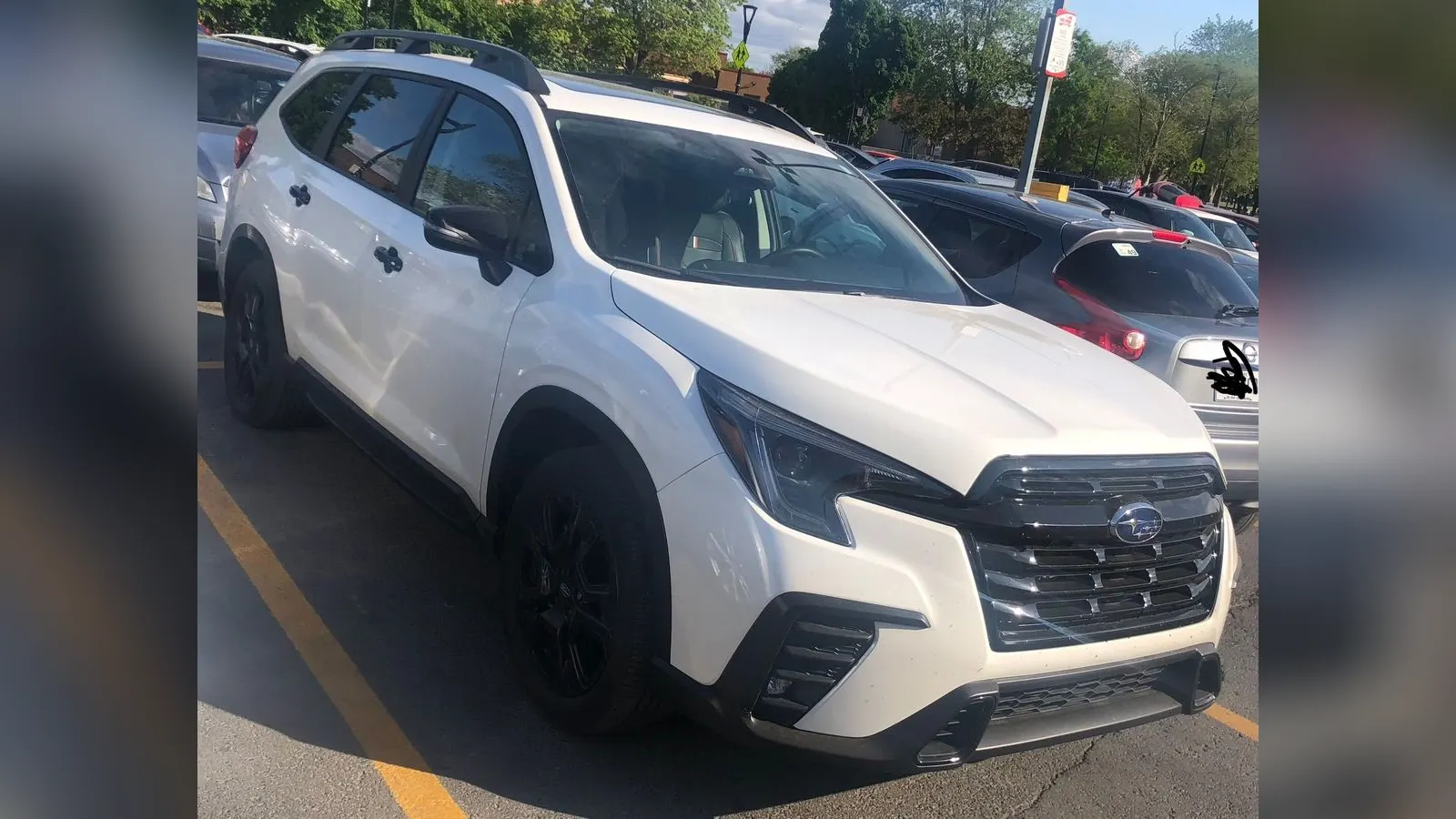
Pictured: 2023 Subaru Ascent (same design as 2023 to 2026), same generation as the 2024 model.
Owner complaints
50
4 report a crash, fire, injury or death
Recalls
1
None urgent
Most common problem
58%
of complaints: driver-side mirror vibration
In short
No pattern of serious problemsThe 2024 Subaru Ascent shows no pattern of serious problems: its largest serious class, stalling while driving, makes up 4% of complaints. NHTSA has 50 owner complaints, and 4 report a crash, fire, injury or death. The most common complaint is a vibrating driver-side mirror, with 29 reports. There is 1 recall, for an incorrect certification label.
Reliability
How Reliable Is the 2024 Subaru Ascent?
This model year has a verdict of no pattern of serious problems. The largest serious class in its complaints is engine failure or stalling, and it makes up only 4% of reports. Safety-related complaints are 14%, below the typical 17%. There is no do-not-drive or park-outside recall and no open serious NHTSA investigation. That is why the page does not flag it as a model year to avoid.
What dominates the complaints is not a safety issue. A driver-side mirror that vibrates or shakes accounts for 29 of the 50 complaints, or 58%. Owners say it gets worse with speed and is most noticeable at highway speeds. They describe poor visibility, trouble using the mirror at night, and a few mention distraction, dizziness or nausea. None of these reports are rated severe. It is an annoyance that can still affect how well you see behind you.
This model year has no recall for the mirror problem. The only recall is 26V436000, issued in July 2026, where the vehicles were manufactured with an incorrect Gross Axle Weight Rating on the certification label. Subaru will mail a new certification label to owners, free of charge. It is not a do-not-drive recall. Among the 11 owners who reported what happened after a mirror repair, all 11 said it did not fix the problem. Complaints lean toward repairs that failed, so a replaced mirror is not proof the problem is gone.
We can say very little about mileage. Only one mirror report includes an odometer reading, so there is no basis for saying whether the vibration shows up early or late. When looking at a particular vehicle, the odometer will not tell you much about whether the problem is likely to appear. A test drive at highway speed is more useful.
For buyers, the practical step is to test the mirror at speed and ask about past mirror repairs. The evidence has limits. Complaint counts show what owners reported, not how many vehicles are affected, and they cannot show how any particular vehicle was maintained. With only 50 complaints, this is a small sample, so a quiet record for other problems does not rule them out.
Top problems
The problem owners report most
Named from 50 NHTSA complaints. Open a problem for symptoms, the fix, cost and owners' accounts.
1.Driver-side mirror vibratesMinorNearly half of complaints14,000–14,000 mi
Owners say the driver mirror vibrates or shakes, often while driving and at highway speeds, and that it gets worse as speed increases. Some report poor visibility, difficulty using the mirror at night, distraction, dizziness or nausea. This model year has no recall for it, and owners who had it repaired mostly say the mirror or housing was replaced without fixing it.
What owners describe
- Mirror shakes at highway speed59%
- Mirror vibrates while driving55%
- Hard to see, especially at night21%
- Vibration worsens with speed10%
Fix
Most common repair owners describe: replaced mirror (2 reports).
Repair worked in 0% of complaints that describe one (complaints lean toward repairs that failed)
Mileage
14,000 mi
Middle half 14,000–14,000 mi · 1 reports
Repair cost
—
Fewer than 10 owners report a repair cost
How common
58%
29 of 50 complaints
Crash, fire or injury
0%
of these complaints
In owners' words
“The dealer's service department confirmed the problem and replaced the mirror but was unable to fix it, stating that nothing else can be done.”
Owner in TX2.4L 4-cylFiled 2024NHTSA 11595175 “The driver’s side mirror vibrates excessively, especially at highway speeds, to the point where it makes me nauseous to use it.”
Owner in NE2.4L 4-cylFiled 2024NHTSA 11614732 “The driver-side mirror vibrates and shakes excessively at highway speeds, making it difficult to use, especially at night.”
Owner in AR2.4L 4-cylFiled 2024NHTSA 11598382
Buying one
Should you buy a used 2024 Subaru Ascent?
What to check before you buy, based on the complaint and recall data.
Check the driver-side mirror on a test drive, at highway speed if you can, since this is what owners report most. Ask the seller whether the mirror has already been replaced, because owners say replacements often did not stop the vibration. Confirm with a dealer that the certification label recall (26V436000) has been handled or that a new label is on its way.
- 1Run the VIN for open recalls. NHTSA lists 1 recall. Check at nhtsa.gov/recalls.
- 2Check for driver-side mirror vibration. The most common complaint, in nearly half of owner complaints.
- 3Get a pre-purchase inspection. An independent mechanic can spot leaks, stored fault codes and accident repairs that a test drive misses.
Subaru Ascent model years
Which Subaru Ascent years to avoid? Every model year compared
Early complaints are those filed in a model year's first 3 years. They follow how many were sold, so they don't show which years are better. The tag on 2024 is its verdict from our research of its owner complaints.
Crash test ratings
NHTSA 5-Star Safety Ratings.
| SUV AWD | |
|---|---|
| Overall | ★★★★★ |
| Frontal crash | ★★★★★ |
| Side crash | ★★★★★ |
| Rollover | ★★★★ |
| Rollover risk | 17% |
Owning one
If you already own one
Find your symptom, see when problems tend to show up, and check which recalls apply.
Watch for a driver mirror that shakes or blurs your view, especially as speed rises. If it makes it hard to see behind you, get it checked soon, and tell the dealer if a first repair does not fix it. Confirm the certification label recall 26V436000 on your vehicle; Subaru will mail a new label free of charge. If the engine ever stalls while you drive, have it inspected before driving again.
Too few reports for a symptom finder
Only 1 symptom reached 10 reports. If something is wrong with yours, report it at nhtsa.gov/report-a-safety-problem.
1 recall, newest first
Open one for the risk, the remedy and what to do now.
Other › LabelsThese vehicles were manufactured with an incorrect Gross Axle Weight Rating (GAWR) on the certification label. As…Jul 7, 2026541,237 vehicles26V436000
- Defect
- These vehicles were manufactured with an incorrect Gross Axle Weight Rating (GAWR) on the certification label. As such, these vehicles fail to comply with the requirements of Federal Motor Vehicle Safety Standard (FMVSS) 110, "Tire selection and rims."
- Risk
- An incorrect GAWR label may lead to an overloaded vehicle, increasing the risk of a crash.
- Remedy
- Subaru will mail a new certification label to owners, free of charge.
What to do
Check the VIN at nhtsa.gov/recalls. If a recall is open, any dealer will fix it free. For NHTSA's full record of a campaign, search its number there (for example 26V436000).
Reliability history
Subaru Ascent reliability by year
Complaints filed in each model year's first 3 years, by trouble spot. Darker cells have more complaints; counts aren't adjusted for how many were sold each year.
| Trouble spot | 2019 | 2020 | 2021 | 2022 | 2023 | 2024 | 2025 | 2026 |
|---|---|---|---|---|---|---|---|---|
| Transmission & drivetrain | 2019 Transmission & drivetrain: 31 complaints in the first 3 years. | 2020 Transmission & drivetrain: 30 complaints in the first 3 years. | 2021 Transmission & drivetrain: 8 complaints in the first 3 years. | 2022 Transmission & drivetrain: 10 complaints in the first 3 years. | 2023 Transmission & drivetrain: 2 complaints in the first 3 years. | 2024 Transmission & drivetrain: too new, fewer than 3 complete years. | 2025 Transmission & drivetrain: too new, fewer than 3 complete years. | 2026 Transmission & drivetrain: too new, fewer than 3 complete years. |
| Engine | 2019 Engine: 31 complaints in the first 3 years. | 2020 Engine: 16 complaints in the first 3 years. | 2021 Engine: 4 complaints in the first 3 years. | 2022 Engine: 4 complaints in the first 3 years. | 2023 Engine: 2 complaints in the first 3 years. | 2024 Engine: too new, fewer than 3 complete years. | 2025 Engine: too new, fewer than 3 complete years. | 2026 Engine: too new, fewer than 3 complete years. |
| Fuel system & stalling | 2019 Fuel system & stalling: 12 complaints in the first 3 years. | 2020 Fuel system & stalling: 10 complaints in the first 3 years. | 2021 Fuel system & stalling: 1 complaints in the first 3 years. | 2022 Fuel system & stalling: 3 complaints in the first 3 years. | 2023 Fuel system & stalling: 0 complaints in the first 3 years. | 2024 Fuel system & stalling: too new, fewer than 3 complete years. | 2025 Fuel system & stalling: too new, fewer than 3 complete years. | 2026 Fuel system & stalling: too new, fewer than 3 complete years. |
| Electrical | 2019 Electrical: 119 complaints in the first 3 years. | 2020 Electrical: 93 complaints in the first 3 years. | 2021 Electrical: 11 complaints in the first 3 years. | 2022 Electrical: 3 complaints in the first 3 years. | 2023 Electrical: 2 complaints in the first 3 years. | 2024 Electrical: too new, fewer than 3 complete years. | 2025 Electrical: too new, fewer than 3 complete years. | 2026 Electrical: too new, fewer than 3 complete years. |
| Driver aids & stability | 2019 Driver aids & stability: 9 complaints in the first 3 years. | 2020 Driver aids & stability: 6 complaints in the first 3 years. | 2021 Driver aids & stability: 11 complaints in the first 3 years. | 2022 Driver aids & stability: 3 complaints in the first 3 years. | 2023 Driver aids & stability: 6 complaints in the first 3 years. | 2024 Driver aids & stability: too new, fewer than 3 complete years. | 2025 Driver aids & stability: too new, fewer than 3 complete years. | 2026 Driver aids & stability: too new, fewer than 3 complete years. |
| Brakes | 2019 Brakes: 20 complaints in the first 3 years. | 2020 Brakes: 18 complaints in the first 3 years. | 2021 Brakes: 2 complaints in the first 3 years. | 2022 Brakes: 10 complaints in the first 3 years. | 2023 Brakes: 8 complaints in the first 3 years. | 2024 Brakes: too new, fewer than 3 complete years. | 2025 Brakes: too new, fewer than 3 complete years. | 2026 Brakes: too new, fewer than 3 complete years. |
| Steering | 2019 Steering: 5 complaints in the first 3 years. | 2020 Steering: 0 complaints in the first 3 years. | 2021 Steering: 6 complaints in the first 3 years. | 2022 Steering: 0 complaints in the first 3 years. | 2023 Steering: 0 complaints in the first 3 years. | 2024 Steering: too new, fewer than 3 complete years. | 2025 Steering: too new, fewer than 3 complete years. | 2026 Steering: too new, fewer than 3 complete years. |
| Suspension | 2019 Suspension: 4 complaints in the first 3 years. | 2020 Suspension: 1 complaints in the first 3 years. | 2021 Suspension: 1 complaints in the first 3 years. | 2022 Suspension: 0 complaints in the first 3 years. | 2023 Suspension: 1 complaints in the first 3 years. | 2024 Suspension: too new, fewer than 3 complete years. | 2025 Suspension: too new, fewer than 3 complete years. | 2026 Suspension: too new, fewer than 3 complete years. |
| Airbags & seat belts | 2019 Airbags & seat belts: 5 complaints in the first 3 years. | 2020 Airbags & seat belts: 5 complaints in the first 3 years. | 2021 Airbags & seat belts: 0 complaints in the first 3 years. | 2022 Airbags & seat belts: 0 complaints in the first 3 years. | 2023 Airbags & seat belts: 3 complaints in the first 3 years. | 2024 Airbags & seat belts: too new, fewer than 3 complete years. | 2025 Airbags & seat belts: too new, fewer than 3 complete years. | 2026 Airbags & seat belts: too new, fewer than 3 complete years. |
| Body, lights & visibility | 2019 Body, lights & visibility: 78 complaints in the first 3 years. | 2020 Body, lights & visibility: 65 complaints in the first 3 years. | 2021 Body, lights & visibility: 20 complaints in the first 3 years. | 2022 Body, lights & visibility: 8 complaints in the first 3 years. | 2023 Body, lights & visibility: 9 complaints in the first 3 years. | 2024 Body, lights & visibility: too new, fewer than 3 complete years. | 2025 Body, lights & visibility: too new, fewer than 3 complete years. | 2026 Body, lights & visibility: too new, fewer than 3 complete years. |
| Acceleration & speed control | 2019 Acceleration & speed control: 4 complaints in the first 3 years. | 2020 Acceleration & speed control: 1 complaints in the first 3 years. | 2021 Acceleration & speed control: 1 complaints in the first 3 years. | 2022 Acceleration & speed control: 0 complaints in the first 3 years. | 2023 Acceleration & speed control: 2 complaints in the first 3 years. | 2024 Acceleration & speed control: too new, fewer than 3 complete years. | 2025 Acceleration & speed control: too new, fewer than 3 complete years. | 2026 Acceleration & speed control: too new, fewer than 3 complete years. |
| Wheels & tires | 2019 Wheels & tires: 3 complaints in the first 3 years. | 2020 Wheels & tires: 2 complaints in the first 3 years. | 2021 Wheels & tires: 3 complaints in the first 3 years. | 2022 Wheels & tires: 2 complaints in the first 3 years. | 2023 Wheels & tires: 5 complaints in the first 3 years. | 2024 Wheels & tires: too new, fewer than 3 complete years. | 2025 Wheels & tires: too new, fewer than 3 complete years. | 2026 Wheels & tires: too new, fewer than 3 complete years. |
All problems
Every problem reported on the 2024 Ascent
Every problem found in the 50 owner complaints, by area of the vehicle.
Body, lights & visibility
34 68%- 29 58%0% fixed––0%
- Driver window will not go up1 2%–––
- Windshield cracking1 2%–––
- Loud vibrating noise from cooled seat1 2%–––
- Door-open warning inadequate at low speed1 2%–––
- Hood flexes at speed1 2%–––
Driver aids & stability
4 8%- Adaptive cruise and emergency braking failed to stop car1 2%–––
- 360 camera image misaligned or distorted1 2%–––
- Automatic emergency braking activates for no reasonCritical1 2%–––
- Vehicle drifts out of lane1 2%–––
Electrical
3 6%- Many warning lights at onceMinor2 4%–––
- Screen or infotainment glitchesMinor1 2%–––
Wheels & tires
3 6%- Tire blowout1 2%–––
- Excessive inner-edge front tire wear1 2%–––
- Poor traction from original tires1 2%–––
Other
2 4%- Wireless CarPlay connection drops2 4%–––
Airbags & seat belts
2 4%- EyeSight freezes or stops working2 4%–––
- Burning smell from car1 2%–––
- Starlink emergency service froze or did not call1 2%–––
Engine
2 4%- Stalling or shutting off while drivingCritical2 4%–––
Acceleration & speed control
2 4%- Accelerator goes unresponsive1 2%–––
- Sudden or unintended accelerationCritical1 2%–––
Brakes
2 4%- Brake noise and early wearMinor1 2%–––
- Reverse automatic braking failed to stop car1 2%–––
Steering
2 4%- Clunk or thump from steering1 2%–––
- Loss of power steeringCritical1 2%–––
Fuel system & stalling
1 2%- Fuel level sender fails1 2%–––
Transmission & drivetrain
1 2%- Transmission warning messagesMinor1 2%–––
- Transmission shudder or judderSerious1 2%–––
- Drops into neutral or loses drive while movingCritical1 2%–––
Suspension
1 2%- Electric shock or burn at left ankle1 2%–––
31 problems found in all 50 complaints. One complaint can describe more than one problem, so counts add up to more than the total. Typical miles, repair cost and fix rate show only when enough owners report them.
The data
Behind the numbers
Every figure comes from NHTSA's complaint file and APIs.
- Complaints
- 50
- Recalls
- 1
- Crashes
- 3
- Fires
- 0
- Injuries
- 1
- Deaths
- 0
Crashes and fires count complaints that report one; injuries and deaths count people.
Mileage at failure
Not enough data yet
Only 1 complaint list mileage; we chart this from 30.
FAQ
2024 Subaru Ascent questions
Is the 2024 Subaru Ascent reliable?
The 2024 Subaru Ascent shows no pattern of serious problems. Its largest serious problem class is engine failure or stalling while driving, at 4% of complaints, and there is no do-not-drive or park-outside recall and no open serious NHTSA investigation. NHTSA has 50 owner complaints for this model year.
What are the most common 2024 Subaru Ascent problems?
The most common complaint is a vibrating driver-side mirror, with 29 of 50 complaints, or 58%. Owners say it shakes at highway speed and gets worse as speed rises. It is rated minor. Other reports are scattered, including driver aids, electrical, and wheels and tires, with only a few complaints each.
Does the 2024 Subaru Ascent have any recalls?
There is 1 recall, 26V436000, issued in July 2026. These vehicles were built with an incorrect Gross Axle Weight Rating on the certification label, and Subaru will mail a new label to owners free of charge. It is not a do-not-drive or park-outside recall. Check your VIN at nhtsa.gov/recalls.
Does the 2024 Subaru Ascent have driver-side mirror problems?
Yes, it is the main complaint, with 29 reports. Owners describe the driver mirror shaking at highway speed, poor visibility, trouble using it at night, and sometimes distraction, dizziness or nausea. There is no recall for it, and all 11 owners who reported a mirror repair outcome said the repair did not fix it.
What should I check before buying a 2024 Subaru Ascent?
Test the driver-side mirror on a test drive, at highway speed if you can, since owners report it most. Ask whether the mirror has been replaced, because owners say replacements often did not stop the vibration. Also confirm with a dealer that the certification label recall, 26V436000, has been handled.
Is the 2024 Subaru Ascent safe?
NHTSA gives the 2024 Subaru Ascent SUV AWD 5 out of 5 stars overall, 5 out of 5 stars for frontal crash, 5 out of 5 stars for side crash and 4 out of 5 stars for rollover. Of the 50 owner complaints, 4 report a crash, fire, injury or death.
Which Subaru Ascent years should you avoid?
No Subaru Ascent model year shows serious known problems in owner complaints. For the 2019–2022, make sure the recall repairs were done: an urgent recall matters more than their complaint pattern. The 2024 shows no pattern of serious problems. The 2023 and 2025–2026 have too few complaints to judge. Every model year is compared on the Subaru Ascent years-to-avoid page.
Methodology
How we researched this
- Complaints. NHTSA's owner complaint file, counted as unique complaint numbers for make SUBARU, model ASCENT, model year 2024. Data through Oct 4, 2026.
- Verdict. Judged from this model year's own complaints, not against other models, using shares rather than counts. Serious known problems: one serious problem (transmission, engine or stalling, steering, brakes, airbags, fire, fuel leaks) is in a quarter or more of complaints; or a smaller but clear cluster comes with an unusual share of crash, fire, injury or loss-of-power reports or early failures; or an urgent recall or NHTSA investigation matches a top complaint. Some known problems: one of those signals on its own. No pattern of serious problems: none of them; this doesn't mean the vehicle is trouble-free. Too few complaints to judge: under 50 complaints. Why this verdict: Checked: the largest serious problem class is engine failure or stalling (stalling while driving), 4% of complaints; safety-related complaints are 14% (typical: 17%), and there's no do-not-drive or park-outside recall or open serious NHTSA investigation..
- No grade or class ranking. Raw complaint counts favor models that sell fewer cars, so we don't score or rank this vehicle against other models until we can adjust for sales.
- Trouble spots and history. Complaints grouped by the part owners chose when filing. The history grid counts complaints filed in each model year's first 3 years so older and newer years compare fairly; years with fewer than 3 complete years are marked too new.
- Named problems. Every one of the 50 complaints was researched and classified by its problems, severity, symptoms, repairs and any cost the owner mentions; the counts, costs and fix rates on this page are tallies of those classifications. Quotes are verbatim excerpts, checked against the original text. Engines are decoded from partial VINs with NHTSA's vPIC service.
- Repair costs and fix rates. Shown only when at least 10 owners report a repair cost, or at least 10 complaints describe whether a repair worked.
- Not adjusted for sales. Not affiliated with NHTSA. Page updated Nov 5, 2026.