2020 Subaru Ascent Reliability & Problems
By Adrian V. LockhartUpdated All 322 NHTSA owner reports researched and classified
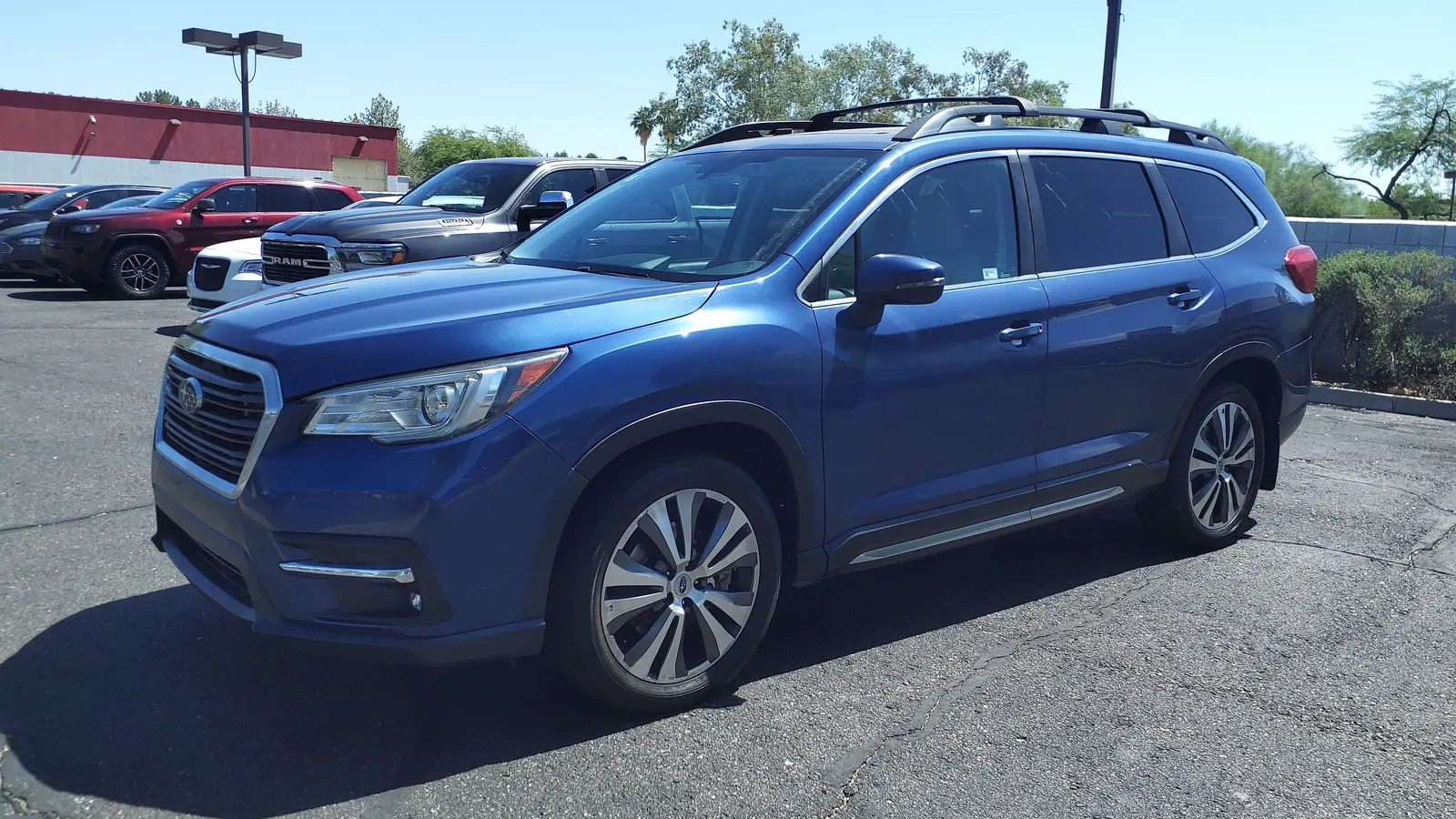
Pictured: 2020 Subaru Ascent Limited.
Owner complaints
322
7 report a crash, fire, injury or death
Recalls
5
1 with a park-outside warning
Most common problem
29%
of complaints: battery drain or no-start problem
Complaints per year filed
2019–2025 · peak 85
In short
Some known problemsThe 2020 Subaru Ascent has some known problems, chiefly because a park-outside recall for a fire risk in the electrical system matches a top complaint. NHTSA has 322 owner complaints, and 7 report a crash, fire, injury or death. The most common are battery drain or no-start, cracking windshields and transmission hesitation. There are 5 recalls.
Reliability
How Reliable Is the 2020 Subaru Ascent?
This model year has a verdict of some known problems, and the reason is official rather than based on how often owners complain. Recall 22V907000 is a park-outside recall for a fire risk in the electrical system, and electrical trouble is also the most common complaint. Its defect text says the ground bolt that secures the ground terminal of the PTC heater may have been improperly fastened, which could result in melting of the ground terminal and surrounding components. The remedy is advice to park away from structures and avoid leaving the vehicle unattended while the engine is running. Of 322 complaints, only 7 report a crash, fire, injury or death, so most complaints describe inconvenience and breakdowns rather than harm.
Two problems make up about half of all complaints. Battery drain or no-start is the largest, at about 1 in 3, with owners describing dead batteries, jump starts and cars that would not start after sitting overnight or in a garage. Some also mention a tailgate that beeped or would not open. Windshields that crack easily come next, at about 1 in 5. Owners describe cracks that appeared without an impact they noticed, sometimes within weeks of purchase. Neither problem has a recall for it on this model year, so there is no official fix to point to. The park-outside recall concerns a heater ground terminal, and the complaints do not tie the battery problem to it.
The transmission is the other area to take seriously. Hesitation or slipping makes up a smaller share, and a smaller group reports outright transmission failure that needed replacement. Recall 21V955000 says a programming error in the transmission control unit may allow the clutch to engage before the drive chain is completely clamped. Dealers reprogram the unit, inspect its data for chain slip and visually inspect the chain guide. A few owners mention this recall in their reports. Where owners say what happened after repairs, the picture is poor: for battery problems, most of 24 reports say the repair did not fix it, and for hesitation, all 12 say it did not. For windshields, 8 of 13 say it did not. Complaints lean toward repairs that failed, so a past repair is not proof a problem is solved.
Mileage matters when you read an odometer. Battery and windshield complaints come early, with the middle half of battery reports between about 3,900 and 10,800 miles and windshield reports between about 3,000 and 11,800 miles. A vehicle with higher mileage that has not shown these problems is not guaranteed to avoid them, but they cluster in the first year or two of use. Transmission failures are reported much later, around 82,500 miles at the median, so a vehicle with tens of thousands of miles deserves a careful test drive and a look at its service history.
For a buyer, the practical steps are to confirm recall work, test starting after the vehicle has sat, inspect the glass and drive it through a range of speeds and grades. Keep the limits of this evidence in mind. Complaint counts show what owners chose to report, not how many vehicles are affected, and they cannot show how a particular vehicle was maintained. A clean record on one vehicle and a bad story on another are both consistent with these numbers.
Top problems
The 4 problems owners report most
Named from 322 NHTSA complaints. Open a problem for symptoms, the fix, cost and owners' accounts.
1.Battery drain or no-startSeriousAbout 1 in 3 complaints3,900–10,800 mi
Owners describe a dead battery, a needed jump start and a car that would not start, often overnight or while parked in a garage. Some also mention a tailgate that beeped or would not open. Half of the reports with a mileage fall between about 3,900 and 10,800 miles, with a median of 7,100. No recall is mentioned for this problem.
What owners describe
- Dead battery after sitting47%
- Car will not start20%
- Needs a jump start18%
- Tailgate beeps or will not open10%
Fix
Most common repair owners describe: battery replaced (11 reports).
Repair worked in 19% of complaints that describe one (complaints lean toward repairs that failed)
Mileage
7,100 mi
Middle half 3,900–10,800 mi · 56 reports
Repair cost
—
Fewer than 10 owners report a repair cost
How common
29%
94 of 322 complaints
Crash, fire or injury
1%
of these complaints
In owners' words
“Three months later at a regular service the dealer advised battery capacity was only 75% indicating continued above normal drainage.”
Owner in CA2.4L 4-cylFiled 2020NHTSA 11341025 “Battery keeps going dead. I have ensured nothing is left on and it keeps happening.”
Owner in NY2.4L 4-cylFiled 2020NHTSA 11353178 “They gave me a run around stating I had left the either a door open or lights on.”
Owner in NC2.4L 4-cylFiled 2020NHTSA 11324471 2.Windshield cracks easilySeriousAbout 1 in 5 complaints3,000–11,800 mi
Owners describe cracks that appeared spontaneously, overnight or from small pebbles, and some say a repaired crack reappeared. Several happened within weeks of purchase, on the highway or while parked. Half of the reports with a mileage fall between about 3,000 and 11,800 miles. No recall is mentioned for this problem.
What owners describe
- Crack with no impact21%
- Crack appears overnight13%
Fix
Most common repair owners describe: windshield replaced (6 reports).
Repair worked in 38% of complaints that describe one (complaints lean toward repairs that failed)
Mileage
6,700 mi
Middle half 3,000–11,800 mi · 50 reports
Repair cost
—
Fewer than 10 owners report a repair cost
How common
21%
68 of 322 complaints
Crash, fire or injury
0%
of these complaints
In owners' words
“Dealer denied service because they said they found itty bitty (smaller than a pin head) mark at very edge of window molding.”
Owner in AZ2.4L 4-cylFiled 2020NHTSA 11318017 3.Hesitation or slipping while drivingSeriousAbout 1 in 15 complaints28,000–61,900 mi
Owners describe the transmission slipping, a momentary rise in engine revs, a slight lurch and slow gear changes, often when accelerating onto the interstate or climbing a hill. Some report a grinding noise. One report mentions recall 21V955000.
What owners describe
- Transmission slipping36%
- Hesitation or lurch36%
- Revs rise without speed14%
- Grinding noise9%
Fix
Most common repair owners describe: recall repair (2 reports).
Repair worked in 0% of complaints that describe one (complaints lean toward repairs that failed)
Mileage
37,000 mi
Middle half 28,000–61,900 mi · 9 reports
Repair cost
—
Fewer than 10 owners report a repair cost
How common
7%
22 of 322 complaints
Crash, fire or injury
0%
of these complaints
In owners' words
“The transmission occasionally slips, resulting in a momentary rise in engine revs and a slight lurch.”
Owner in MN2.4L 4-cylFiled 2020NHTSA 11375376 “Slipping is indicated by approximately 300 RPM change and a noticable hesitation in vehicle motion.”
Owner in MD2.4L 4-cylFiled 2020NHTSA 11378130 “When going up a hill the automatic transmission drops in gears which significantly increases RPMS”
Owner in GA2.4L 4-cylFiled 2021NHTSA 11386456 4.Transmission failure needing replacementSeriousAbout 1 in 19 complaints43,300–102,800 mi
Owners describe the transmission failing while driving, no gear engaging, a car that lurched but would not move, and warning lights including the check engine light. Reports with a mileage have a median of 82,500 miles, and half fall between about 43,300 and 102,800 miles. Two reports mention recall 21V955000.
What owners describe
- Warning lights come on35%
- Lurching or lost acceleration24%
- No gear will engage18%
- Grinding or loud noise18%
Fix
Most common repair owners describe: transmission replaced (3 reports).
Mileage
82,500 mi
Middle half 43,300–102,800 mi · 10 reports
Repair cost
—
Fewer than 10 owners report a repair cost
How common
5%
17 of 322 complaints
Crash, fire or injury
0%
of these complaints
Buying one
Should you buy a used 2020 Subaru Ascent?
What to check before you buy, based on the complaint and recall data.
Ask the seller for proof that recall 22V907000, the park-outside recall, has been done, and check the other recalls too, including 21V955000 on the transmission control unit. Test the vehicle after it has sat for a night or more, since many battery complaints describe a dead battery after parking. Look closely at the windshield for cracks or repairs, and check that the transmission shifts smoothly when you accelerate and climb hills.
- 1Run the VIN for open recalls. NHTSA lists 5 recalls, and 1 carries a do-not-drive or park-outside warning (22V907000). Check at nhtsa.gov/recalls.
- 2Check for battery drain or no-start problem. The most common complaint, in about 1 in 3 owner complaints.
- 3Get a pre-purchase inspection. An independent mechanic can spot leaks, stored fault codes and accident repairs that a test drive misses.
Subaru Ascent model years
Which Subaru Ascent years to avoid? Every model year compared
Early complaints are those filed in a model year's first 3 years. They follow how many were sold, so they don't show which years are better. The tag on 2020 is its verdict from our research of its owner complaints.
Crash test ratings
NHTSA 5-Star Safety Ratings.
| SUV AWD | |
|---|---|
| Overall | ★★★★★ |
| Frontal crash | ★★★★★ |
| Side crash | ★★★★★ |
| Rollover | ★★★★ |
| Rollover risk | 17% |
Owning one
If you already own one
Find your symptom, see when problems tend to show up, and check which recalls apply.
Until recall 22V907000 is done, follow its advice: park away from structures and do not leave the vehicle unattended with the engine running. Watch for a battery that dies after sitting, a tailgate that beeps or will not open, and any slipping, lurching or grinding from the transmission. Warning lights with a loss of power or a gear that will not engage are reasons to stop driving and get it checked. Confirm with a Subaru dealer that every recall on your VIN is complete.
- Battery drain or no-startSeriousAbout 1 in 3 owner complaints94 of 322Median 7,100 mi
Most common repair owners describe: battery replaced (11 reports).
- Windshield cracks easilySeriousAbout 1 in 5 owner complaints68 of 322Median 6,700 mi
Most common repair owners describe: windshield replaced (6 reports).
- Hesitation or slipping while drivingSeriousAbout 1 in 15 owner complaints22 of 322Median 37,000 mi
Most common repair owners describe: recall repair (2 reports).
- Transmission failure needing replacementSeriousAbout 1 in 19 owner complaints17 of 322Median 82,500 mi
Most common repair owners describe: transmission replaced (3 reports).
- Brake noise and early wearMinorAbout 1 in 25 owner complaints13 of 322Median 29,500 mi
- Screen or infotainment glitchesMinorAbout 1 in 27 owner complaints12 of 322Median 6,000 mi
- Brake vibration or warped rotorsSeriousAbout 1 in 32 owner complaints10 of 322Median 9,500 mi
- Transmission shudder or judderSeriousAbout 1 in 32 owner complaints10 of 322
of complaints that list mileage (124 of 140) came in before 25,000 miles. A low odometer reading is no guarantee.
5 recalls, newest first
Open one for the risk, the remedy and what to do now.
Other › LabelsThese vehicles were manufactured with an incorrect Gross Axle Weight Rating (GAWR) on the certification label. As…Jul 7, 2026541,237 vehicles26V436000
- Defect
- These vehicles were manufactured with an incorrect Gross Axle Weight Rating (GAWR) on the certification label. As such, these vehicles fail to comply with the requirements of Federal Motor Vehicle Safety Standard (FMVSS) 110, "Tire selection and rims."
- Risk
- An incorrect GAWR label may lead to an overloaded vehicle, increasing the risk of a crash.
- Remedy
- Subaru will mail a new certification label to owners, free of charge.
Wiring › Interior/under dashPark outsideThe ground bolt that secures the ground terminal of the Positive Temperature Coefficient (PTC) heater may have been…Dec 8, 2022271,694 vehicles22V907000
- Defect
- The ground bolt that secures the ground terminal of the Positive Temperature Coefficient (PTC) heater may have been improperly fastened, which could result in melting of the ground terminal and surrounding components.
- Risk
- A melting ground terminal increases the risk of a fire.
- Remedy
- Owners are advised to park their vehicle away from structures and to avoid leaving the vehicle unattended while the engine is running.
- What to do
- Park outside and away from buildings until the recall repair is done.
Automatic transmission › Control module (tcm/pcm/tecm)A programming error in the Transmission Control Unit (TCU) may allow the clutch to engage before the drive chain is…Dec 9, 2021198,255 vehicles21V955000
- Defect
- A programming error in the Transmission Control Unit (TCU) may allow the clutch to engage before the drive chain is completely clamped.
- Risk
- An improperly secured drive chain may slip and break, causing a loss of drive power and increasing the risk of a crash.
- Remedy
- Dealers will reprogram the TCU, inspect TCU data for chain slip, and visually inspect the chain guide.
Linkages › Tie rod assemblyDue to an incorrect tapered hole in the housing, the front tie rod ends may not fit properly. The improper fit can…Dec 9, 20211,305 vehicles21V954000
- Defect
- Due to an incorrect tapered hole in the housing, the front tie rod ends may not fit properly. The improper fit can result in the tie rods and housings being deformed during assembly and service replacement if excessive torque is applied.
- Risk
- The tie rods may separate from the housing, causing a loss of steering control and increasing the risk of a crash.
- Remedy
- Dealers will replace the left and right front tie rod ends and housings, free of charge.
Delivery › Fuel pumpThe low-pressure fuel pump inside the fuel tank may fail.Jul 29, 2021175,968 vehicles21V587000
- Defect
- The low-pressure fuel pump inside the fuel tank may fail.
- Risk
- Fuel pump failure can cause an engine stall while driving, increasing the risk of a crash.
- Remedy
- Dealers will replace the low-pressure fuel pump, free of charge.
What to do
Check the VIN at nhtsa.gov/recalls. If a recall is open, any dealer will fix it free. For NHTSA's full record of a campaign, search its number there (for example 26V436000).
Reliability history
Subaru Ascent reliability by year
Complaints filed in each model year's first 3 years, by trouble spot. Darker cells have more complaints; counts aren't adjusted for how many were sold each year.
All problems
Every problem reported on the 2020 Ascent
Every problem found in the 322 owner complaints, by area of the vehicle.
Electrical
101 31%- Battery drain or no-startSerious94 29%typically at 7,100 mi · 19% fixed7,100–19%
- Screen or infotainment glitchesMinor12 4%typically at 6,000 mi6,000––
- Many warning lights at onceMinor4 1%–––
- Water leaks damaging electronicsSerious2 0.6%–––
- Total electrical failure1 0.3%–––
- Burnt wiring harness1 0.3%–––
Show 1 more electrical problemsShow fewer electrical problems
- Electronic parking brake engages on its ownCritical1 0.3%–––
Body, lights & visibility
93 29%- Windshield cracks easilySerious68 21%typically at 6,700 mi · 38% fixed6,700–38%
- Liftgate opens or fails to operate7 2%–––
- Hood wobbles at highway speedMinor4 1%–––
- Turn signal or LED daytime light failsMinor4 1%–––
- Side window cracks on its own2 0.6%–––
- Sunroof glass cracks or shatters2 0.6%–––
Show 7 more body, lights & visibility problemsShow fewer body, lights & visibility problems
- Driver mirror vibrates1 0.3%–––
- Rust and corrosion on metal window panels1 0.3%–––
- Hood vibrates and flexes at speed1 0.3%–––
- Child seat anchor will not hold1 0.3%–––
- Window trim or gasket detaching1 0.3%–––
- Power window slow or skipping1 0.3%–––
- Driver seat frame comes loose1 0.3%–––
Transmission & drivetrain
55 17%- 22 7%typically at 37,000 mi · 0% fixed37,000–0%
- 17 5%typically at 82,500 mi82,500––
- Transmission shudder or judderSerious10 3%–––
- Drops into neutral or loses drive while movingCritical6 2%–––
- Transmission pressure sensor leaks fluid into wiringSerious4 1%–––
- Harsh, jerky shiftingSerious3 0.9%–––
Show 7 more transmission & drivetrain problemsShow fewer transmission & drivetrain problems
- Transmission warning messagesMinor3 0.9%–––
- Delayed engagement pulling away from a stopSerious3 0.9%–––
- Power transfer unit (PTU) or 4WD failureCritical3 0.9%–––
- Vibration and wobble when driving1 0.3%–––
- Ignition will not start unless shifter is moved1 0.3%–––
- Gear shifter stuck in park1 0.3%–––
- Driveshaft bracket bolt backs out1 0.3%–––
Brakes
24 7%- Brake noise and early wearMinor13 4%typically at 29,500 mi · 10% fixed29,500–10%
- Brake vibration or warped rotorsSerious10 3%typically at 9,500 mi9,500––
- Brake pedal sinks or brakes failCritical3 0.9%–––
- Brakes feel inadequate for vehicle weight2 0.6%–––
- Vehicle fails to decelerate when braking1 0.3%–––
Engine
15 5%- Stalling or shutting off while drivingCritical8 2%–––
- Oil leaks or low oilSerious2 0.6%–––
- Serpentine belt shredded1 0.3%–––
- Exhaust fumes or carbon monoxide in the cabinCritical1 0.3%–––
- Alternator failure1 0.3%–––
- Engine failure1 0.3%–––
Show 3 more engine problemsShow fewer engine problems
- Engine sludge needing engine replacement1 0.3%–––
- Fuel pump or fuel injector failureCritical1 0.3%–––
- Exhaust manifold or flex pipe failure1 0.3%–––
Suspension
9 3%- Clunks or knocks from the suspensionMinor9 3%–––
Driver aids & stability
8 2%- EyeSight driver assist fails or shuts off4 1%–––
- Automatic emergency braking activates for no reasonCritical3 0.9%–––
- Backup camera failure1 0.3%–––
- Lane assist steers on its own1 0.3%–––
Fuel system & stalling
7 2%- Raw fuel smell in cabinSerious7 2%–––
Wheels & tires
7 2%- Wheel bearing failure2 0.6%–––
- Tire blowout1 0.3%–––
- Steering wheel locks and car will not start1 0.3%–––
- Wheel lug studs fail1 0.3%–––
- Steering wheel goes loose then tight1 0.3%–––
- Uneven tire wear1 0.3%–––
Airbags & seat belts
5 2%- Airbags did not deploy in a crashCritical4 1%–––
- Front seat cannot go back far enough for seat belt1 0.3%–––
- Driver seat belt did not lock in crash1 0.3%–––
Acceleration & speed control
4 1%- Sudden or unintended accelerationCritical4 1%–––
Fire
2 0.6%- Blue smoke from tailpipe1 0.3%–––
- Vehicle catches fireCritical1 0.3%–––
Other
1 0.3%- Clicking noise from dash1 0.3%–––
Steering
1 0.3%- Loss of power steeringCritical1 0.3%–––
67 problems found in all 322 complaints. One complaint can describe more than one problem, so counts add up to more than the total. Not counted as a defect: 14 about recall paperwork or parts delays, 5 describing no vehicle defect. Typical miles, repair cost and fix rate show only when enough owners report them.
The data
Behind the numbers
Every figure comes from NHTSA's complaint file and APIs.
- Complaints
- 322
- Recalls
- 5
- Crashes
- 6
- Fires
- 1
- Injuries
- 5
- Deaths
- 0
Crashes and fires count complaints that report one; injuries and deaths count people.
FAQ
2020 Subaru Ascent questions
Is the 2020 Subaru Ascent reliable?
The 2020 Subaru Ascent has some known problems, mainly because of a park-outside recall (22V907000) for a fire risk in the electrical system, which matches a top complaint. NHTSA has 322 owner complaints, and only 7 report a crash, fire, injury or death. Most describe inconvenience and breakdowns.
What are the most common 2020 Subaru Ascent problems?
Battery drain or no-start is the most common, at about 1 in 3 owner complaints (94 complaints), followed by windshields that crack easily at about 1 in 5 (68 complaints). Transmission hesitation or slipping comes next at about 1 in 15 (22 complaints). None of the three has a recall of its own.
Does the 2020 Subaru Ascent have any recalls?
There are 5 recalls. Recall 22V907000 is a park-outside recall: a PTC heater ground terminal may melt, risking a fire, so owners should park away from structures and not leave the vehicle unattended with the engine running. The others cover the transmission control unit (21V955000), front tie rod ends (21V954000), the low-pressure fuel pump (21V587000) and an incorrect axle weight label (26V436000). Check your VIN at nhtsa.gov/recalls.
Does the 2020 Subaru Ascent have transmission problems?
Owners do report them. The transmission and drivetrain account for 55 complaints, including hesitation or slipping (22) and transmission failure needing replacement (17). Failure reports with a mileage have a median of 82,500 miles. Recall 21V955000 covers a transmission control unit programming error, so confirm it was done.
At what mileage do 2020 Subaru Ascent battery and windshield problems appear?
Both tend to appear early. Half of the battery drain or no-start reports with a mileage fall between about 3,900 and 10,800 miles, with a median of 7,100. For cracking windshields, half fall between about 3,000 and 11,800 miles, with a median of 6,600. Test starting after the vehicle has sat overnight.
Is the 2020 Subaru Ascent safe?
NHTSA rates the 2020 Subaru Ascent 5 out of 5 stars overall, 5 out of 5 stars in the frontal test, 5 out of 5 stars in the side test and 4 out of 5 stars for rollover. Of 322 owner complaints, 7 report a crash, fire, injury or death. Recall work, especially park-outside recall 22V907000, should be confirmed.
Which Subaru Ascent years should you avoid?
No Subaru Ascent model year shows serious known problems in owner complaints. For the 2019–2022, make sure the recall repairs were done: an urgent recall matters more than their complaint pattern. The 2024 shows no pattern of serious problems. The 2023 and 2025–2026 have too few complaints to judge. Every model year is compared on the Subaru Ascent years-to-avoid page.
Methodology
How we researched this
- Complaints. NHTSA's owner complaint file, counted as unique complaint numbers for make SUBARU, model ASCENT, model year 2020. Data through Oct 4, 2026.
- Verdict. Judged from this model year's own complaints, not against other models, using shares rather than counts. Serious known problems: one serious problem (transmission, engine or stalling, steering, brakes, airbags, fire, fuel leaks) is in a quarter or more of complaints; or a smaller but clear cluster comes with an unusual share of crash, fire, injury or loss-of-power reports or early failures; or an urgent recall or NHTSA investigation matches a top complaint. Some known problems: one of those signals on its own. No pattern of serious problems: none of them; this doesn't mean the vehicle is trouble-free. Too few complaints to judge: under 50 complaints. Why this verdict: A park-outside recall (22V907000) for a fire risk in the electrical system, matching a top complaint.
- No grade or class ranking. Raw complaint counts favor models that sell fewer cars, so we don't score or rank this vehicle against other models until we can adjust for sales.
- Trouble spots and history. Complaints grouped by the part owners chose when filing. The history grid counts complaints filed in each model year's first 3 years so older and newer years compare fairly; years with fewer than 3 complete years are marked too new.
- Named problems. Every one of the 322 complaints was researched and classified by its problems, severity, symptoms, repairs and any cost the owner mentions; the counts, costs and fix rates on this page are tallies of those classifications. Quotes are verbatim excerpts, checked against the original text. Engines are decoded from partial VINs with NHTSA's vPIC service.
- Repair costs and fix rates. Shown only when at least 10 owners report a repair cost, or at least 10 complaints describe whether a repair worked.
- Not adjusted for sales. Not affiliated with NHTSA. Page updated Nov 5, 2026.