2018 Hyundai Kona Reliability & Problems
By Adrian V. LockhartUpdated All 75 NHTSA owner reports researched and classified
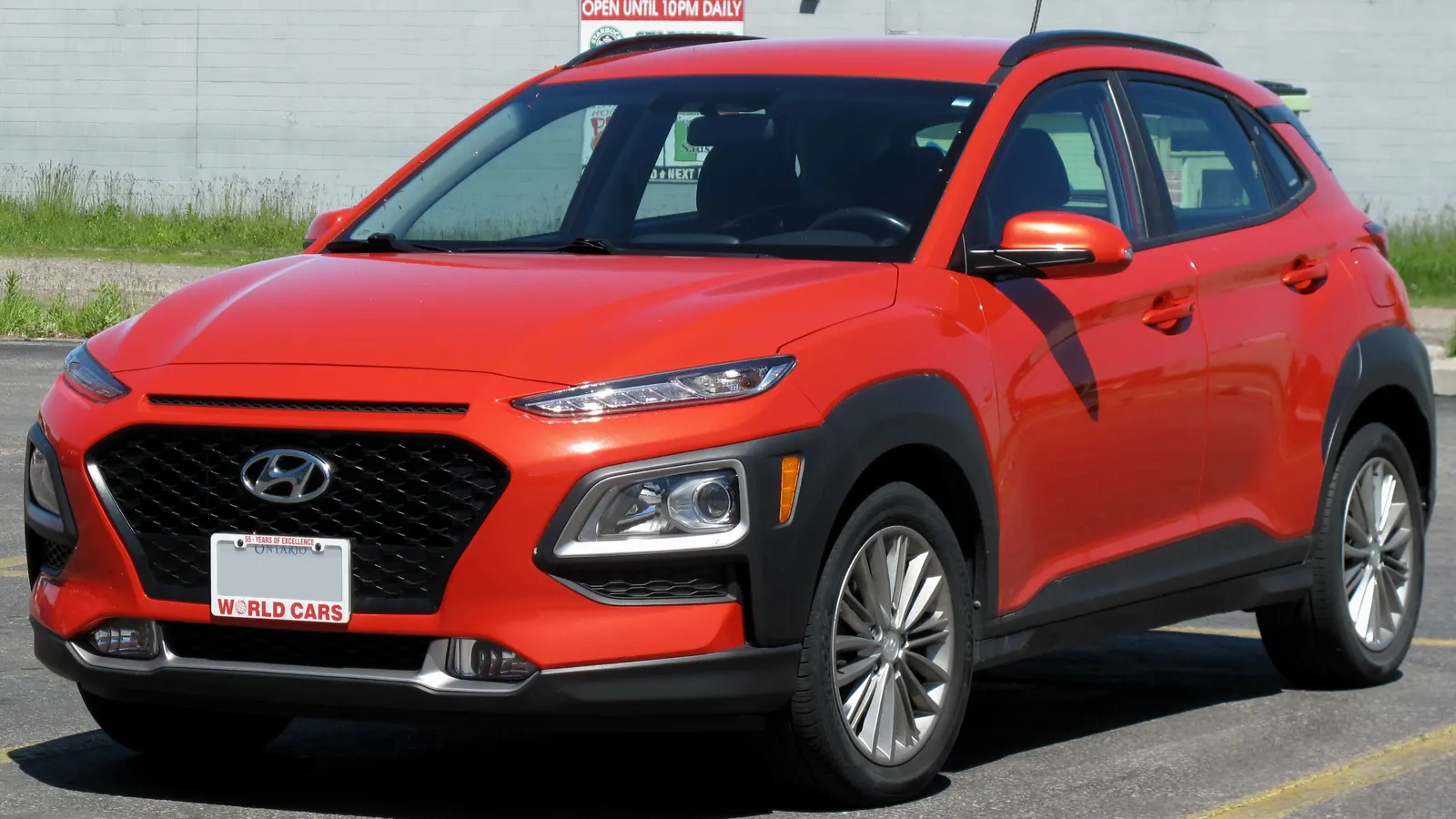
NHTSA lists no safety recalls for this model year.
Owner complaints
75
15 report a crash, fire, injury or death
Recalls
0
None listed by NHTSA
Most common problem
29%
of complaints: engine failure
Complaints per year filed
2018–2025 · peak 14
In short
Serious known problemsThe 2018 Hyundai Kona has serious known problems: 35% of owner complaints (26) describe engine failure or stalling, a safety-critical failure. NHTSA has 75 owner complaints, and 15 report a crash, fire, injury or death. The most common problems are engine failure and stalling or shutting off while driving. This model year has no recalls.
Reliability
How Reliable Is the 2018 Hyundai Kona?
This model year has serious known problems because of what owners report about the engine. About 1 in 3 complaints describe engine failure, and about 1 in 4 describe stalling or shutting off while driving. Many of these are not minor annoyances. A car that loses power on a highway, while accelerating onto an interstate or at an intersection, puts the driver and others at risk. Almost half of all complaints report a crash, fire, injury or death, or a loss of power while moving. That is well above the typical share, and it is what lifts the verdict beyond the engine complaints alone.
The two main problems overlap. Owners with engine failure describe a check engine light, knocking, burning oil, poor acceleration and sometimes a stall. Owners with stalling describe the car turning off while driving, jerking, misfires and, in some cases, a repair that ended with a needed engine replacement. Several reports are therefore likely the same underlying engine trouble seen from different angles. For a buyer, a stall or knock in this vehicle should be treated as a possible sign of serious engine damage rather than a small fault.
No recall is listed for this model year, so there is no official defect or remedy to point to for either problem. Owners who report a recall number do so only a handful of times, and it does not appear on this model year's recall list. Repair outcomes are too thinly reported to say how often fixes work, but the reports we have include owners who were told the engine needed replacing and owners whose warranty claims were refused. Complaints lean toward repairs that failed or did not resolve the problem, so a past repair is not proof the problem is gone.
Mileage matters for engine failure. Owners who give a mileage report it mostly between about 71,300 and 106,100 miles, with a middle point near 94,000 miles. A Kona in that range deserves the closest look. A low odometer reading is not a guarantee, because some owners report stalling and engine trouble at much lower mileage. Mileage figures are reported for only some complaints, so treat them as a rough guide.
If you are considering one, inspect the engine closely, ask for service history, and walk away from any car with engine noise, repeated warning lights or a history of stalling. Remember the limits of this evidence. Complaint counts show what owners reported to NHTSA, not how many vehicles are affected, and they cannot show how any particular Kona was driven or maintained. Many owners will have had no trouble at all, but the pattern here is serious enough that a careful inspection is worth the cost.
Top problems
The 2 problems owners report most
Named from 75 NHTSA complaints. Open a problem for symptoms, the fix, cost and owners' accounts.
1Engine failureCriticalAbout 1 in 3 complaints71,300–106,100 mi
Owners describe a check engine light, engine knock, burning oil, poor acceleration and engines that seized or needed replacing, often while accelerating onto a highway or from a stop. Where mileage is given, the middle report is about 94,000 miles, with most between about 71,300 and 106,100 miles. One owner mentions recall 21V301000, which is not on this model year's recall list.
What owners describe
- Check engine light18%
- Engine knock or loud knocking18%
- Burning oil or oil leaks14%
- Poor or no acceleration14%
Fix
Most common repair owners describe: engine replacement needed (2 reports).
Mileage
94,000 mi
Middle half 71,300–106,100 mi · 12 reports
Repair cost
—
Fewer than 10 owners report a repair cost
How common
29%
22 of 75 complaints
By engine
- 2.0L 4-cyl73%
- 1.6L 4-cyl27%
In owners' words
“Suddenly proceeded to not maintain speed and lost the ability to accelerate and shake in the middle of the interstate”
Owner in IN1.6L 4-cylFiled 2024NHTSA 11621568 “Felt a large shudder/vibration go through the whole car while on the highway and lost some power.”
Owner in TX2.0L 4-cylFiled 2024NHTSA 11632679 “Piston ring failure. No oil in car and no leaks. P0301 code and knocking sound. Unable to drive.”
Owner in IL2.0L 4-cylFiled 2025NHTSA 11682651 2Stalling or shutting off while drivingCriticalAbout 1 in 4 complaints90,000–110,000 mi
Owners describe the car turning off while driving, stalling without warning lights, jerking, misfires and a loud noise from the engine. It happens while driving on the highway, accelerating from a stop and slowing down at intersections, and some owners report near collisions. One owner mentions recall 21V301000, which is not on this model year's recall list.
What owners describe
- Engine shuts off while driving70%
- Check engine light on stall20%
- Stalls with no warning lights10%
- Misfire or jerking10%
Fix
Most common repair owners describe: engine replacement needed (2 reports).
Mileage
100,000 mi
Middle half 90,000–110,000 mi · 9 reports
Repair cost
—
Fewer than 10 owners report a repair cost
How common
27%
20 of 75 complaints
By engine
- 2.0L 4-cyl90%
- 1.6L 4-cyl10%
In owners' words
“Vehicle engine randomly stalls when slowing down, at intersections, and while driving down the road in traffic.”
Owner in LA2.0L 4-cylFiled 2022NHTSA 11467856 “The vehicle started decelerating and sputtering before the vehicle coasted to the side of the road and stalled”
Owner in GA1.6L 4-cylFiled 2025NHTSA 11686886 “The vehicle suddenly stalled while driving on the highway at normal speed without warning.”
Owner in VA2.0L 4-cylFiled 2026NHTSA 11735187
Buying one
Should you buy a used 2018 Hyundai Kona?
What to check before you buy, based on the complaint and recall data.
Ask for full service records and check that the engine has not been replaced or flagged for knocking, burning oil or a check engine light. On a test drive, listen for engine knock and watch for hesitation when accelerating from a stop or slowing down. Have a mechanic inspect the engine before you buy. Check the VIN with Hyundai and NHTSA for open recalls, since none are listed for this model year.
- 1Still run the VIN. NHTSA lists no recalls for this model year, but recalls can be added later. Check at nhtsa.gov/recalls.
- 2Test-drive for engine failure. It's the most common safety-critical complaint, in about 1 in 3 owner complaints, usually around 94,000 miles.
- 3Get a pre-purchase inspection. An independent mechanic can spot leaks, stored fault codes and accident repairs that a test drive misses.
Hyundai Kona model years
Which Hyundai Kona years to avoid? Every model year compared
Early complaints are those filed in a model year's first 3 years. They follow how many were sold, so they don't show which years are better. Each tag is that year's verdict from our research of its owner complaints.
Owning one
If you already own one
Find your symptom, see when problems tend to show up, and check which recalls apply.
Watch for a check engine light, engine knock, burning oil, oil leaking underneath, or a loss of power when accelerating. Owners also describe the engine shutting off with no warning lights at all. If the engine stalls, loses power or knocks loudly, stop driving when it is safe and have the car towed instead of continuing. Confirm with a dealer that no recall applies to your VIN, and keep every repair record in case a warranty claim is refused.
- Engine failureCriticalAbout 1 in 3 owner complaints22 of 75Median 94,000 mi
Most common repair owners describe: engine replacement needed (2 reports).
- Stalling or shutting off while drivingCriticalAbout 1 in 4 owner complaints20 of 75Median 100,000 mi
Most common repair owners describe: engine replacement needed (2 reports).
- Oil consumptionCriticalAbout 1 in 6 owner complaints12 of 75Median 115,000 mi
Recalls
No recalls
NHTSA lists no safety recalls for the 2018 Hyundai Kona.
Reliability history
Hyundai Kona reliability by year
Complaints filed in each model year's first 3 years, by trouble spot. Darker cells have more complaints; counts aren't adjusted for how many were sold each year.
| Trouble spot | 2018 | 2019 | 2020 | 2021 | 2022 | 2023 |
|---|---|---|---|---|---|---|
| Transmission & drivetrain | 2018 Transmission & drivetrain: 1 complaints in the first 3 years. | 2019 Transmission & drivetrain: 6 complaints in the first 3 years. | 2020 Transmission & drivetrain: 4 complaints in the first 3 years. | 2021 Transmission & drivetrain: 6 complaints in the first 3 years. | 2022 Transmission & drivetrain: 13 complaints in the first 3 years. | 2023 Transmission & drivetrain: 9 complaints in the first 3 years. |
| Engine | 2018 Engine: 1 complaints in the first 3 years. | 2019 Engine: 29 complaints in the first 3 years. | 2020 Engine: 62 complaints in the first 3 years. | 2021 Engine: 32 complaints in the first 3 years. | 2022 Engine: 20 complaints in the first 3 years. | 2023 Engine: 6 complaints in the first 3 years. |
| Fuel system & stalling | 2018 Fuel system & stalling: 0 complaints in the first 3 years. | 2019 Fuel system & stalling: 5 complaints in the first 3 years. | 2020 Fuel system & stalling: 0 complaints in the first 3 years. | 2021 Fuel system & stalling: 0 complaints in the first 3 years. | 2022 Fuel system & stalling: 2 complaints in the first 3 years. | 2023 Fuel system & stalling: 4 complaints in the first 3 years. |
| Electrical | 2018 Electrical: 2 complaints in the first 3 years. | 2019 Electrical: 3 complaints in the first 3 years. | 2020 Electrical: 6 complaints in the first 3 years. | 2021 Electrical: 6 complaints in the first 3 years. | 2022 Electrical: 7 complaints in the first 3 years. | 2023 Electrical: 21 complaints in the first 3 years. |
| Driver aids & stability | 2018 Driver aids & stability: 2 complaints in the first 3 years. | 2019 Driver aids & stability: 2 complaints in the first 3 years. | 2020 Driver aids & stability: 4 complaints in the first 3 years. | 2021 Driver aids & stability: 3 complaints in the first 3 years. | 2022 Driver aids & stability: 16 complaints in the first 3 years. | 2023 Driver aids & stability: 11 complaints in the first 3 years. |
| Brakes | 2018 Brakes: 0 complaints in the first 3 years. | 2019 Brakes: 2 complaints in the first 3 years. | 2020 Brakes: 1 complaints in the first 3 years. | 2021 Brakes: 1 complaints in the first 3 years. | 2022 Brakes: 7 complaints in the first 3 years. | 2023 Brakes: 3 complaints in the first 3 years. |
| Steering | 2018 Steering: 1 complaints in the first 3 years. | 2019 Steering: 1 complaints in the first 3 years. | 2020 Steering: 4 complaints in the first 3 years. | 2021 Steering: 2 complaints in the first 3 years. | 2022 Steering: 0 complaints in the first 3 years. | 2023 Steering: 1 complaints in the first 3 years. |
| Suspension | 2018 Suspension: 1 complaints in the first 3 years. | 2019 Suspension: 0 complaints in the first 3 years. | 2020 Suspension: 1 complaints in the first 3 years. | 2021 Suspension: 0 complaints in the first 3 years. | 2022 Suspension: 0 complaints in the first 3 years. | 2023 Suspension: 0 complaints in the first 3 years. |
| Airbags & seat belts | 2018 Airbags & seat belts: 1 complaints in the first 3 years. | 2019 Airbags & seat belts: 2 complaints in the first 3 years. | 2020 Airbags & seat belts: 2 complaints in the first 3 years. | 2021 Airbags & seat belts: 0 complaints in the first 3 years. | 2022 Airbags & seat belts: 2 complaints in the first 3 years. | 2023 Airbags & seat belts: 2 complaints in the first 3 years. |
| Body, lights & visibility | 2018 Body, lights & visibility: 7 complaints in the first 3 years. | 2019 Body, lights & visibility: 1 complaints in the first 3 years. | 2020 Body, lights & visibility: 4 complaints in the first 3 years. | 2021 Body, lights & visibility: 1 complaints in the first 3 years. | 2022 Body, lights & visibility: 4 complaints in the first 3 years. | 2023 Body, lights & visibility: 2 complaints in the first 3 years. |
| Acceleration & speed control | 2018 Acceleration & speed control: 0 complaints in the first 3 years. | 2019 Acceleration & speed control: 1 complaints in the first 3 years. | 2020 Acceleration & speed control: 3 complaints in the first 3 years. | 2021 Acceleration & speed control: 3 complaints in the first 3 years. | 2022 Acceleration & speed control: 7 complaints in the first 3 years. | 2023 Acceleration & speed control: 7 complaints in the first 3 years. |
| Wheels & tires | 2018 Wheels & tires: 0 complaints in the first 3 years. | 2019 Wheels & tires: 0 complaints in the first 3 years. | 2020 Wheels & tires: 2 complaints in the first 3 years. | 2021 Wheels & tires: 2 complaints in the first 3 years. | 2022 Wheels & tires: 1 complaints in the first 3 years. | 2023 Wheels & tires: 2 complaints in the first 3 years. |
All problems
Every problem reported on the 2018 Kona
Every problem found in the 75 owner complaints, by area of the vehicle.
Engine
39 52%- Engine failureCritical22 29%typically at 94,000 mi94,000––
- 20 27%typically at 100,000 mi100,000––
- Oil consumptionCritical12 16%–––
- Engine knocking8 11%typically at 87,000 mi87,000––
- Misfires or head gasket failureSerious7 9%–––
- Oil leaks or low oilSerious4 5%–––
Show 2 more engine problemsShow fewer engine problems
- Alternator belt cuts through AC tubing1 1%–––
- Turbocharger failing1 1%–––
Fire
8 11%- Vehicle catches fireCritical8 11%–––
Body, lights & visibility
8 11%- LED headlights cause glare to oncoming drivers2 3%–––
- Antenna breaks off2 3%–––
- Front end detaches from frame1 1%–––
- Headlights flicker1 1%–––
- Mildew smell from air conditioning1 1%–––
- Rear door will not open from inside1 1%–––
Show 1 more body, lights & visibility problemsShow fewer body, lights & visibility problems
- Door lock or door problem1 1%–––
Driver aids & stability
5 7%- Blind spot warning shuts off by itselfMinor4 5%–––
- False forward collision warnings1 1%–––
Electrical
4 5%- Screen or infotainment glitchesMinor3 4%–––
- Interior and exterior lights fail1 1%–––
Airbags & seat belts
2 3%- Airbags did not deploy in a crashCritical2 3%–––
Acceleration & speed control
2 3%- Sudden or unintended accelerationCritical2 3%–––
Wheels & tires
2 3%- Tire blowout1 1%–––
- Tire tread separating1 1%–––
Brakes
1 1%- Brake pedal sinks or brakes failCritical1 1%–––
Transmission & drivetrain
1 1%- Drops into neutral or loses drive while movingCritical1 1%–––
- Transmission shudder or judderSerious1 1%–––
- Transmission failure needing replacementSerious1 1%–––
28 problems found in all 75 complaints. One complaint can describe more than one problem, so counts add up to more than the total. Not counted as a defect: 1 about recall paperwork or parts delays, 4 describing no vehicle defect. Typical miles, repair cost and fix rate show only when enough owners report them.
The data
Behind the numbers
Every figure comes from NHTSA's complaint file and APIs.
- Complaints
- 75
- Recalls
- 0
- Crashes
- 9
- Fires
- 10
- Injuries
- 12
- Deaths
- 0
Crashes and fires count complaints that report one; injuries and deaths count people.
Mileage at failure
Not enough data yet
Only 24 complaints list mileage; we chart this from 30.
Complaints by engine
Decoded from the partial VINs owners include. Not adjusted for how many of each engine were sold.
FAQ
2018 Hyundai Kona questions
Is the 2018 Hyundai Kona reliable?
The 2018 Hyundai Kona has serious known problems. 35% of its 75 NHTSA owner complaints (26) describe engine failure or stalling, including stalling, misfires and head gasket failures. 45% of complaints report a crash, fire, injury or death, or a loss of power while moving.
What are the most common 2018 Hyundai Kona problems?
Engine failure is the most common problem, in 22 complaints (29%, about 1 in 3). Stalling or shutting off while driving follows with 20 complaints (27%, about 1 in 4). Both are rated critical. Owners also report oil consumption in 12 complaints, and the two main problems often overlap.
Does the 2018 Hyundai Kona have any recalls?
No recalls are listed for the 2018 Hyundai Kona, so there is no official defect or remedy for its engine or stalling complaints. There is no do-not-drive or park-outside warning. Check your VIN at nhtsa.gov/recalls, and confirm with a Hyundai dealer that nothing applies to your car.
Does the 2018 Hyundai Kona stall while driving?
Owners report it. 20 complaints (27%) describe the engine shutting off while driving, sometimes with no warning lights, on highways, when accelerating from a stop and when slowing at intersections. Some owners report near collisions. If it stalls or loses power, stop driving when it is safe and have the car towed.
At what mileage does the 2018 Hyundai Kona have engine problems?
Among 12 engine failure reports that give a mileage, the middle report is about 94,000 miles. Most fall between about 71,200 and 106,100 miles. Some owners report stalling and engine trouble at much lower mileage, so a low odometer reading is not a guarantee.
What should I check before buying a used 2018 Hyundai Kona?
Ask for full service records and check whether the engine has been replaced or flagged for knocking, burning oil or a check engine light. On a test drive, listen for engine knock and watch for hesitation when accelerating or slowing. Have a mechanic inspect the engine before you buy.
Which Hyundai Kona years should you avoid?
Avoid the 2018–2021 Hyundai Kona: owner complaints for those years show serious known problems. For the 2023, make sure the recall repairs were done: an urgent recall matters more than its complaint pattern. The 2022 and 2024 show no pattern of serious problems. The 2025–2026 have too few complaints to judge. Every model year is compared on the Hyundai Kona years-to-avoid page.
Methodology
How we researched this
- Complaints. NHTSA's owner complaint file, counted as unique complaint numbers for make HYUNDAI, model KONA, model year 2018. Data through Oct 4, 2026.
- Verdict. Judged from this model year's own complaints, not against other models, using shares rather than counts. Serious known problems: one serious problem (transmission, engine or stalling, steering, brakes, airbags, fire, fuel leaks) is in a quarter or more of complaints; or a smaller but clear cluster comes with an unusual share of crash, fire, injury or loss-of-power reports or early failures; or an urgent recall or NHTSA investigation matches a top complaint. Some known problems: one of those signals on its own. No pattern of serious problems: none of them; this doesn't mean the vehicle is trouble-free. Too few complaints to judge: under 50 complaints. Why this verdict: 35% of complaints (26) describe engine failure or stalling (stalling, misfires and head gasket failures); 45% of complaints report a crash, fire, injury or death, or a loss of power while moving (typical: 17%).
- No grade or class ranking. Raw complaint counts favor models that sell fewer cars, so we don't score or rank this vehicle against other models until we can adjust for sales.
- Trouble spots and history. Complaints grouped by the part owners chose when filing. The history grid counts complaints filed in each model year's first 3 years so older and newer years compare fairly; years with fewer than 3 complete years are marked too new.
- Named problems. Every one of the 75 complaints was researched and classified by its problems, severity, symptoms, repairs and any cost the owner mentions; the counts, costs and fix rates on this page are tallies of those classifications. Quotes are verbatim excerpts, checked against the original text. Engines are decoded from partial VINs with NHTSA's vPIC service.
- Repair costs and fix rates. Shown only when at least 10 owners report a repair cost, or at least 10 complaints describe whether a repair worked.
- Not adjusted for sales. Not affiliated with NHTSA. Page updated Oct 9, 2026.